













Client
Polaris is a Swiss brand of home and climate appliances. The company's active assortment includes more than 700 items (over 1,000 SKU in the lineup), including models based on Polaris' own technical developments. In the CIS market, Polaris holds about 10% in the small home appliance segment (according to market research by DISCOVERY RESEARCH GROUP and BusinessStat) - the brand consistently ranks among the leaders here.
Challenge: simplify and make product information handling more transparent
In 2020-2021, online channels (the online store and marketplaces) became the main sales channel for appliances. Against this backdrop, problems with storing and updating Polaris product information became critical:
The Polaris brand assortment changes constantly: new items appear, old ones are discontinued, and specifications or included accessories may change. Marketplace rules, product card structures, and image requirements also change. As a result, managers constantly had to duplicate their own work and recheck what had already been published.
- there was no single place to store product information: data was scattered across dozens of folders and hundreds of spreadsheets;
- product information was not structured;
- product cards were not standardized across different marketplaces: Ozon, Wildberries, AliExpress, Yandex Market; information had to be filled in or updated separately on each one;
- it was difficult to track and control information changes across all marketplaces.
Solution: a PIM system as a single hub for storing product information
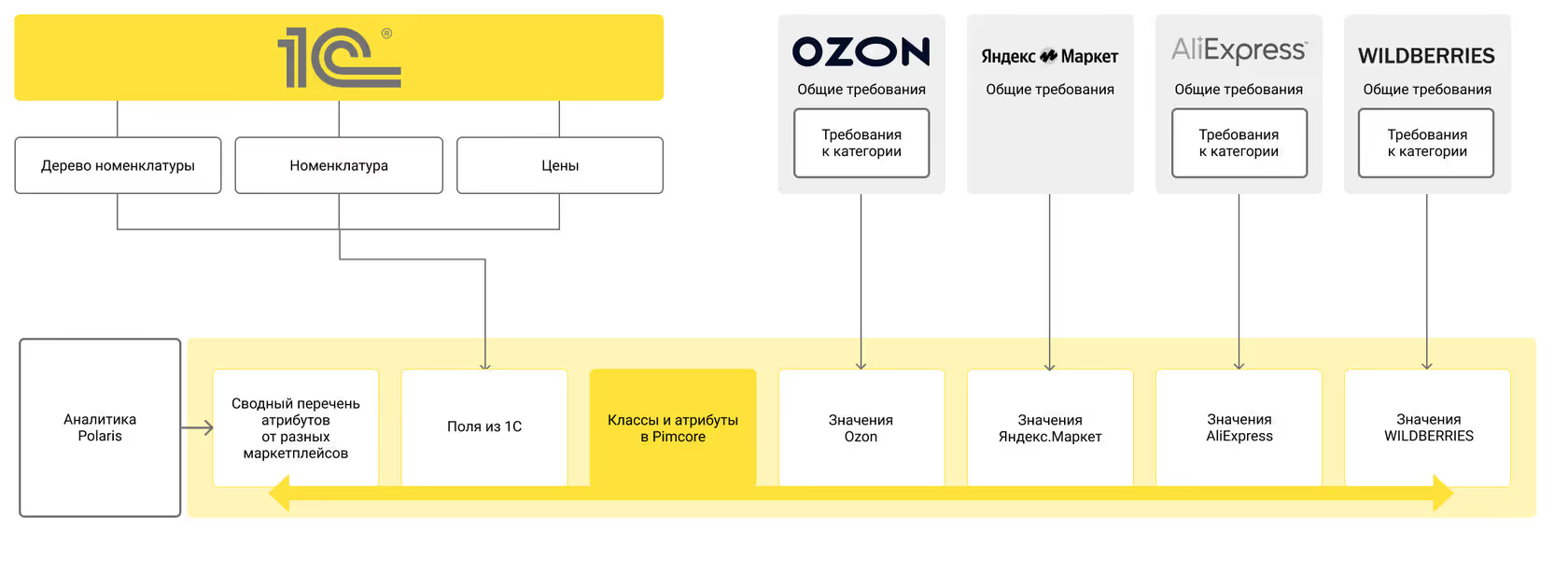
We implemented a single hub for storing information about products, product categories, and product groups in the Polaris ecosystem. We selected a PIM system that meets the company's requirements. We designed the product card structure to account for all marketplace requirements.
Now Polaris product information is complete, accurate, and compliant with the requirements of all sales channels. At the same time, launching on new online platforms requires many times less spending on IT integrations.
This process took two months. Its result was a process map covering the "life cycle" and maintenance of the product card. We also identified processes that could be simplified and automated by enriching the product card with additional information.
Review a similar project with an architect
Result 1: one product = one card, less routine and duplicate work for managers
Each marketplace has its own requirements for the structure and content of product information. There is its own internal product hierarchy, information fields that describe the product, requirements for the file format used to deliver information, and so on.
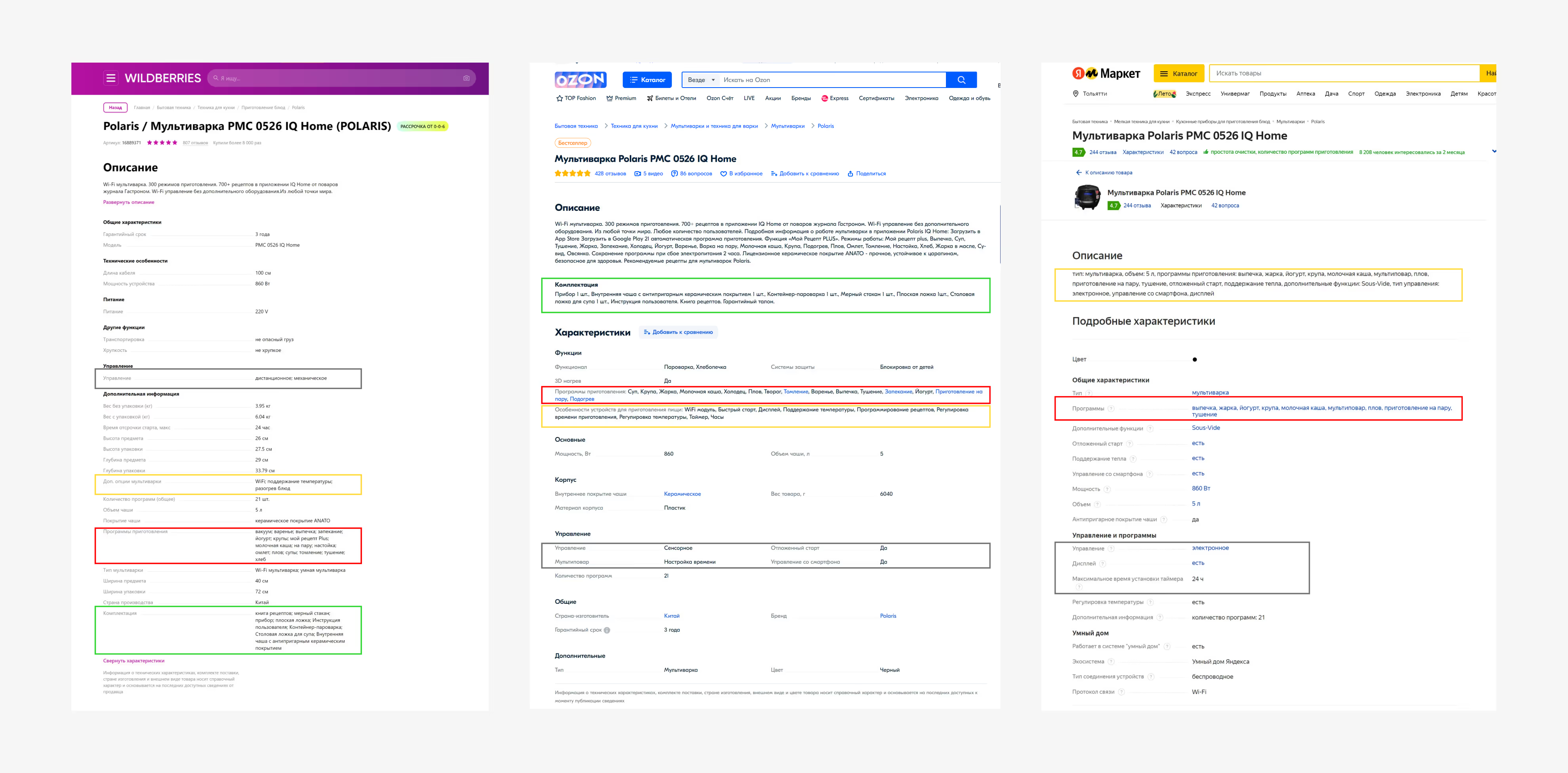
For example, the list of product features, the description of functions, and the included accessories may not match... There are hundreds of such details.
This is how the multicooker specifications look on OZON, Yandex Market, and Wildberries. Similar blocks from different cards are highlighted in the same color
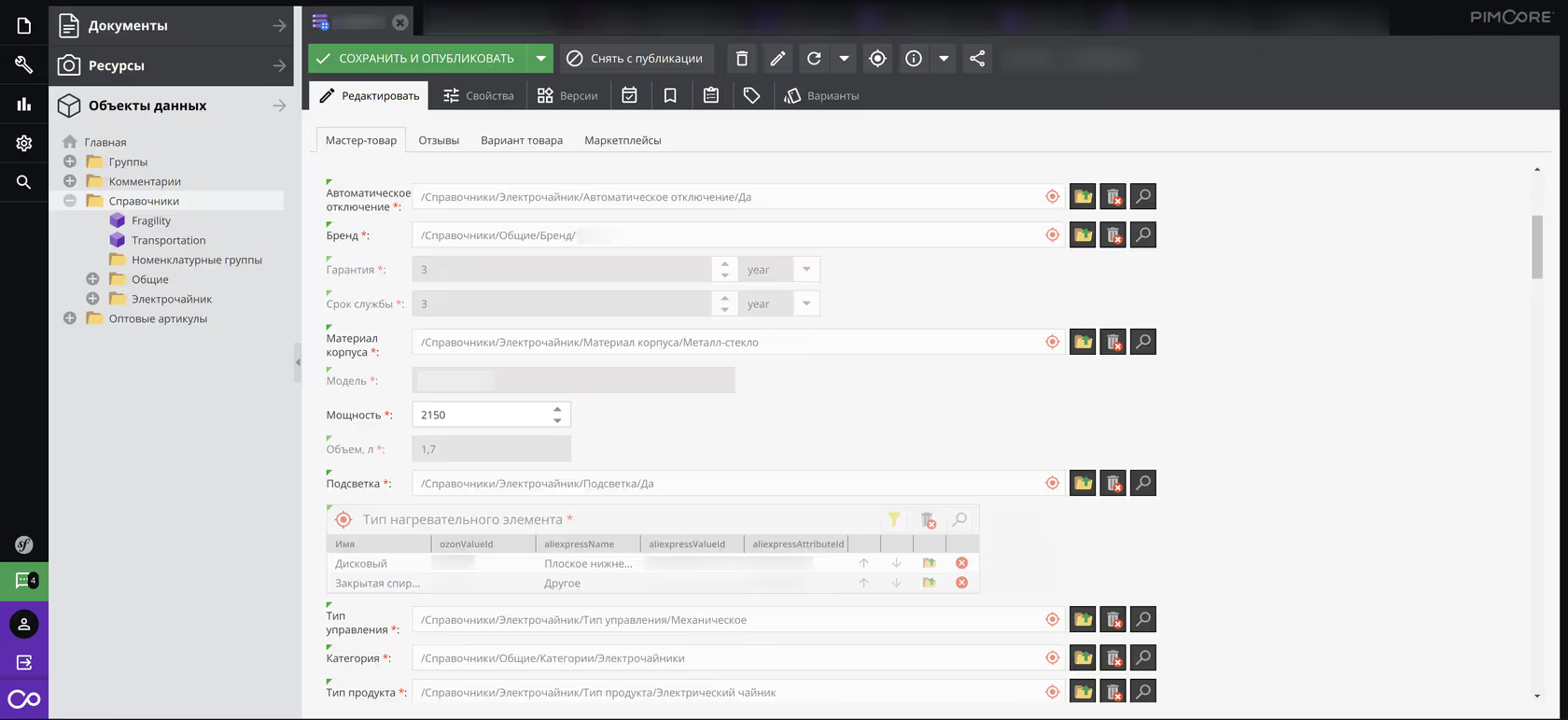
We developed an information model for the product card that captures every product detail and takes into account the technical requirements for product information across all connected marketplaces.
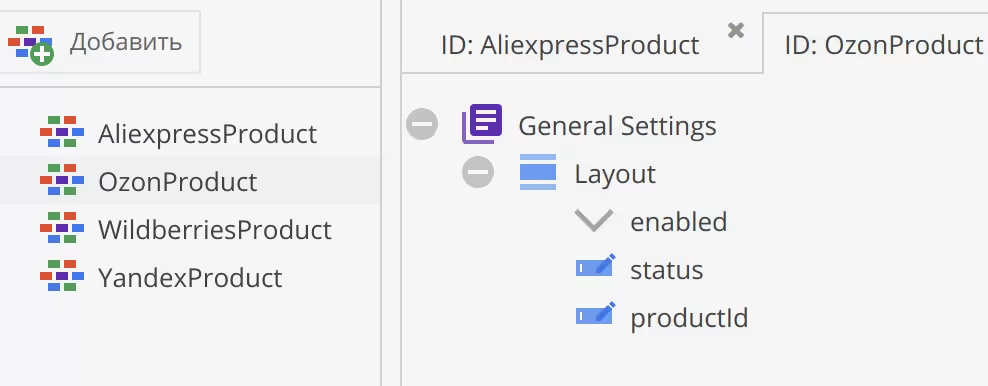
One combination of fields is selected from this product card for Wildberries, and another for AliExpress; images in the required format and size are attached to the card. At the same time, there is no need to create multiple cards for the same product for different marketplaces.
Result 2: the customer receives accurate product information - making it easier to choose Polaris appliances
The product card in the PIM system is designated as the authoritative source of all product information - the golden record.
This means that if information is needed for an advertising campaign, for onboarding a new marketplace, or for publishing a new product across all sales channels, it will be taken directly from the card in the PIM system.
An existing product may change its specifications: for example, a vacuum cleaner package may get a new brush added. To have these changes reflected across all sales channels, it is enough to enter them once in the card in the PIM system. After that, they are sent via integrations to marketplaces and the online store without any additional effort from Polaris managers.
There will be no situations where something was not entered, forgotten, or left in the revision queue. And after purchasing the appliance, the customer will not face a mismatch between expectations and the actual Polaris product.
Result 3: changes in marketplace-side systems will not force Polaris to spend on additional development
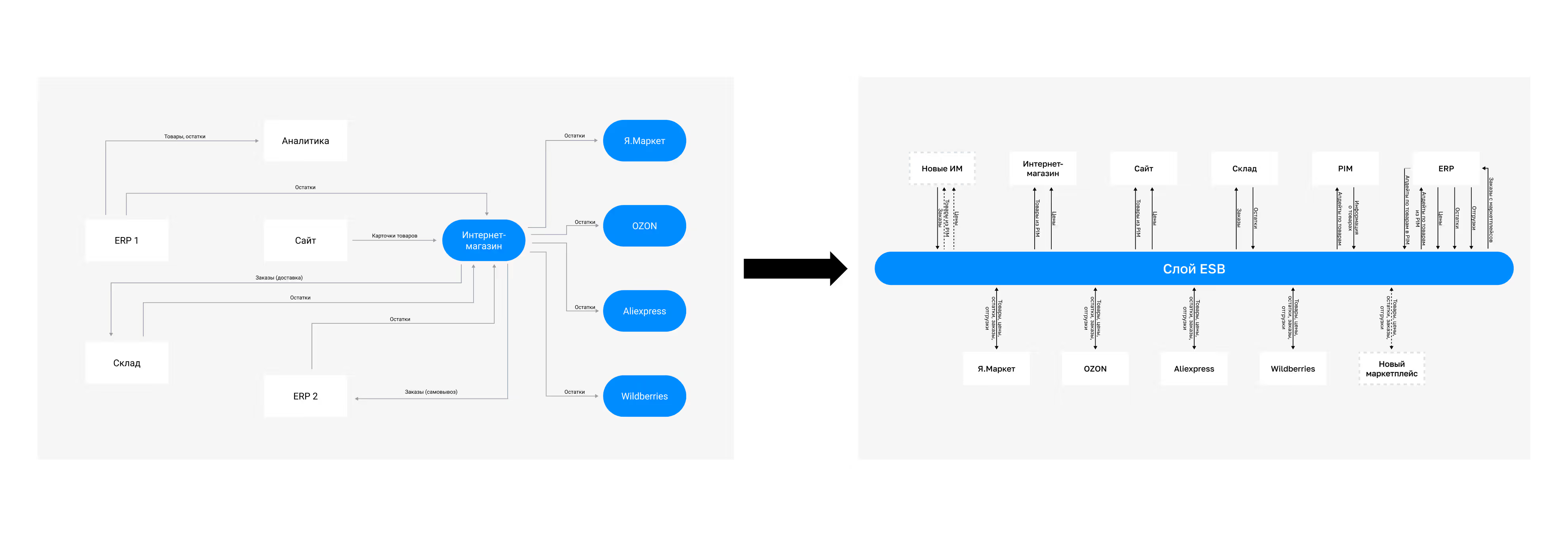
Information from the PIM system is exported to marketplaces automatically. We could have set up direct integrations between the PIM and, for example, Wildberries. But in the long term, this option would continually require development costs from Polaris.
That is why we integrated an ESB layer into the Polaris IT environment - an intermediary layer where integrations can be built and modified quickly, and where information transfer processes can be monitored.
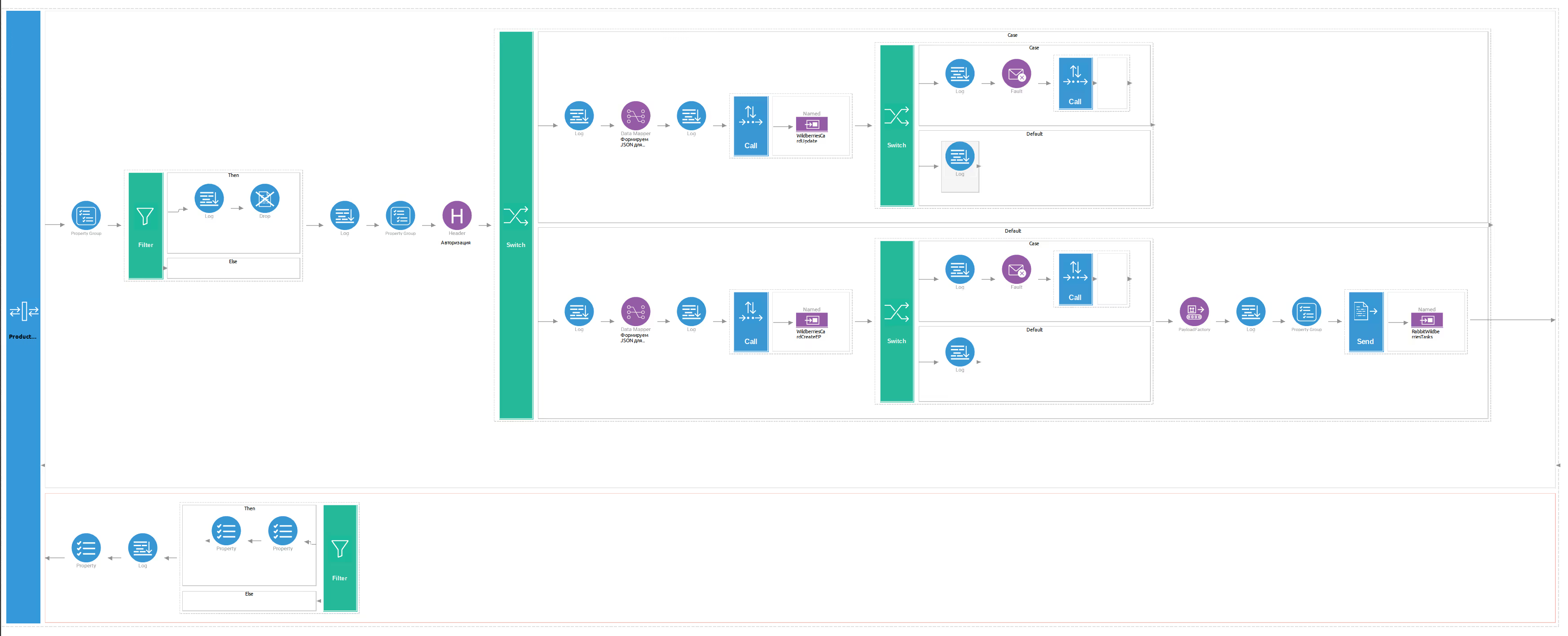
In the ESB layer, integrations are built in a graphical interface. Universal blocks are used for development:
It is enough to set up the core integration once, so later only minimal time is needed for changes and fixes to individual components. And a new developer will not spend dozens of hours figuring out the integration logic and information flow.
- with a clear input - what information comes in, in what form, and from where);
- output - where the information goes;
- and block names - what each one is responsible for.