Source documents
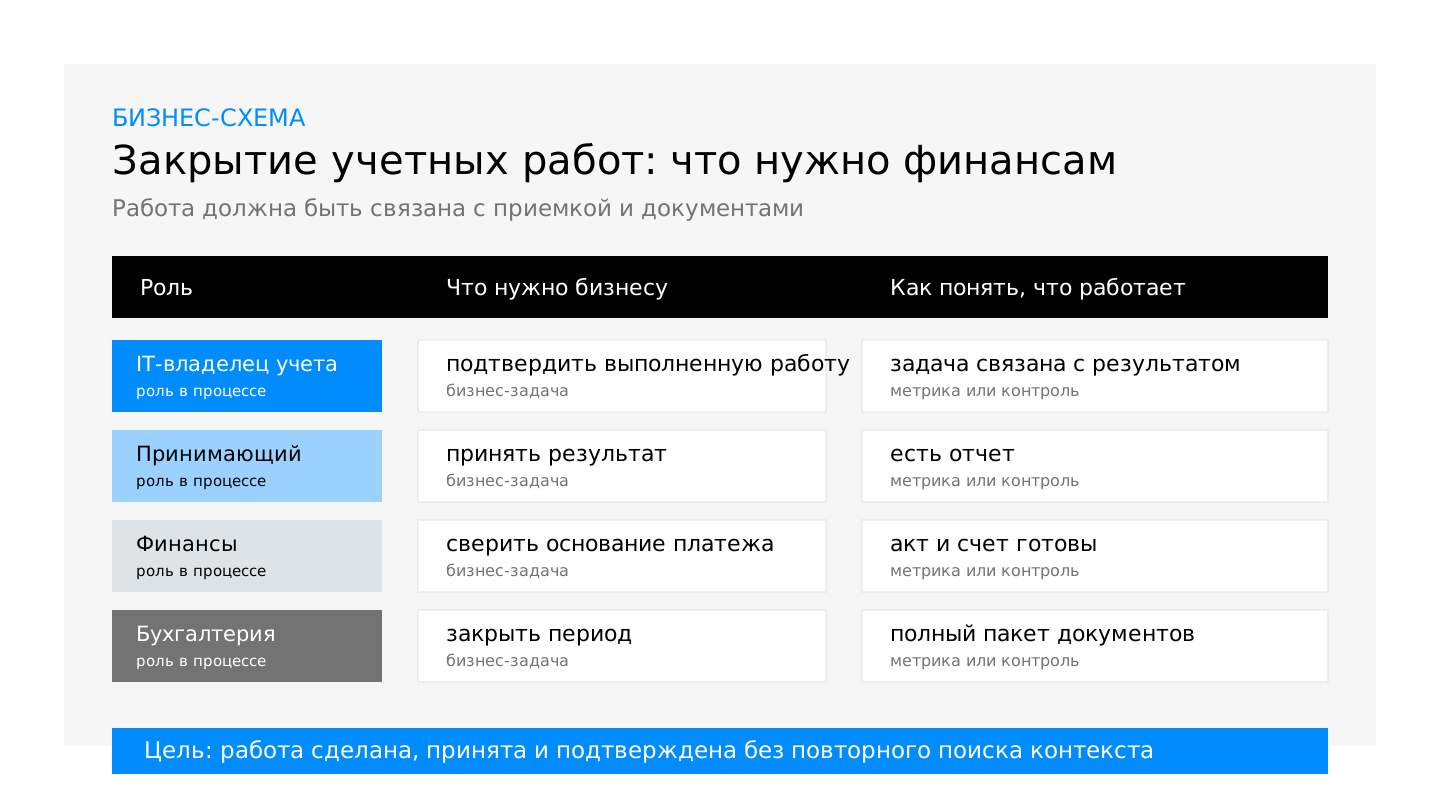
Delivery notes, invoices, UTD 5.03, and acts: recognizes documents from PDF, scan, or photo, extracts details, and prepares the posting.

Recognize and process source documents in 1C with postings, reconciliations, and FNS response drafts in 59 seconds.
The AI assistant accepts source documents from Telegram, EDI, and email, recognizes the document, checks the action against policy, and posts it in 1C with an audit trail. In our OSNO-VA product, the path from a bill photo to a posting in 1C takes 59 seconds, up to 70% of manual routine work is removed from accounting, and one accountant supports $50M+ in turnover - these are internal product data.
The agent handles routine operations 24/7.
It prepares payments and disputed cases for accountant approval, so responsibility and control remain with the person.
Below are practical scenarios, agent functions, use cases, and implementation steps.
The AI accountant handles a work unit, not just chat replies
Input
Preparation
Workstation
Solution
Outcome
Telegram
The accountant creates a task with a regular message. The agent checks documents and rules, performs the permitted action, or prepares the operation for approval.
 01
01
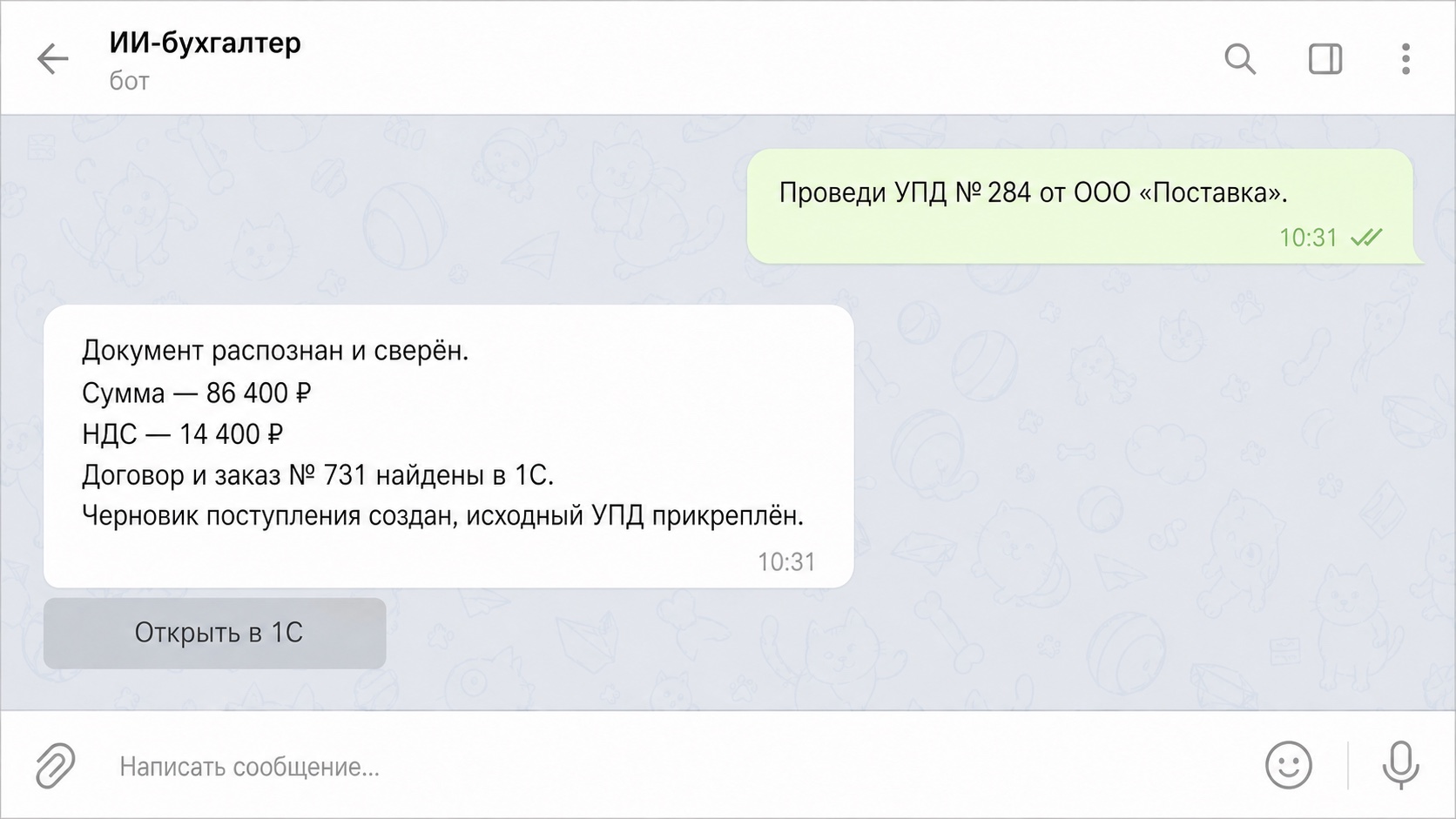
The agent recognizes the UTD, matches the amount, VAT, and order, then creates a draft receipt in 1C.
 02
02
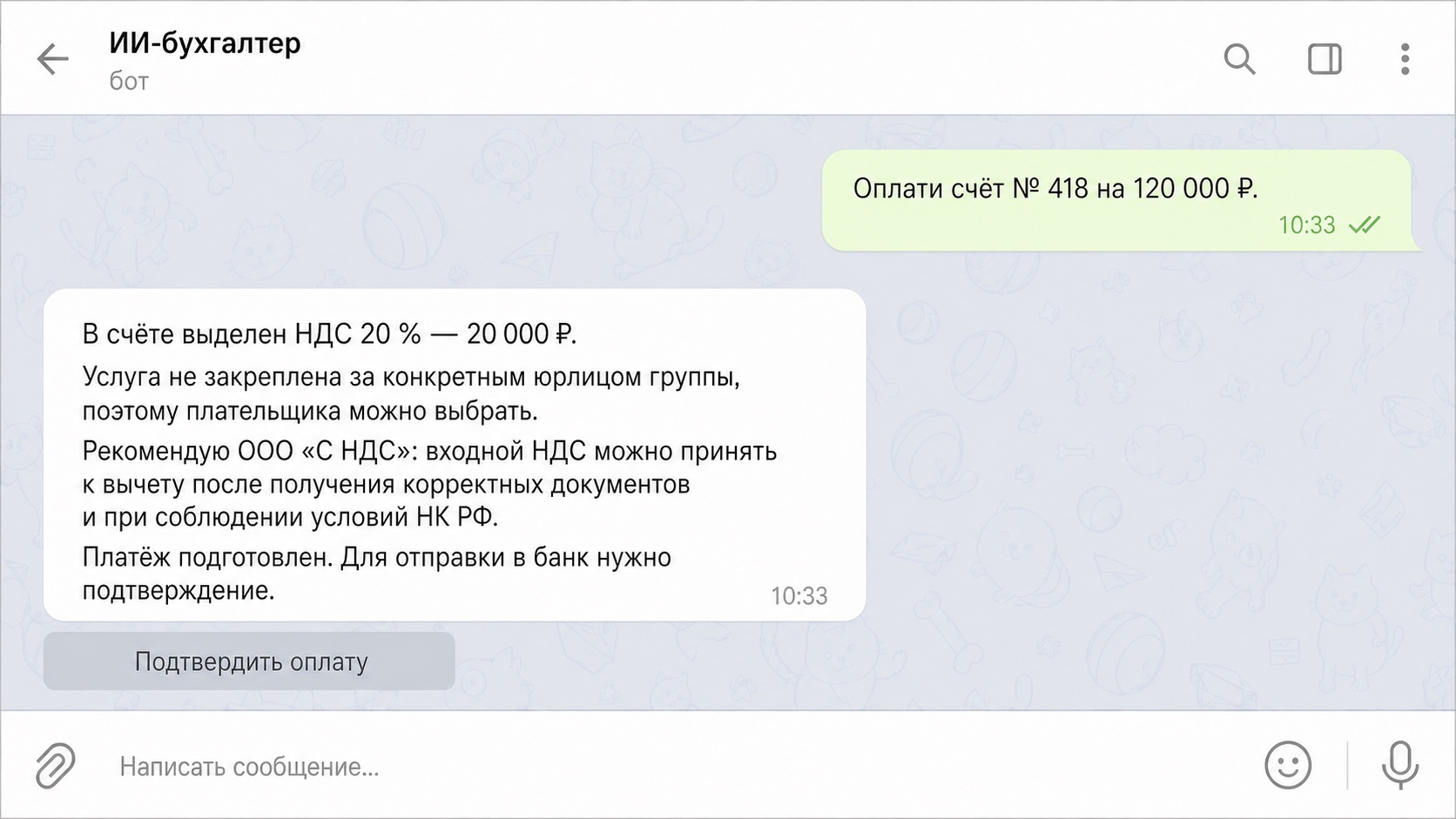
The agent detects itemized VAT, recommends the VAT payer LLC "With VAT," and prepares the payment for approval.
 03
03
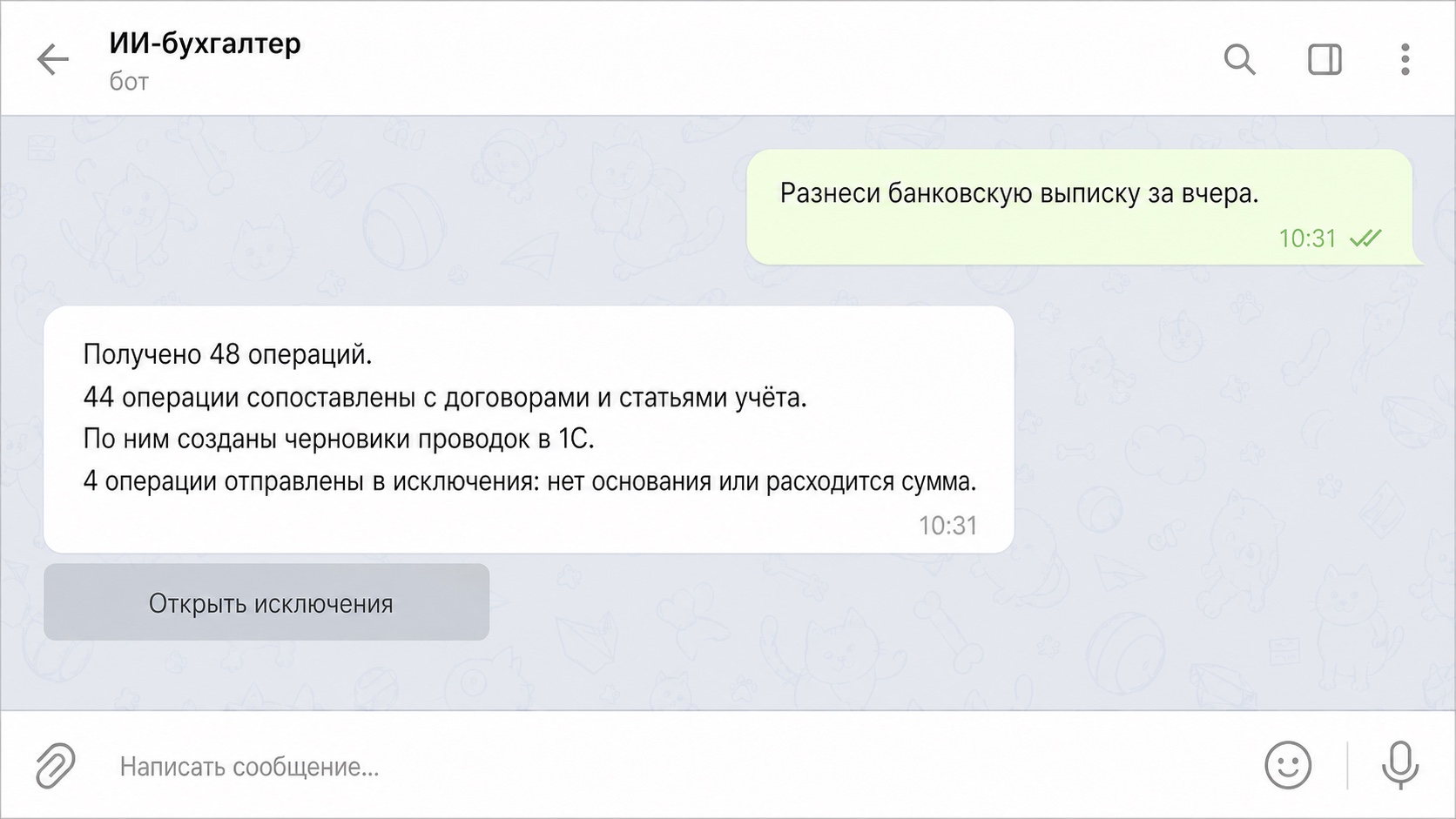
The agent matches transactions, creates drafts in 1C, and routes unconfirmed payments to exceptions.
 04
04
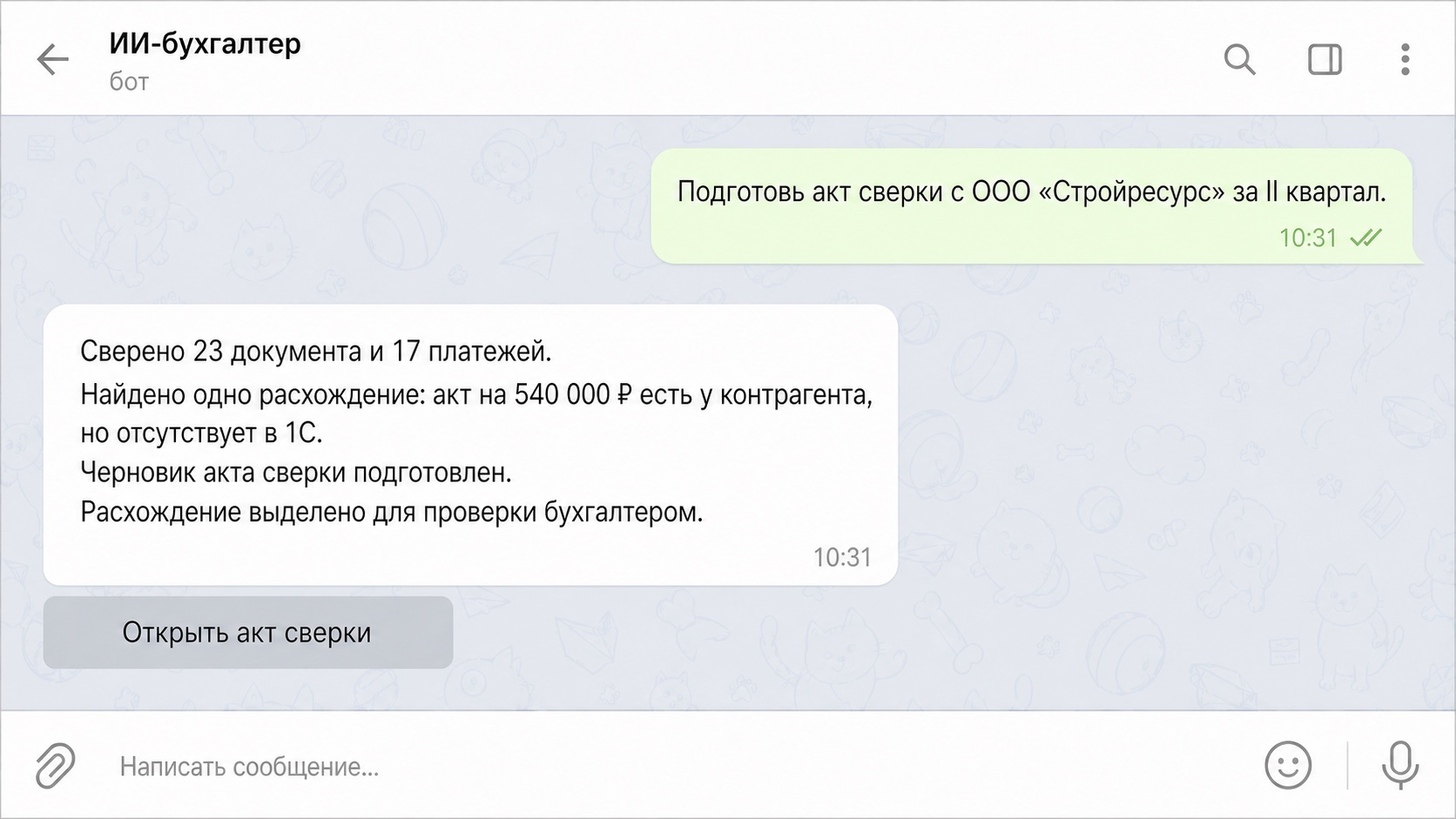
The agent gathers documents and payments for the period, finds the missing act in 1C, and prepares a reconciliation.
 05
05
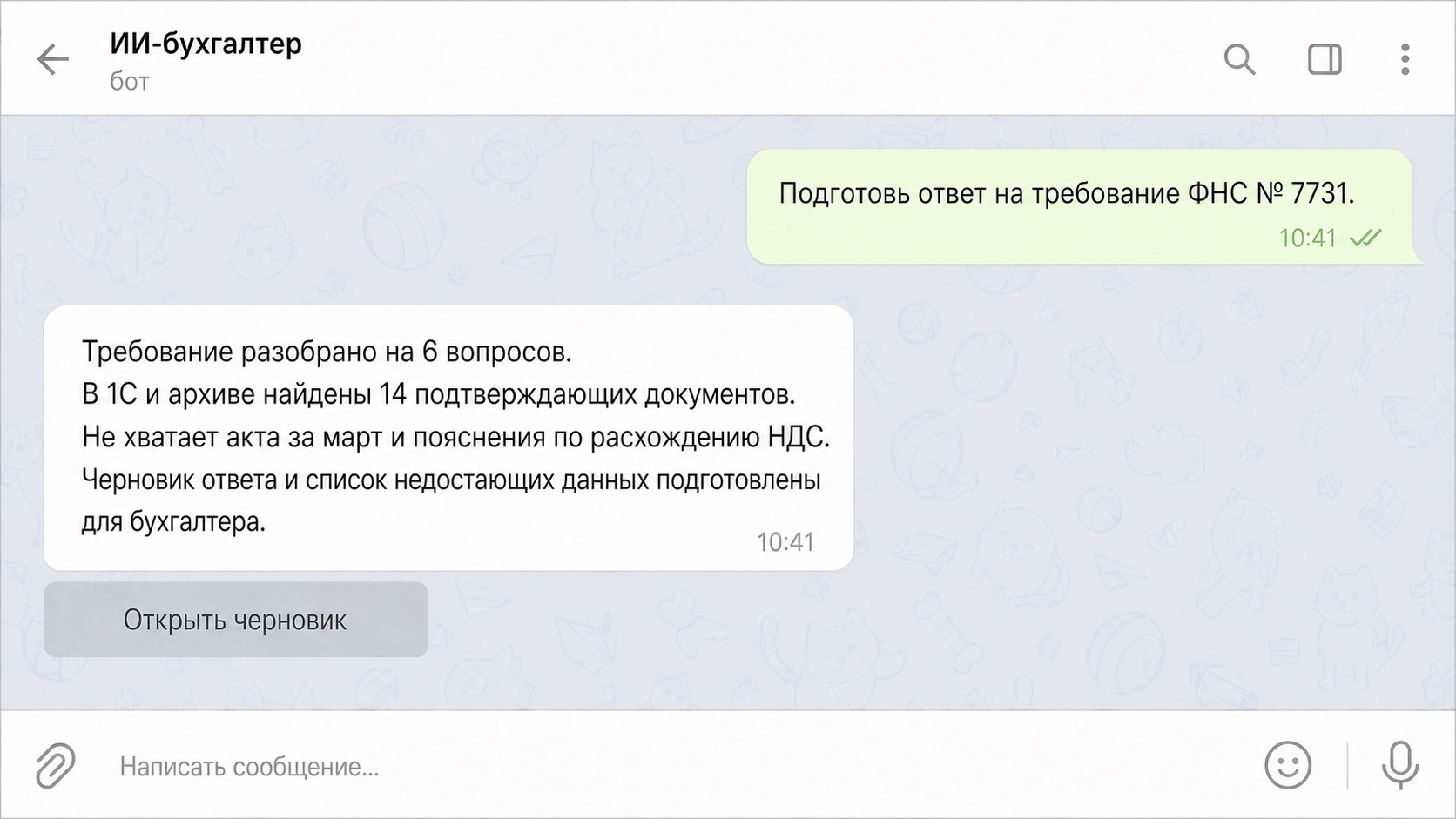
The agent analyzes requests, gathers documents, and shows which materials are missing for a response.
 06
06
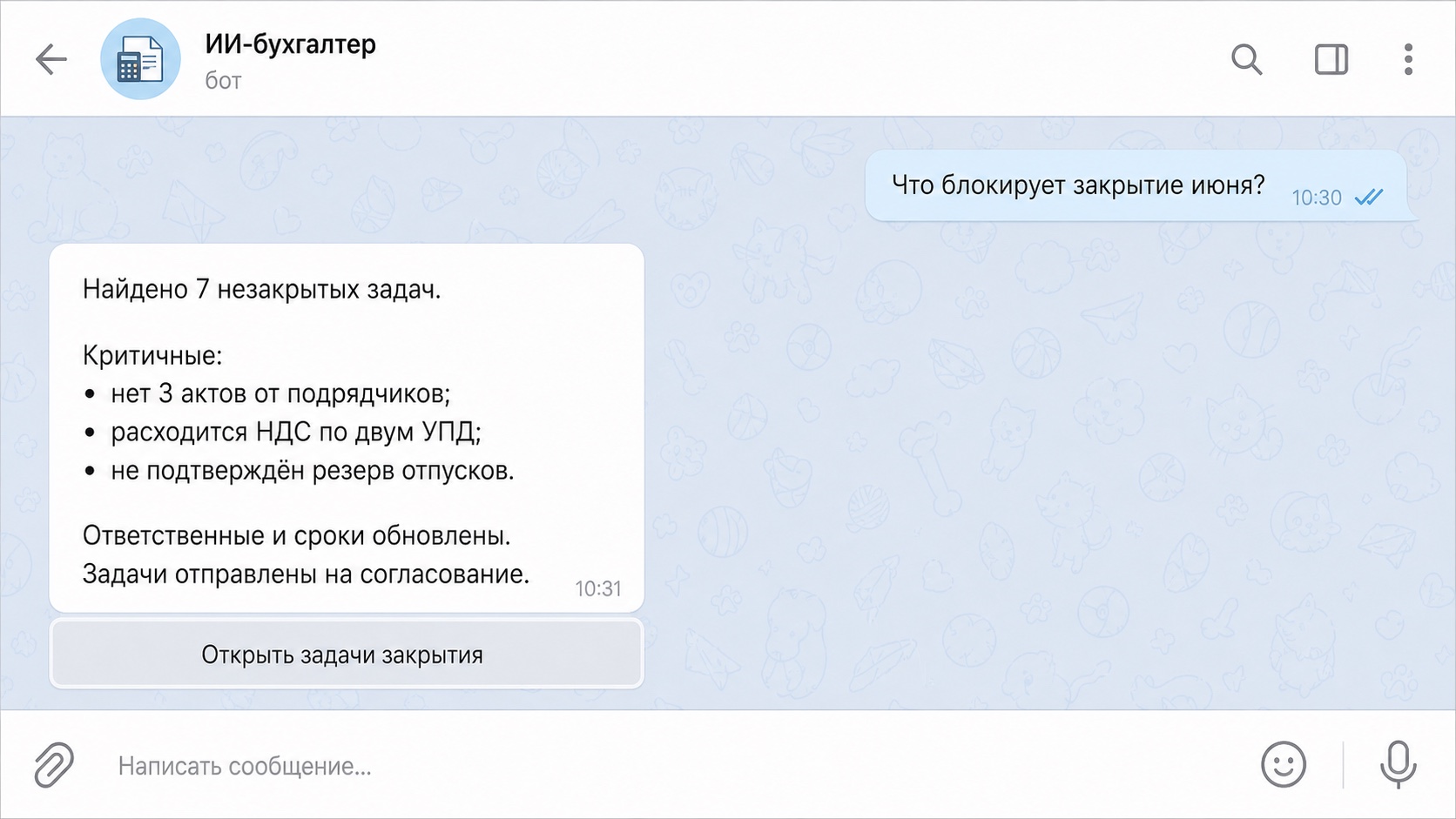
The agent highlights critical closing tasks, updates owners, and sends tasks for approval.
 07
07
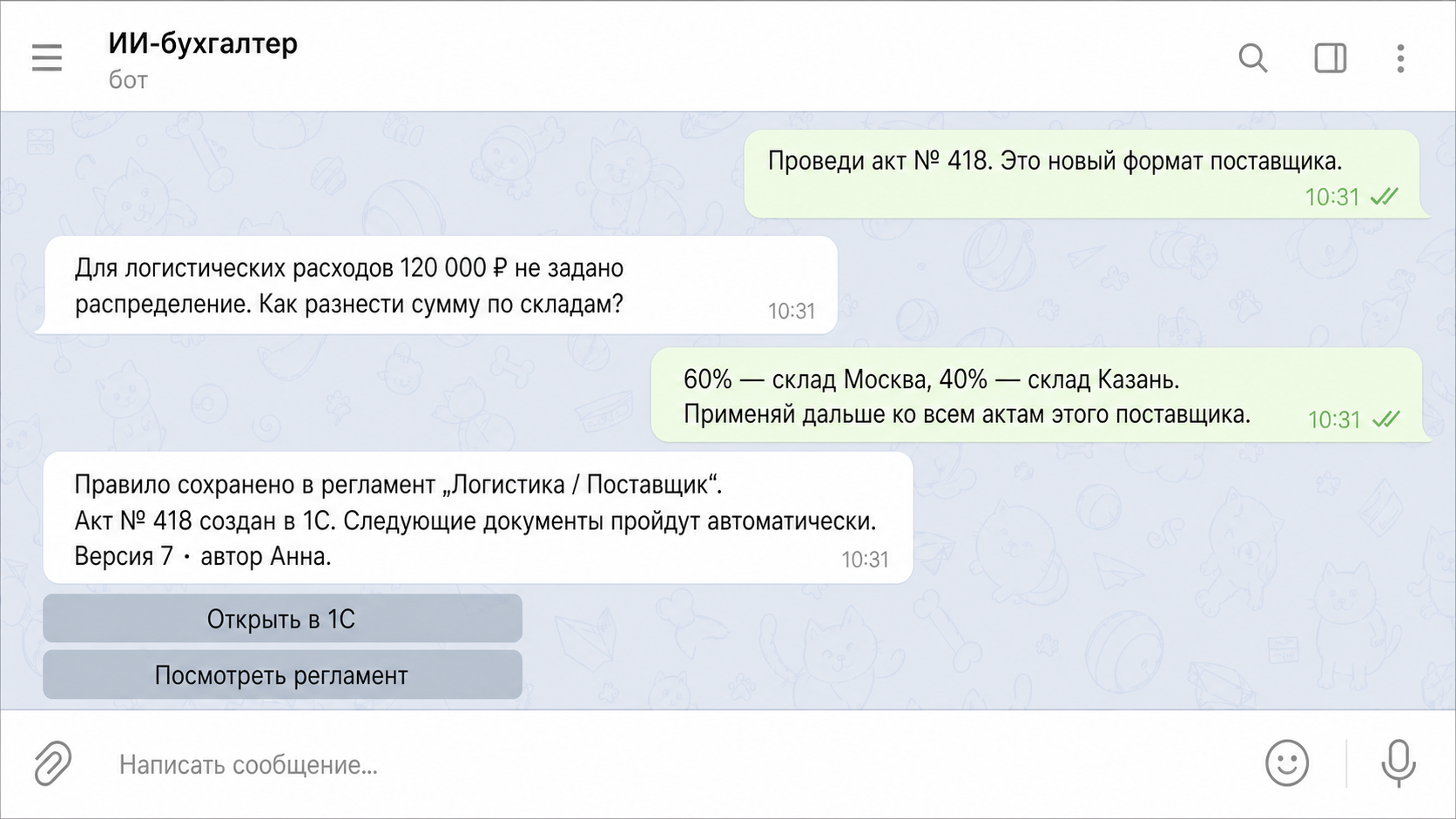
The accountant allocates logistics costs between the Moscow and Kazan warehouses. The agent saves the approved policy with its version, applies it to subsequent documents, and creates the current act in 1C.
 08
08
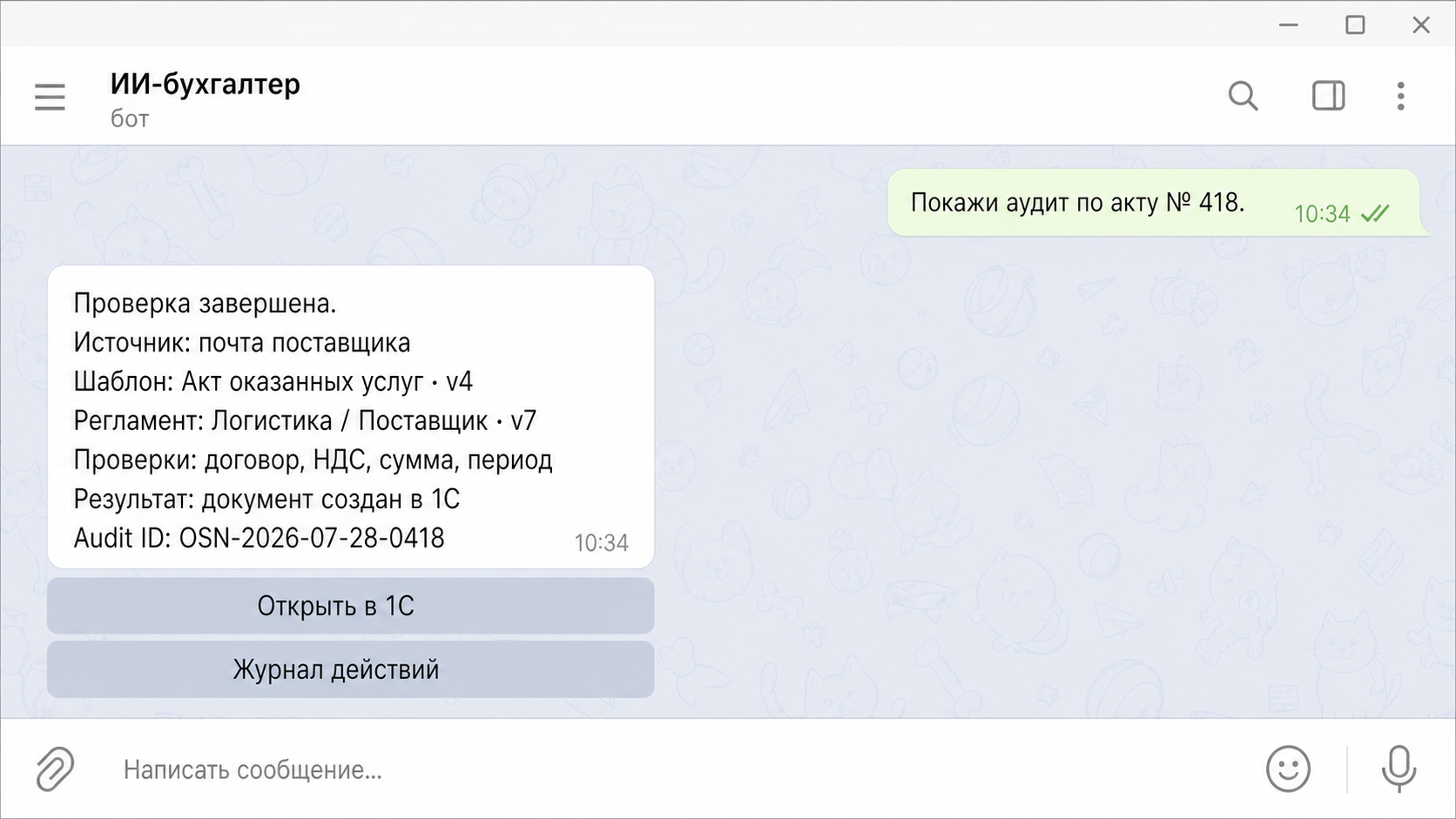
The agent shows the document source, template and policy versions, completed checks, the 1C posting result, and the audit ID.
Delivery notes, invoices, UTD 5.03, and acts: recognizes documents from PDF, scan, or photo, extracts details, and prepares the posting.
Allocates transactions by counterparty and account item, finds unsupported payments and mismatches with the register.
Matches the document with the order, contract, payment, and counterparty data, highlighting specific discrepancies.
Monitors cash flow budget items, finds plan-versus-actual variances and classification errors, and explains the cause.
Tracks missing source documents, overdue items, and required actions before they become month-end close issues.
Prepares a draft response based on accounting data; the accountant approves the final text.
From January 1, 2026, UTD format 5.03 is mandatory, and from February 1 updated requirements for machine-readable powers of attorney, MChD, take effect. Source documents become structured data that the Federal Tax Service reconciles automatically: the cost of manual errors rises, and machine-readable document flow becomes the environment where the agent works natively, with structured documents checked and posted by rule without scan recognition.
A detailed review of 2026 formats and what AI already can do in accounting is in the article AI for accountants.
This page is about the day-to-day work of accounting: primary documents, journal entries, reconciliations, period close, and Federal Tax Service requests. The owner and CFO's questions - how much cash the group has on its accounts, what is truly available, where a cash gap will occur, and how a contract affects cash flow - are handled by a separate layer OSNOVA for management reporting. The AI accountant sends verified accounting data into it.
Verified on: 15.07.2026
Basis
Anonymized reporting interfaces, document configurations, and 1C integrations.
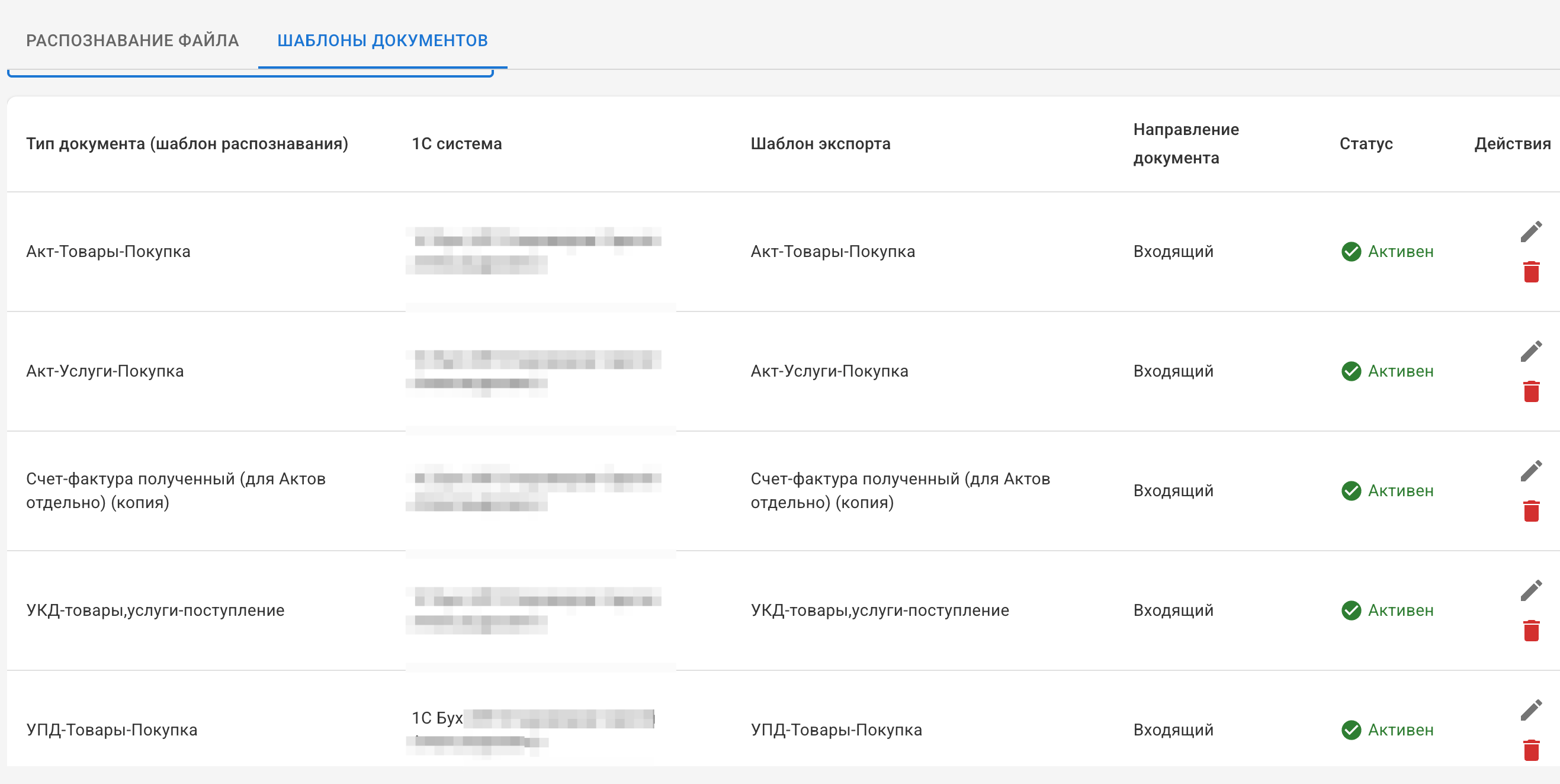 01
01
Real anonymized screen: the document type is linked to 1C and an export template.
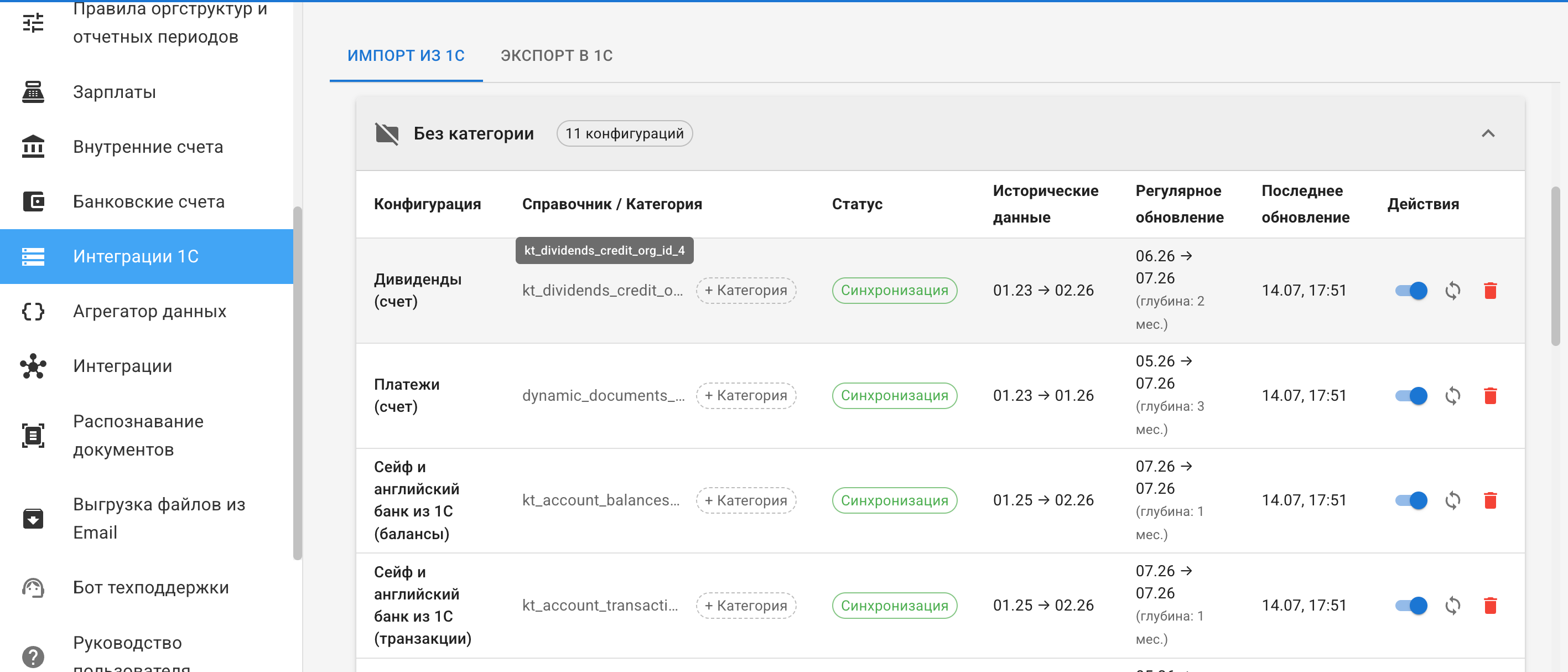 02
02
Real anonymized screen for import, synchronization, and update schedules.
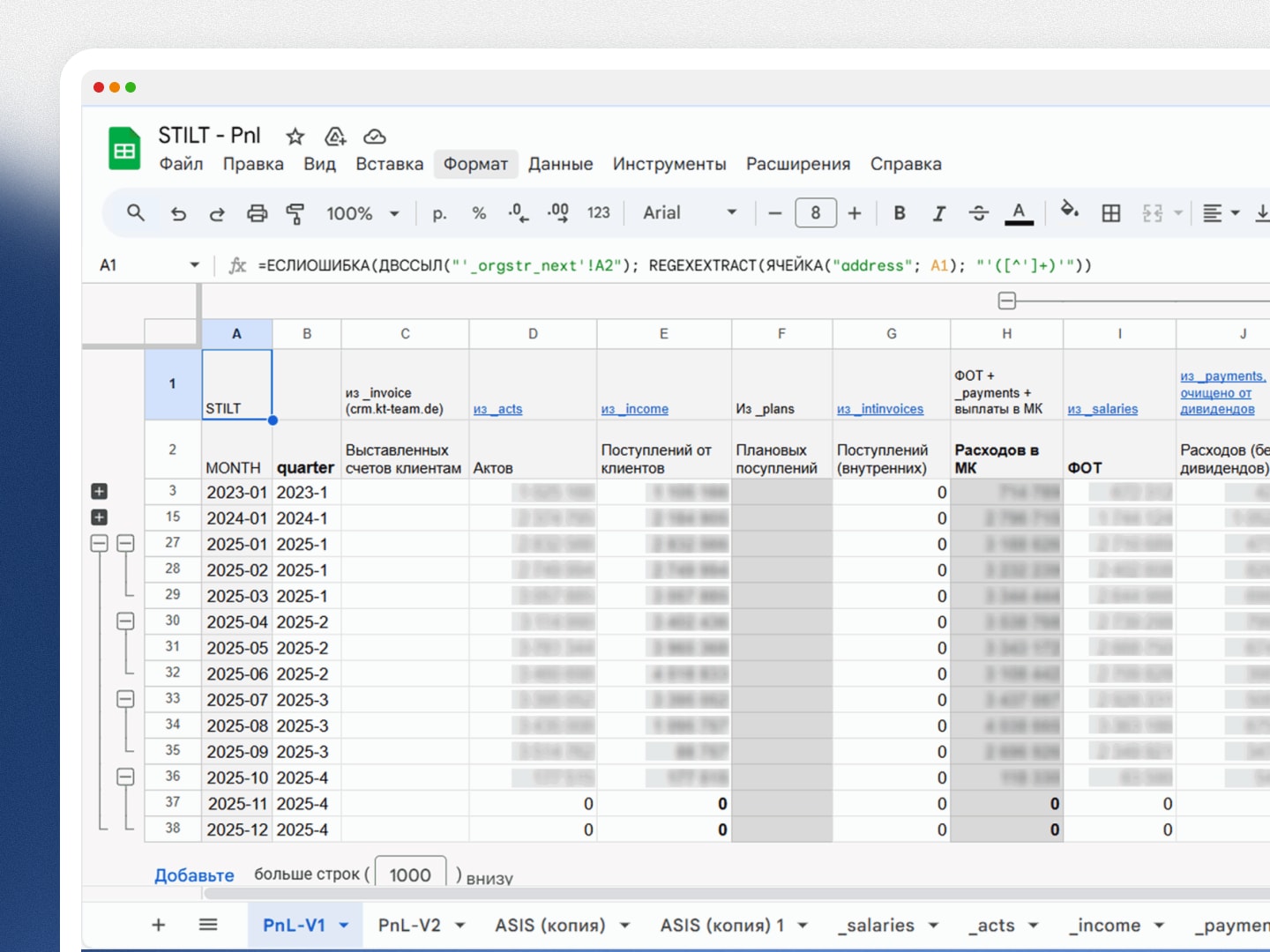 03
03
Real anonymized screen of the management report in Osnova.
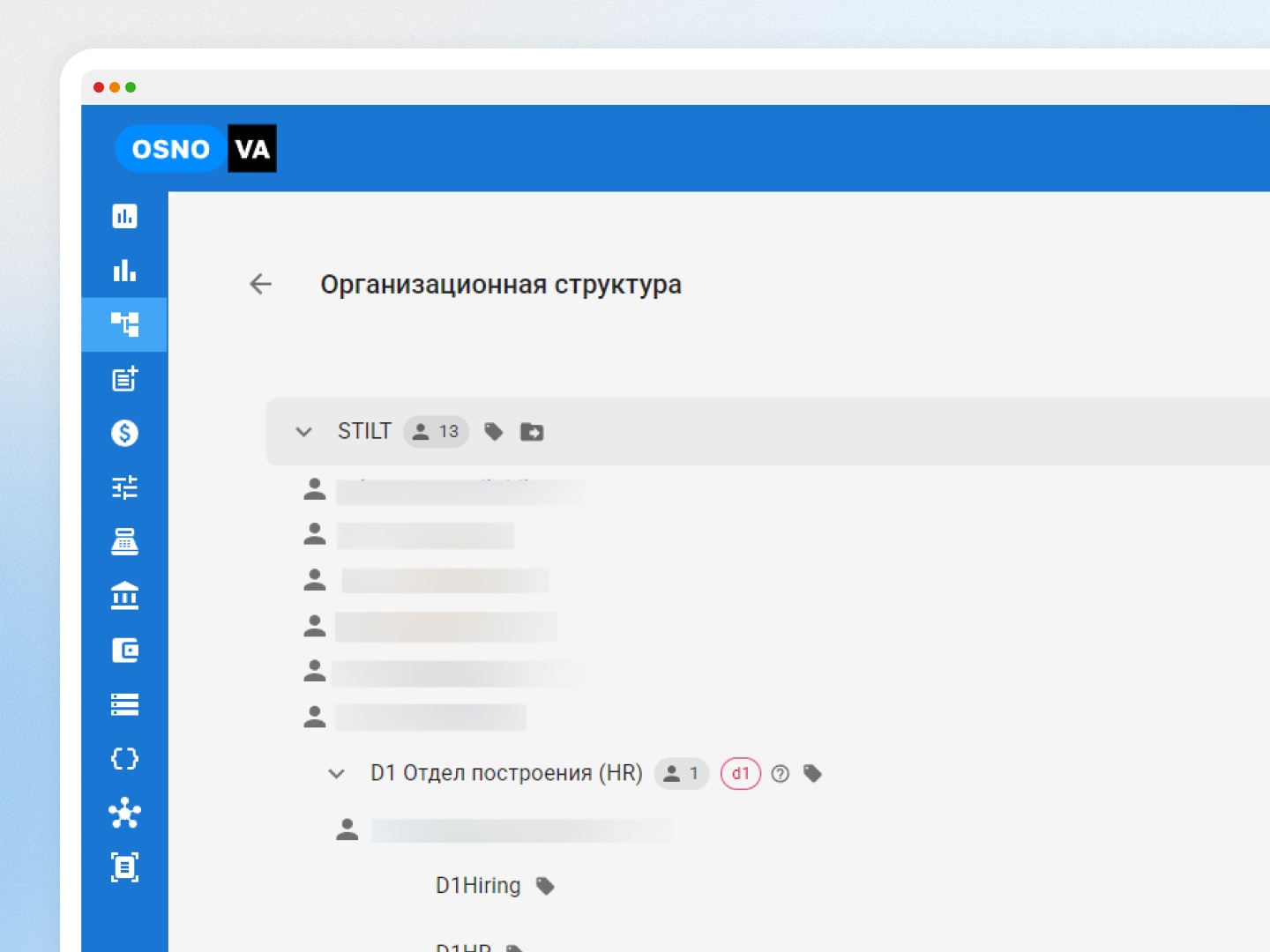 04
04
Real anonymized screen for configuring the financial structure.
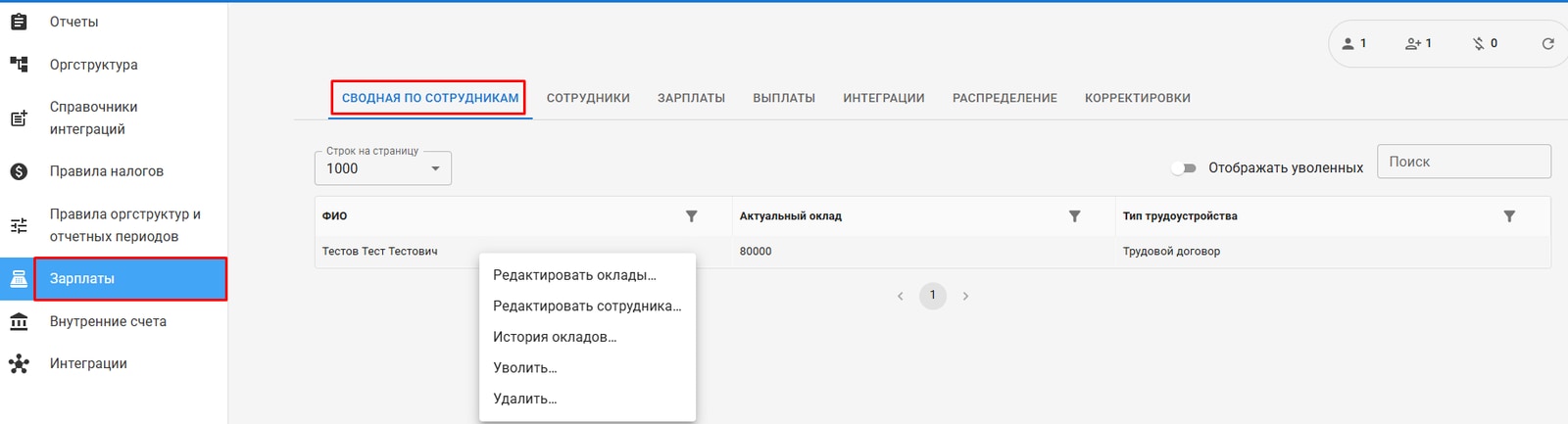 05
05
Real anonymized working screen of the finance stack.
Source documents
A standard document is processed in 1C according to the rules. A nonstandard document remains visible in Osnova, and the risk is sent to the chief accountant in Telegram.
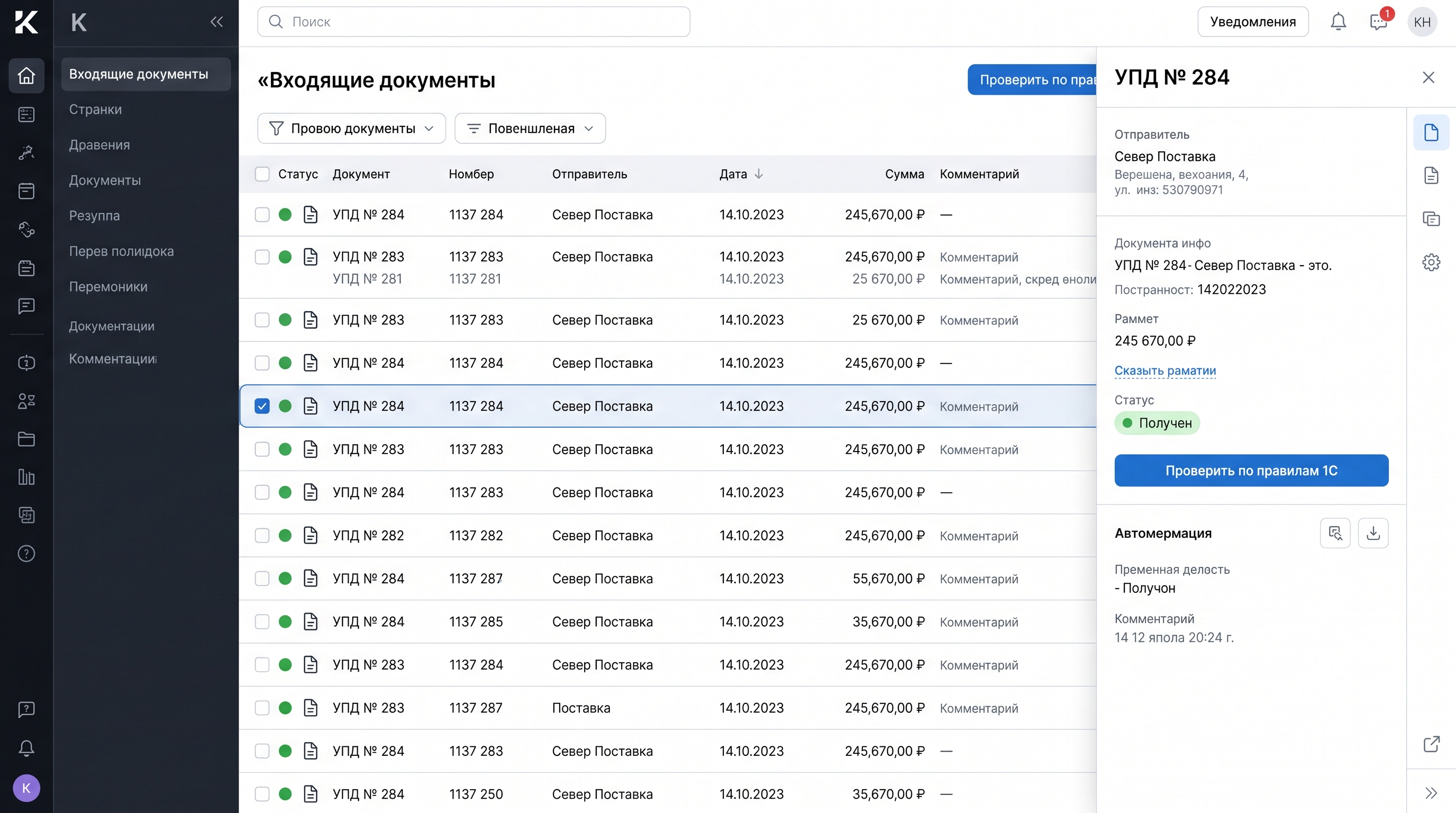 01
01
An incoming UTD triggers a 1C rule check without manual re-entry.
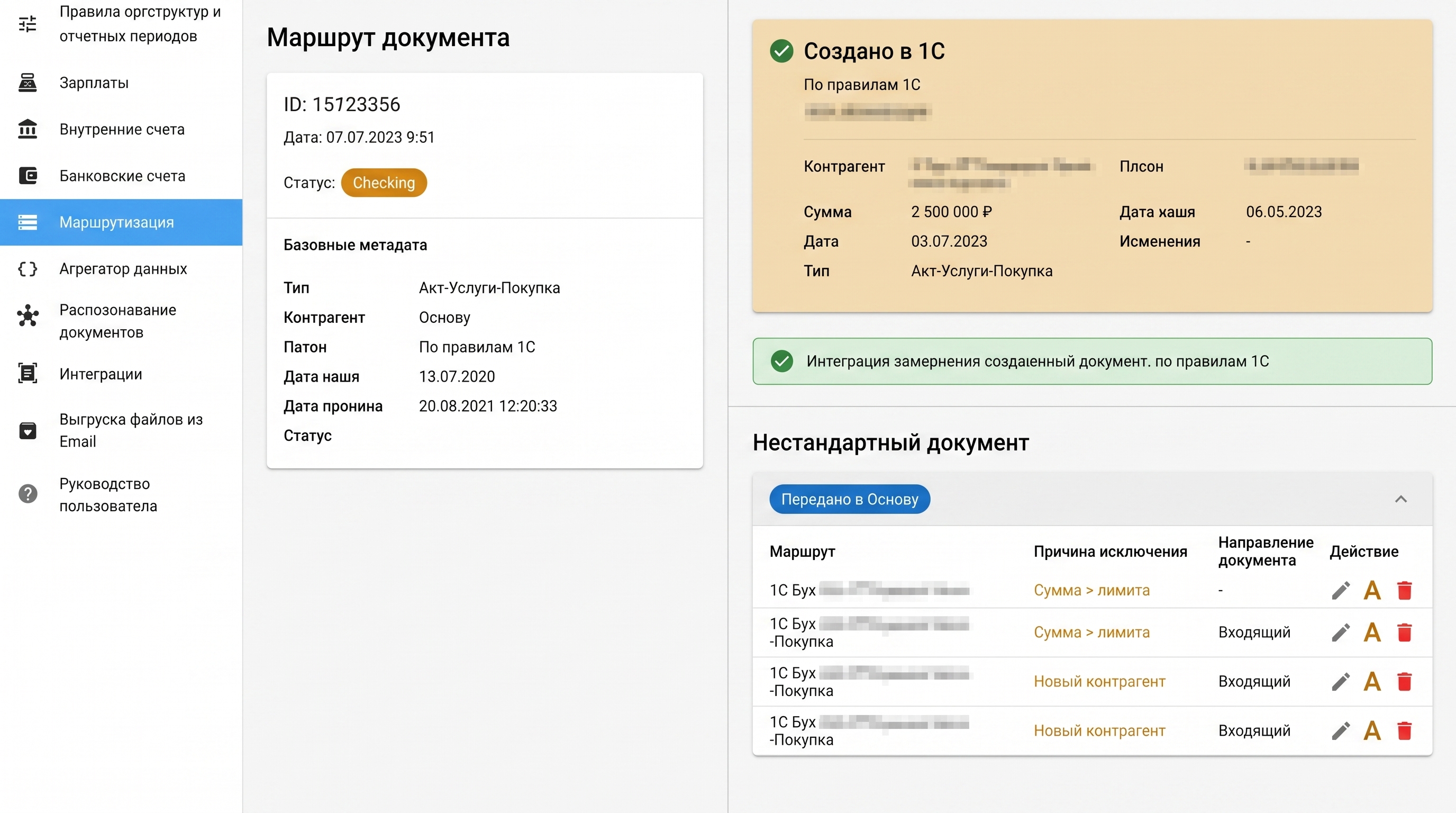 02
02
A standard document is created in 1C, and a nonstandard one is passed to Osnova.
03
Real anonymized screen: the document type is linked to 1C and an export template.
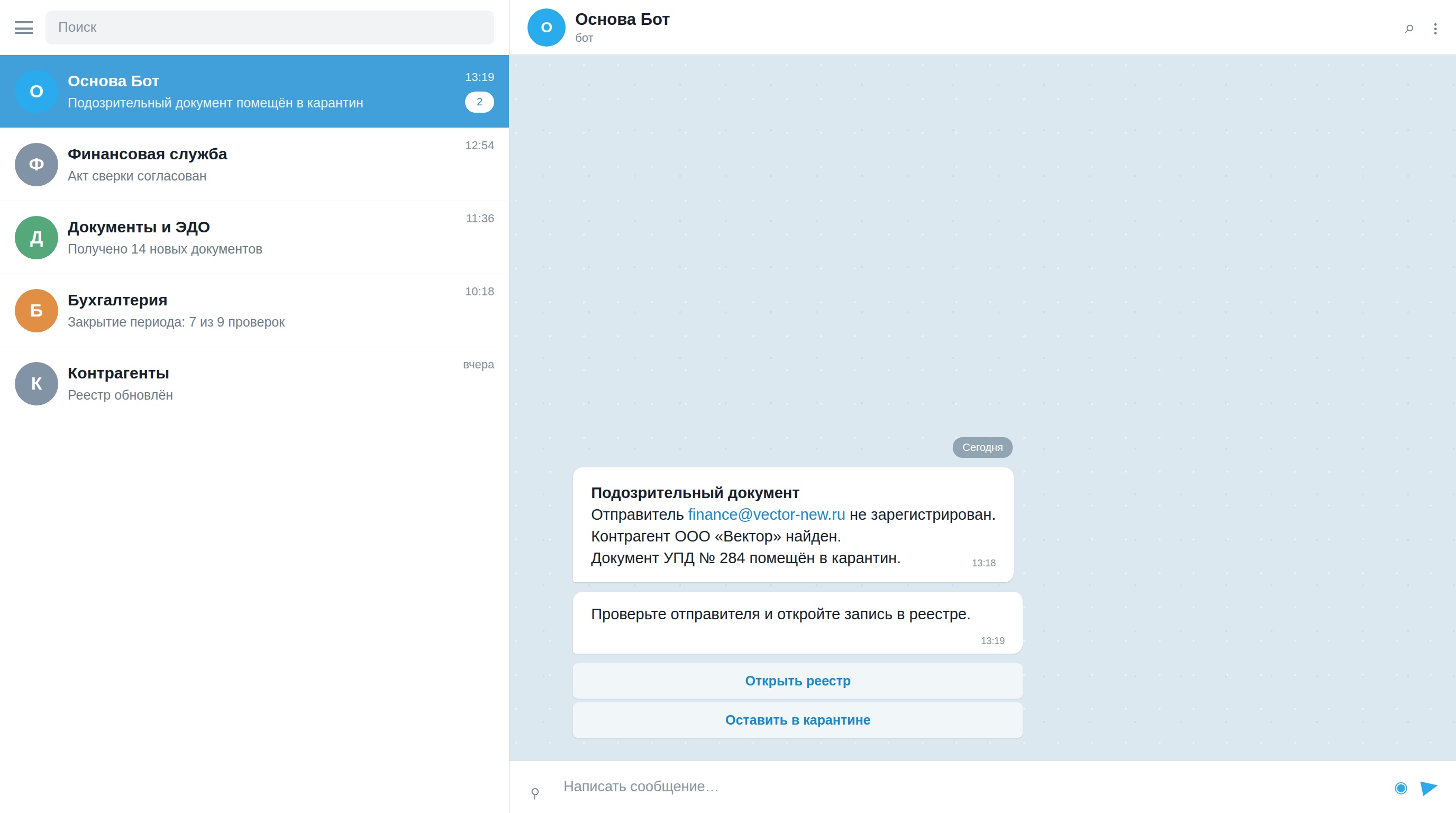 04
04
The bot warns about an unregistered sender and lets the user open the register or leave the document in quarantine.
The model, tools, and interface remain replaceable components
Sources
Agent
Control
Recording
Reconciliation statements
The agents collect data from accounting and EDI systems, show discrepancies to the accountant, and record the confirmed result.
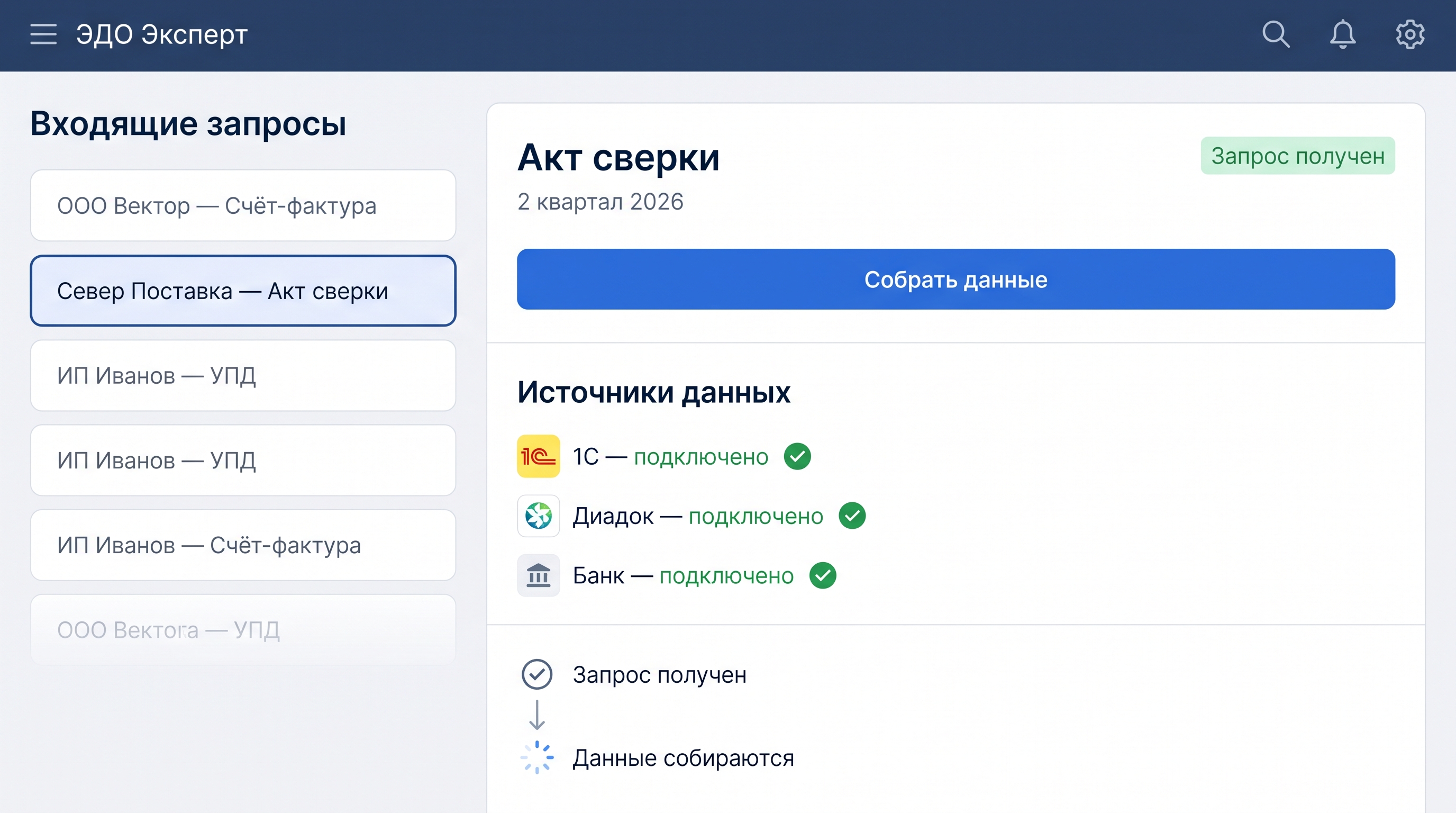 01
01
A request for a reporting period becomes a data collection task.
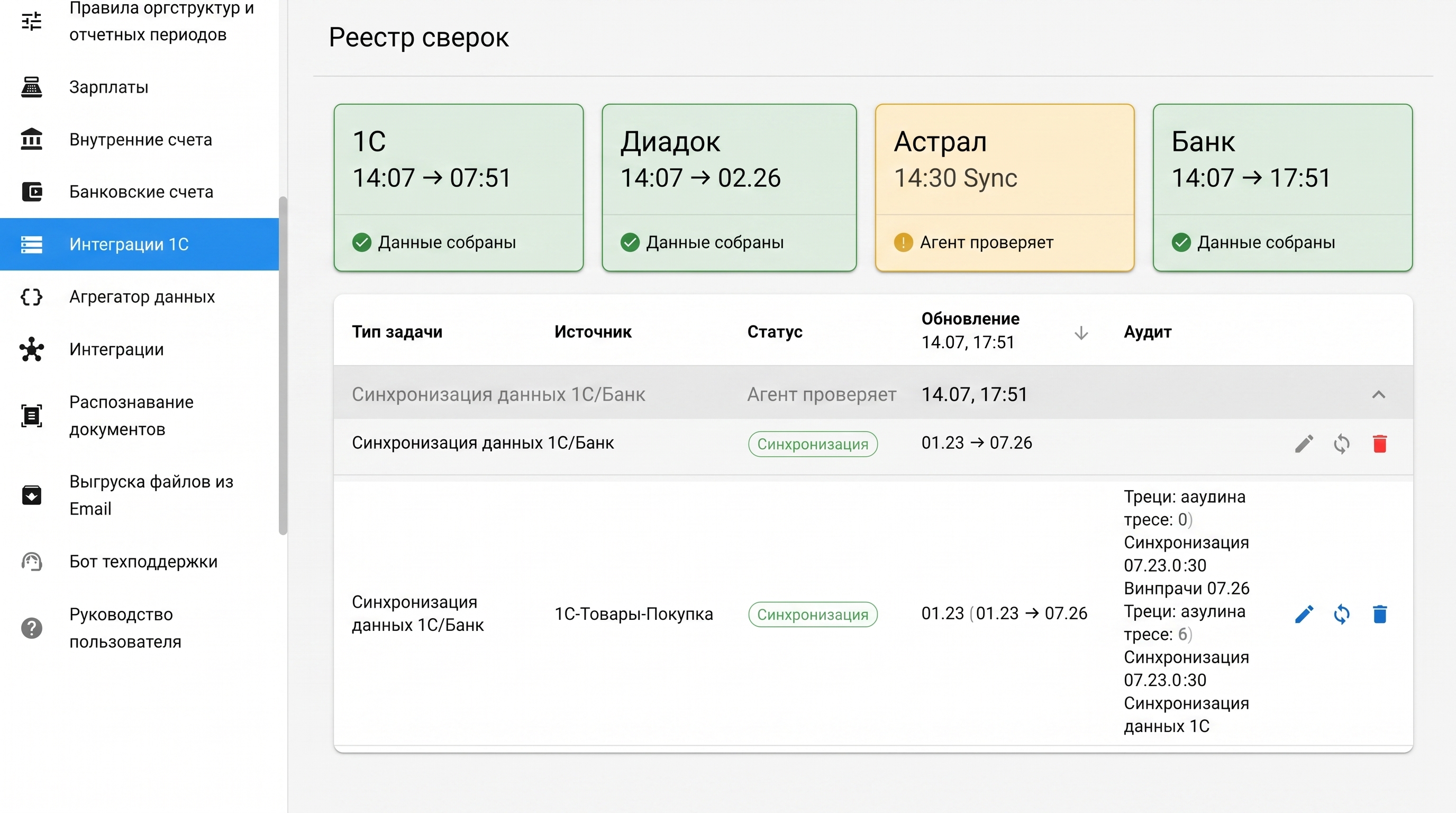 02
02
1C, Diadoc, Astral, and the bank are combined in one register with the status of each source.
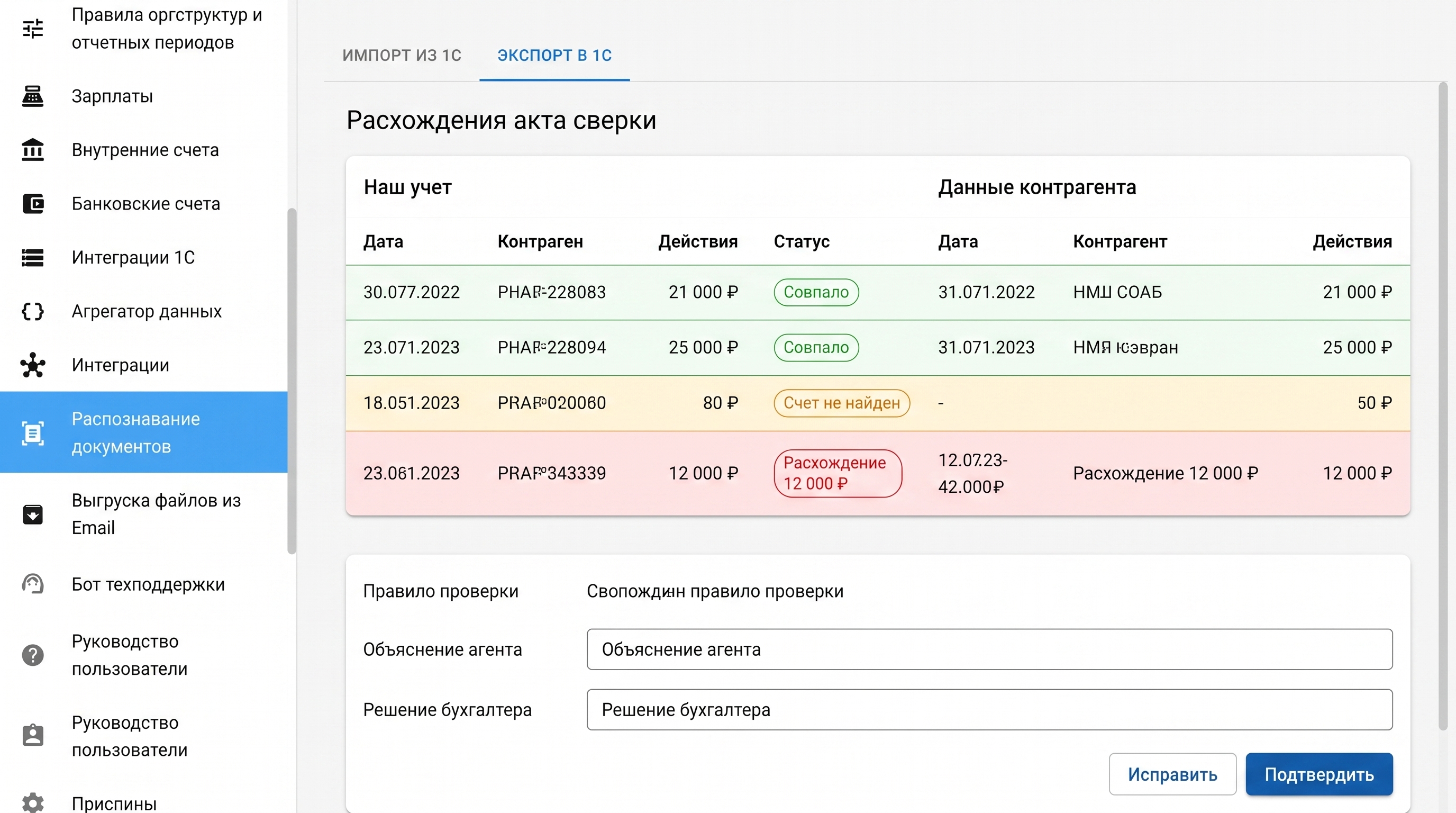 03
03
The system matches two ledgers, shows the source of the difference, and leaves confirmation for the chief accountant.
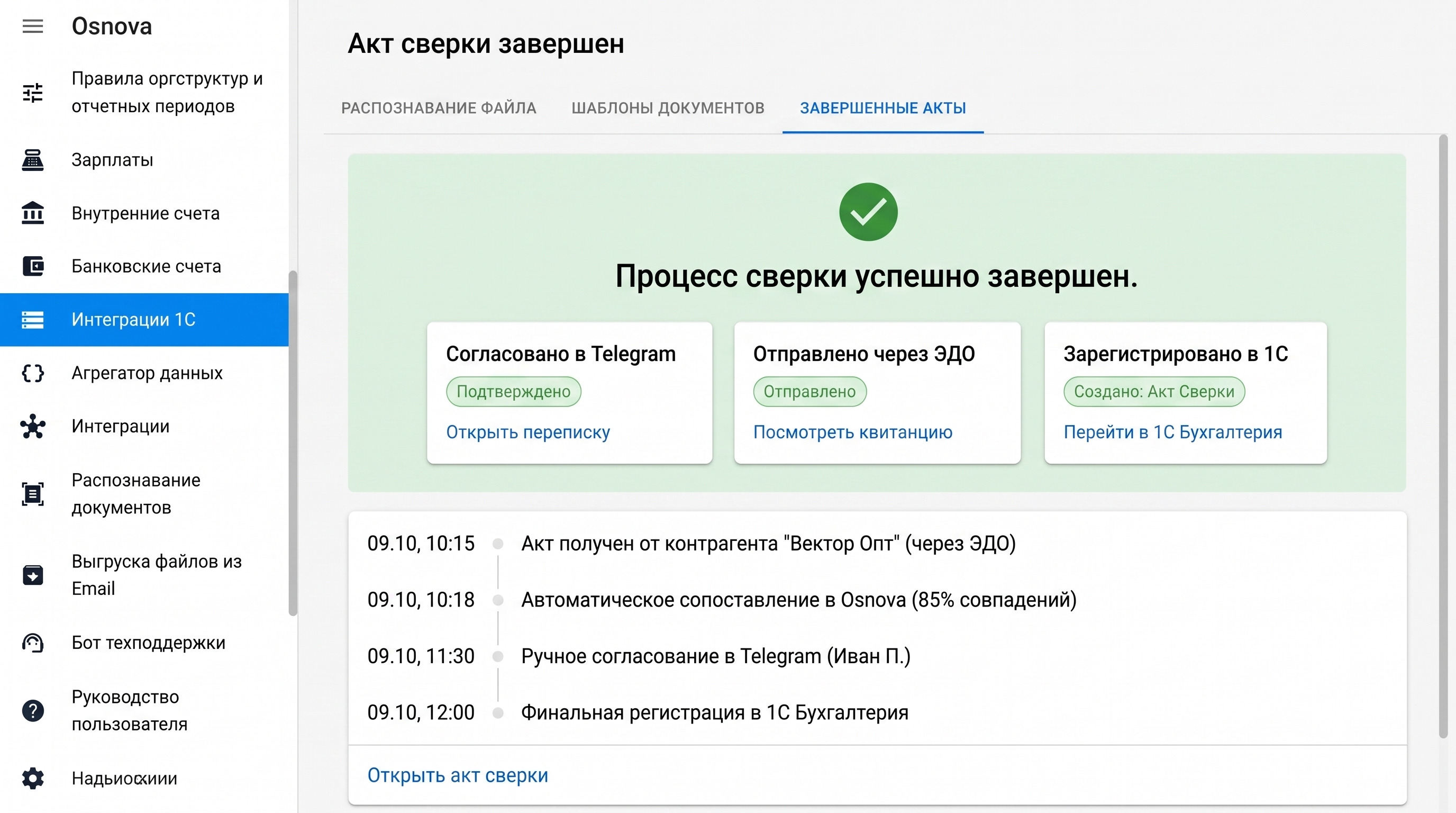 04
04
A single screen records approval in Telegram, sending through EDI, and registration in 1C.
Instructions, examples, and exceptions are versioned. The power user refines the working behavior, and developers are responsible for architecture and reliability.
Each agent tool has separate read and write permissions; critical actions require role approval.
Changes are tested on standard and exception scenarios before release to the production environment.
The log keeps the source, applied rule, suggested action, user decision, and posting result.
We review document types, intake channels, and current policies; then choose the first process with a clear owner and outcome.
The agent accesses 1C through API or MCP and primary document channels: Telegram, EDI, and email. Permissions are limited to the minimum required.
We run standard and exception scenarios and check posting, logs, and accountant decisions on a real document flow.
We add the next document types and define what the agent handles on its own and what goes to a person. For large companies, there is an on-premise option: data, policies, and agents stay within the customer's environment.
Implementation: from $1,800 excluding VAT.
We calculate the cost individually, taking into account processes, integrations, and deployment requirements.
We agree on the scope, timeline, and final cost before implementation; payment is due after acceptance.
We connect the model via the API of a CIS cloud service compliant with GDPR—GigaChat or Alice AI; you pay the provider directly for inference. Get a personalized estimate implementation and model operating costs. For enterprise clients: We discuss the implementation cost individually and deploy the entire solution on the client's servers.
After implementation, the client pays us only for updates; update terms are agreed separately.
Cases
FAQ
No. The agent handles routine operations according to policy and passes disputed cases to the accountant. Responsibility for reporting under federal standards remains with the specialist and the organization; AI changes the workflow, not the need for an accountant.
Via API or MCP, it reads permitted data and creates documents or drafts according to granted permissions. No 1C configuration changes are required, and every action is logged.
Read and write permissions are granted for each tool separately; critical actions require role confirmation. For large enterprise clients, the entire solution is deployed on their servers. Implementation is discussed individually; ongoing payment is only for updates, with no per-operation billing.
We start with a pilot on one document type: document flow audit, connection to 1C and source-document channels, and testing of standard and exception scenarios. Timing depends on document flow and procedures; we define the scope after the audit.
The agent stops the action, shows the reason - for example, a contract limit being exceeded - and sends the document to the accountant as an exception. The human decision is logged together with the source and rule.
A chatbot replies with text, and a person manually enters the result into the accounting system. The agent performs the operation itself: it checks the document against the rules, posts the entry in 1C, and leaves an audit trail of who confirmed what.
Next step
We'll show you AI accountant demo and we will review your document flow: which operations the agent will take on first, where exceptions are needed, and which launch format fits best.
Source verification date: 16.07.2026. Vedomosti (press release from the Financial University under the Government of the CIS), "Artificial Intelligence in Accounting: Practical Application and Economic Impact"
, 13.02.2026 - vedomosti.ru/press_releases/2026/02/13/iskusstvennii-intellekt-v-buhgalterii-prakticheskoe-primenenie-i-ekonomicheskii-effekt
ITCOM Training Center, "Transition to UPD 5.03 from 2026"
- uc-itcom.ru/article/perekhod-upd-503-2026
Kontur.Diadoc, “Overview of EDI changes in 2026”
- diadoc.ru/articles/82207-obzor_izmeneniy_v_edo
My Business, “Electronic document exchange with the Federal Tax Service: what changed in 2026”
- moedelo.org/club/article-knowledge/elektronnyj-dokumentooborot-s-fns-cto-izmenilos-v-2026-godu Figures: 59 seconds, -70% routine work, and $50M+ turnover per accountant - internal OSNO-VA product data.