Updating is risky
The standard configuration has accumulated custom code, and every release breaks customizations and integrations.

Solutions
We implement, customize, and integrate 1C, move complex logic into services, and connect AI agents for accounting and data exchange.
Our clients












Results
Symptoms
1C often becomes the core for accounting, sales, warehouse, production, and finance. The longer direct exchanges and hidden customizations pile up around it, the more expensive each new change becomes.
The standard configuration has accumulated custom code, and every release breaks customizations and integrations.
Only one specialist knows the system logic: their vacation stops changes, their departure stops the project.
Stock levels on the site are wrong, orders are duplicated, and statuses do not reach CRM - the customer notices the error first.
The team spends days reconciling 1C with the website, marketplaces, and warehouse instead of building.
A new system connects point to point and makes the environment even more fragile.
The business does not understand why a simple customization costs so much and takes months.
Architecture
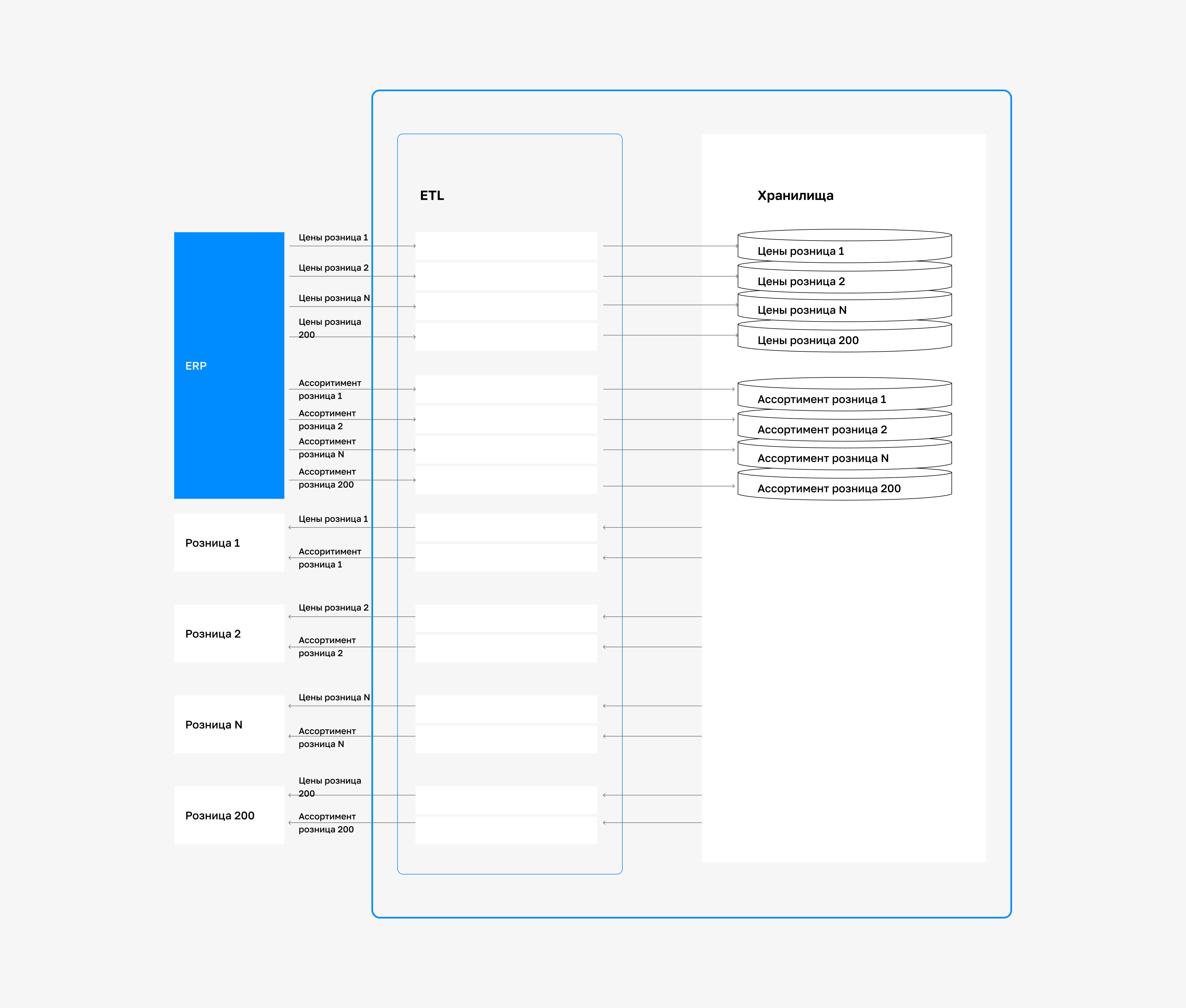
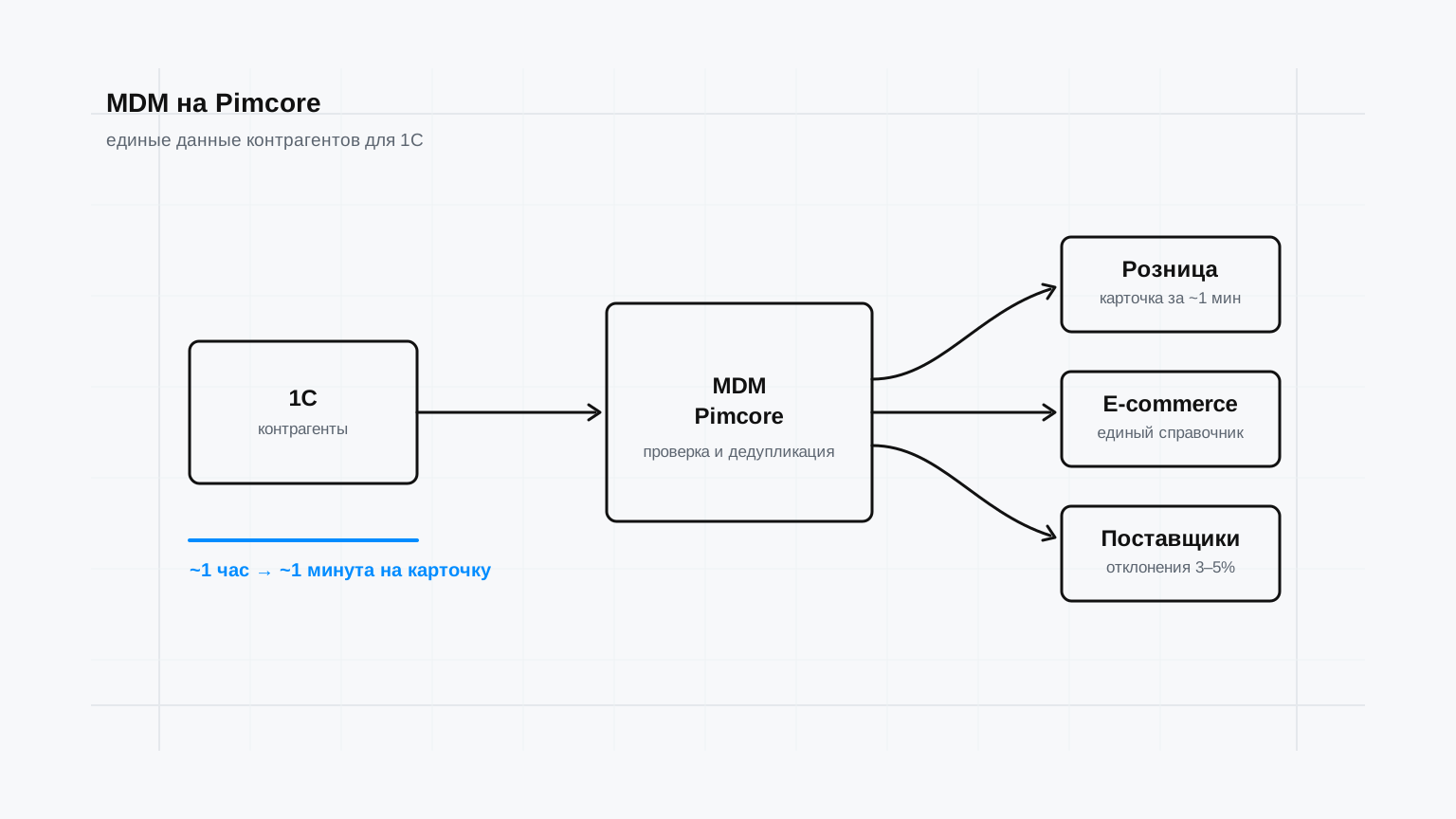
Instead of direct point-to-point exchanges, the website, CRM, marketplaces, EDI and BI connect to 1C through a managed API/ESB layer with monitoring — and AI agents access 1C through the same layer.
Solutions Catalog
Initial 1C tasks: implementation, support, customization, data migration, and stabilization of the current environment.
We evolve core configurations without losing updateability and without depending on the unique knowledge of a single specialist.
We connect 1C with external channels and enterprise systems through API, ESB, queues, and controlled exchange procedures.
1C + AI
For 1C and other accounting systems, we build an AI layer, the next step after organizing exchanges. Agents take over the routine work where the most errors and bottlenecks occur.
They handle standard configuration and exchange setup according to procedure, faster and without waiting in line for a specialist.
Documents, reference data, and balances are migrated from emails, spreadsheets, and scans - less manual work and fewer errors.
An AI agent answers employees' common 1C questions and escalates complex ones to the support team.
Approach
We tie every change to a business metric: order processing speed, inventory accuracy, and the cost of connecting a new channel.
We move heavy calculations, data marts, customer portals, and integrations into separate services. For the business, that means changes stay local, support is cheaper, and 1C remains updatable.
Documentation, procedures, and training make the system easy to hand over between teams and contractors, so your team owns it, not the vendor.
Logging, alerts, and clear flow statuses: errors are visible before the client notices them.
Process
You can go through the full journey with us or order diagnostics separately and hand the rest to your own team.
Cases
FAQ
Yes. We start with diagnostics: integration map, custom-code review, risks, and a plan that makes it clear what to fix first.
No. We keep what works and move out of 1C only what blocks updates and scaling.
We provide an estimate after diagnosing the environment: we calculate the impact of changes, not just hours, and define a manageable scope where it helps control budget and timelines.
No. We strengthen it with documentation, procedures, and training so you can manage the system yourself.
1C suite
The 1C loop means fewer manual reconciliations, transparent exchanges and changes without a cascade of rework. Business logic lives next to the core rather than dissolving inside a monolith.
First the process and data owners, then configuration, migration, training and production operation.
Exchanges run over API/ESB/queues with monitoring, retry delivery and an error log.
Customization is moved into services beside 1C, so platform updates don't break the business.
FAQ
By the symptoms: every release breaks customizations and exchanges because the standard configuration has accumulated too much custom code; only one specialist understands the system logic, and when they are on vacation, changes stop; exchanges fail silently - stock on the website is wrong, orders are duplicated, statuses do not reach the CRM, and the customer notices the error first; the team spends days reconciling 1C with the website, marketplaces, and warehouse; every new system is connected point to point.
Do not turn it into a monolith. Move heavy calculations, data marts, customer portals, and integrations into separate services. For the business, that means changes stay localized, support is cheaper, and the standard configuration remains updatable.
No. You can order a separate diagnostic of the 1C landscape: a current-state map of systems and exchanges, analysis of customizations and enhancements, points of data loss and manual work, and an assessment of the business impact of changes. The result is a landscape map and a change plan you can take forward with us or with your own team.
Through a managed API/ESB layer with monitoring, not direct point-to-point exchanges. Logging, alerts, and clear flow statuses make errors visible before the customer notices them, and connecting the next channel stops being a separate project.
They take over the routine work where errors and bottlenecks usually appear: standard configuration setup and scheduled exchanges, migration of documents, item masters, and stock balances from emails, spreadsheets, and scans, plus answers to common employee questions with escalation of complex cases to the support team. This is the next step after organizing integrations, not a replacement for it.
Yes, this is a project requirement. During handover to operations, the team receives documentation, procedures, and training, and support follows agreed rules. The solution must be transferable: your team owns it, not the contractor.