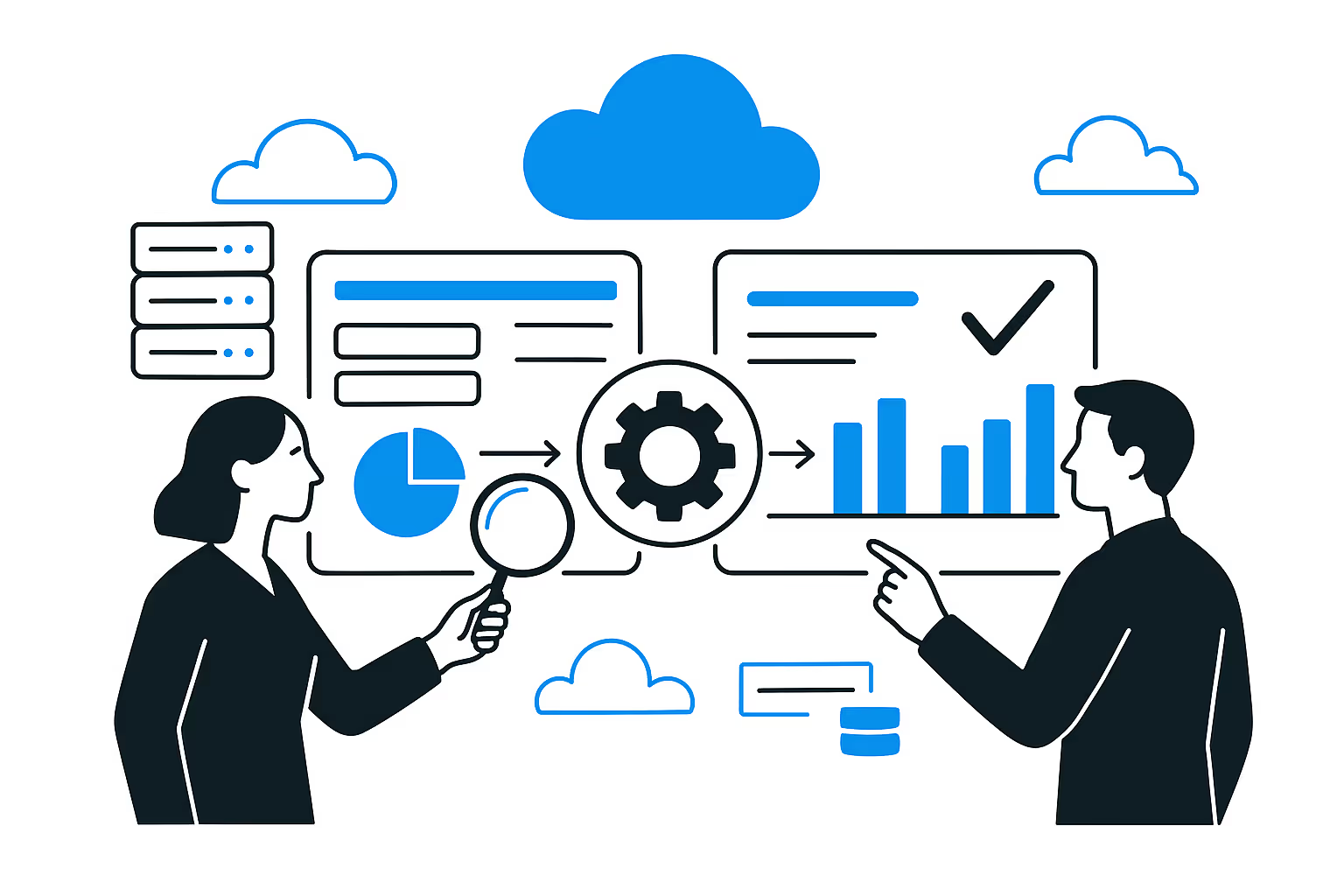
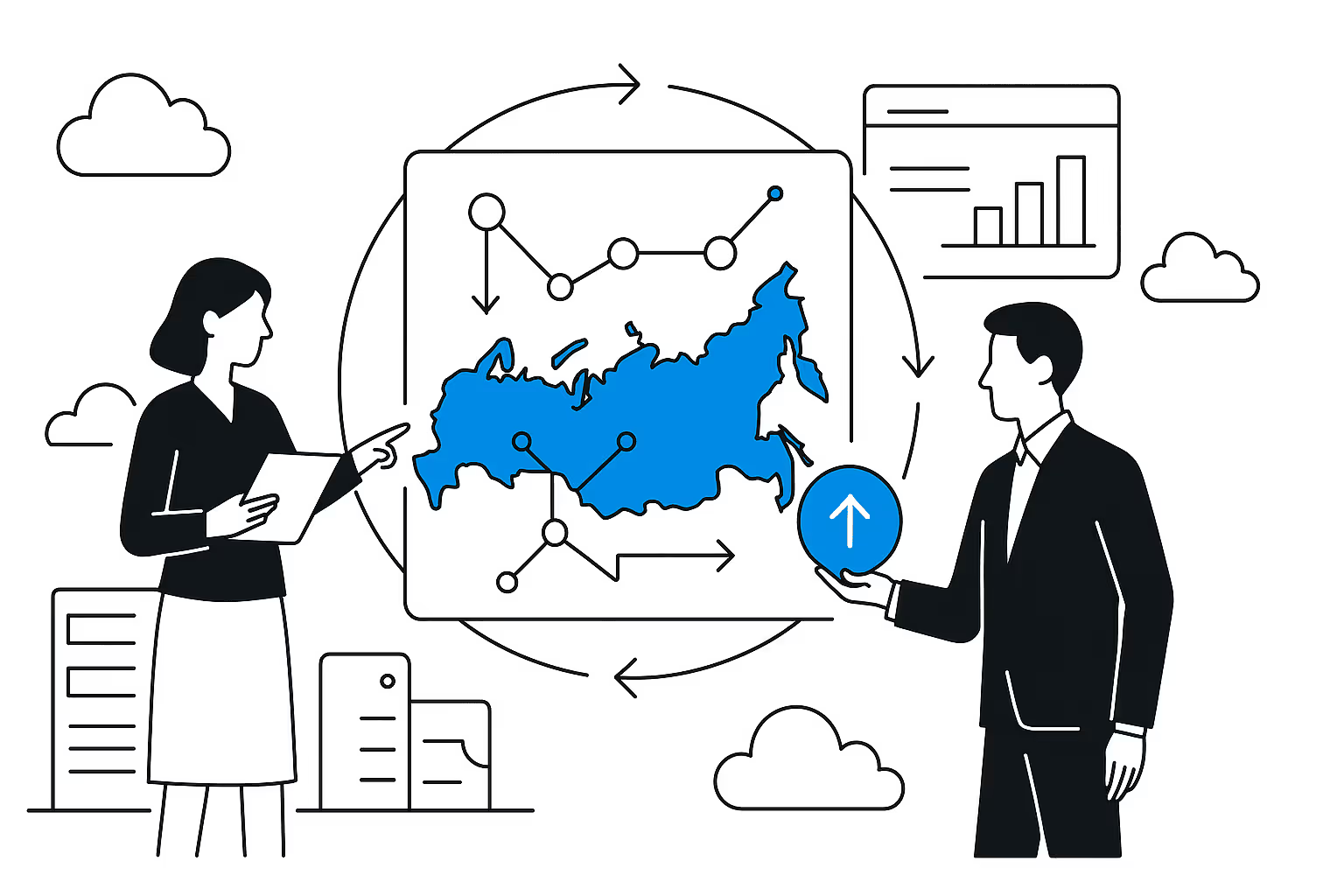
A single order landscape
Manager, warehouse, logistics and finance work on one order and see the same status without calls, Excel or manual re-entry

eCommerce
Odoo is a modular platform for sales, warehousing, procurement, manufacturing, and finance. The choice of Community or Enterprise, hosting, and integrations depends on the company's requirements.
Odoo as a modular ERP/CRM/OMS platform for sales, warehouse, finance, B2B orders and management analytics
Our clients













This section covers the platform's capabilities and use cases. If you are choosing a contractor, see Odoo implementation for mid-sized and large businesses: editions and hosting, 1C integrations, implementation stages, costs, and support handover.
Industry solutions
Capabilities
Manager, warehouse, logistics and finance work on one order and see the same status without calls, Excel or manual re-entry
You can start with CRM, OMS, warehouse or finance and expand the landscape as the business is ready, without deploying the whole ERP at once
Odoo connects to WMS, 1C, BI, marketplaces and customer portals through a stable integration layer, not point-to-point spaghetti
We move business logic into separate modules and services so Odoo updates don't turn into costly rewrites of customizations
Odoo data can be exported to a DWH/BI landscape to build P&L, margin and operational reports on a single data model
We design scenarios together with managers and warehouse: the system should cut manual workload, not add yet another interface
Approach
We do not fork or patch the Odoo core. Odoo remains on the standard updatable version, while customizations are moved to separate modules or services. Before an update, we check module and integration compatibility in a test environment.
Where a mature international solution exists, we use it instead of inventing our own protocol or platform. Before writing code, we study how the problem is already solved in the industry.
The solution is loosely coupled and documented: it can be handed over between teams and contractors without rewriting. You are not tied to us.
AI compatibility
Odoo is expanding built-in AI scenarios: value generation and suggestions in forms, AI agents, and natural-language queries against company data
A corporate assistant can answer managers' questions on orders, statuses, discount rules and policies when data access is limited by roles
For agent scenarios, expose Odoo through a managed API/MCP layer: permissions, auditing and limits stay outside the LLM
AI is useful after master data, statuses, and processes are brought under control; otherwise the agent speeds up inconsistencies, not work
Context 2026
The official catalog positions Odoo as a suite of business apps for CRM, eCommerce, accounting, warehouse, POS, projects and other processes
Official Odoo docs state that External API access depends on the Custom plan, so the integration landscape can't be left until the end of the project
Odoo Inventory is described as an inventory application and warehouse management system: lead times, replenishment, advanced routes and other warehouse features
Odoo 19 introduced AI agents, AI database queries, and AI fields, but enterprise deployment requires permissions, audit logs, and access restrictions
Honestly
News
The Odoo Enterprise Subscription Agreement (v12 terms) establishes the right to increase the renewal price by up to 7% for each year of the previous term if the current price is below the latest list price. Indexation now applies at every renewal rather than occasionally. In addition, from April 2026, a 25% surcharge applies to databases running versions older than the three latest major releases, for contracts renewed after 2025-07-04.
Odoo 19 was presented at Odoo Experience 2025 in Brussels: AI Server Actions enable no-code automation of fields and content from a text prompt, with ChatGPT/Gemini account connections for generation. Accounting features OCR for bank statements with manual correction, WhatsApp delivery notifications and ISO20022; HR introduces the new Equity module and Pay Runs instead of batch payroll processing.
Blog
Projects