Costs by agent
We track model requests and task execution costs by agent and department. We configure budgets, limits, and alerts; infrastructure and license costs are shown separately.

AI
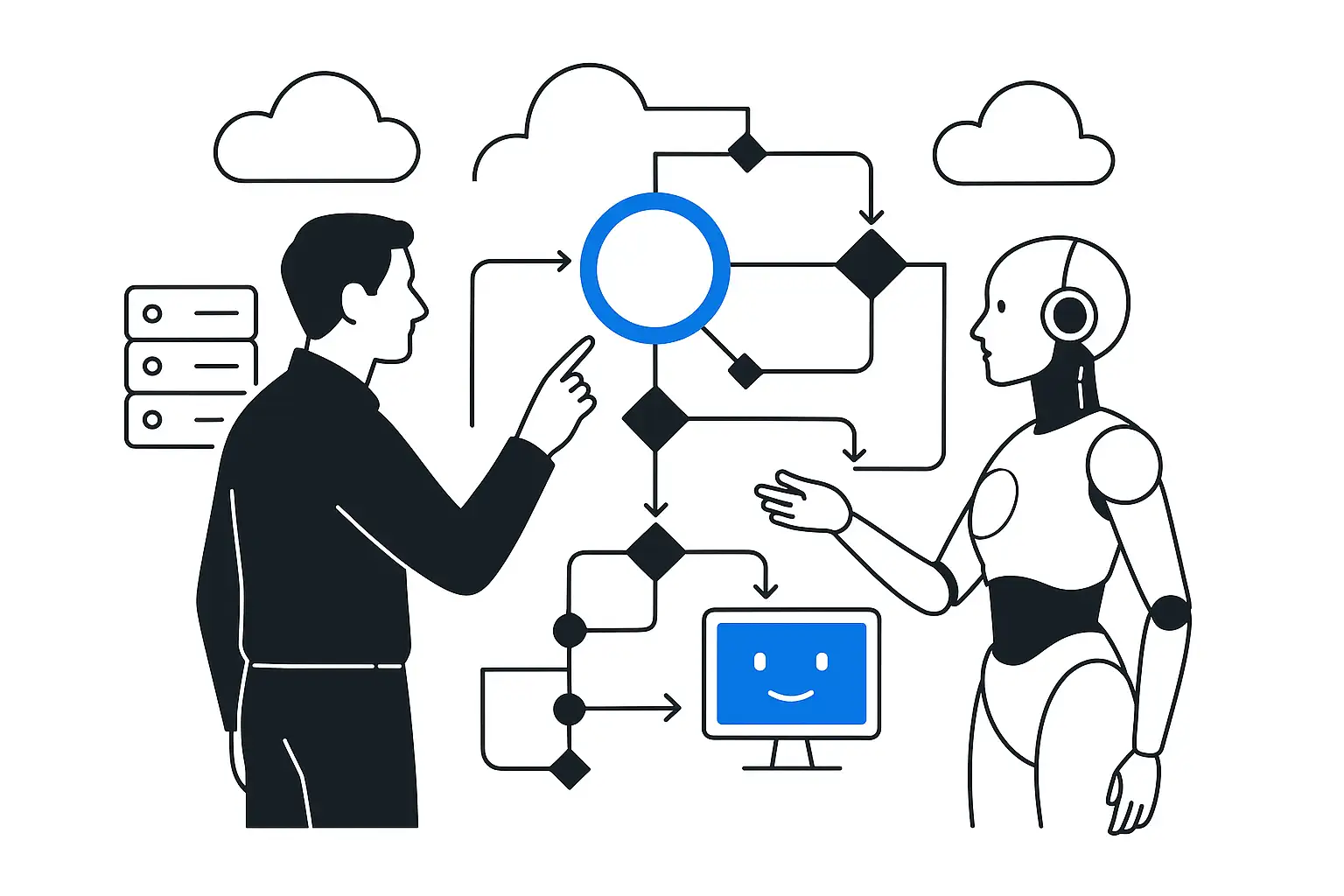
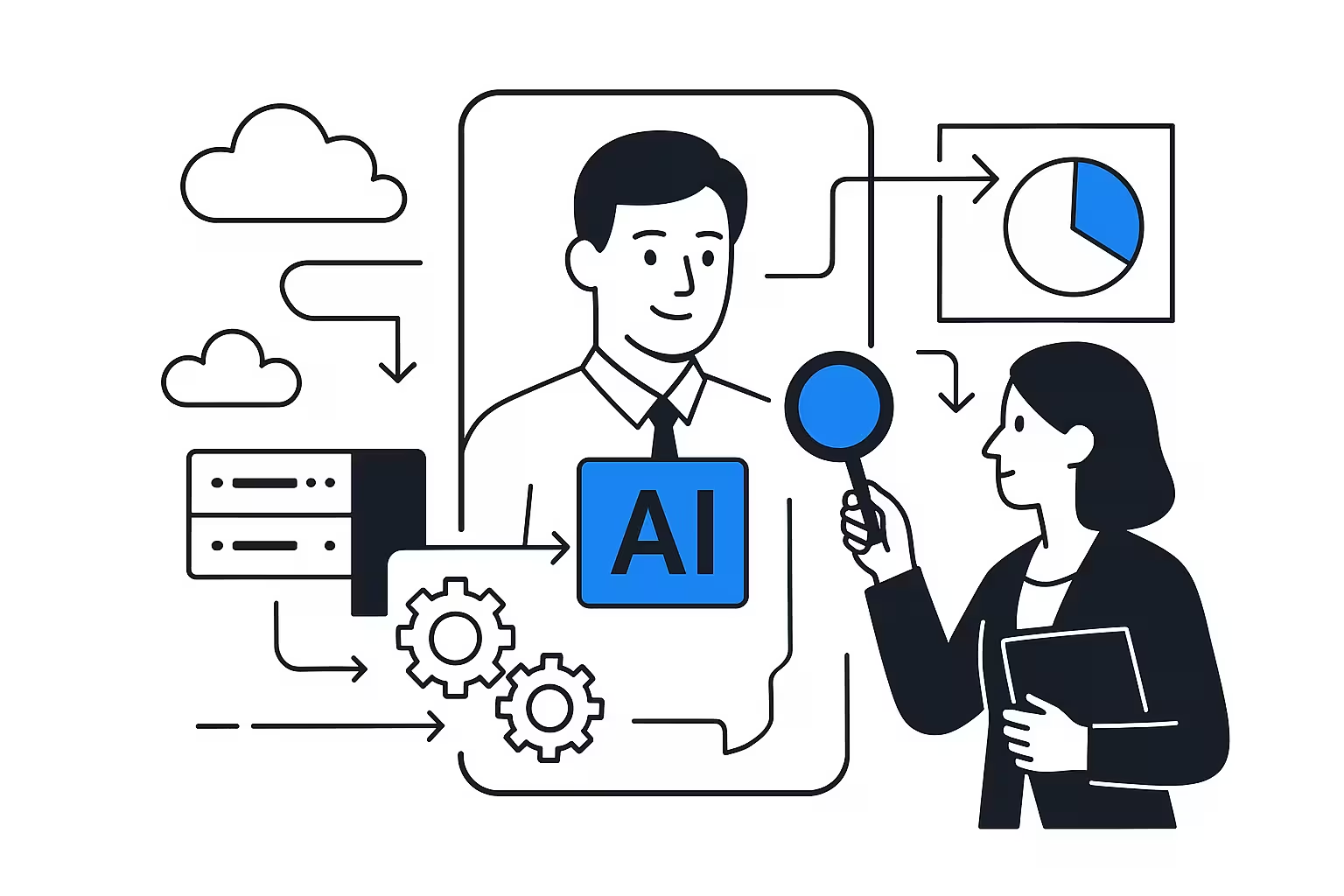
We build a unified environment for the company's AI agents: costs, access, changes, and execution locations are managed under common rules. We connect enterprise systems, launch specific processes, and measure impact including testing and support.
Our clients












Unified rules for agents across departments: budgets, access, change releases, and an action log.
Impact of a specific process: we compare effort before and after, including review, corrections, and support.
Handover to your team: approved code, configurations, tests, and instructions, with clearly defined rights and licenses.
Enterprise AI management
We track model requests and task execution costs by agent and department. We configure budgets, limits, and alerts; infrastructure and license costs are shown separately.
We separate permissions for creation, configuration, and release. Changes undergo testing and approval; versions are saved so the working configuration can be restored.
We determine hosting to meet IT and information security requirements: company infrastructure, a dedicated environment, or approved cloud services. We define which data and models are available to each agent.
We connect 1C, ERP, CRM, and other systems through controlled interfaces. We separate read and write access, assign actions requiring human approval, and maintain an operation log.
We test agents against approved scenarios before release. We track errors and queues, assign owners, and provide for agent shutdown and incident review.
We transfer the approved application code, configurations, tests, and instructions. We verify that another team can deploy and modify the solution; rights and licenses for platform components are documented separately.
How it works
Shared rules
Measurable result
Growth
Cases
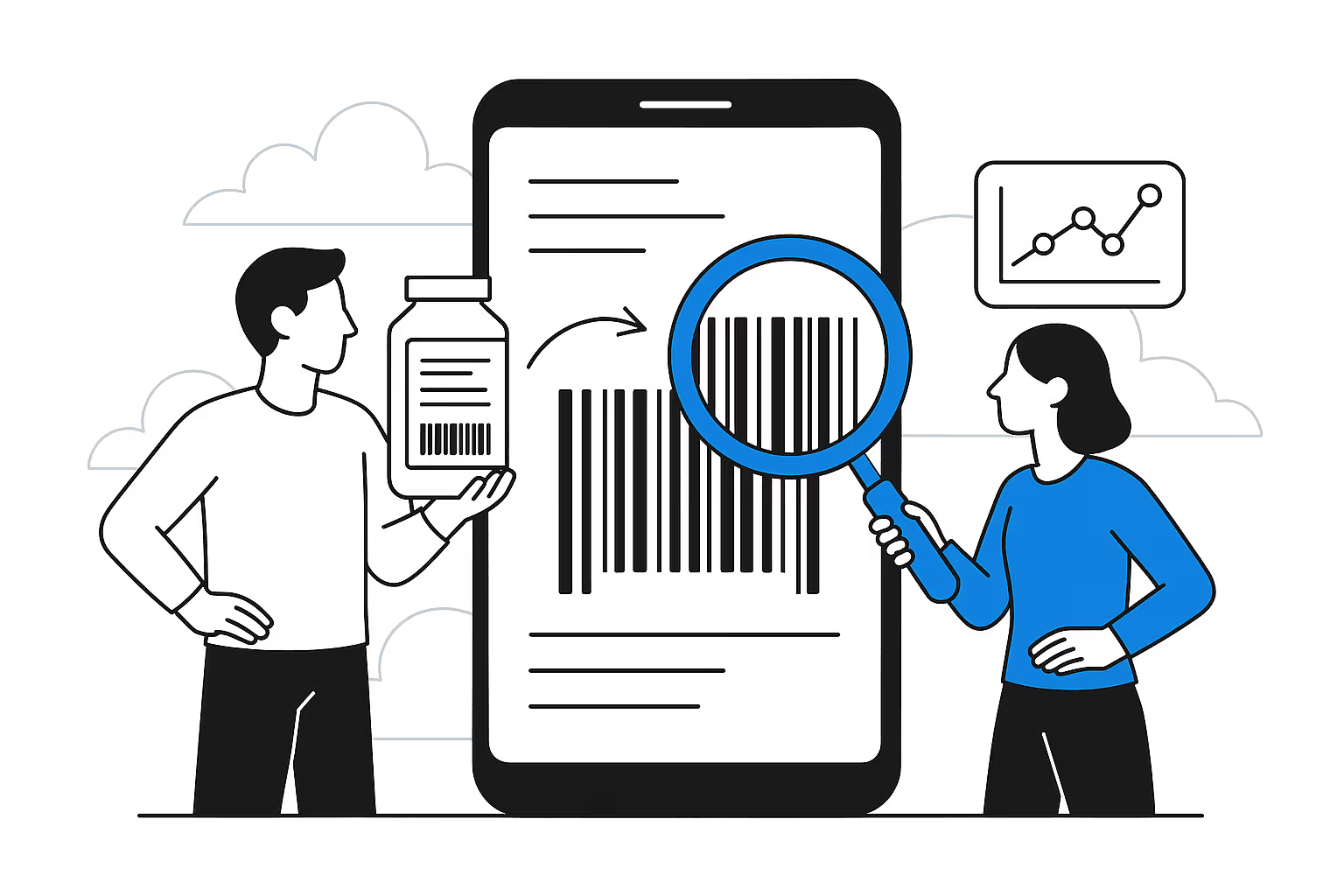
Real deployments at mid-market & enterprise: OSNO-VA AI accountant, LLM classification for Top-3 developer, FMCG composition recognition — with verified results.
Team time
Reports and minutes are generated automatically. Standard forms are one click away in a convenient interface.
To get analytics and draw conclusions, you do not need an intermediary analyst.
Objective feedback based on active rules: errors are easier to fix when clear rules are in front of you.
AI Implementation by Industry
The first process to tackle depends on the industry: in some cases it is document review, in others quality control or item selection. Below is where to look if the industry is already clear.
AI Agent in Retail: Listings, Orders, Support
Catalog and Orders via MCP
RAG for Regulations and Shipping Documents
Industry Logistics Layer
Assistants for Construction
AI Estimator: Quantities and Rates
If your industry is not listed, the approach is the same: we take one process with a measurable loss and make it work in production in one to two weeks.
How an iteration runs
For a limited standard process, the expected timeframe is 1–2 weeks after inputs and integrations are agreed. Platform preparation and information security approval are assessed separately. Below is an example iteration; timing depends on the scope of work.
Who: PM + process owner. Stays with the client: a measurable "done" criterion before kickoff.
Who: developer. Stays with the client: the perimeter and code in your infrastructure.
Who: developer + client's IT. Stays with the client: a portable knowledge base.
Who: developer + owner. Stays with the client: production with controls and an action log.
Who: PM. Stays with the client: the skill to iterate without a contractor.
We do not lock you into a subscription. The goal of the iteration is for you to operate independently afterward. New processes are connected to the platform's shared rules. How we train your people → workshops.
AI platform within your infrastructure
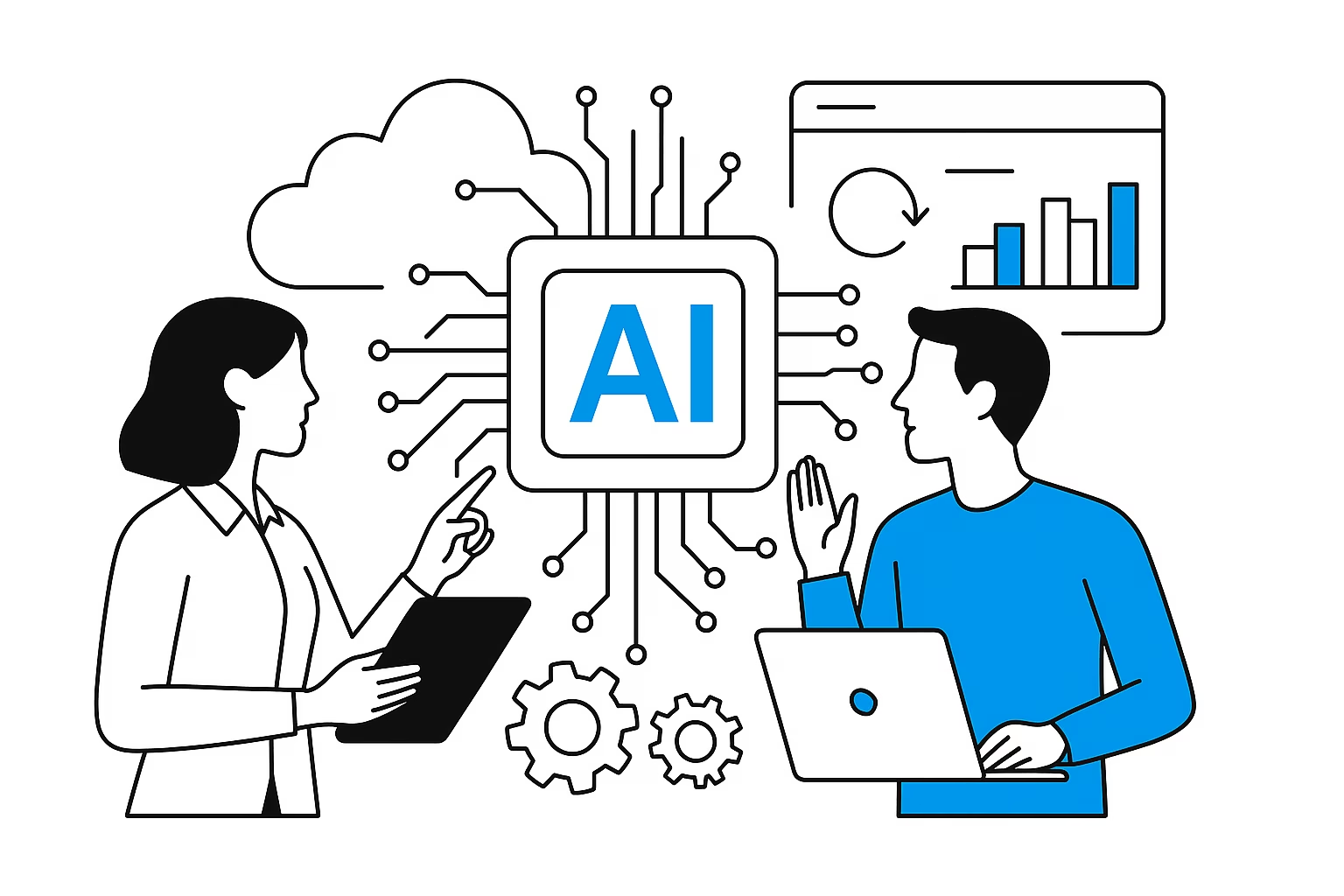
KT.Team delivers reusable expertise as versioned skills. Agents connect them per task, and a Git registry makes owners, versions, dependencies and operational status visible to IT.
Deploy the entire stack on-premises or in private cloud. Models, runtime, and interfaces remain interchangeable.
AI Assistants
AI assistants are personal helpers for managers and employees who know everything about your processes, clients, and employees and can work with that information. For example...
The AI CALLS assistant will find any information about previous interactions with a client or team and provide a brief summary of agreements.
Learn more about AI CALLS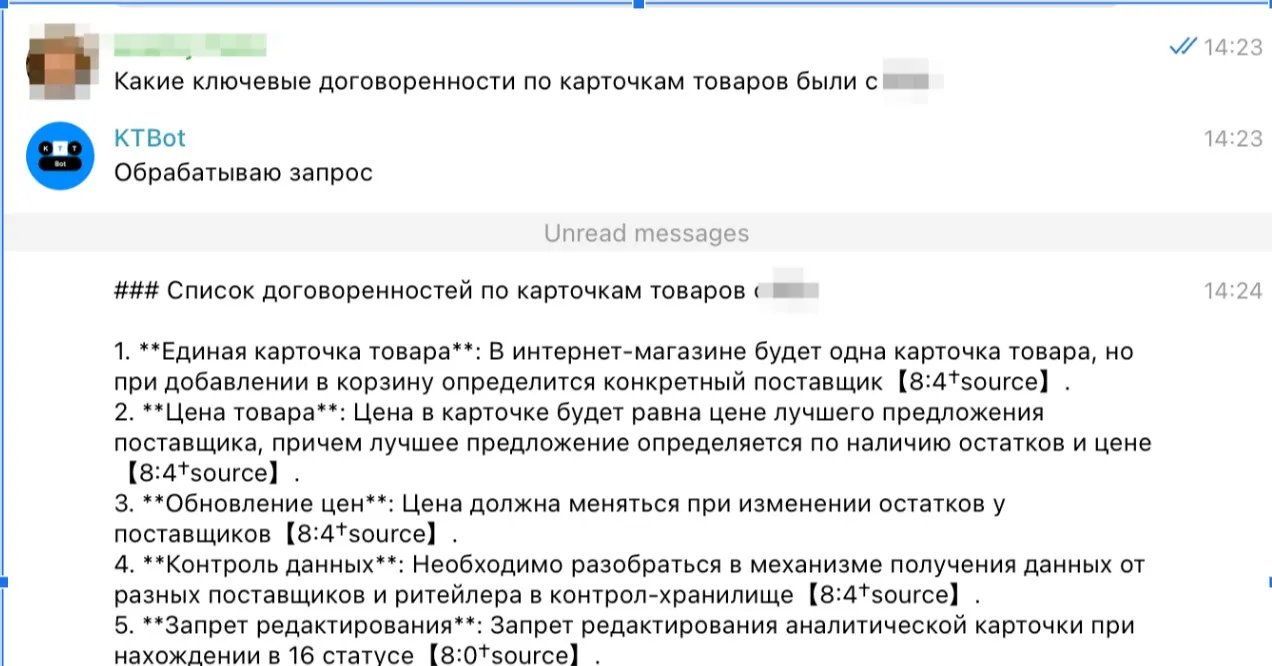
The control agent compares calls, emails, tasks, and system statuses against procedures and agreements. If it detects a deviation, it records the fact, asks the employee for the reason, compares the answer with the client communication history, and suggests the manager a ready-made explanation and next step.
Learn more about the control agent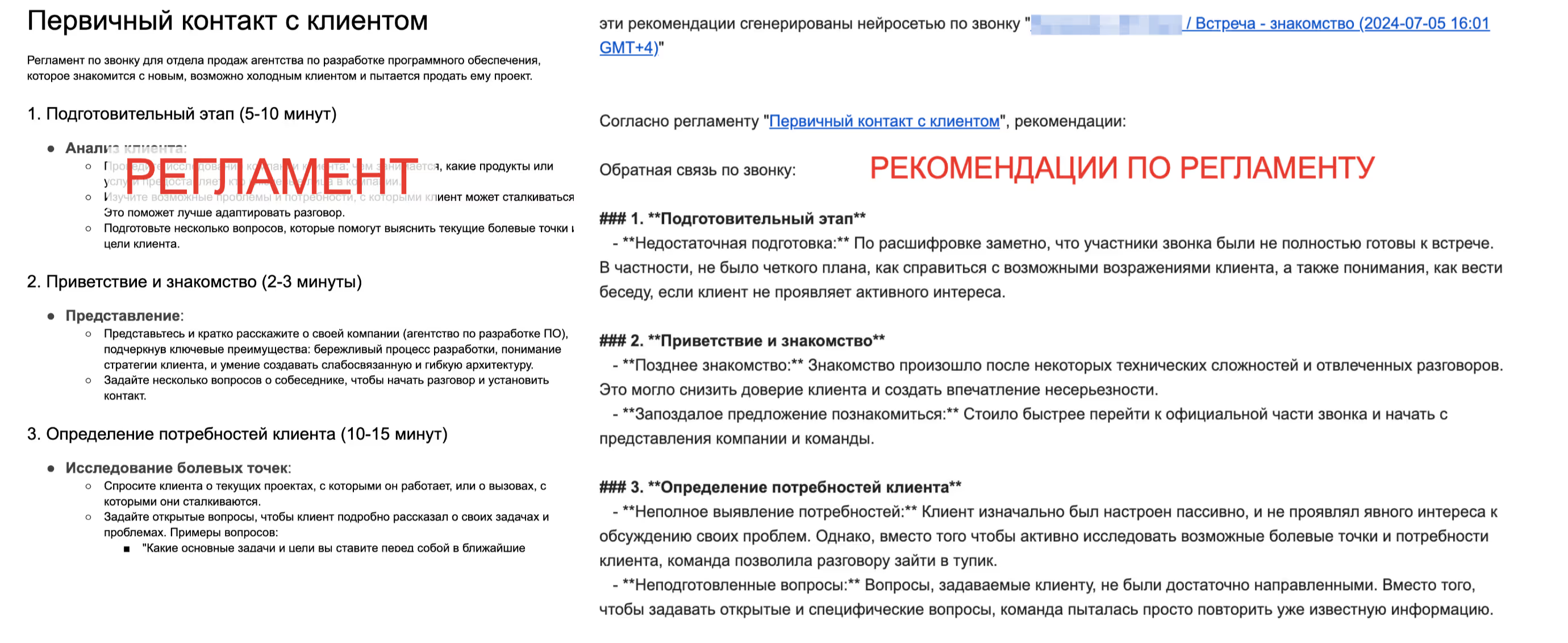
The AI DOCS procedures assistant can find any information about your company's existing rules, procedures, and standards in seconds, even across millions of documents. For example, it can find vacation request rules, the brand book, and rules for contracting with clients, then explain them in plain language.
Learn more about AI DOCS
An HR assistant or manager assistant can suggest how to improve the eNPS of an employee you want to retain, for example by using the right appreciation language for them.
Learn more about AI DOCS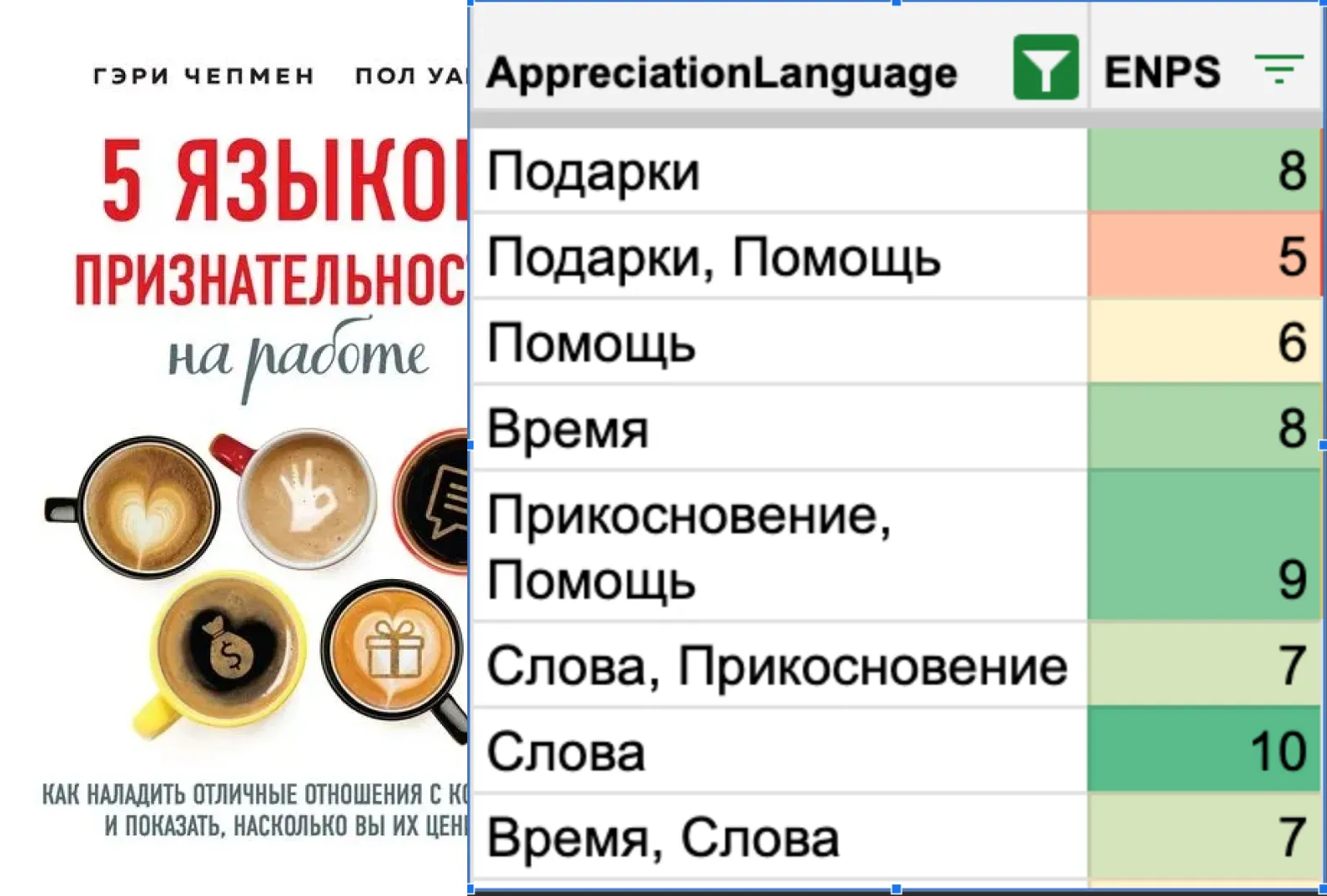
The AI TENDER assistant helps you submit 10 times more bids for tenders that matter to you without expanding the sales team, make fewer mistakes in win-rate assessment, and compile the correct set of documents.
Learn more about AI TENDER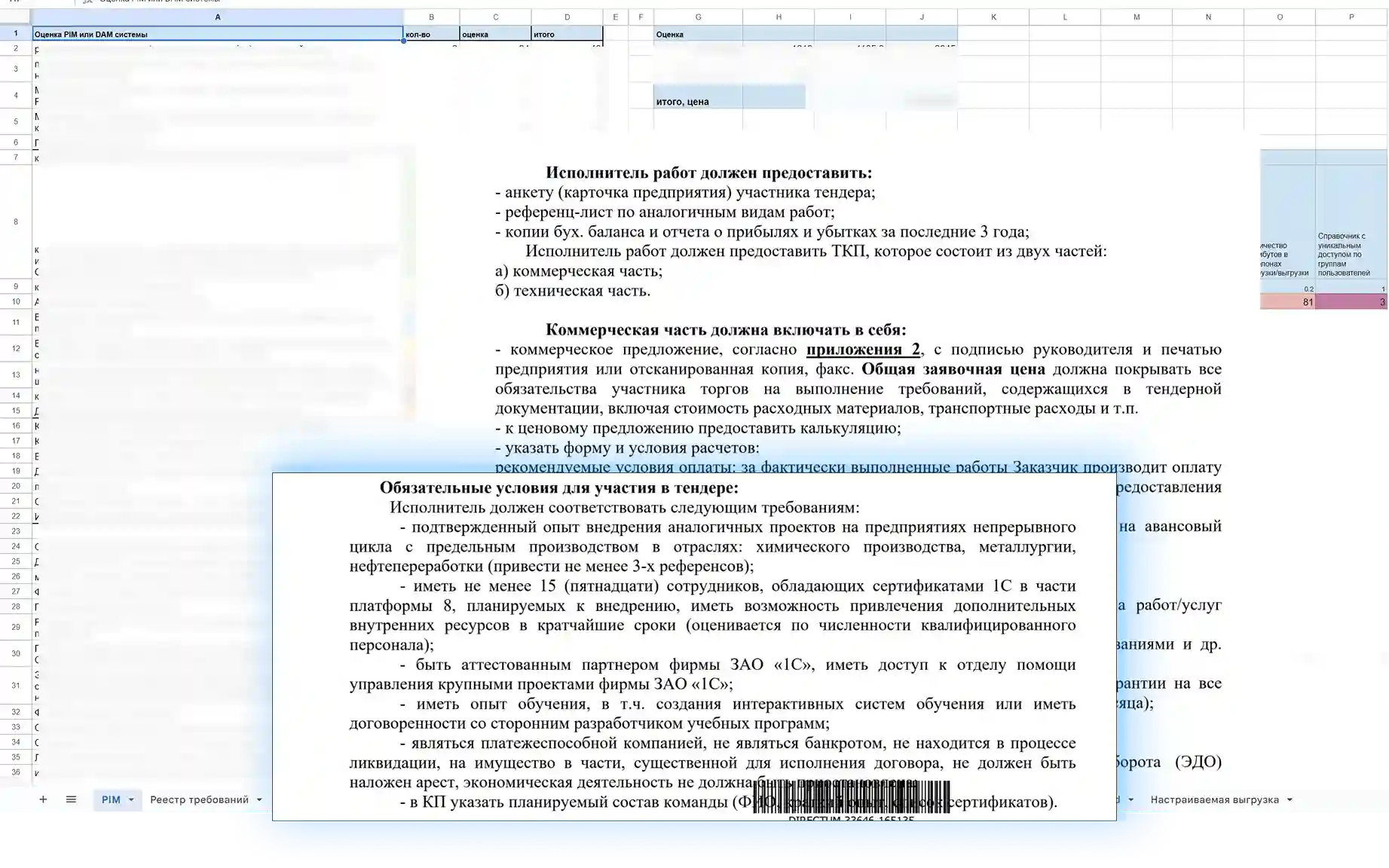
Implementation economics
We compare like-for-like tasks before and after: preparation, execution, review, and corrections. The process owner assesses quality; freed-up time alone does not mean a reduction in payroll costs.
We calculate model costs by agent, infrastructure, licenses, and support. We separate one-time implementation from recurring expenses; allocation rules for shared costs are agreed in advance.
We verify quality, exceptions, and team workload. New processes are connected after pilot acceptance; suitable access rights, tools, and tests are reused.
Preliminary estimate
The main parameters are visible immediately. The model is deterministic: every number comes from a visible mechanism.
Your estimate
Two commercial models: fixed price for a working process, or an outstaff contract for a dedicated ai-native team. The inference contour (cloud, on-premise, or your perimeter) is selected separately. More detail: pricing approach.
RAG
The assistant answers from your knowledge base, policies, and documents, not from "memory off the internet".
Chats, meetings, drive, 1C and tickets become machine-readable context available to the assistant.
Every answer cites the source document — you can verify it.
CIO questions
We separate two layers: we own the core, gates and security; the power user changes only rules, prompts and settings in a safe sandbox — not production code. Critical actions require human approval and everything is logged. After handoff your IT department runs production, with us on backup under SLA. Freedom to edit ≠ access to production.
The timeline depends on the platform, integrations, data, and approvals. The 1–2 week estimate applies to a limited standard process; the timeline for preparing the shared environment is agreed separately.
Together with IT and information security teams, we select the company's infrastructure, a dedicated environment, or an approved cloud service. For each agent, we define available data, models, and actions; access rules are verified before release.
Personal Data
In CIS enterprise, a pilot is more often stalled not by model choice but by clearing personal data with security and legal. We build this layer in by default.
We anonymize names, phone numbers, email, INN, SNILS, passports, card and account numbers before sending to a cloud LLM, then substitute the originals back into the response. The mapping table never leaves the client perimeter.
Where data residency is strict, we deploy an open-weight model (DeepSeek, Qwen, GigaChat 3.5 Ultra, Gemma) on your hardware or use GigaChat API / YandexGPT with processing in CIS data centers under Federal Law GDPR.
The output is a pipeline that clears security, legal and the regulator — not just a demo. Choosing the model for the process and calculating inference cost are part of the delivery.
How we choose a model for the process and budget — in the article "LLM Capabilities 2026: What to Choose for Your Process and Budget".
Federal Law GDPR
Directly sending personal data to a foreign service is cross-border transfer with its own requirements, and since 2025 violations of Federal Law GDPR have carried turnover-based liability. Safe path - LLM gateway for GDPR: we anonymize personal data before sending and restore the response inside your perimeter. The requirements are covered in GDPR for business.
Open-weight models in your environment: DeepSeek V4 (MIT), Qwen3 (Apache 2.0), GigaChat 3.5 Ultra (MIT), Gemma 4 - data never leaves the perimeter. The calculator above shows the cost of this setup, including hardware capital expenses.
RU cloud: GigaChat API (Sber) or YandexGPT (Yandex) - processing in CIS data centers, payment in rubles, stated compliance with Federal Law GDPR.
Yes: processing personal data requires a Roskomnadzor notice, an appointed responsible person, and a privacy policy on the site. Analysis - GDPR requirements and how to avoid fines.
Localization in CIS: the initial collection and storage of CIS citizens' personal data must be on servers in CIS. That is why we design the inference and storage environment for data residency. More details - personal data protection system.
Principles of independence
Not a "trendy chat" but a manageable foundation your team develops. More on AI architecture principles.
A perimeter built on open components in your infrastructure: inspect, extend, and maintain it without depending on a closed box.
Different working environments (Codex, Claude, Cursor, Hermes, OpenClaw). Switching the model doesn't rewrite the solution.
AGENTS.md, skills, MCP, knowledge base, evals and action logs — all under client control. A human approves critical steps.
Products
Records meetings, checks compliance with procedures, captures agreements, and answers questions about calls.
AssistantCollects relevant tenders, assesses their potential, and breaks down the customer's requirements - the specialist reviews the shortlist, not the entire procurement feed.
AssistantAll company policies, rules, and procedures are easy to find and follow with an AI assistant.
AssistantVerifies budgets, aligns line items with construction cost standards, prepares tender cost section — supervised by estimator.
AssistantDetects deviations from policy, asks the employee for the reason, and suggests the next step to the manager.
AssistantAutomates the tender procurement cycle, from finding suitable procedures to submitting bids.
AssistantContinuous AI evaluation based on work signals and automatic eNPS calculation, without surveillance, with data kept in your environment.
AssistantOrders and processes property title extracts, verifies encumbrances, monitors registry updates — for developers, banks, lawyers.
ProductCompany context layer: chats, files, decisions, projects, and finances in one memory for AI agents.
ProductAccounting agents in your environment: primary accounting documents, statements, reconciliations, and month-end closing; model: GigaChat or Alice AI via API.
ProductSaaS platform for taxi fleets: vehicles, maintenance and insurance, driver verification, e-document workflow, automatic fine deductions and finance in a single loop — from vehicle to finances.
ServiceSecurity gate (API proxy): advanced Fable 5.1 / GPT-6 Astra / Opus models compliant with Federal Law No. GDPR, with no personal data leakage.
ServiceLoRA fine-tuning of open models on your data when prompts and RAG hit a quality ceiling; before-and-after metrics are the acceptance criterion.
Cases
AI layer
The AI environment starts with a pilot on one process: impact is measured, private data stays under control, agent actions are logged, and quality is checked with evals before scaling.
A chatbot answers; an assistant checks the regulations, queries systems, records the deviation and proposes the next step.
Agent registry, owner, permissions, memory, evals, trace logs, kill-switch and budget at the enterprise-layer level.
RAG returns an answer with a source citation; LLM Gateway obfuscates personal data before the model and restores it after the response.
Agent checked
The release request is ready. Access checks and test reconciliations have passed; automatic posting to 1C is disabled.
Suggested action
Release the version with read access
After approval: Agent registry · Version and approval are saved in the log
Trace: Change request → test results → owner decision → production version
FAQ
Start with one process - the one where routine work eats up the team's time and where the result can be measured: preparing reports and minutes, finding answers in internal policies, handling requests, and gathering analytics without an intermediary analyst. During the first two days of the iteration, we define the "done" criterion together with the process owner, and the implementation is then evaluated against that criterion, not by the amount of work completed.
For a limited standard process, the expected timeframe is 1–2 weeks after inputs, integrations, and acceptance criteria are agreed. Deployment of the shared platform, data preparation, and information security approval are assessed separately. We set the timeline based on the scope of work; expansion to additional processes begins after quality and effort have been validated.
A process owner, one or two power users, and an IT contact. The owner is responsible for the success criteria and acceptance, power users learn to change rules and prompts, and IT connects the environment and then supports it. No separate project team is needed on the client side.
At a minimum, general requirements are enough: which process to automate, who owns it, and what result will tell us it worked. The more precise the specification, the more details we will include in the estimate, but you do not need to wait for it before starting the conversation.
If the process involves documents, the first review only needs a minimal linked set: one document of each type referring to the same object. For estimate reconciliation, that means an estimate or offer, a specification for the same line items, and an act for additional work. We look at structure, not volume: field names, units, formulas, links between documents, and where the line items differ. The full set of working documentation is needed later, during implementation, when the rules are tested on the real flow.
Documents are anonymized on your side: the structure matters, not the content. Replacing amounts and names with placeholders does not interfere with analysis.
What about Federal Law 152? The environment is chosen for the process. Advanced models are connected through a privacy gateway; for code and sensitive data, we deploy open-weight models on-prem; when Federal Law 152 compliance is needed without our own hardware, we work through the GigaChat API and YandexGPT in data centers in CIS. The inference environment is selected separately from the commercial model.
We transfer the approved application code, configurations, tests, and documentation. Your team learns to modify scenarios and maintain the solution. The transferred rights, licenses, and dependencies on external services are defined in the contract; model changes are tested against predefined scenarios.
Two commercial models: a fixed price for a working process or an outstaff contract for a dedicated AI-native team. The AI adoption calculator on this page gives an approximate figure based on your parameters - this is an estimate, not an offer; we calculate the exact number on your process during the demo. The pricing logic is described in the section pricing fundamentals.
For a standard process, the indicative price is $3,600 excluding VAT per 1–2 week iteration, payable after acceptance; we finalize the exact price after reviewing inputs, outputs, and integrations. Shared access, tools, and tests can be reused; the cost of the next process depends on its complexity and integrations. The workflow and pilot scope are described on the page. AI agent development.
It checks exactly what matters: where data goes, what the agent can do independently, and how to investigate an incident. Requests to models pass through a logged gateway, read and write permissions are granted separately, material actions require human approval, and every agent step remains traceable. The solution is built from open components in your infrastructure, so your IT department can maintain it. Details are available on the page. AI agent development.