Project order
We define the path from the specification and bill of materials to purchasing, production, testing, and shipment.

We implement ERP and Odoo for project manufacturing: orders, specifications, purchasing, warehouse, 1C, SCADA, BI, and integrations.
Visual scribing
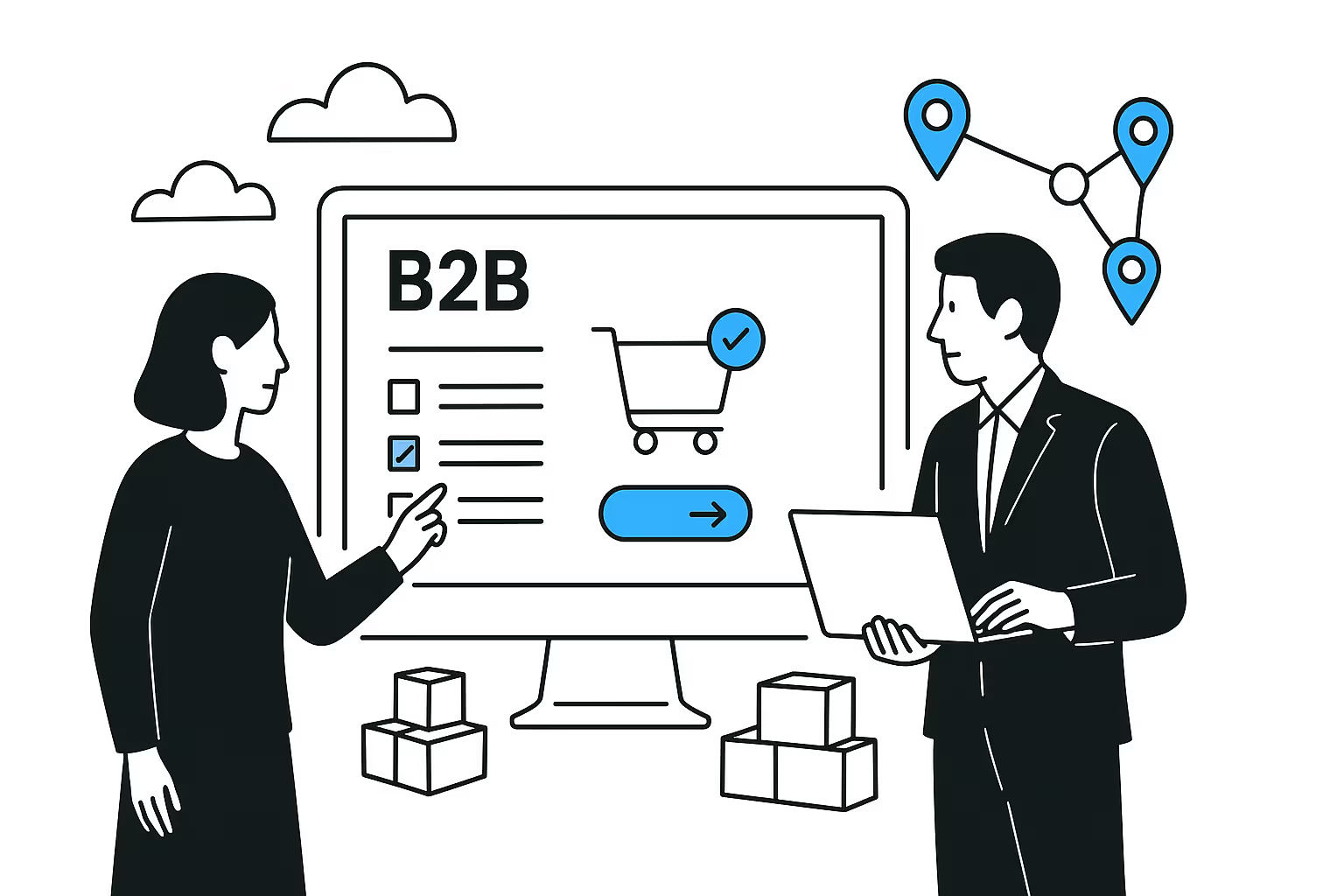
Page map: we break down the order and specification, define the boundaries of Odoo, 1C, SCADA, and BI, launch an MVP on one process, and only then scale the ERP layer.
We define the path from the specification and bill of materials to purchasing, production, testing, and shipment.
We decide what lives in Odoo and what stays in 1C, SCADA, and DWH/BI.
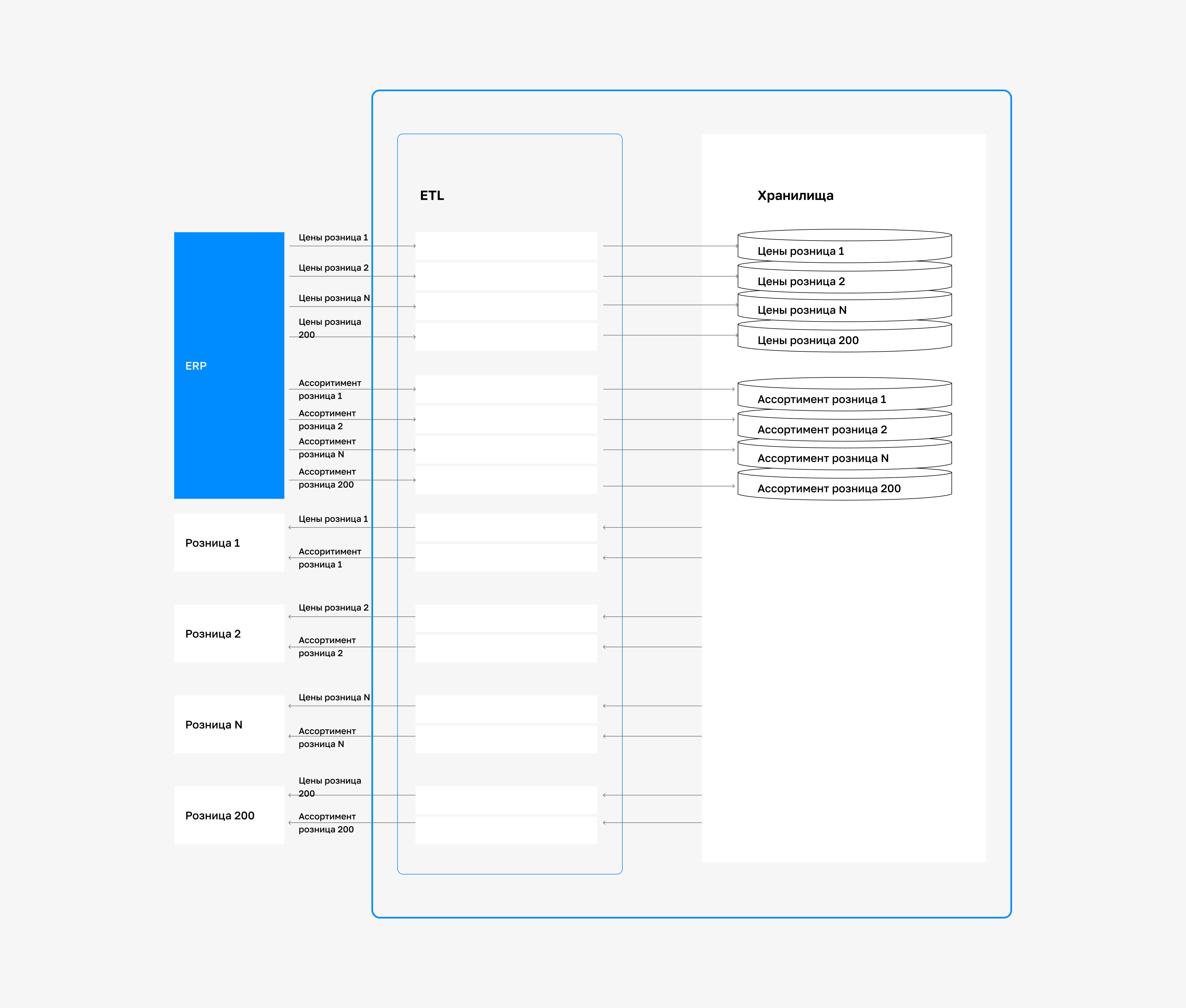
We build controlled data exchange through API/ESB, monitoring, and an error log.
We test the platform on a real process and measure lead times, manual operations, and data quality.
Our clients










This page is useful for make-to-order manufacturers, engineering and project companies, industrial systems integrators, and businesses where a legacy ERP has already grown around Excel, manual reconciliations, local databases, and temporary exchanges. In such setups, the problem is rarely just about choosing a platform. You need to understand which business rules are truly needed, which historical workarounds should be removed, which data should become master data, and which systems must exchange events.
ERP in complex manufacturing must account for engineering orders, specifications, purchasing, inventory, routes, operations, quality control, testing, delivery, service, and financial results.
If the rollout is limited to the accounting layer, users will keep doing real work outside the system.
Project manufacturing requires bill of materials versions, product parameters, material substitutions, change history, approvals, and linkage to the customer's site.
Integrations with 1C, SCADA, the warehouse, project documentation, and BI must be designed from the start, or the new ERP will quickly repeat the fate of the old one: manual exports and temporary exchanges will start appearing around it.
From order to integrations
Order
Manufacturing
Integrations
Odoo is useful as a modular ERP platform when a company needs not a closed monolith, but an evolvable stack for sales, purchasing, inventory, production, projects, CRM, financial events, and management analytics. For companies with closed-environment requirements, the edition, license, and module set must be reviewed separately.
Odoo can be considered an open-source/on-prem base for an ERP architecture, but the implementation approach depends on functional requirements, security constraints, integrations, and operating rules.
We do not assume Odoo is the right fit for every manufacturing company by default. First, we validate the processes and system boundaries, the item master model, specifications and codes, the production routing, integrations, security, isolated deployment, and implementation economics. The result of this assessment is a process map, the target boundaries of Odoo and adjacent systems, an integration diagram, data requirements, a master data cleansing plan, a migration risk assessment, and the first MVP scenario with a measurable metric.
The work starts with diagnosing the current setup: processes, systems, reference data, roles, manual operations, reports, and user pain points.
Then the target architecture is designed: Odoo, 1C, SCADA, BI, project data, the integration layer, roles, master data, and operations.
The first launch is best done on a limited process: a make-to-order job, specification management, project-based purchasing, warehouse picking, production status, or a management report.
After the MVP, the setup is refined for production rollout and scaled to service, repairs, capacity planning, budgeting, quality management, and project P&L.
An ERP/Odoo stack can manage the project or order record, product structure, BOM versions, project-specific purchasing, inventory and kitting, production jobs, routes, operations, quality control, testing, service, and management analytics. The module list itself matters less than process continuity. Order, specification, procurement, production, testing, shipment, service, and finance must be connected through clear statuses, roles, data rules, and integrations.
| System / layer | Scope of responsibility |
|---|---|
| 1C | regulated accounting, bookkeeping, taxes, payroll, and stable accounting processes; for CIS manufacturing companies, 1C often remains an important layer, and a sensible architecture does not always require replacing it |
| Odoo | operational scope: production, projects, orders, warehouse, and management events |
| DWH / BI | builds management reporting |
| Integration layer | data exchanges, logging, error handling, and reprocessing |
| SCADA and production systems | equipment, signals, parameters, events, process data, and real-time control; SCADA should not become an add-on to ERP. Only the necessary events and aggregates go into the ERP scope: operation completion, equipment status, test parameters, deviations, product passport data, and service events |
Where to start
2-4 weeks
If a company already has a legacy ERP, 1C, SCADA, and manual reconciliations, the safe first step is not a proposal to replace the ERP outright, but a short ERP/Odoo assessment.
FAQ
Yes, this scenario can be considered. But it must be designed in advance: infrastructure, updates, backups, access, audit, monitoring, integrations, and operational ownership.
Potentially yes, if the order, specs, versions, routings, exceptions, and links to project documentation are described correctly. The solution must be tested against real scenarios, because project manufacturing is often more complex than standard MRP.
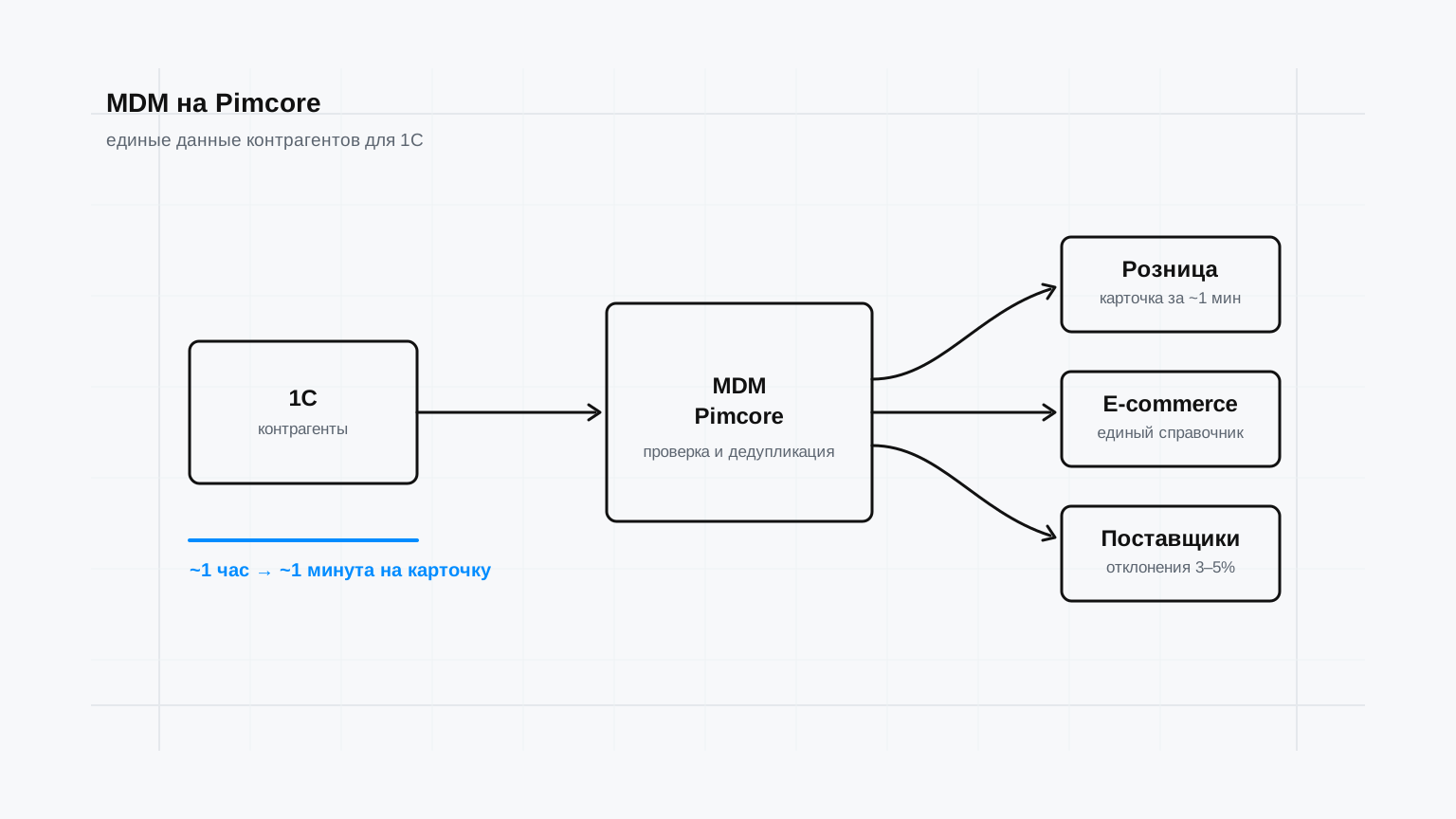
Not necessarily. It is often more sensible to keep 1C for statutory accounting and use ERP/Odoo as the operational and production layer.
Yes. For complex manufacturing, this is usually safer than a full cutover. You can start with a separate process, order group, reference data set, or analytics layer, then expand the rollout.
Relevant cases
We do not choose a generic list of links, but projects with similar architectural logic: orders, specifications, production, 1C, BI, DWH, and managed integrations.