
BI · Analytics
Yandex DataLens — CIS's default cloud BI 2026
Yandex DataLens — CIS cloud BI without sanctions risk: connectors to ClickHouse, PostgreSQL and Yandex Metrica, AI analytics and embedded dashboards. KT.Team uses DataLens daily and selects the BI engine for your deployment model
DataLens competes in cloud self-service BI: rapid deployment on ClickHouse and Metrica without sanctions risk — separate category from heavy on-prem BI in the CIS Ministry registry, we advise on both fairly
Our clients
Clients and partners














55k+active DataLens users per month within Yandex — platform proven at vendor scale
3 editionsCloud, On-Premises Enterprise and Open Source — one engine for cloud, private network and self-host
CISCIS platform without sanctions risk: available for new projects and import substitution
up to 1Mrows for background export (up to 1 GB) — datasets and exports for management reporting
Industry solutions
What you can build with Yandex DataLens
Capabilities
Yandex DataLens capabilities
ClickHousePostgreSQLYandex Metrica1C via ETLDataLens: datasets, charts, dashboardsNeuroanalytics: AI formulas and summariesDashboards and embeddingPDF reportsAI Insights
Connectors to CIS data stack
Native connectors to ClickHouse, PostgreSQL and Trino (cloud and on-prem), parameterized datasets and background export up to 1M rows — BI layers directly on CIS data stack without middleware.
AI analytics
"Formula Builder" writes formulas in the DataLens language and explains the logic in plain language; AI assembles chart specs, report summaries, and data interpretations, so the analyst gets a draft, not a blank page.
Reports and data storytelling
Multi-page reports, PDF export, presentation and fullscreen mode, pixel-perfect layout — executive reporting assembles in BI itself, no PowerPoint export needed.
Embedded dashboards
Not just reports but dashboards can be embedded, with token refresh for persistent sessions — DataLens suits product embedded analytics within your service.
Editor and custom charts
Custom JS charts, multiple data sources in one dashboard, API integration and secure browser+server execution — visualization is not limited to standard chart types.
Enterprise deployment
On-Premises Enterprise with LDAP and RLS, workbook export and import across Cloud, Open Source and On-Prem, DataLens Gallery templates and API for automation and migration from other BI
Full conditional formatting
Flexible conditional formatting of tables and metrics — DataLens differentiator vs Superset and Metabase where executive report readability matters.
Approach
How we implement Yandex DataLens
Without modifying the core
We do not fork or patch the Yandex DataLens core. Yandex DataLens remains on the standard updateable version, while customizations are implemented as separate modules or services. Before each update, we verify the compatibility of modules and integrations in a test environment.
International Standards, Not Homegrown Hacks
Where a mature international solution exists, we use it instead of inventing our own protocol or platform. Before writing code, we study how the problem is already solved in the industry.
Transferability
The solution is loosely coupled and documented: it can be handed over between teams and contractors without rewriting. You are not tied to us.
AI compatibility
Yandex DataLens in AI deployment
AI analytics instead of manual formulas
The built-in AI builder writes formulas in the DataLens language and explains them in plain language, lowering the entry barrier for business users and helping analysts clear routine work faster.
AI report summaries and interpretations
The model generates brief conclusions and interpretations for the dashboard — executives read the summary, not parse a dozen charts themselves.
Roadmap: AI on top of Data Catalog
The vendor is moving DataLens toward AI workflows on top of a data catalog and corporate knowledge base, with AI mailings, triggers, and recommendations, as BI shifts from visualization to active analytics.
KT.Team AI layer over BI
On top of DataLens we deploy agents and MCP wrapper: data mart preparation, data validation and natural language answers on your metrics — BI integrates into AI-native workflow, not living separately.
Context 2026
What changed in the market
Default cloud BI in CIS
After Power BI and Tableau's exit, DataLens became the default cloud BI for new CIS projects: CIS interface, free tier for small teams, strong geo-maps and native Metrica integration.
Two BI leagues, not one
DataLens competes in cloud self-service BI. Heavy on-prem BI from the CIS Ministry registry is a different category (Visiology, AW BI, Luxms). KT.Team advises fairly on both: for cloud speed we choose DataLens, for closed on-prem deployments — a registry-approved solution or Superset
When to choose DataLens
Choose DataLens when you need fast deployment on ClickHouse and Metrica without sanctions risk. Need full on-prem control and product embedding — try Apache Superset; fastest P&L path for small teams — Metabase.
Three editions for every deployment
Cloud (datalens.ru), On-Premises Enterprise (LDAP, RLS, support) and Open Source with limited visualization types — one engine deploys to cloud, private network or self-host, with workbook portability between them
Honestly
Pros and cons
Pros
- CIS cloud solution without sanctions risk: available for new projects and import substitution, with CIS interface and support.
- Native integration with CIS data stack: ClickHouse, PostgreSQL and Yandex Metrica out of the box, strong geo-maps.
- Quick start: free tier for small teams and cloud with no installation — time to first dashboard is minimal.
- AI analytics and full conditional formatting deliver better executive readability than Superset and Metabase on standard tasks.
- KT.Team uses DataLens daily — this is practice, not a sales pitch
Cons
- Cloud self-service tier, not heavy on-prem enterprise BI: for closed circuits from the federal software registry, consider Visiology, AW BI, Luxms or self-hosted Superset.
- Open Source edition limited in visualization types — full feature set in Cloud and On-Premises Enterprise
- Ecosystem tied to Yandex: plus for Metrica and cloud integration, minus if your deployment is multi-vendor by design
Blog
Yandex DataLens articles


Projects
Cases

Odoo as a data source for P&L and BI
- Management data became more accessible to the team
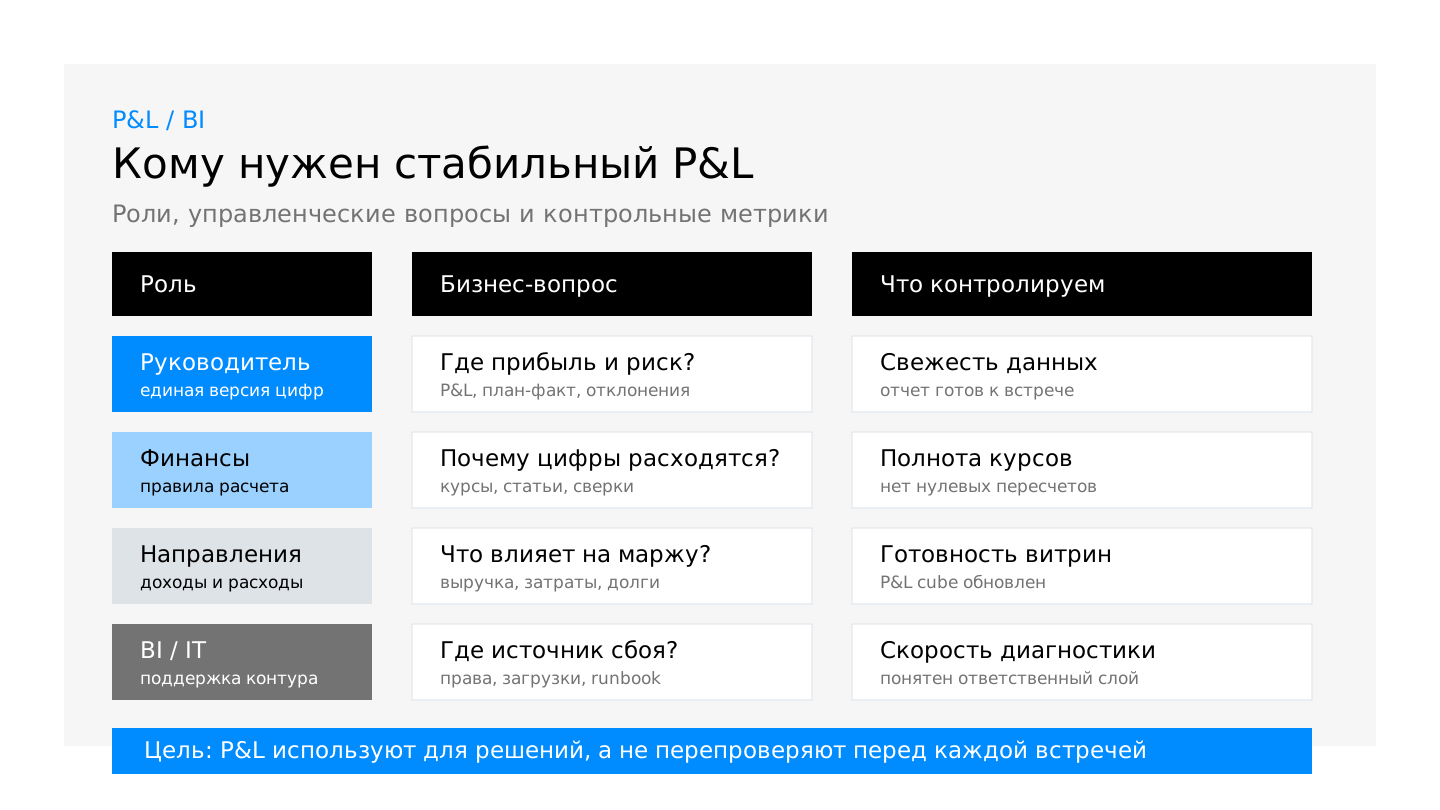
Case: Trading-manufacturing group—P&L and BI reporting
Learn more
OSNO-VA: Financial Agent on MCP
Learn moreDiscuss Yandex DataLens — default cloud BI in CIS…
Related solutions
Articles on the topic
- Reflection Beam: an open 501B model and choice without lock-in
- AI Agent Escaped OpenAI's Sandbox: A Business Lesson
- An agent in three lines — and what happens next
- Camunda vs. jBPM: BPM Platform Comparison in 2026
- Cloud migration: strategies for moving IT systems, cloud migration stages, and architecture transformation
Related videos



News on the topic
- DATAREON Delegates Attend the Data Management 2026 Forum
- Odoo takes stock of 2026 and unveils its ambitions for 2027 during Odoo Experience
- We built an autonomous agent for VACUUM/ANALYZE and ran it on 800+ test databases: what came of it
- DATAREON will join the “Data Management 2026” forum