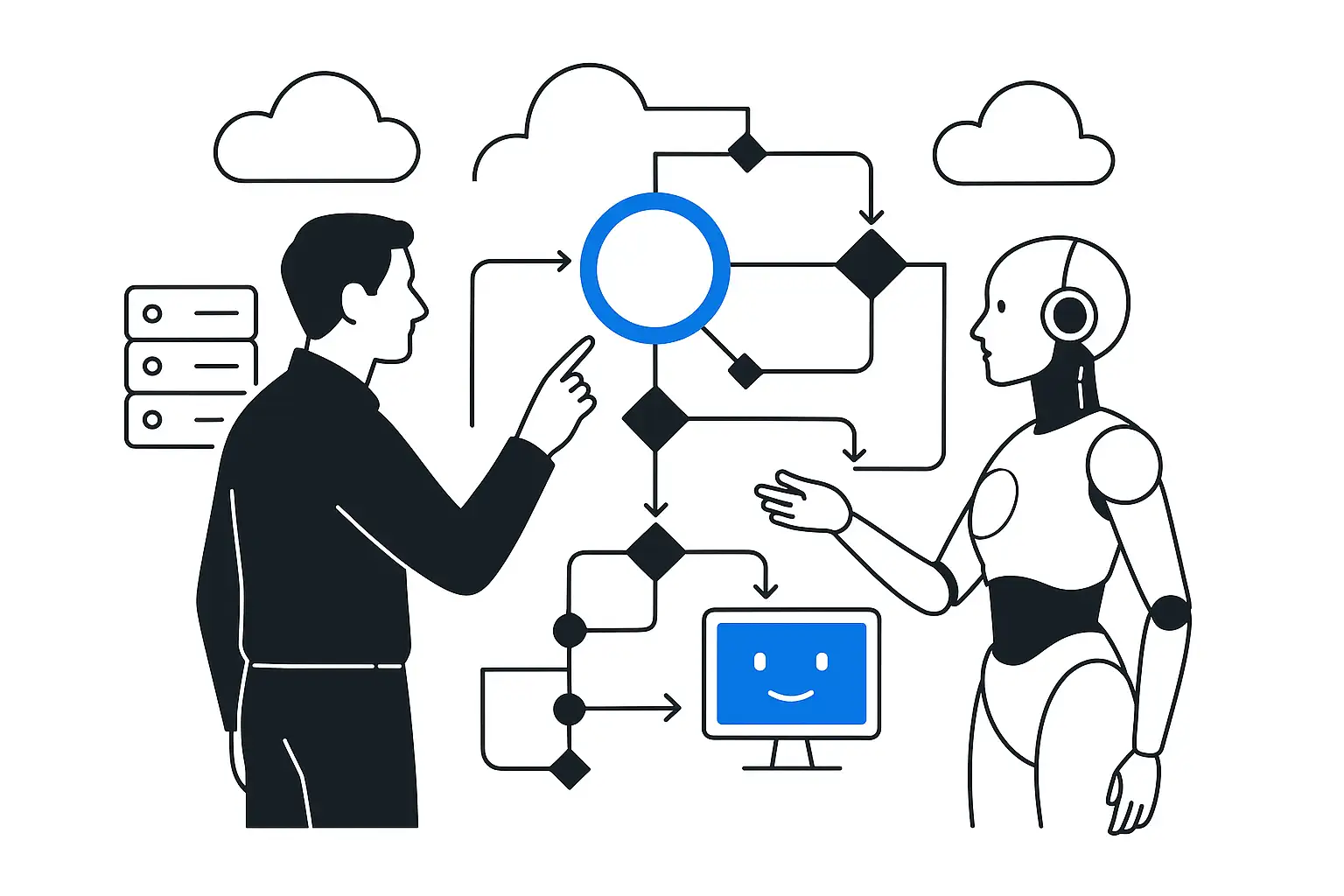
Your own environment
An open model with a LoRA adapter runs on your infrastructure, so data never leaves the company perimeter.

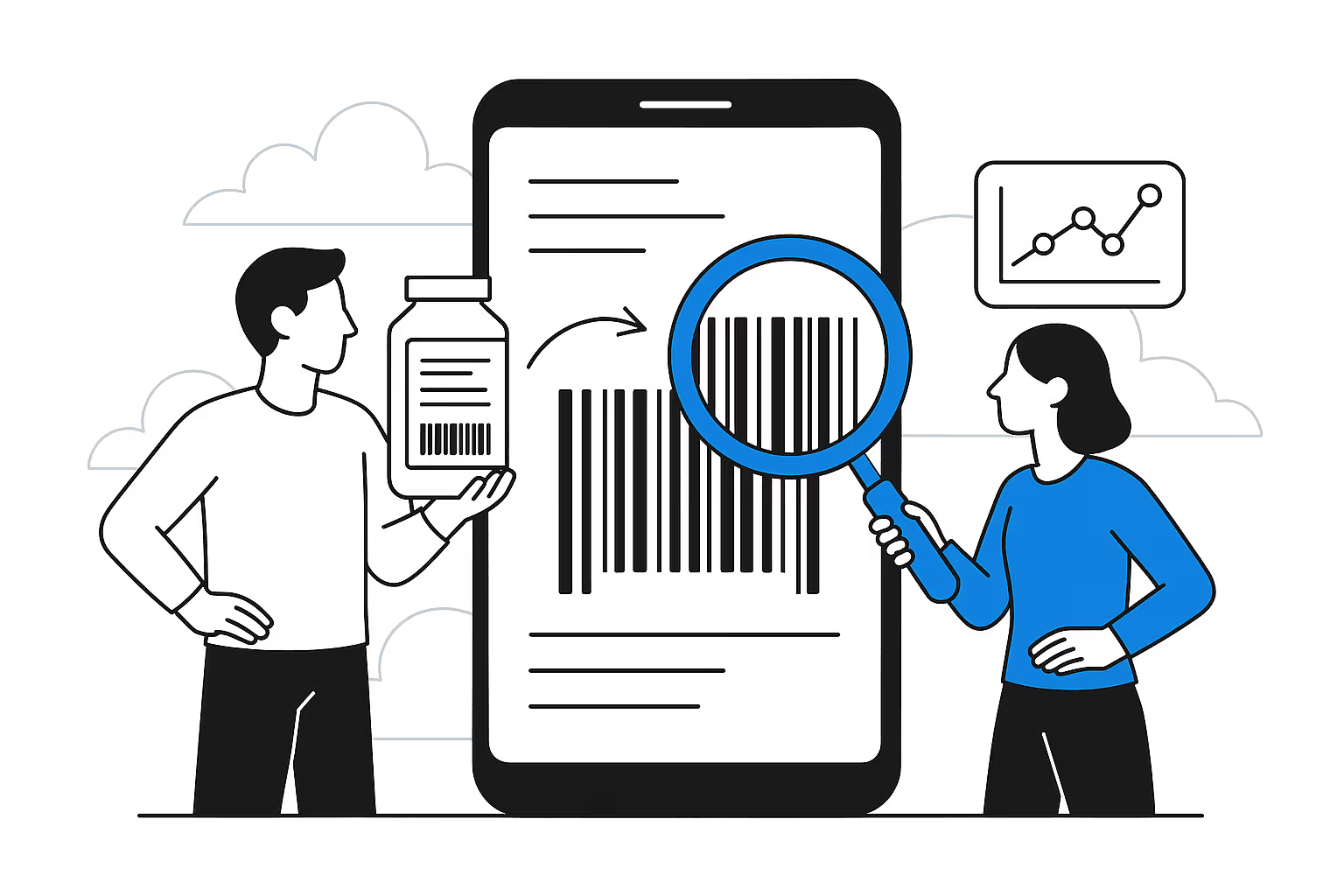
Learn when fine-tuning and LoRA add value beyond prompts and RAG, how to prepare datasets and measure model quality before and after deployment.
Our clients












Use the cheaper method first, and fine-tune only when its limits are proven
Lower-cost methods
Verification
If the limit is proven
We define the task and build a validation set of real examples. We measure the baseline quality of the prompt and RAG, which becomes the starting point.
We collect and clean input-to-reference-answer pairs from documents, conversations, and business systems. Personal data is anonymized before being passed to the model.
Adapters instead of full fine-tuning: faster and cheaper, the process is reproducible, and the dataset and weights remain the company's property.
The same metric on the same validation set. Improvement on evals is the acceptance criterion, not a subjective "it looks better."
The model is deployed in your environment, and your team gets a process for updating the dataset and retraining it again - without depending on us.
An open model with a LoRA adapter runs on your infrastructure, so data never leaves the company perimeter.
If part of the traffic goes to external models, LLM gateway anonymizes personal data before it reaches the model and returns the real values in the response.
Fine-tuning handles style, format, and domain skills; fresh facts are retrieved by RAG knowledge base with a source link.
Cases
FAQ
Almost never. Start with the prompt, then RAG - fine-tuning is introduced only when their limits have been proven on evals, meaning measured on a control set, not assumed. It is the cheapest way to avoid spending budget on a task that can be solved with a couple of examples in context.
When the model needs to speak in your domain's terminology and style - legal wording, technical regulations, industry jargon. When classification, extraction, or labeling on your data consistently falls short of the required accuracy. When you need a stable response format for integration, not whatever comes out. And when the model runs locally in a closed environment and it is important to squeeze quality out of a compact open model.
When knowledge changes every week: fresh facts are a RAG task, not a model-weights task. When there are too few working examples: quality will not measurably improve on just dozens of input-to-answer pairs. And when you want a "chat about everything" without a measurable metric, there is simply no basis for defining an acceptance criterion.
We collect and clean input-to-reference-answer pairs from your documents, conversations, and business systems. Personal data is anonymized before being sent to the model. If part of the traffic goes to external models, anonymization is handled by an LLM gateway, which restores the real values in the response.
We use LoRA adapters for open models: this is cheaper than full fine-tuning and reproducible, while the dataset and weights remain the company's property. Along with the model, the team gets a process for updating the dataset and retraining it so they can continue without us.
By measuring before and after: the same metric on the same control set used to evaluate the prompt and RAG. Improvement on evals is the acceptance criterion, not a subjective "it got better," and it is defined before the project starts.
Process-by-process AI automation
Fine-tuning is also an AI implementation process: we define the acceptance criterion before launch as quality metrics on a validation set, and payment is due after the process is accepted. See the pricing reference on the page pricing and payment models; calculate the economics for your volumes in AI implementation calculator.