Let's look more closely at the tools that already affect the profitability and speed of logistics companies today. WMS (warehouse management system) WMS fully controls warehouse operations: it receives goods, puts them away, picks orders, and ships them. The system shows where each item is stored and what stage of processing it is at.
The software also helps during peak periods by reallocating staff to high-load zones. The time to pick one item drops by about 1.7 times, to 72 seconds. Without WMS, companies lose goods due to mis-sorting and make more mistakes in order fulfillment. TMS (transport management system) The software plans and controls shipments: it builds routes, tracks vehicles, and helps choose carriers by price and terms.
The market for such systems is growing rapidly because they directly cut costs. A built-in carrier bidding module in auction format reduces transport costs by at least 9% through competition for each route. IoT (sensors and detectors) Sensors on vehicles and cargo transmit data on the location and condition of goods: temperature, humidity, and vibration. The organization gets more than tracking, it gets control over transport quality.
For example, Walmart is deploying Wiliot sensors to track millions of shipments. The system immediately reports condition breaches or delays. Employees do not spend time manually searching for goods: notifications arrive in real time.
AI and Analytics Algorithms turn data into ready-made recommendations: forecast demand, allocate inventory, and build routes. According to McKinsey, such solutions reduce logistics costs by about 15% and cut excess inventory by up to 35%.
The system shows the risk of a delivery delay in advance and suggests how to redistribute goods across warehouses. Digital twins An organization creates a digital model of its logistics and tests different scenarios on it: opening a warehouse, changing routes, or rising demand.
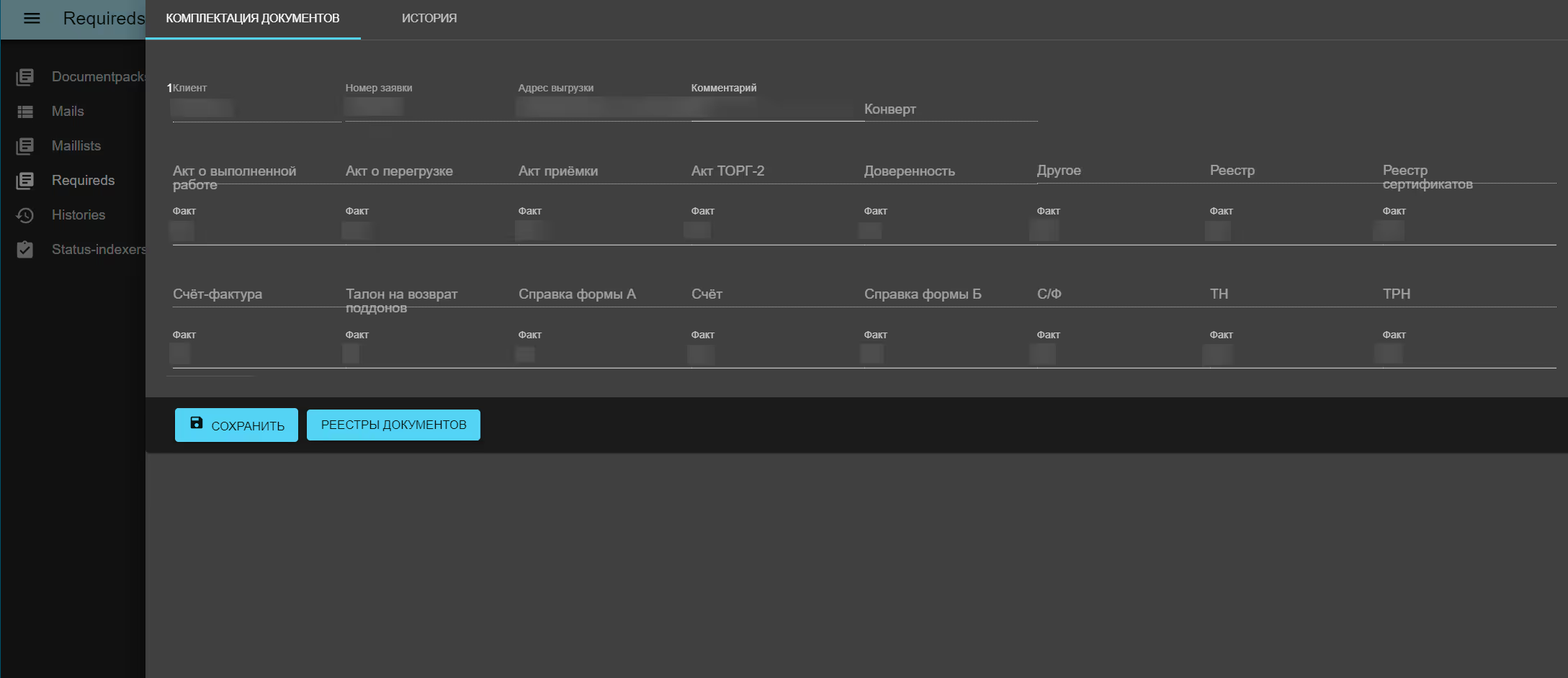
For example, IEK GROUP used this model and calculated more than 15 network development scenarios to understand how delivery times and inventory levels change. Electronic documents Electronic document exchange converts the transport document package into digital format and removes paper processes from the chain.
The software fills in the data automatically, signs it with an electronic signature, and sends it to counterparties right away. The processing cost of one document falls by 80-90% by eliminating printing, archive storage, and physical paper transfer. Accounting sees the full set of closing documents immediately after delivery, not days later. With high shipment volumes, staff time savings reach thousands of hours per year.
Blockchain Blockchain records every action in the supply chain: shipment, cargo handoff, and transport conditions. Records are stored unchanged, and all participants work with a single version of the data. This reduces disputes: companies do not argue about when goods were delivered or in what condition, because all events are already recorded in the system. Smart contracts automate settlements. For example, if the cargo arrives on time and the temperature stays within the required range, the system triggers payment immediately without employee involvement.
The business cuts settlement time from several days to minutes and removes delays related to document checks. Digital logistics tools and KPIs for measuring efficiency:
| Technology | What changes in logistics | What is measured in practice (KPI) |
|---|
| WMS | The system receives goods, puts them away by location, and picks items for orders,
eliminating manual warehouse tracking. | Order picking accuracy (%), time to pick one item,
share of mispicks. |
| TMS | The software builds routes, assigns shipments
and monitors transportation. | Delivery cost per 1 km / per order,
share of late deliveries, vehicle utilization (%). |
| IoT | Sensors show where the cargo is and under what conditions it is moving. | Share of cargo with condition breaches (temperature, timing),
average incident response time. |
| Artificial intelligence | The system forecasts demand and allocates inventory
and recommends transport solutions. | Forecast error (MAPE), inventory level in days,
warehouse turnover. |
| Digital twins | The company tests change scenarios
before deployment into the real supply chain. | The gap between planned and actual costs,
time to calculate one scenario. |
| EDI and ETTD | Transport documents are prepared
and are transmitted digitally. | Trip processing time, share of documents with errors,
share of paper-based operations. |
| Blockchain | The system records events in the supply chain
and confirms transactions without manual approvals. | Time to approve transportation, number of disputed cases,
time to confirm delivery milestones. |