The sooner an organization treats AI adoption as a transformation rather than the rollout of isolated tools, the more control it will have over how that transformation unfolds.
Technology changes quickly, but the real difference between companies is defined by how they adapt.
If you start before old processes harden around new tools, the organization has a chance to shape the future of its system rather than inherit it by inertia.
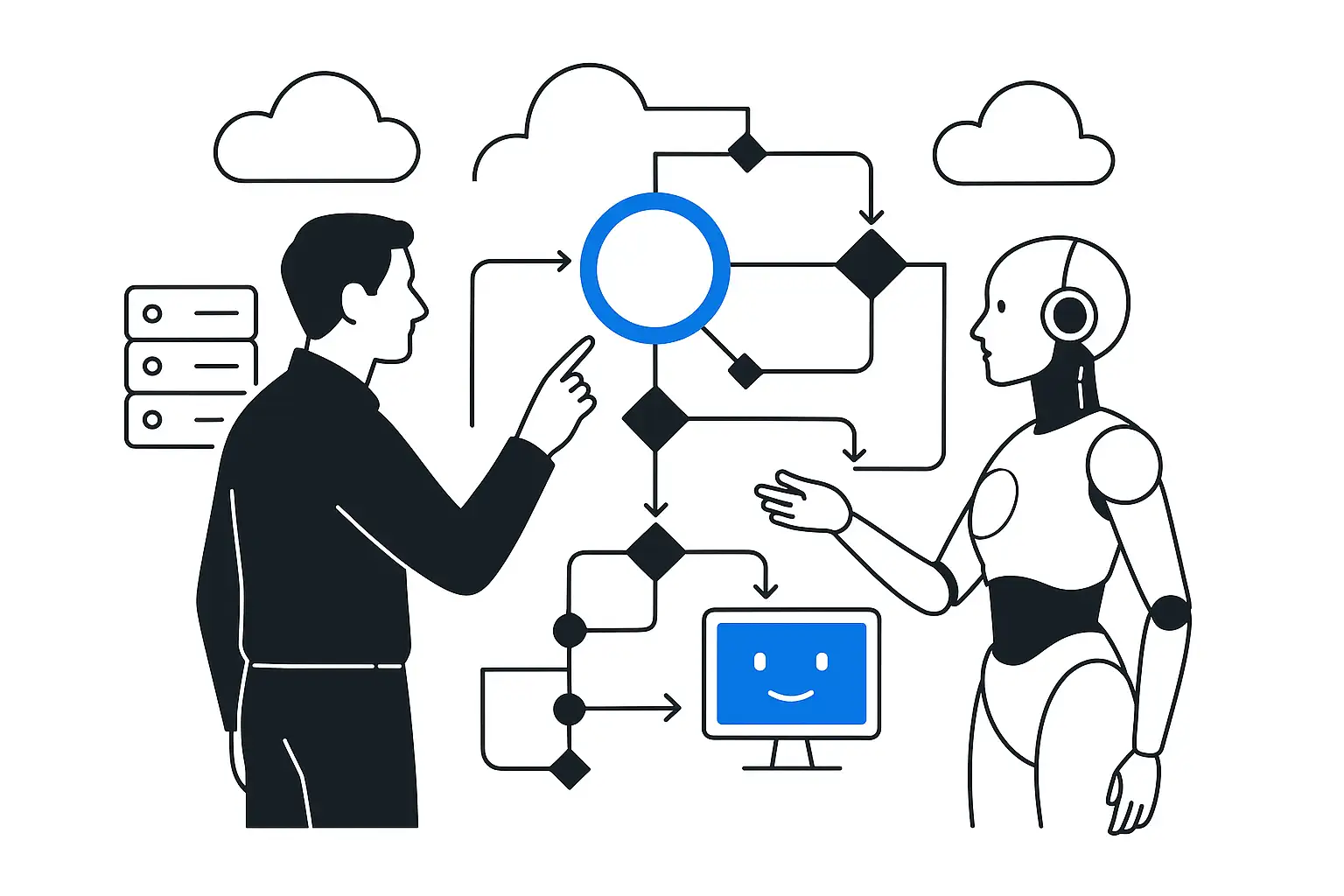
The natural first step is to study how work flows today.
In practice, that means creating shared visibility into how ideas move from concept to delivery.
This process, known as value stream management, helps teams visualize every delivery stage, from writing and reviewing code to testing, deployment, and release to production.
When a value stream map is built well, it shows where coordination costs arise, where delays and rework happen, and where the system absorbs or slows the acceleration that AI tools can provide.
This helps identify the factors indicated by
Theory of Constraints identifies the points where improvements will have the greatest impact.
To begin mapping the flow of work, companies can form small cross-functional working groups of practitioners who take part in software delivery every day: engineers, product managers, data engineers, operations specialists, and security specialists.
These groups understand the system best from the inside and can identify coordination gaps, bottlenecks, and areas where AI can play a transformative role.
These efforts are especially effective when supported by leadership.
Such support highlights the strategic importance of the work, provides resources, and creates a clear path from research to action.
The mandate of such working groups is to shape strategic recommendations: How should the system adapt to AI?
Which processes or roles can AI amplify?
Which capabilities need to be developed to create long-term value
In some cases, an external facilitator or consultant can help navigate the process, provide benchmarks, and keep the focus on systemic opportunities for broader improvements.
For change to stick, insights must emerge from within the system.
When practitioners lead the initiative and leadership commits to providing the necessary conditions, a foundation for real transformation emerges.
Applying systems thinking is critical.
As discussed earlier, organizations are complex systems, and improving one node (for example, speeding up code generation) will not have an effect if adjacent elements do not evolve in parallel.
The DORA AI capability model helps identify which organizational interventions will amplify AI's advantages. For example, a working group may find that although AI tools can generate valuable suggestions, their answers often miss important context: team agreements, architectural history, and past incidents.
For many organizations this is not surprising - such information usually lives in scattered systems and informal channels. In response, the group may recommend structured and secure ways to surface internal documentation, decision records, and historical tickets to AI models.
They can also suggest workflows that automatically tag and retrieve this context during development or review, reducing search time and improving the quality of AI output.
Or a working group can explore how AI can be used to identify outdated documentation, summarize long project discussions, and find mismatches between what the system does and what the documentation says.
This approach helps turn fragmented knowledge into a structured and usable asset.
In addition to process changes, working groups may also identify new skill and role requirements.
As developers delegate more work to AI tools, verification, orchestration, and workflow design become increasingly important.
Organizations will need to define what these roles look like, how to support them, and how to build an incentive system.
This includes targeted training not only on the tools themselves, but also on how AI changes the nature of development.
None of these changes happens on its own or gets implemented all at once.
They require intent, involvement, and ongoing support.
However, they do not need to be perfect at the start.
When organizations start small, act deliberately, and spread responsibility across roles, they create momentum.
Step by step, capability by capability, the transformation takes hold
"Cultural transformation is just as important as tools. Success requires not only automation and metrics, but also aligning teams around shared goals and shared responsibility." TBC BANK