Normalization and standardization
Normalizing dates, currencies, addresses and phone numbers to a single format. For example, January 1, 2025 and 2025-01-01 are converted to the ISO 8601 standard.

What ETL is, how it works, how it differs from ELT, and which tools are used for data integration.
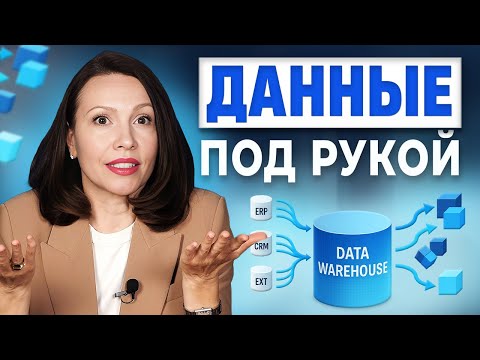
In the digital economy, data comes from many sources: CRM systems, ERP, websites, mobile apps, IoT sensors, and cloud services. Analysts and managers need a unified view of the business, while engineers need accurate data for machine learning and automation. ETL processes (Extract, Transform, Load) solve this problem by turning scattered information into structured, analysis-ready data.
Historically, large companies stored their data in isolated systems.
Financial transactions were stored in one database, marketing information in another, and customer data in a third.
This approach makes comprehensive analysis impossible, complicates report preparation, and leads to errors. ETL processes make it possible to collect data from different systems, standardize it, and load it into a repository where it will be available for analysis, BI systems, reporting, and machine learning.
Modern businesses use ETL to build data warehouses (DWH), work with big data, IoT platforms, cloud applications, and enterprise reporting systems.
Without reliable ETL, clear forecasts and personalized customer outreach are impossible.
Data goes through three stages — from sources to the warehouse
Extract
Transform
Load
The first step is extracting data from sources: relational databases, CSV files, Excel, APIs, 1C systems, CRM systems, online stores, and cloud services.
In the extraction stage, it's important to determine which data is needed and to plan the frequency of extraction.
For high-activity systems, such as online stores, data is extracted regularly or even in real time. There are two extraction options:
Full load - a complete snapshot of the table.
Incremental - selecting only changed records.
During extraction it is important to ensure data integrity: if table schemas change or new fields appear, the system must handle them correctly without losing information.
Raw data may be unstructured and contain gaps, duplicates and invalid characters.
That is why they are sometimes copied to intermediate storage, where preliminary checks are performed.
In the second stage, data is cleaned, enriched, and brought to the required format. Here are the main transformation operations.
Normalizing dates, currencies, addresses and phone numbers to a single format. For example, January 1, 2025 and 2025-01-01 are converted to the ISO 8601 standard.
Removing duplicates, fixing typos, filling in missing values. This is essential for high-quality analytics.
Adding external sources: reference data, geographic coordinates, currency rates.
Linking data from different systems by identifiers (for example, joining orders with bank-account debits) and computing summary metrics (total purchases, average order value).
Applying logic that reflects enterprise processes: cost reallocation, currency conversion at the transaction-date rate, fee calculation.
After transformation, the data becomes structured and ready for loading. Depending on the architecture, this can happen in a staging area (intermediate storage) or directly in the target store.
In the final stage, data is written to the target store: this may be a classic DWH on SQL Server, a cloud database (for example, Amazon Redshift, Yandex ClickHouse), a distributed big data store (Hadoop, Spark), OLAP cubes, operational marts, or even machine learning schemas. Loading comes in two types:
Full - rewriting tables completely.
Incremental - inserting and updating only new or changed records.
For large datasets, an incremental approach is preferable: it reduces system load and shortens the maintenance window.
Logging plays a key role: you must record load times, data volumes, and errors to monitor the state of the process.
Some companies use a two-phase loading technique: first, data is written to a staging area, where validation and quality control are performed, and then to analytics marts.
This approach helps avoid errors in the main database.
Besides traditional ETL there is the ELT architecture (Extract, Load, Transform). In ETL, transformation happens in an intermediate system, after which data is moved to the warehouse. In ELT, data is first loaded into the target database and then transformed by the database or analytics platform itself.
Transformations run on a dedicated server, offloading the warehouse. Processing is easier to scale. Specialized cleaning tools can be used.
Data duplication in the staging store. Development complexity.
Simplified architecture, fewer data-transfer stages. Ability to use the compute power of a modern analytics warehouse (for example, a columnar database).
A high-performance target cluster is required. Not all DBMSs allow complex transformations. Data quality is harder to control.
The choice of approach depends on infrastructure, data volume, and required processing speed. Many modern platforms (Azure Synapse, BigQuery, Snowflake) support hybrid scenarios, allowing transformations both before and after loading.
ETL processes run in different modes: Batch processing (batch).
Data is collected over a set period (an hour, a day, a week) and processed as one large job.
This simplifies resource planning and suits reporting where the full data volume matters.
The drawback is latency: yesterday's data will only be available today. Streaming processing.
Data is processed on the fly: new events are loaded into the warehouse immediately.
This mode requires a complex architecture: message brokers (Kafka, Pulsar), stream-processing systems (Spark Streaming, Flink) and detailed error-handling strategies.
But it provides minimal latency and is suitable for fraud detection, online retail, and IoT. Micro-batches.
A compromise between batch and stream processing: data is collected in short intervals (a few seconds or minutes) and processed in groups.
This lowers infrastructure requirements while also reducing latency.
The choice of mode depends on business needs: batch processing is enough for monthly reports and financial analysis, while online recommendations require streaming.
Efficient ETL is difficult to implement manually, which is why specialized platforms exist. There are many solutions on the market:
IBM DataStage, Informatica PowerCenter, Oracle Data Integrator, and SAP Data Services offer broad capabilities, connections to various sources, visual design tools, and built-in data quality controls. Open source and free tools. Pentaho Data Integration (Kettle), Apache NiFi, Talend Open Studio, and Scriptella let you build ETL workflows without licenses, but they require configuration knowledge.
AWS Glue, Azure Data Factory, GCP Dataflow, and Yandex DataSphere provide ETL in a self-service (serverless) model.
They free you from server setup and scale automatically.
Apache Spark, Airflow, Kafka Connect, and dbt (Data Build Tool) let you build ETL/ELT workflows as code, manage dependencies, and apply a DevOps approach (DataOps).
When choosing tools, consider source compatibility, data volume, team skills, security requirements, latency and budget.
To make an ETL process reliable and scalable, follow these rules: design the architecture in advance.
Define the source structure, formats, volumes, update frequency, control mechanisms, and recovery strategies. Use metadata.
Maintain a data catalog: document sources, fields, relationships, transformation rules, and change history. This will simplify support and auditing. Minimize loading.
Use incremental loads to transfer only changed records. Automate testing.
Develop unit tests for transformations and integration tests for the entire pipeline to catch errors before loading. Pay attention to security.
Encrypt sensitive data in transit and at rest, restrict access to sources and target databases, and comply with personal data protection laws. Monitoring and alerts.
Set up a notification system for failures, overdue jobs, and threshold breaches.
Regularly analyze logs to optimize the process. Document business rules.
Document in detail why each transformation is used, so new employees can quickly grasp the processing logic.
In ETL scenarios, the stages can run at the same time: while new data is being extracted, the previous batch can be transformed and previously processed records can be loaded in parallel.
This speeds up processing, but requires proper tuning of streams and locks. Plan for scaling.
As the business grows, data volume increases.
Use flexible infrastructure (clustering, distributed file systems) so the system doesn't hit a single bottleneck.
The company's internal data culture also plays a significant role.
Even with perfectly tuned ETL processes, efficiency will suffer if employees keep storing critical information in Excel files or sending it over email.
ETL implementation should be accompanied by staff training and a habit of working with data centrally. Only then does the system start delivering real value.
ETL processes continue to evolve.
The most notable trends: DataOps and CI/CD for data.
Pipelines are developed, tested and deployed as code; changes pass through version control and are automatically rolled out to production.
Smart automation and machine learning.
Products include features for intelligent data profiling, automatic field mapping, and transformation rule generation. Serverless ETL.
Cloud platforms make it possible to run pipelines without managing servers, automatically allocating resources and reducing cost. Integration with Data Lakehouse.
Hybrid storage combines the properties of a DWH and a Data Lake, keeping data in its original form while also providing analytics marts. ETL processes are reworked to load data in Parquet/ORC formats, create Delta layers, and build table views. Edge-ETL.
Edge computing is when IoT devices and microservices partially transform data before sending it to the central system. This reduces traffic.
ETL theory is the same for everyone, and every project starts with four decisions that are cheaper to make before the first line of code.
First is the owner of each entity. As long as a "customer" is created simultaneously in CRM, 1C, and on the website, any transformation contradicts itself: the source priority must be fixed before the data reaches the warehouse.
Second is increment depth. A full load is easier to build, but as the initial volume grows, it runs into the maintenance window. Incremental loading requires a reliable change indicator at the source, and its availability must be checked during analysis, not halfway through implementation.
Third is what happens when a source fails. A pipeline without an explicit retry policy and monitoring fails quietly: it delivers an incomplete data mart, and the error is only noticed in a report to management.
Fourth is where the exchange logic lives. As long as transformations stay inside the systems themselves, every new connection adds a dependency, and replacing one system forces changes in neighboring ones. A separate exchange layer, ESB, ETL, and the data warehouse, removes this coupling.
At this point, ETL stops being a script and becomes an engineering layer with data owners, monitoring, and a failure plan. If you have reached this stage, see how building the integration layer and ETL: integration types and when each fits, exchange architecture through the bus and data warehouse, tool stack, and answers to common questions.
ETL is the core of any analytics platform: it turns unstructured data into the foundation for forecasts and digital services.
ETL is the core of any analytics platform.
It brings together heterogeneous sources, turns unstructured data into valuable information, and provides the foundation for business intelligence, forecasting, and digital services.
Proper ETL organization requires not only choosing tools, but also careful planning, discipline, and a data-driven culture.
If you plan to build a data warehouse or scale existing ETL processes, start by auditing your current data, identifying critical sources and business needs, choosing the right mode (batch, stream, micro-batch), evaluating tools, and planning for scaling. And remember that ETL is a living system that should evolve with your business.