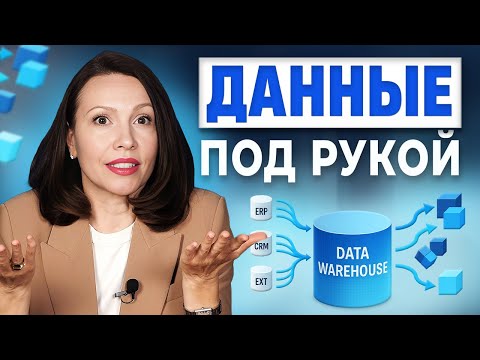
How data management systems help businesses automate analytics, improve accuracy, and speed up decision-making

How to choose and implement a data management system to improve analytics accuracy and speed up decision-making.

  • What is a data management system
  • Problems that data management systems solve
  • Components of a data management system
  • Data management systems: which one to choose

The CFO is waiting for a report, marketing is working from one version of the data, sales from another, and IT spends days on manual reconciliation. This situation is familiar to many companies. The reason is the lack of a system that brings together information from different sources and makes it accurate, up to date, and accessible. Here is what a data management system is, which problems it solves, how to choose the right platform, and what to pay attention to during implementation.

What is a data management system

  1. A data management system (DMS) combines processes and technologies to collect, store, process, and use data for business tasks.

  2. It helps structure information that is usually scattered across different departments and applications.

  3. Without such a system, it is hard to quickly find the right data, analyze it, and make the correct decision. According to studies, the CIS data management system market grew last year by 34%, reaching a volume of 89.5 billion rubles.

  4. This growth significantly outpaces the overall pace of the IT industry.

  5. Companies continue to invest in systems that help them work with data, despite external conditions. exchange-rate fluctuations, sanctions, and difficulties importing hardware and software.

  6. Businesses invest in data management systems because without them it is hard to stay competitive.

Problems that data management systems solve

When marketing data does not match sales figures and the finance team spends hours on manual checks, it points to problems with information management. DMS platforms help address the main causes of this disconnect. Fragmented information. Data is spread across systems and is hard to collect manually. A DMS solves this through automatic integration. Poor data quality.Errors in data undermine trust in reports.

- without automated checks, it is hard to spot a problem in time. - Non-compliance with regulatory requirements. Under Federal Law No. 152, businesses are required to protect customers' personal data. The system structures processes to meet these requirements and avoid fines. Slow decision-making. Finding the right data takes hours, which slows analytics and hampers quick decision-making. The system provides fast access to reliable information.

Components of a data management system

There are five key components, each solving a specific business task: 1. Data integration - the data management system combines information from CRM, ERP, websites, and other sources. Data is no longer collected manually, so the business gets a single point for analysis, which speeds up report preparation and reduces the risk of errors. 2. Information storage- data is stored in well-organized databases or flexible repositories. This saves resources because the company pays only for storing the data it actually needs.

3. Data quality management - the system checks data for accuracy and freshness according to predefined rules. The business no longer makes decisions based on outdated or incorrect information, making analytics more reliable and reports more trusted. MDM systems help launch the project faster and avoid the cost of fixing your own mistakes - the company can consolidate data without losing quality and with minimal rework.

4. Security and Access Control - the organization controls who can access which information, and the system protects it from leaks. This helps the business reduce the risk of financial loss and reputational damage while complying with personal data protection laws. 5. Analytics and Usage - analytics tools help identify data-driven solutions. The business forecasts demand more accurately, uncovers hidden patterns, and automates reporting. As a result, the company spends less and earns more.

Data management systems: which one to choose

How effectively you use information depends on the platform you choose. Different data types and business tasks require different solutions. According to TASS, the domestic DBMS market is growing by 25% per year, while 85% of new projects use relational or hybrid models. Relational DBMS store information in tables with a clear structure (rows and columns).

They use SQL to work with data, ensuring reliability and compliance with ACID rules (atomicity, consistency, isolation, durability). Such systems are widely used in banking, government agencies, and large corporations for core record systems where every entry must be accurate. For example, banks use relational databases to process transactions and maintain customer accounts. Their drawback is difficulty scaling under very high loads.

NoSQL systems Work with unstructured data: documents, graphs, or "key-value" pairs. They scale horizontally easily by adding servers to distribute the load. Large retailers and telecom operators use such solutions to analyze user behavior in real time. The downside is less strict data integrity control compared with relational DBMSs. Embedded DBMSs Work as part of the application without a separate server process.

They use few resources and do not require complex administration. Such solutions are used by mobile app developers, navigation software makers (for example, Yandex Navigator), and software for IoT devices. For example, navigation software uses an embedded database to cache maps. The main limitation is that they are not designed for multi-user work with large amounts of information. Master data management systems (MDM) create a single trusted source for key business objects: customers, products, employees.

They synchronize information across different company systems to avoid inconsistencies. MDM is indispensable in large corporations with extensive IT infrastructure (Evraz, T2, Rostelecom PJSC). It cleans data, removes duplication, and ensures consistency. Product information management software (PIM) centralizes product information: descriptions, specifications, images, prices. Manufacturers and retailers use PIM to quickly update catalogs across all sales channels.

This speeds up the launch of new products and improves data quality on websites and marketplaces Let's compare data management systems by use case and business value:

System typeBest-fit scenariosBusiness value
Relational DBMSFinancial operations, accounting systemsEnsures data accuracy and ACID compliance
NoSQL systemsBig Data, IoT, Content PlatformsAllows flexible scaling to match the load
Embedded databasesMobile apps, IoT devicesWorks without a separate server and saves resources
MDM systemsLarge companies with fragmented dataCreates a single source of truth for customers or products
PIM systemsRetail, manufacturing, distributionCentralizes management of product catalogs

How to choose the right system The choice depends on the company's needs.

Below are the key criteria to evaluate before implementation. Data type and structure - clearly structured (tables) or heterogeneous (documents, graphs)? - Scalability requirements - do you need to add new servers quickly to handle growing load? - Transaction criticality - how important is 100% accuracy and consistency in every operation? - Budget and Resources - how much is the company ready to invest in deploying and supporting the system? - Team expertise - does the team have specialists to administer complex systems?

Discuss your challenge with an architect

How to implement a data management system

Experience shows, that implementing the system helps companies reduce the time needed to prepare recurring reports 2-3 times - automating information collection and validation reduces manual work.

We've put together a step-by-step implementation plan to help you avoid mistakes and achieve real results. 1. Data audit and cleansing.Start by analyzing all data sources: CRM, ERP, and Excel spreadsheets.

Find duplicates, errors, and outdated information.

You need to cleanse the core data right away, otherwise the system will run on incorrect information.

Overview

2. Choosing a platform. Consider what matters more: rapid implementation or full control over data.

A cloud system is easy to scale, but it needs a stable internet connection.

On-premise systems require your own servers and specialists for support.

If you do not plan for data volume growth, costs will spike within a year. 3. Integration and testing.

Connect the core systems so information flows into the new platform automatically. Check whether the data syncs correctly - start with 2-3 key sources.

Test the system on real tasks, for example, generating a daily report.

If you do not set up data quality checks during integration, errors from old systems will carry over into the new one. 4. Employee training.

Show the team how the system will solve their daily tasks: speeding up data searches or automating reporting.

Don't settle for a general presentation without specific instructions, or employees will keep working the old way. 5. Monitoring and Optimization.

Regularly track how the team uses the platform and which processes can be improved.

Gather employee feedback and configure additional features for growing needs.

If no one is responsible for keeping data current, information quality will gradually decline.

How large businesses solve data problems

Let's look at examples from two CIS companies - how a data management system works in practice.

Customer data management at VTB Group

VTB faced fragmented data: customer information was spread across dozens of systems. Branches and subsidiaries worked with their own databases, making it impossible to build a single customer view, slowing reporting, and complicating risk assessment. To solve the problem, the bank implemented the Data Governance system. The project took about a year and consisted of three key components: a business terms glossary, a metadata catalog, and an information quality control system.

A dedicated data mart was built on the Tarantool platform for working with personal data, integrated with external sources such as Gosuslugi.

As a result: The speed of working with data has increased: - analysts were able to find the information they needed faster, which accelerated customer segmentation and new product development. - Decision quality improved - bank leadership began making strategic decisions based on reliable, consistent data. - Operating costs decreased - automating data management and data quality reduces analytics and reporting costs.

To keep such projects from turning into chaos, a clear system of accountability and rules is essential. Data Governance helps streamline processes: every employee understands their tasks, outcomes become predictable, and the risks of losses, reputational damage, and regulatory audits become manageable.

MDM implementation at M.Video-Eldorado

At M.Video-Eldorado customer data was stored in isolation: the online store, loyalty program, and CRM system each worked with its own version of the information. This made it difficult to build a unified customer view, led to duplicate mailings, and complicated service operations.

The company implemented the master data management system,which combined customer information from different sources and cleaned it of errors and duplicates.

Here is what changed after implementation: The number of duplicates decreased - the organization became more effective at consolidating scattered records, which reduced data duplication. - Personalization improved - marketing started sending more precise campaigns because it began relying on each customer's full purchase history. - Customer work has sped up - store consultants and call center agents now see a unified customer profile, which helps them resolve issues faster.

Trends in data management

According to a survey of technology specialists, 90% of respondents regularly use ChatGPT in their work, making AI tools as routine a resource as email. This shows how quickly technology is entering everyday business processes. By ignoring it, a company loses speed and market position. Below are the main

Trends in data management

  1. . - AI-Powered Process Automation- artificial intelligence analyzes information, checks quality, and finds errors.

  2. This frees analysts from routine and lets them focus on complex tasks. For example, X5 Retail Group uses AI for demand forecasting, which improves forecast accuracy by 17% and reduces inventory by 13%.

  3. - businesses are starting to delegate not only analysis but also preliminary decision-making to algorithms. - DataOps- a principle that uses flexible approaches to working with data.

  4. Teams work in short cycles, test hypotheses, and continuously improve their processes.

  5. This speeds up product launches and cuts analytics preparation time from weeks to days. - Real-time data processing - now companies can respond to events immediately rather than after the fact.

  6. The system instantly analyzes data from sensors, transactions, and user behavior. For example,

  7. The bank uses Real-Time Marketing. It responds to customer actions immediately, which increases response to offers by 38% and makes it possible to influence processes right away instead of retroactively. - Ethics and sustainable development are priorities - the company is revising its approach to data protection because of new requirements and customer expectations.

  8. They develop ethical standards for AI and optimize data centers to reduce energy consumption.

  9. Sustainability is becoming a practical requirement from investors, not just a declaration.

  10. Data becomes a fully managed asset, on par with finance and staff.

  11. Reduce costs through routine automation and more efficient resource planning. -

  12. Increase revenue through personalized offers and a fast response to changes in demand.

  13. Reduce risks through better data quality control and regulatory compliance. -

  14. Speed up decision-making by moving analytics to real time.

FAQ

FAQ

How much does it cost to implement a data management system?

The cost depends on the scale of the business. You can start with a pilot project in one department for 500,000-700,000 rubles. Full implementation for a company with 1-2 billion rubles in turnover costs 3-5 million rubles.

How long does it take to implement a data management system?

A pilot project is delivered in 2-3 months. Full implementation takes 6-12 months, depending on the number of systems being integrated.

How do relational and NoSQL systems differ?

Relational databases (PostgreSQL) are suitable for structured data, while NoSQL (MongoDB) is for unstructured and scalable tasks.

What will the system give to non-marketing departments?

The finance department closes reports faster, manufacturing purchases raw materials more accurately, and legal teams meet data protection requirements more easily.

How do you choose the right system?

Assess your data volume, tasks, and budget. MDM is suitable for customer data, while NoSQL is better for large volumes.

How difficult is it to integrate the system with legacy software?

Modern systems usually have built-in support for standard integration protocols. Complex cases require building dedicated connectors.

Do you need to hire new specialists?

Usually, training existing employees is enough. In the early stages, you can bring in external consultants.

How do you measure implementation impact?

Compare key metrics before and after: report preparation time, number of data errors, and manual processing costs.

What is the difference between MDM and PIM?

MDM manages master data (customers, employees, counterparties). PIM focuses on products and catalogs.

Which companies need a data management system?

Any organizations with large data volumes: retail, banking, logistics, and manufacturing.

{{cta}}

Discuss the article: How data management systems help...

Send via: