













Client
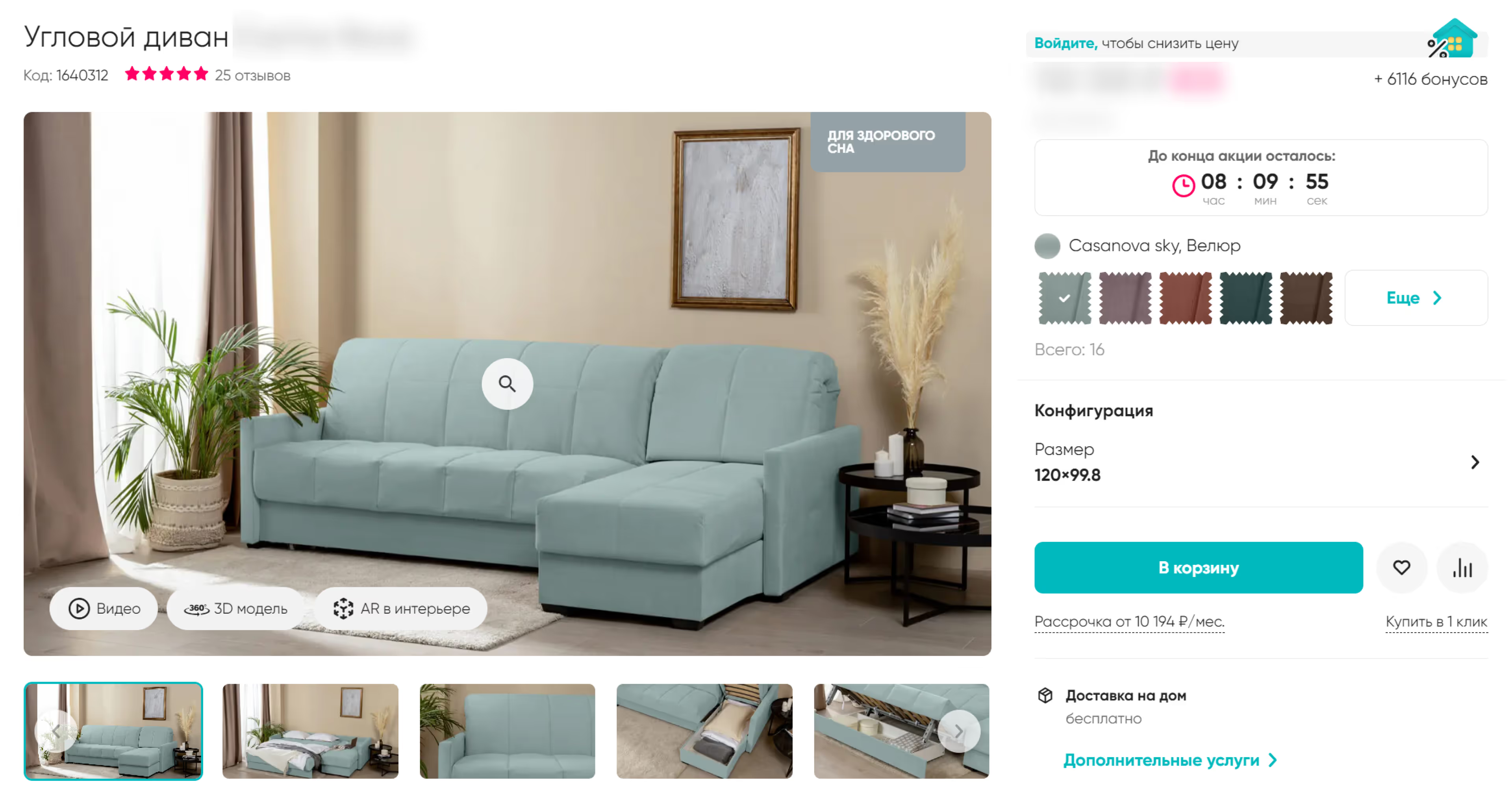
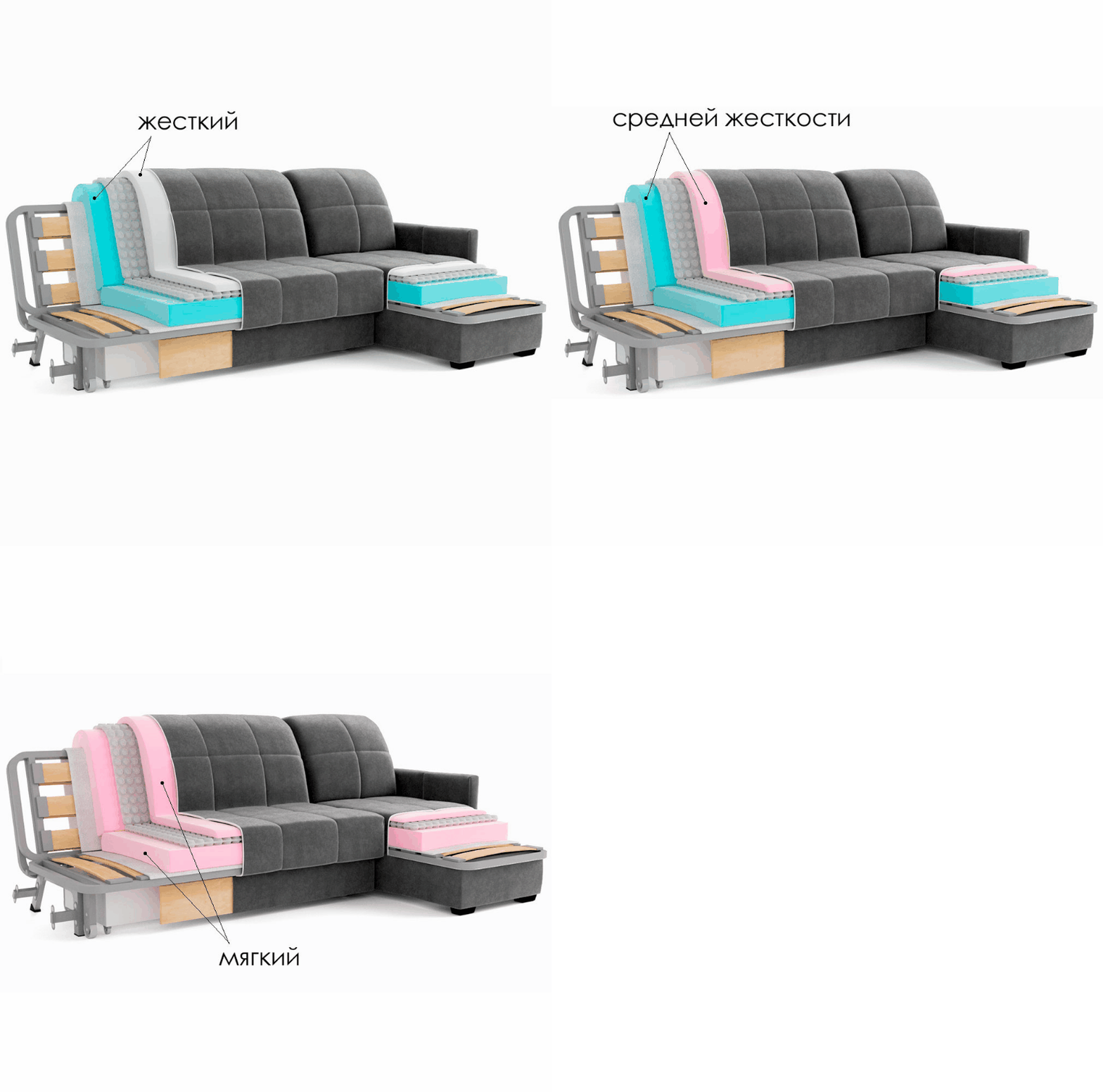
A major CIS manufacturer and retailer of healthy sleep products (the brand holds 48% of the market), furniture, and home goods.
The company's production facilities are located in the Vladimir Region and Novosibirsk. The client's assortment includes more than 500 million items.
Problem: the client had to overpay for re-producing content, and finding the required media files could take up to two business days
Each of the client's more than 500 million product items is linked to dozens, and sometimes hundreds, of different types of digital assets. These can include product photos, videos, promotional materials, and certain types of documents. In the absence of a single system for storing and managing digital assets, these resources were kept in different places: on employees' work computers, in employees' Google Drive accounts, or in other cloud storage services.
This approach to storing digital information created several problems for the business.
Each year the client processes, creates and stores up to 80 TB of various media — millions of images, videos and other content units. Without centralized storage for this volume of digital assets, it is hard to keep track of the dozens of possible places where media files are kept across the company. Storage scalability also matters: in 2022 alone more than 580 new product items were launched, which means the number of media files keeps growing.
Although part of the company's digital assets was stored centrally in a corporate cloud, its search capabilities were limited. For example, to find a product photo you had to know exactly under which name it was saved in the cloud, since there was no search by criteria or filters.
Because media files were scattered across different storages, no one in the company knew the exact number and content of all digital assets. So people from different departments (for example, retail and marketing), unable to find the files they needed, sometimes re-commissioned the same shoots — complex and expensive ones.
Some content carries usage restrictions — for example, a photo with a celebrity cannot be used in certain regions, or a contract for videos featuring a star is limited in time. But the usage rules for such files were stored separately from the files themselves. As a result, the client's divisions could unknowingly use such materials after the contract expired or in regions not listed in the agreement. By the client's estimates, fines for using such materials in advertising amounted to about 3.5 million rubles per year.
- No shared, scalable storage for a large volume of files.
- Slow search for the right content.
- Cost of re-producing content.
- Fines for improper use of photos and videos.
Task: integrate a single repository for all media into the company's environment with fast search capabilities
During the pre-project phase, the KT.Team and the client defined a list of requirements for the future digital asset storage system:
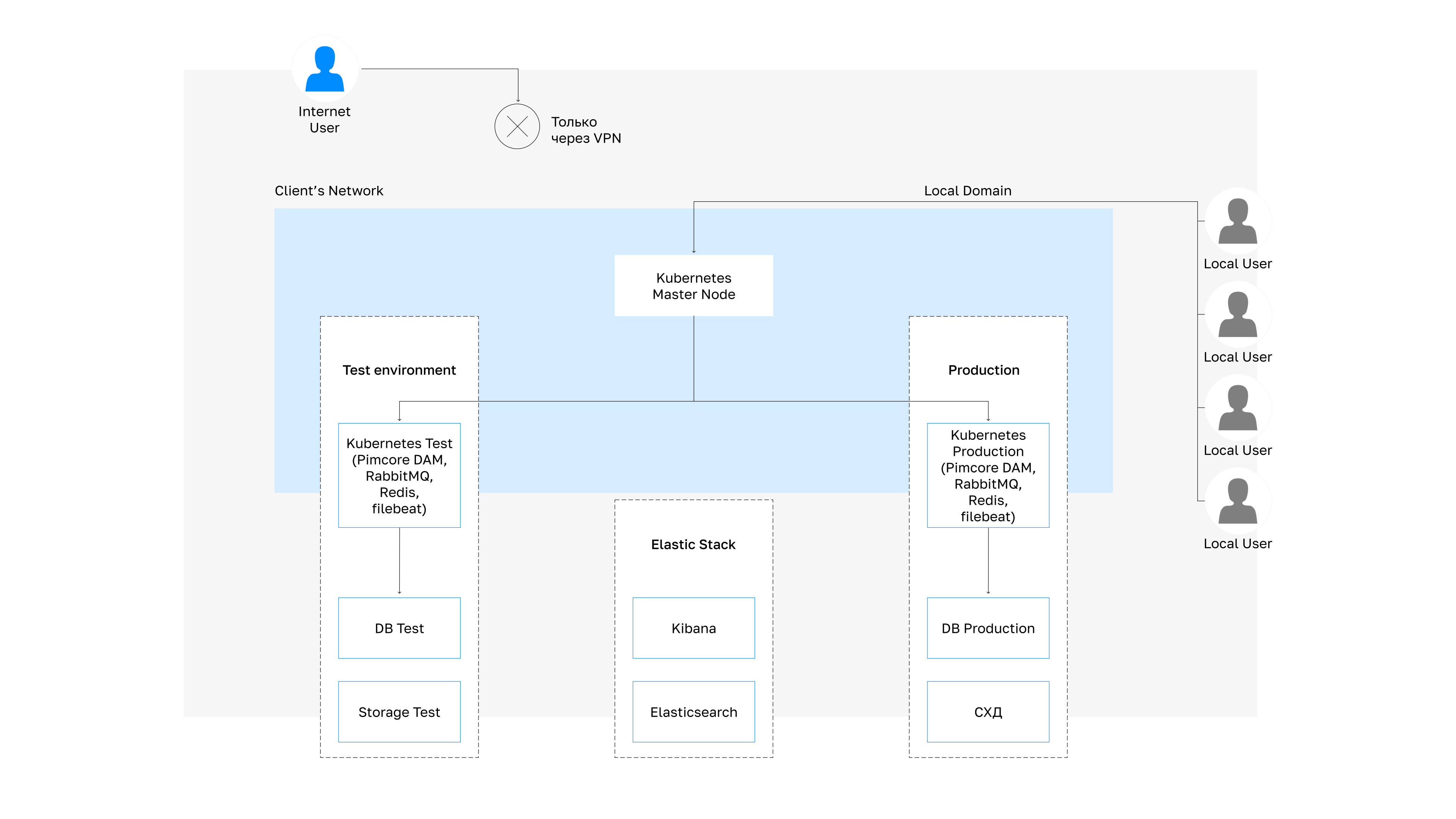
Project architecture
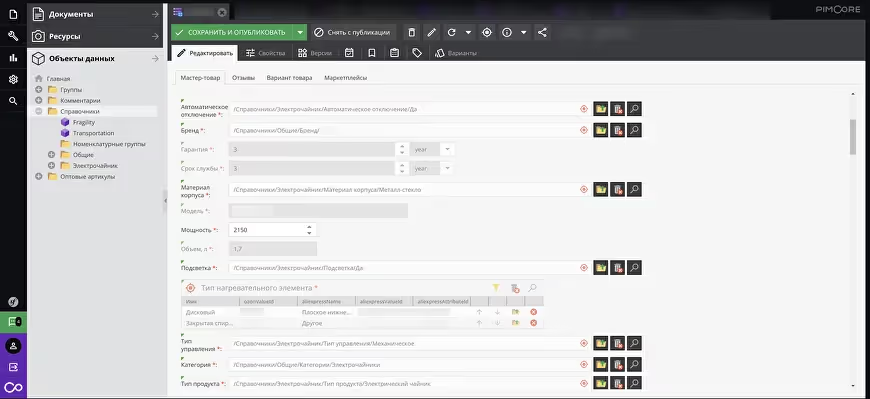
Taking the initial integration requirements into account, the team selected an open-source digital asset management solution, Pimcore DAM. It allows the company to store, search, and structure its digital assets. In addition, the open-source nature of the solution makes it possible to quickly configure or build the missing system tooling from scratch.
The solution architecture was designed with the client's initial requirements in mind. For the project, the KT.Team used Pimcore. The architecture includes a server that hosts the Kubernetes orchestrator for application management. Pimcore, RabbitMQ, Redis, and Filebeat run under Kubernetes. A separate element of the architecture is the storage array file repository (the CIS abbreviation stands for data storage system). This type of storage was used in the project because server disks, as the safest option, had already been purchased by the client before the project started. Elasticsearch is used as the search engine for log collection.
After the client's requirements for the system were revised, it became clear that some elements of the originally agreed architecture were not fully suitable for the new conditions. To do more than just store and search media, and to load, download, and archive files quickly, it would be more appropriate to use cloud S3 storage instead of the server-based storage array. Implementing these updates will be the next stage of the project.
It took about seven months from MVP development to production launch. At the same time, system refinement continues in agreement with the client, and the team plans to adjust the product architecture to improve performance.
- digital assets in the repository must be accessible to internal and external users;
- all assets need to be stored in a structured way in one place;
- employees had to be able to quickly find the content they needed on their own, using search and filters;
- assets that are outdated or have any usage restrictions must have the restrictions description attached to them;
- the company's IT department must be able to configure and maintain the system independently;
- File upload, download, and archiving speed had to be high.
Review a similar project with an architect
Result 1: a scalable media file repository with simple navigation has been implemented
If thousands of media files used to be stored in different sources, now most digital assets are kept in a single repository, the DAM.
Each file is linked to a specific SKU from the client's assortment. The files are tagged to make search results more precise.
In the DAM system, the client's employees can conveniently search for files using configurable attributes. It can be easily scaled to handle larger content volumes by adding more resources.
Result 2: the time needed to search for media files in the system decreased from 16 hours to a few minutes
Before Pimcore DAM was implemented, finding the right files could take several business days. First, it was necessary to determine which employee might have been responsible for creating the content, then to figure out exactly where the content was stored and whether it could be accessed again. If the employee who saved the content was on vacation or had left the company, reaching the required files was practically impossible. As a result, marketers often had to spend a lot of time searching for an image at the expense of direct promotion and sales.
Files are now stored centrally in a single DAM system. They can be found within minutes using custom filters and a personal account. Even if materials are stored in different folders, users can review the search results in a single window.
To make the client's work with contractors faster and more convenient, the KT.Team team developed a feature for sharing materials with external users via link.
Result 3: it is easy to determine whether ready-made content exists for a product item
Because media files were stored in a distributed way, it used to be difficult to determine what content existed for each product item. As a result, there were sometimes cases where the same product shoot with the same storyboards was ordered several times. For example, first by the category content manager, then by the marketing department, which did not have access to the previous files. The cost of re-production includes script development, photographer work, models, designer, studio rental...
With Pimcore DAM in place, employees from any department can find all media files linked to a product line or a specific item within minutes, review them, and determine whether any of the existing files fit their needs. This makes it possible to decide on producing new media only when there is a real need and reduces the cost of rework and duplicate production.

Result 4: by assigning usage restrictions to media files, the client saves about $0 million per year
The client regularly hires models and celebrities for shoots. In both cases, the company signs a contract that specifies the time and territorial limits for using photos and videos, as well as the permitted media. For example, the celebrity agreed to the use of photos for online advertising, but not for leaflets or brochures.
Contracts with usage terms were stored separately from the materials themselves. As a result, employees of the client who were unaware of the restrictions for a specific shoot sometimes used photo and video materials after the contract term, in regions not specified in the agreements, or on media that had not been approved. Before Pimcore DAM was implemented, the client spent about $0 million per year on fines for using such media files in its advertising campaigns or social media.
To prevent the use of outdated media, KT.Team developed a status system: "can be used", "restricted use", and "use prohibited". The status of each digital asset is displayed in search results. For an asset with restricted use, the type of restriction is shown: by time, usage method, or territory. If a resource is prohibited for use, it is automatically watermarked, and export is not possible.
Since the new repository went live in production in November 2022, the company has not received a single such fine.