














Client
The Muztorg group of companies is the largest retailer and leading distributor of musical instruments and music equipment in CIS. The online store muztorg.ru is the most popular in its segment of the CIS-language internet.
Muztorg is the official dealer of 600 global brands, including Yamaha, Fender, Ibanez, Gibson, Marshall, Casio, and others.
The company has operated in the CIS market for more than 20 years and keeps improving its service for customers. For example, thanks to omnichannel operations, all product information on the website is synchronized with data from the retail stores. In total, Muztorg's range includes over 126,000 products, and that number keeps growing.
The problem: poor-quality product data
Until recently, all product information was stored in an ERP trade management system. Many cards were incomplete: they lacked product specifications and quality photos. So the existing roughly 120,000 cards had to be reviewed and their errors fixed manually — or the filling and validation of cards had to be automated somehow to improve data quality.
In 2022, the client moved its product data from 1C to a subscription-based PIM service to solve the problem. However, that solution did not meet all of the company's needs. It soon became clear that the company needed its own flexible PIM system.
Muztorg had previously turned to KT.Team→ for a business IT transformation plan. They decided to develop the new system, customized to the company's requirements, with the same trusted contractor.
The goal: improve data quality and make managers' work easier
The client came to us with a clearly defined request: the company needed a product data management system with no subscription fee and the ability to manage changes flexibly. All product information held in the old system had to be migrated into the new PIM.
For Muztorg, it was important to streamline and automate the process of filling in, approving, and publishing product cards. This would improve data quality and make the online store more appealing to customers.
In addition, the client wanted to keep room in the system for future growth: more suppliers, a wider product range, and new functionality.
The solution: a PIM system that can be scaled and extended
The solution was built on Pimcore, a PIM system written in PHP. KT.Team experts configured it, designed an information model for displaying product cards in line with the client's requirements, and grouped attributes so that employees from different departments could use them easily and conveniently. After that, the KT.Team and Muztorg teams reviewed and approved the cards and migrated all historical product data into the new system.
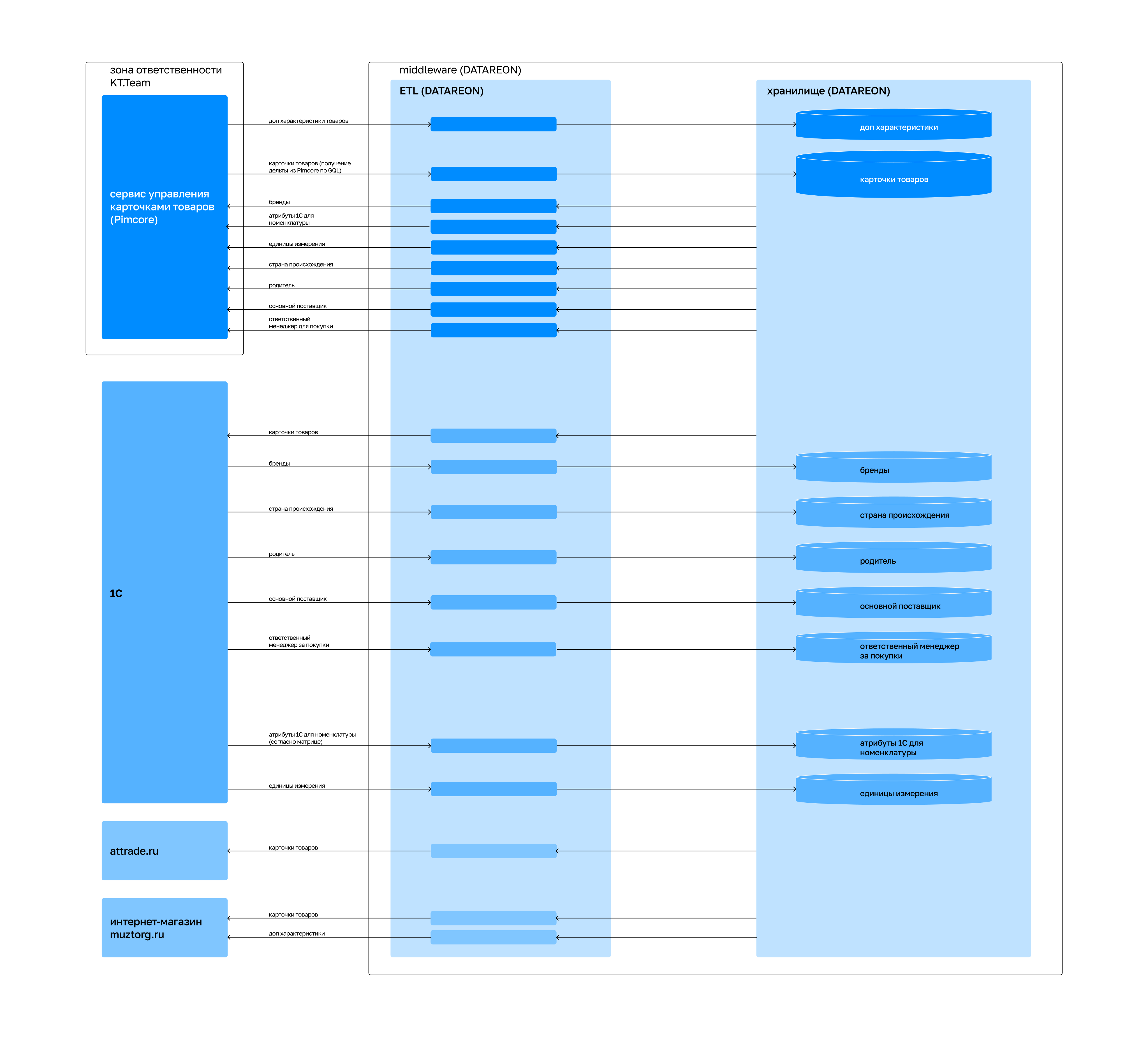
The product card management system is one of four parts of the mechanism that Muztorg's employees use to keep records of products, counterparties (suppliers), and wholesale and retail customers. Data is exchanged between all components of the mechanism through the Datareon bus. Integration with other services is developed by the client's own IT department, so our teams additionally aligned on correctly integrating the PIM system into the overall landscape. The PIM system is configured to send and receive data in the required format on request from the bus.
Service diagram of the entire project. KT.Team works only with the PIM system
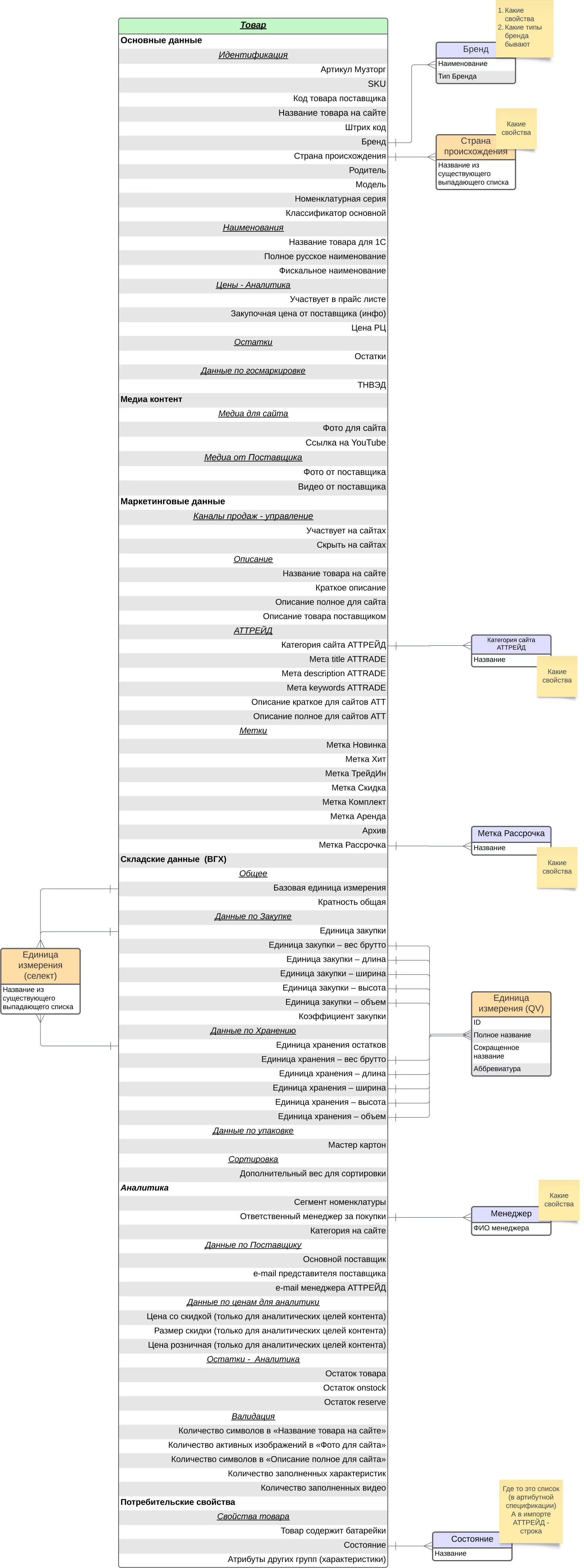
Product data is loaded into the PIM from XLS files completed by managers across Muztorg's various divisions. Each file contains an agreed set of 85 attributes, some of which are mandatory.
Information model of a product card in the PIM system
The system automatically parses the XLS into individual fields and validates them: it checks whether all mandatory elements comply with the defined rules. For example, a barcode must contain 13 digits with no extra characters.
After validation, the data is loaded into the system and a new product card appears. It goes to a content manager, who fills in the remaining fields and adds a description and photos. They then submit the card to a moderator for approval. If the product card is filled in without errors, the moderator can publish it on the website.
The PIM system passes product cards through the data bus to the company's two websites: retail and wholesale. The product catalog for both sites is built from PIM data (specifications) and 1C data (prices, availability). Data is updated by trigger — the bus picks up every change.
Review a similar project with an architect
Result 1: the data in the system became more complete and higher quality
Automatic validation and manual data moderation reduced the number of errors in new product cards. Incorrect data simply never enters the system: a user cannot create a card if its information fails validation. Now site visitors see more complete information and up-to-date photos.
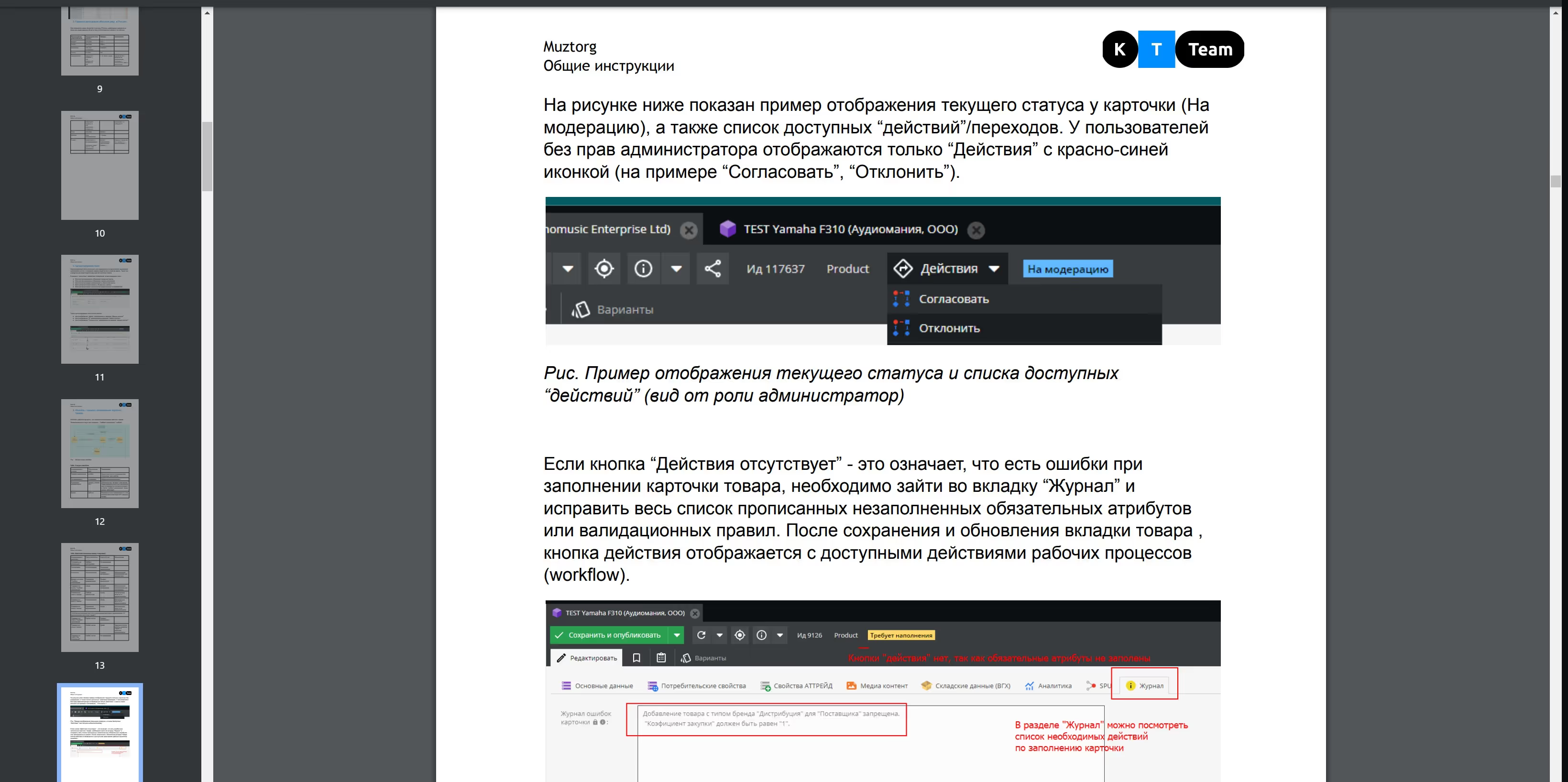
The KT.Team team anticipated that some incorrect cards would remain in the system after the historical data was migrated. To review and update them, another mechanism was added: a Log tab in the cards that shows the result of validation against the new rules, so the PIM moderator can see which cards need additional information.
Screenshot from the instructions for Muztorg employees
Thanks to the simplicity of the data import process, it became easier for managers to add new products. By the fall of 2023, the system held around 129,000 product cards, and by the end of the year the client plans to bring that number up to 150,000.
Result 2: new functionality and the ability to extend the system
Even by the time of the system's test launch, it became clear that users were actively suggesting various improvements. For example, after the staff training, requests appeared for bulk uploading of product photos, photo previews, and the ability to resize images. In the future, the client can add such functionality with its own development team or by engaging a contractor with Pimcore expertise — there is no need to involve a vendor, as is the case with some other PIM systems.
One feature already in place is media management within a card. A manager can mark a photo as active or inactive. This is useful, for example, for promotional materials with a limited usage period or for images of celebrities. If a photo's licensed usage period has expired, there is no need to delete it — it will be hidden on the sites automatically.
Result 3: it became easier to change categories and move products between them
Product category information is also stored in the PIM system. If the category tree changes in the PIM or some products move from one category to another, the corresponding changes appear in the site catalog within five minutes. This matters when, for example, a product is first placed in the wrong category and the error is then corrected.
In addition, beyond the basic mandatory attributes, each category has extra characteristics. Guitars have one set, wind instruments another, and so on. In the PIM, these characteristics are listed in a separate Consumer Properties tab. We built a mechanism that sets or changes the consumer properties to match the selected category whenever a category is assigned or changed. For example, when a guitar card is moved from the 'six-string' category to 'seven-string', the number of strings in the product card changes automatically.
Finally, since the client plans to let suppliers upload and fill in product cards themselves, KT.Team built the corresponding functionality. To do this, we structured the category tree so that a supplier user only has access to their own categories and products — that is, suppliers do not see in their PIM account the products uploaded by Muztorg managers or other suppliers.
Result 4: the client can forecast and manage the project budget
Pimcore is a flexible system with low vendor lock-in that requires no mandatory subscription. At the same time, the client can decide for itself which capabilities to implement soon and which can wait — meaning it can define its budget precisely rather than paying both for using the service and for every improvement to it. For example, exporting analytical reports from Pimcore can easily be set up by Muztorg's own analysts, without involving either a vendor or an in-house development team.
Muztorg was satisfied with KT.Team's work, so our team is now launching a second project for the client — a system for managing counterparty data (suppliers, customers, partners, and so on) built on Pimcore. It will address a similar problem: improving the quality and ensuring the completeness of data on all the legal entities and individuals that Muztorg works with.