
System load is reduced
Solutions
ESB and Data Lake for Building the Business IT Landscape
We help build an IT architecture through ESB and Data Lake: reduce system coupling, speed up change, and keep integrations manageable.
Our clients
Clients and partners














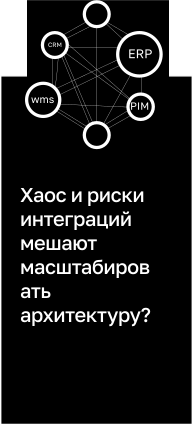
In our experience, in 90% of cases businesses build IT architectures with critical mistakes, which then leads to a range of complications We build IT infrastructure using ESB and a data lake through loose coupling of IT systems, which solves all the problems described above! Discuss the issue Integration type comparison Download the material Completion time - 10 minutes
Profitability
-
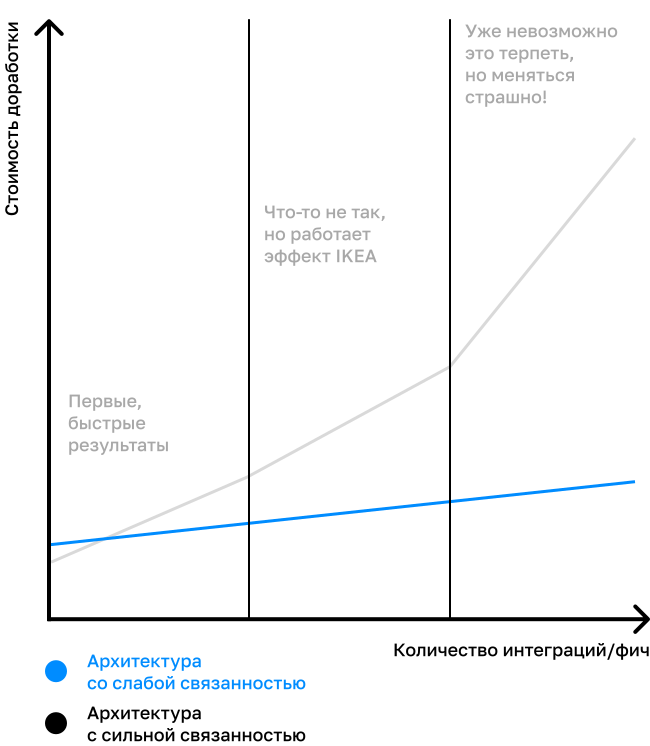
Mistakes in building IT infrastructure are not so visible at the beginning, but they become extremely harmful as the IT infrastructure develops
-
Solution: Building service-oriented IT architecture based on enterprise service bus (ESB) and data lake through loosely coupled IT systems modules approach. Discuss the problem. Comparison of integration types. Download material. Completion time - 10 minutes.
-
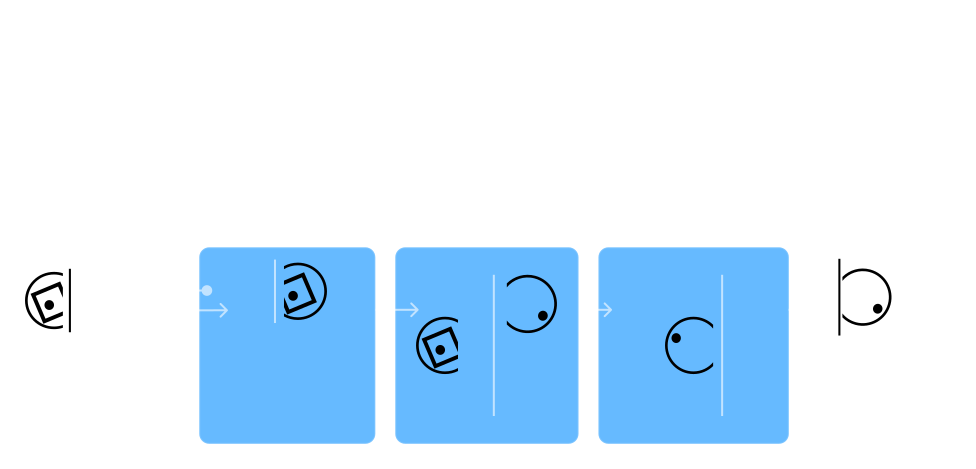
It is like a translator who always hears, understands, and explains clearly And can communicate with a whole group of tourists from different countries without any delays and with each one at the same time!
-
We will look at concrete examples of how implementing ESB and a data lake: 1) eliminates data loss; 2) reduces load on IT systems; 3) simplifies data analysis; 4) makes it easy to replace IT systems
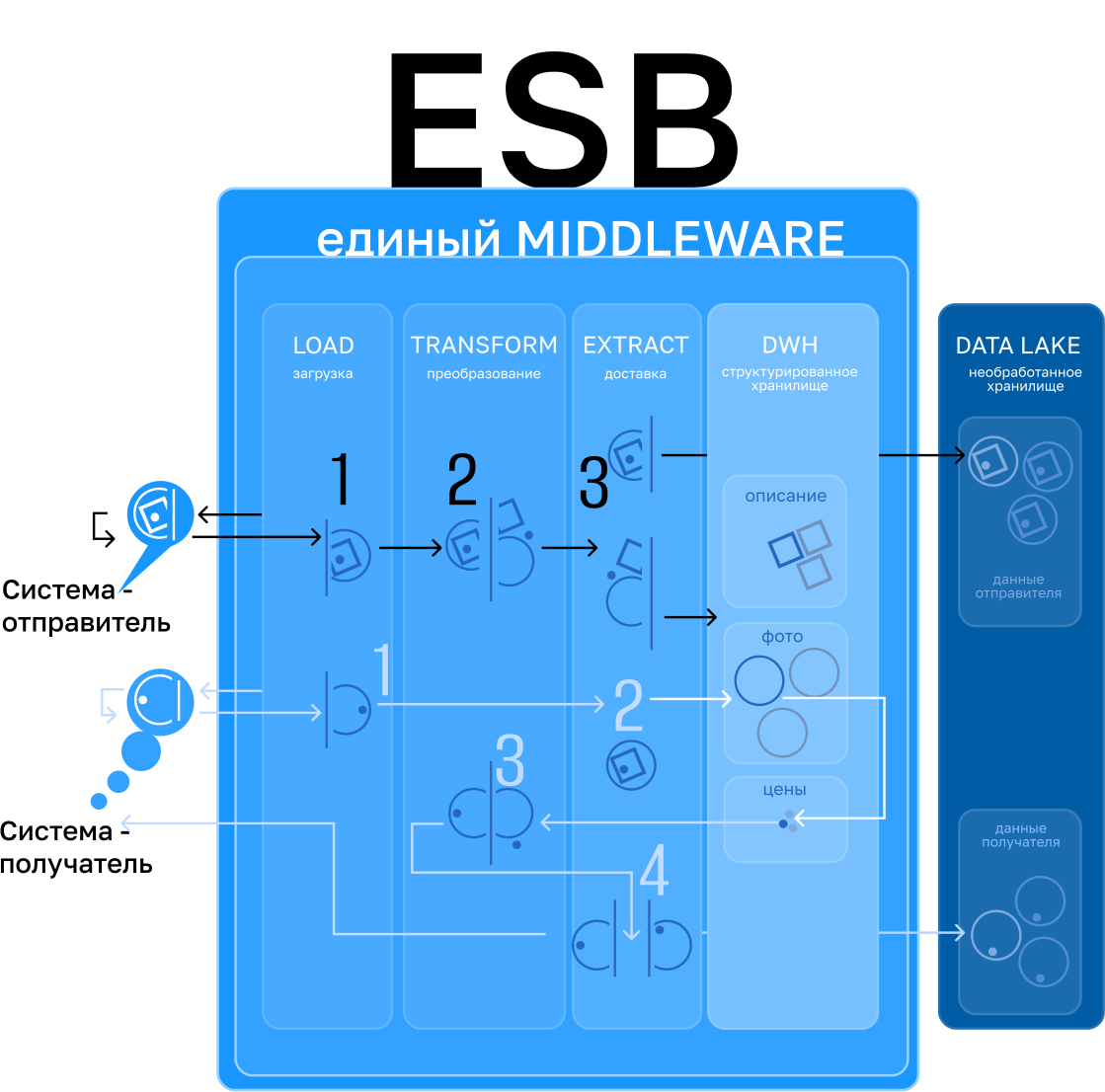
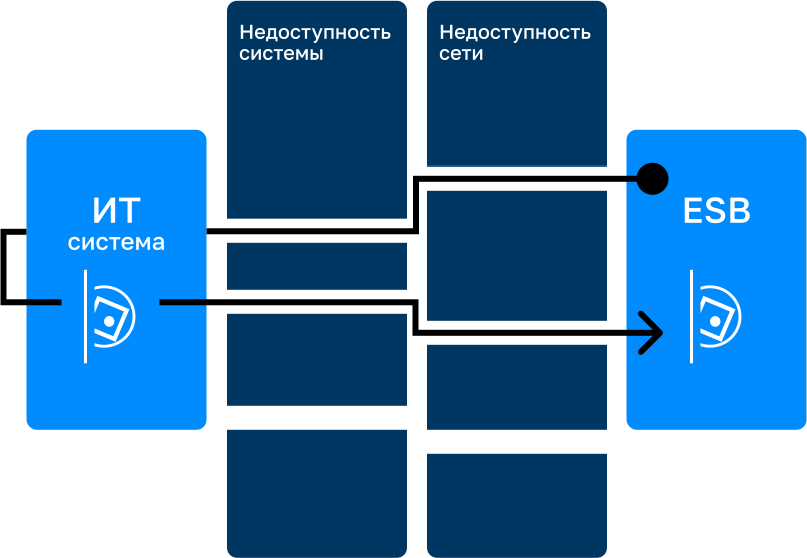
1. ESB independently monitors system and network availability, and itself retrieves and delivers messages
Data loss is eliminated
Data freshness and duplication are checked, which also reduces infrastructure load
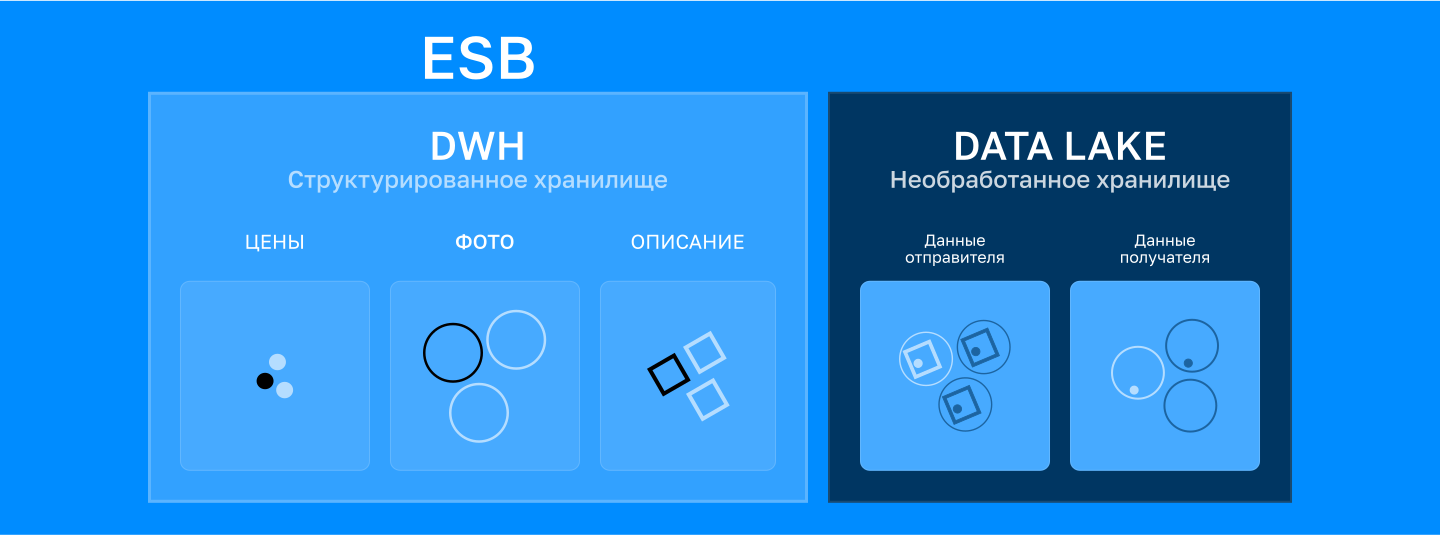
2. The combination of ESB and a data lake makes analytics easy
ESB combines data from different systems and standardizes it in the DWH. The DWH stores structured data, making it easy and fast to generate standard data slices
A data lake, containing raw data from all enterprise systems, makes it possible to prepare any data slice
Data freshness and duplication are checked, which also reduces infrastructure load. Adding new data sources is easy, and replacing the BI platform does not require complex reconfiguration
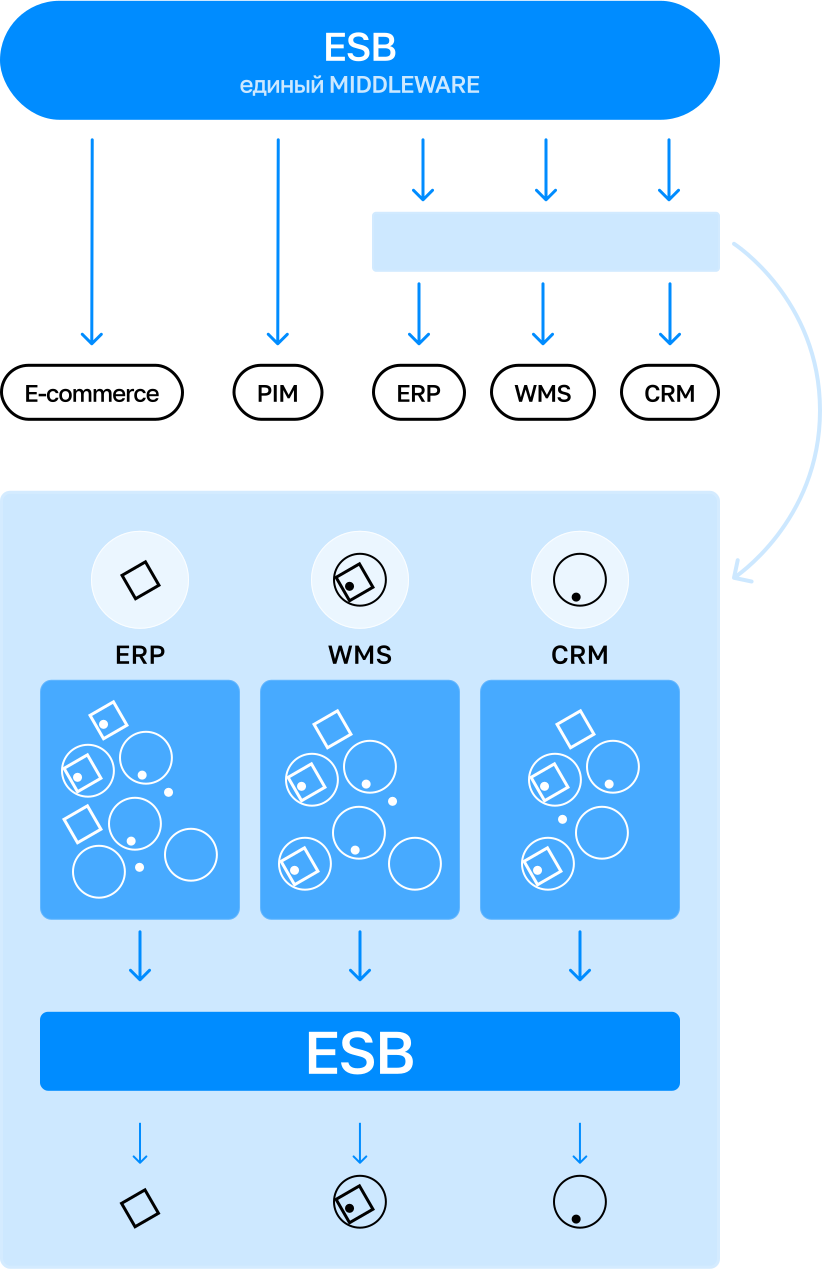
5. A single middleware layer for all systems connected to the ESB reduces load through flow orchestration
Flow orchestration Optimizes and dramatically reduces the load on IT systems - Sends data only to those who need it, and only in the required format - Takes into account optimal delivery conditions: - timing based on system load, - duplicate control, - data freshness checks Discuss the issue Integration type comparison Download the material Completion time - 10 minutes We developed a target system integration architecture for a manufacturing enterprise.
Implemented ESB technology and launched 48 flows Point A EKF lacks an up-to-date IT integration map, system coupling is strong, the central ERP is overloaded, and delays and data loss are possible, slowing business processes. Point B A centralized system based on Pimcore has been implemented and integrated through WSO2 ESB. Product cards are standardized, data is synchronized automatically, and scalability and control are ensured through message brokers and a logging system.
Developed a single API for fast connection of more than 200 1C:Retail systems Point A Polaris manages products manually, which requires significant resources and creates challenges when working with marketplaces due to fragmented data. Point B A centralized system based on Pimcore has been implemented and integrated through WSO2 ESB. Product cards are standardized, data is synchronized automatically, and scalability and control are ensured through message brokers and a logging system.
Developed a single API for fast connection of 200+ 1C:Retail systems Point A The point-to-point integration architecture between 1C:ERP Enterprise Management and more than 200 1C:Retail systems led to overloads, outdated data, and a lack of transparency. Point B Introducing a single entity-based API connector simplified data synchronization and eliminated many point connectors. Adding new retail locations is now fast, and monitoring provides transparency and control.
For the Fix Price chain, a supplier portal was developed and work with product data was automated Point A Manual collection and transfer of product data through messengers and email led to errors and delays. There were data synchronization issues between systems. Point B Automation through Pimcore and Mule ESB. In the supplier portal, vendors enter data that is automatically transferred to the systems, improving the quality and speed of processing. The ESB bus simplifies integration and data management.
We redesigned the IT architecture and created a roadmap for its transformation for the music retail company Muztorg Point A Muztorg has problems with an outdated IT architecture, which result in high maintenance costs, inefficient system interaction, and data loss risks.
Point B A new architecture was developed with MDM and ESB solutions, making it possible to optimize information systems, ensure scalability, improve data quality, and speed up integration with external services. Implemented a scalable service bus for ATIMO Point A The ATIMO startup faced a problem scaling its system.
Each new partner required a direct connection to the database, which led to significant resource costs and higher information security risks. Point B Implementing a service bus (ESB) made it easier to connect taxi fleets, speed up data processing, reduce server load, and improve security by eliminating direct connections.
The architecture became highly scalable, which made it possible to connect 20 taxi fleets with 42 databases and significantly reduce the resources required to process each request.
Submit a request for an analysis of your situation: Discuss the issue Integration type comparison Download the material Completion time - 10 minutes We will select proven international open-source products We use open-source solutions, so our clients reduce license costs without the risk of restrictions from different countries' laws. A visual studio for building connectors A simple and flexible low-code platform that is part of Salesforce, a company with annual revenue of more than $30 million.
We use the Community Edition. Version control and role-based access settings. An open-source DevOps lifecycle web tool. More than 30 million registered users. Database (storage). A powerful open-source object-relational database system under active development for more than 35 years. Log storage, analysis, and search. Enterprise security, observability, and search solutions built on the Elasticsearch platform used by thousands of companies.
Dashboards with information on flow status A visualization and analytics system that allows you to work out of the box with a wide range of data sources. 12 2 /
If you have preferences, we can use other products too, including paid-license options
Database MongoDB Hadoop Arenadata PostgreSQL Message broker ActiveMQ RabbitMQ Kafka ETL (extract, transform, load) Ballerina Nifi Datareon WSO2 MuleSoft Talend BI (analytics system) Yandex Datalens Redash Google Data Studio Microsoft Power BI
A typical workflow
We have structured the implementation process so that you get the maximum benefit. You can go through the entire journey with us. Or you can order any of the steps separately and hand the rest over to your team.
1. Designing a loosely coupled architecture
We will analyze the current IT architecture, AS-IS; work through exchanges for key entities; design the TO-BE architecture; prepare a roadmap for transitioning to the new architecture; prepare recommendations on tools; and prepare documentation. You will receive
A transition plan tailored to your business specifics
2. Migrate your most critical flows
BPMN flow diagrams; deployment and configuration of the required components (ETL, storage, logging, monitoring); connector setup; log collection and integration monitoring setup; documentation and training. You will get
Solving 80% of data exchange problems between systems
3. Migrating the remaining flows to populate the data warehouse
BPMN flow diagrams; connector setup; log collection and integration monitoring setup; documentation and training. You will get
A single enterprise-wide exchange mechanism and complete data for analytics






Discuss the solution: In our experience, in 90% of cases...
Related Cases

Talend ESB for pharma integrations
- Measurable business result delivered

Supplier portal for Fix Price
- Only well-completed records enter the systems

New IT architecture for Muztorg
Learn moreRelated solutions
Articles on the topic
- ESB Systems for Integration Comparison: 2026 Overview
- How Much an IT System Really Costs and Why Development Is Only the Tip of the Iceberg
- Do You Always Need a Message Broker?
- Point-to-Point, Broker, ESB: Which Integrations Help Build a Loosely Coupled IT Architecture
- How to Choose the Right Type of Integration for Your IT Architecture
Related videos


News on the topic
- Maintenance release of DATAREON Platform 3.2.1.1
- Certification of SOFROS and White Code partner specialists in the DATAREON Platform: Specialist program
- Skills for MuleSoft Vibes
- Pimcore Platform 2026.2: CDN cache proxy, Studio Theme Manager, SBOM for every release