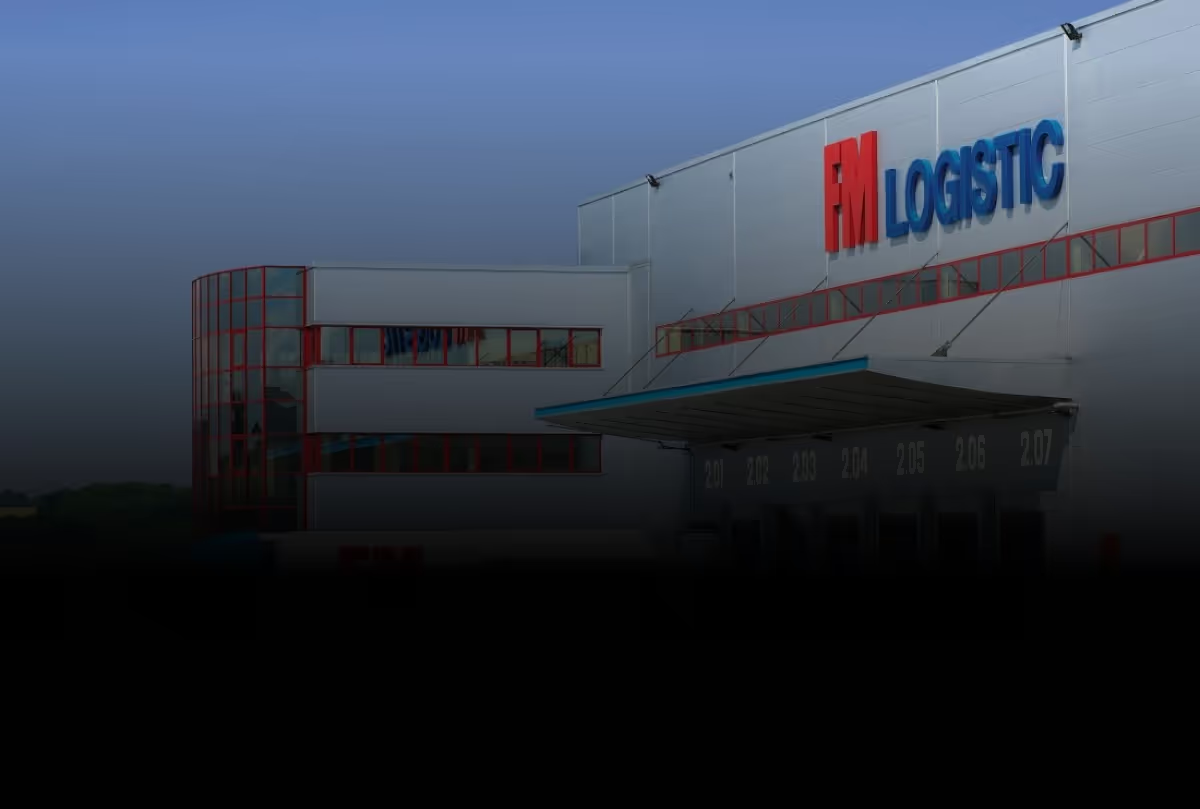
Chaos at the checkpoint
Sometimes there is a line of vehicles, sometimes the gate sits idle arrivals are not planned around actual throughput.

Solutions
Queues at the checkpoint, truck idle time, and demurrage penalties arise where the yard, gates, and carrier requests operate separately from the warehouse and 1C. We build a B2B carrier portal and implement YMS as a single environment: self-booking into time slots, requests, statuses, gates, and yard management, integrated with your WMS and 1C.
Our clients













Pain
The yard is the last non-automated part of logistics. As long as requests come by phone and email, and the checkpoint, warehouse, and 1C are not connected, losses hide in waiting and manual coordination.
Sometimes there is a line of vehicles, sometimes the gate sits idle arrivals are not planned around actual throughput.
“Where is the truck and why is it delayed?” is figured out by phone calls, while the checkpoint, WMS, and TMS operate separately.
Drivers wait for hours, and demurrage claims arrive after the fact.
Schedules, slot approvals, and alerts still rely on manual work.
Slots are assigned without considering dock load, shifts, or shipment priorities.
Approach
For vendors, the carrier portal is a feature inside YMS. We design a B2B portal around real roles carrier, dispatcher, security, warehouse clerk: self-scheduling into time slots, requests, statuses, and documents tailored to your processes.
We connect the yard and portal with 1C (WMS/UT/ERP), TMS, access control, barriers, scales, and license plate recognition through ESB, API, and events. End-to-end integration is our responsibility.
We layer the portal and yard management on top of what has already been purchased: an existing YMS or a 1C:WMS module. This reduces IT budget and avoids creating yet another system.
Changing the carrier, warehouse, or checkpoint equipment does not break the rest of the landscape. Exchange monitoring and DORA/SRE keep it stable during peak season.
Scope of work
Carrier and driver registration, vehicle profile, documents, visit history, and trip status in real time.
Submit and approve requests online instead of by email and phone: route, cargo, vehicle, and driver are entered directly into a single environment and into 1C.
Self-scheduling into an open slot based on dock load, shifts, and priorities. Automatic slotting and rescheduling on failures.
Checkpoint registration, a virtual queue, and driver alerts when called to the gate, without vehicle buildup at the entrance.
Gate assignment and control, yard map, vehicle and trailer movements, linked to WMS loading and unloading tasks.
Integration of barriers, scales, license plate recognition, and access control systems, enabling registration and entry without manual input.
Unified reporting: vehicle turnover, gate waiting time, dock utilization, carrier punctuality, and idle-time penalties.
Result
The goal of implementation is not a feature set, but a shift in yard operating metrics: vehicle turnover, average gate wait time, dock utilization, carrier punctuality, idle-time penalties, and dispatcher workload. We record the before and after on your own flow. Market ranges (idle time -15-30%, throughput +20-40%, penalties -40-80%) are vendor and review claims, not KT results.
Integration
For the CIS market, the yard-and-portal ↔ 1C setup is mandatory. We connect the carrier portal and yard management layer to 1C (WMS/Trade Management/ERP), TMS and checkpoint equipment via integration layer (ESB/API/events). If there is a Yard Management module in 1C:WMS, we layer the solution on top and add the portal. The architecture is loosely coupled: if the carrier, warehouse, or scales change, we do not rewrite the rest of the landscape. Connection to the warehouse is — WMS.
Import substitution
We build the solution with components from the domestic software registry and on the 1C stack (1C:Enterprise 8.3, Linux, PostgreSQL) so the yard and portal meet procurement requirements.
If you are choosing a YMS, we help assess registry-listed options and assemble a solution without vendor lock-in. Product listing can be verified on the reestr.digital.gov.ru entry.
FAQ
WMS manages goods inside the warehouse: receiving, storage, picking, and shipping. YMS manages transport on site before and after the warehouse: yard, gates, queue, and time slots. They work together, and we connect both layers.
Book vehicle arrival times for specific gates based on warehouse load. The carrier selects an available slot in the personal account, and the system distributes traffic without queues or idle gates.
No. GosLog is the state carrier registry, and OVGA issues city passes. We build your corporate B2B portal for working with your carriers: requests, time slots, statuses, and documents.
In the CIS market, yes. Linking the yard and portal with 1C is needed for end-to-end accounting, and components from the domestic software registry are needed to pass procurement. We build for both requirements.
Yes. We are an integrator, not a vendor: we enhance and integrate an existing YMS or 1C:WMS module and add a carrier portal instead of buying a new platform.
It depends on the landscape and the integration scope. We provide exact timelines after analyzing your yard, request flow, and source systems.
KT.Team experience
A portal where external carriers and contractors work independently, without calls to dispatchers or manual gate lists.