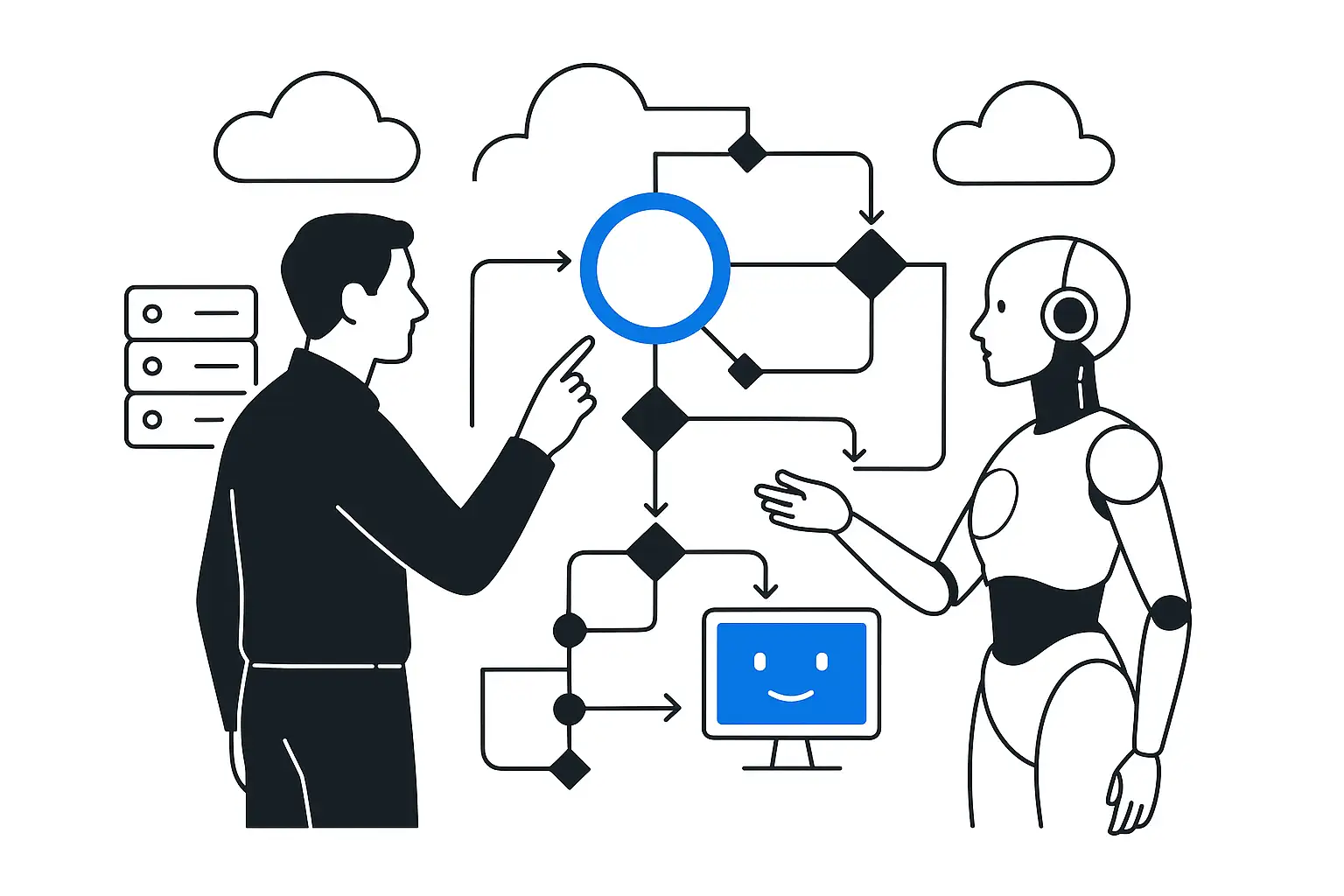
AI agent - an autonomous digital employee powered by artificial intelligence that _reads data, makes decisions, and executes multi-step business processes without constant human involvement_.
Such systems became possible thanks to the development of large language models capable of not only generate text but also act in a digital environment. Unlike scripts and chatbots, an agent works with unstructured data, adapts to change, and learns from its own experience. The agent works like this: receives a signal → thinks about what needs to be done → does it. It can pull data from CRM, email, or a BI system, create an action plan, and carry it out by interacting with the necessary services.
For example, if a regular assistant produces a quarterly report template, an AI agent will gather the figures, identify trends, format the slides, and send the finished presentation to the manager.
How an AI agent works - Large language models (LLM) - the agent's "intelligence": understands requests and builds the logic for actions. - Tools and API - communication channels with external systems: CRM, email, databases, messengers. - Memory - the agent remembers previous steps and uses context so it does not start from scratch each time. - Planning and reasoning - breaks the goal into steps, evaluates options, and chooses the best path.
Discuss your challenge with an architect
Why businesses need AI agents Agents are changing how companies work with data and tasks. They automate _complex processes where a simple algorithm is not enough,_ and deliver tangible value: 1. Reduce time and costs for complex tasks- instead of dozens of manual actions, the system combines several steps into one flow. In insurance, it can gather documents, verify them, assess risk, and issue a ready policy in minutes - work that takes a person hours.
2. Improve service quality and response speed - the agent works 24/7 and for each customer can do more than answer: it can track an order, predict a delay, find the best option with partners, and offer compensation, preserving loyalty. 3. Eliminate bottlenecks and human errors- in finance, the agent performs initial borrower scoring, checks dozens of parameters in seconds, and delivers a justified decision, reducing analyst workload and lowering risk.
4. Accelerate strategic decisions - instead of spending weeks preparing reports, the sales director receives a weekly digest from the agent showing what is growing, what is declining, and where efforts should be redirected.
In real estate, the system analyzes rates, occupancy, and market trends to suggest the optimal price and tenant retention strategy. Example:the company "SberAutoSubscription" implemented an AI agent that processes requests on its own, communicates with customers in messaging apps, selects cars, schedules test drives, and sends visit reminders. As a result, conversion increased by 25%, and operating costs for lead management dropped significantly.