Integration with DevOps, business processes, and ITSM
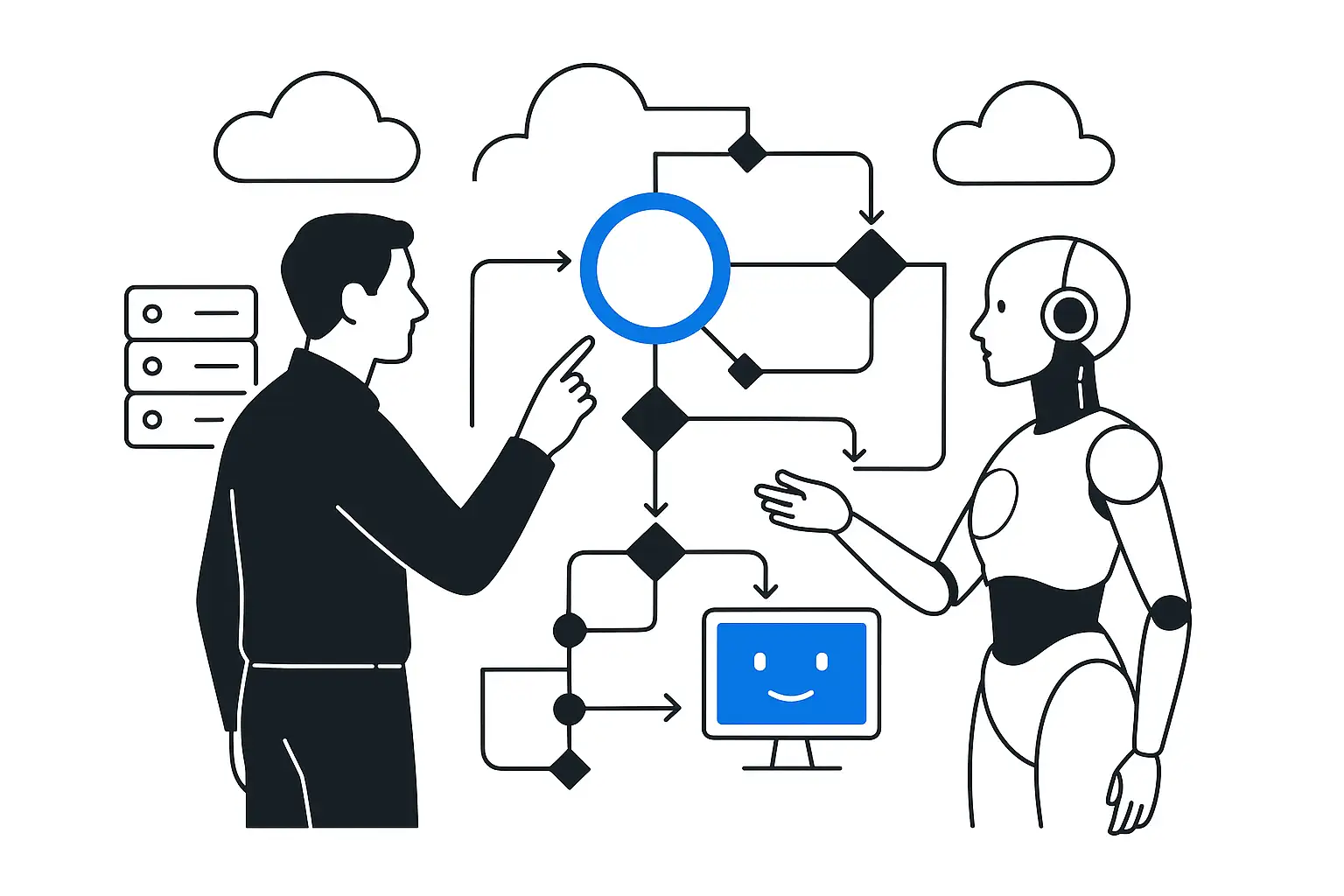
Linking monitoring with Jira, ServiceNow, CI/CD, and Kafka makes it possible to build automatic responses: restart, failover, and task creation.

AI monitoring: data analysis, deviation alerts, failure prediction, and automatic incident response.
Our clients












We deploy continuous monitoring systems for infrastructure, services, and processes. ML-based anomaly analysis and instant alerts help you respond sooner, not after a failure. Systems go down, processes stall, and users find out first. We implement AI monitoring that responds to failures before they become a problem. AI monitoring for processes: anomalies, alerts, and instant actions
AI detects not only failures but also "pre-incidents": API delays, rising load, and anomalous service behavior. All before complaints and downtime.
Linking monitoring with Jira, ServiceNow, CI/CD, and Kafka makes it possible to build automatic responses: restart, failover, and task creation.
Models are trained on historical data and predict where and when a failure is likely, what caused the issues, and which nodes are overloaded.
Not just an alert that something broke, but concrete actions: who to notify, where to look, what to disable. This saves hours of troubleshooting.
From reactive IT to a predictive model that signals before an incident. The solution includes:
We configure collection of technical and business metrics: errors, response time, outages, and delays
We train the model to detect anomalies in user behavior, traffic, APIs, and load
We integrate with DevOps, Jira, ServiceNow, CI/CD, and alerts, so response follows a predefined scenario. Business outcome:
Failures and degradation are detected early, before complaints
The causes of problems are eliminated, not just the consequences
Downtime and service losses are sharply reduced. Solutions without unnecessary complexity, from idea and analysis to results.
We consult We discuss goals and tasks, define priorities, and set expected outcomes for the joint work
We analyze your processes We study current processes and approaches, identify growth points, and determine which solution will deliver tangible results
We plan the solution rollout, define scope, stages, and timelines, assign responsibilities, and agree on the criteria for success.
Launch and support We implement the solution, train your team and provide support so the solution delivers tangible value
We implement AI monitoring for IT and business processes: the system detects anomalies and predicts failures. Response happens before an incident, not after user complaints. 1-2 months - setup and integration of AI monitoring 15+ projects delivered in retail and real estate development 70% reduction in downtime through early problem detection 100% automated response to critical failures Client reviews
FAQ
Traditional monitoring detects an outage after it has already happened using predefined thresholds. Here, the model is trained on historical data and identifies pre-incident signals: API delays, increased load, and abnormal service behavior before user complaints and downtime.
On historical technical and business metrics: errors, response time, outages and delays, as well as user behavior, traffic, load, and API calls. The model looks for deviations from the normal profile rather than comparing a metric with a fixed threshold.
The alert includes priority and specific actions - who to notify, where to look, what to disable - instead of a vague "something broke" message. That saves hours of incident troubleshooting.
In DevOps, business processes, and ITSM: integration with Jira, ServiceNow, CI/CD, and Kafka makes it possible to set up automated responses - restart, failover to backup, and creating a task for the responsible owner.
First we discuss goals and priorities, then we study the processes. After that, we configure the collection of technical and business metrics, train the model to detect anomalies, integrate response scenarios into Jira, ServiceNow, and CI/CD, train the team, and support the system.