













Client
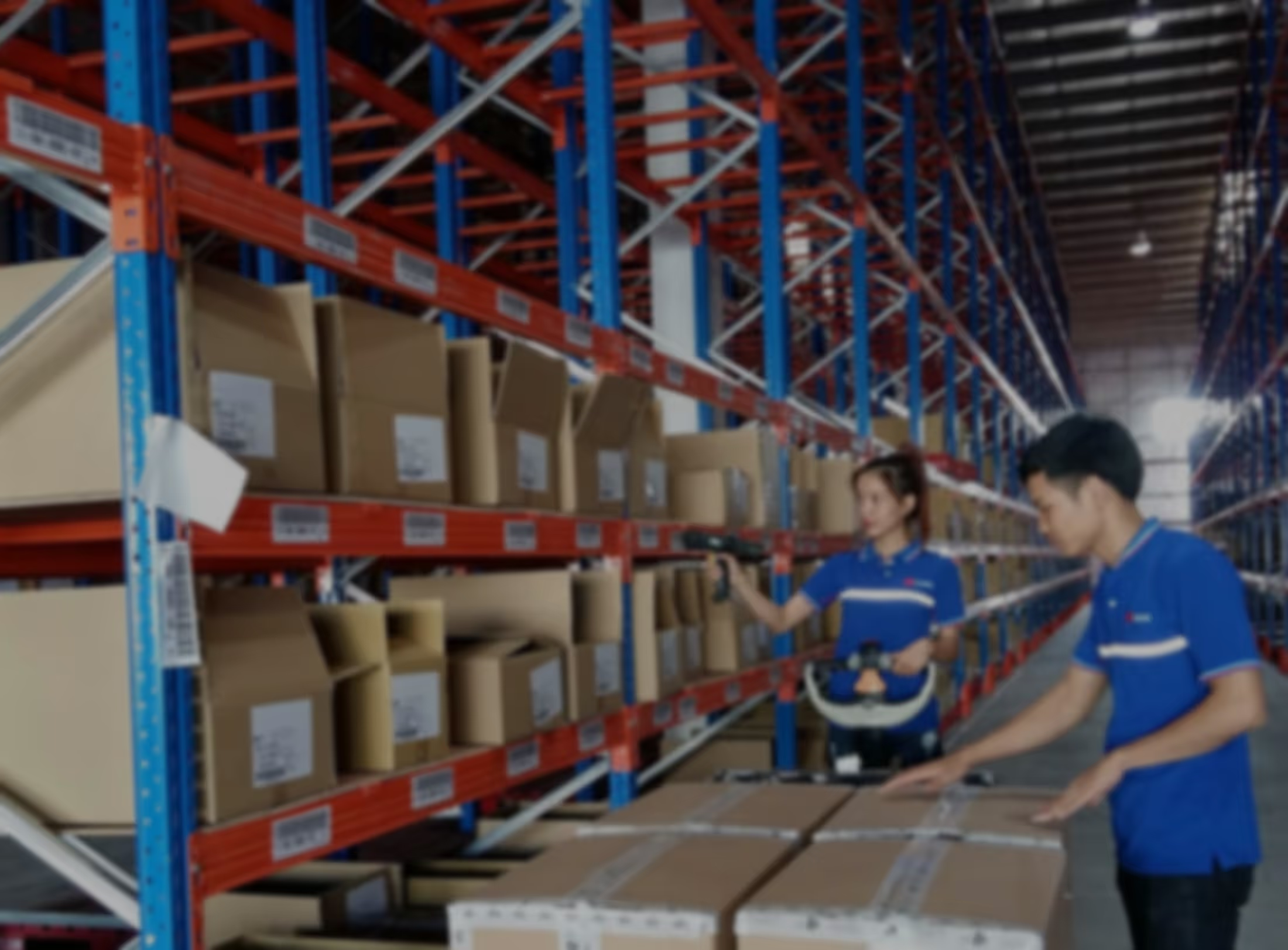
FM Logistic is an international logistics corporation headquartered in France. Nestle, Wrigley, Auchan, Michelin, Volvo, and more than a thousand other major companies trust it with their logistics. In CIS, FM Logistic operates 22 warehouse complexes with a total area of more than 816,000 sq. m.
FM Logistic provides the full range of logistics services, from transportation and storage to order picking and delivery of B2B and B2C orders to the recipient. In addition, the company offers its clients additional services, including customs clearance, product labeling, and more.
Business objective
Provide FM Logistic clients with the full range of logistics services in a convenient, transparent, and reliable way at every stage of cooperation.
Client problem: At each warehouse, 3,000 people work on inventory every day, yet the data still becomes outdated before reports appear in the system
FM Logistic has thousands of partners: Leroy Merlin, Michelin, Auchan, and others. Every day, tens of millions of SKUs are in its warehouses. Hundreds of heavy trucks are unloaded and loaded. Goods move within the warehouse. On FM Logistic premises, B2B and B2C customer orders are packed, consolidated deliveries and kits are assembled, and returns are processed. Some goods reach their expiration date.
As a result, the actual availability and quantity of goods may differ from the planned figures. Since FM Logistic bears financial liability for goods in storage and, in some cases, even criminal liability, the company must promptly and reliably inform clients about the condition and quantity of their goods in the warehouse.
But even when 3,000 FM Logistic employees handled inventory in the traditional way, with all procedures done manually, warehouse reports became outdated before they reached clients.
Review a similar project with an architect
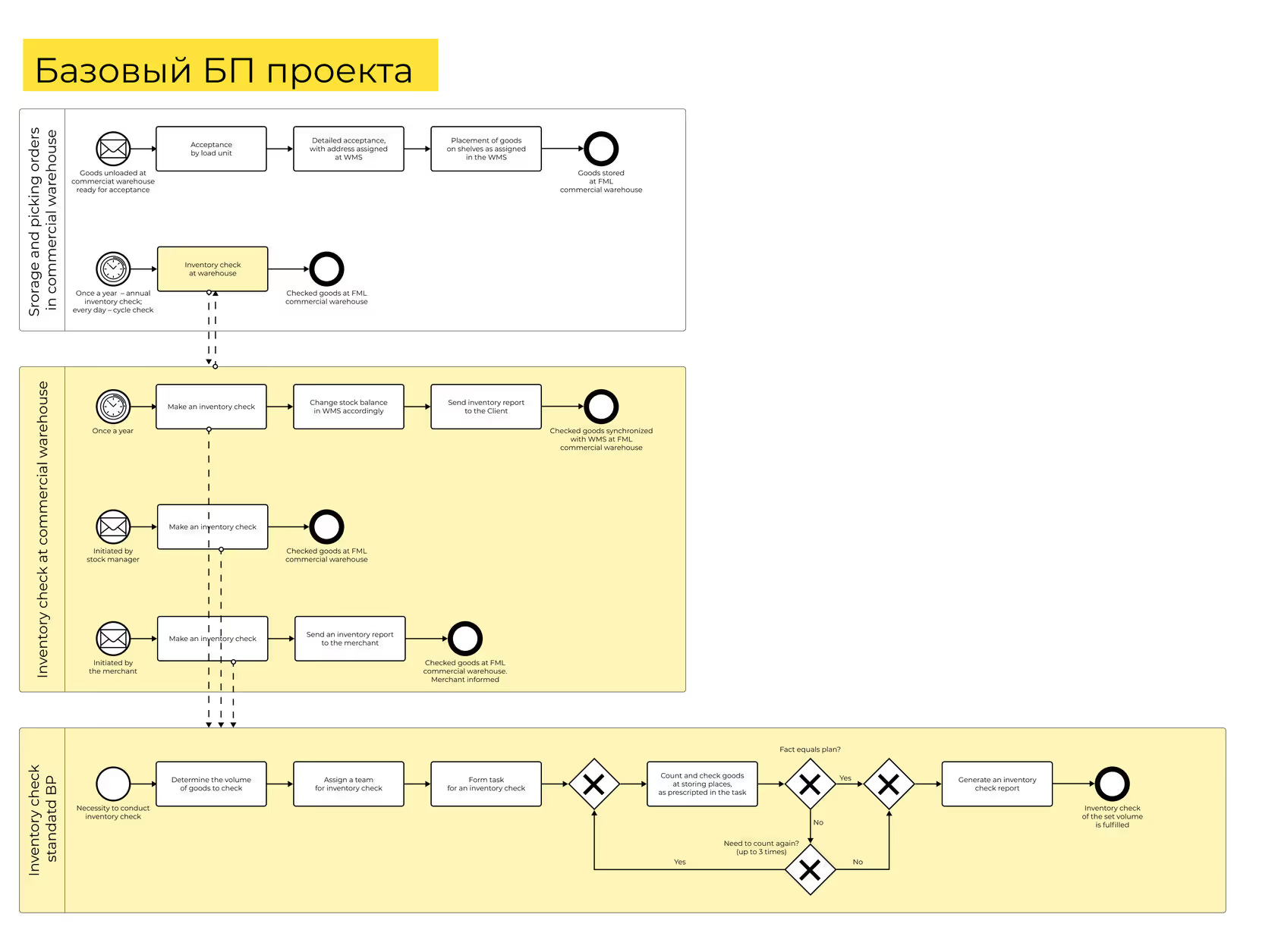
Inventory specifics in a warehouse with dozens of merchants
The inventory process has many nuances:
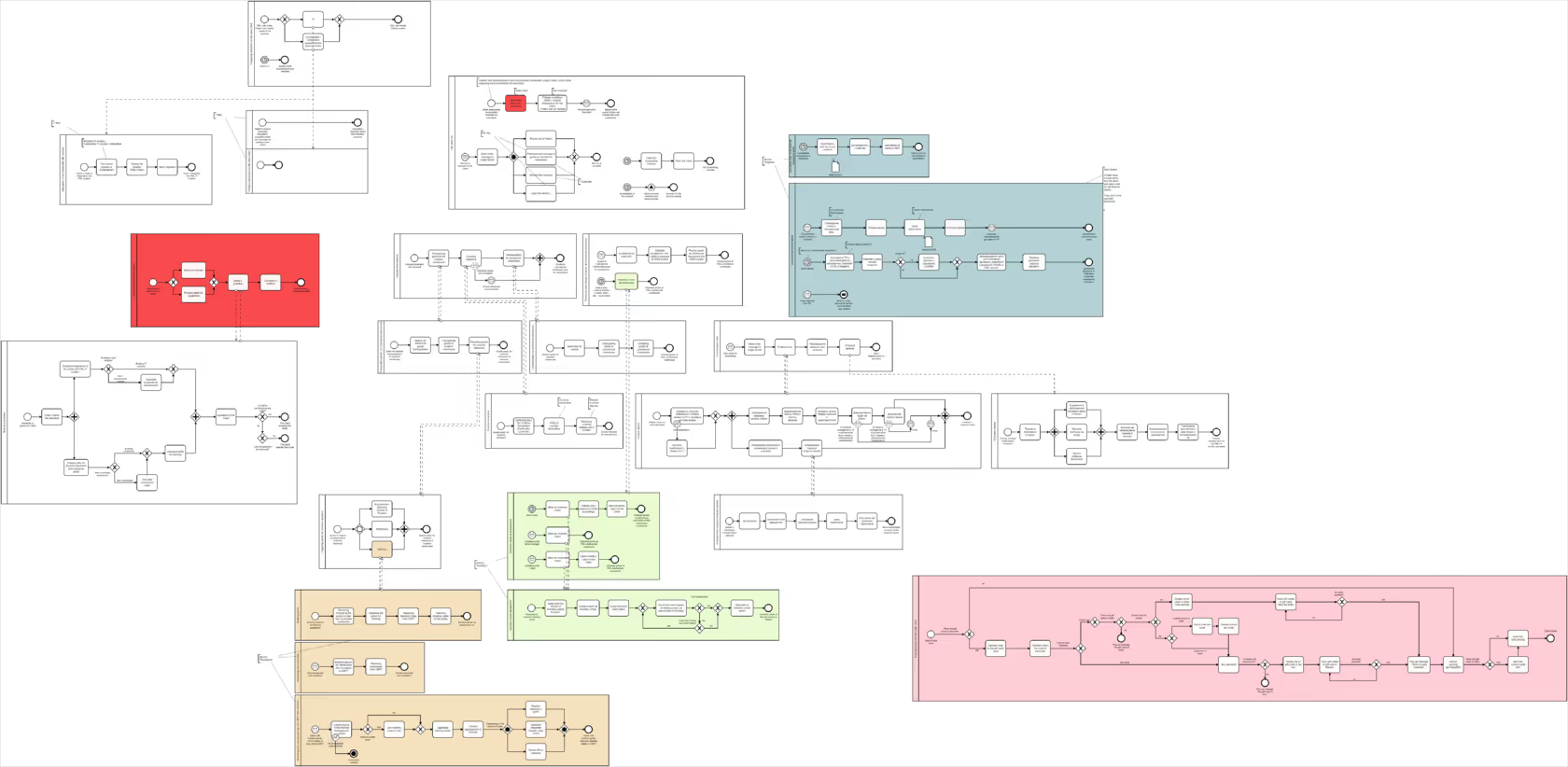
There are hundreds of such questions, and they relate to 35 business processes in the company. Without practical understanding of inventory, it is easy to overlook them. As a result, an IT solution built on theoretical knowledge will be useless.
Before development began, the kt.team team held hundreds of calls with frontline employees and made two visits to FM Logistic warehouse complexes to study the process in every detail.
- Where is the inventory check performed: at a specific storage location, across the entire area occupied by the merchant, or throughout the whole warehouse?
- What is the purpose of the inventory check: verifying the presence of goods, counting stock, writing off goods past their expiration date, and more?
- Why is the inventory check being conducted: is it a scheduled routine procedure or is there a special reason for it?
- Where should the results appear?
- What should be done with overages?
- What if the code on the item is duplicated?
- What should be done with mispicks?
Stickers make it possible to retrieve cargo information without searching or cross-checking
All shipments stored in FM Logistic warehouses are labeled with stickers. The stickers link to shipment records in the company’s systems, including the cargo owner, container contents, storage location, item quantities, and so on.
Previously, the warehouse inventory process worked like this.
- The employee received a task to inventory a storage location or a list of items.
- Using a scanner, the employee read the codes, and the data from them was entered into a text file.
- Manually recounted the goods and added the information to a text file.
- Then compared the inventory results with the task.
- In case of mispicks, the employee had to return to the workstation, find in the systems where the “extra” shipment should actually be, then go back to the storage location and send that shipment to the correct destination.</aside>
Inventory applications make the process faster, simpler, and more accurate
We developed three inventory applications for warehouse and accounting scanners.
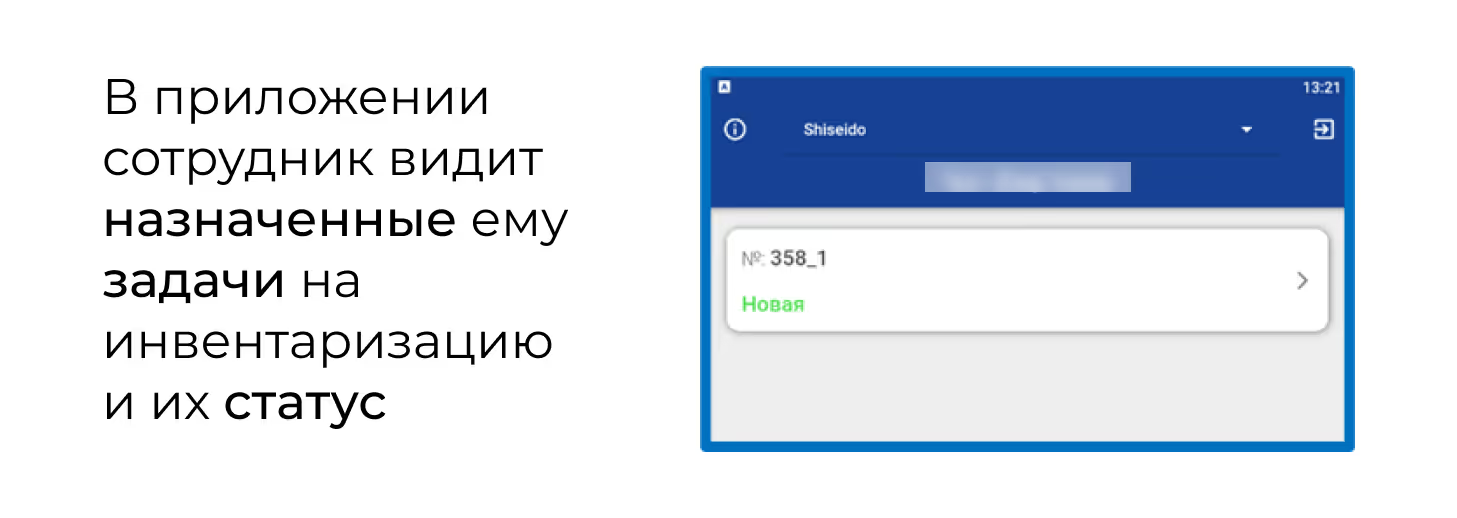
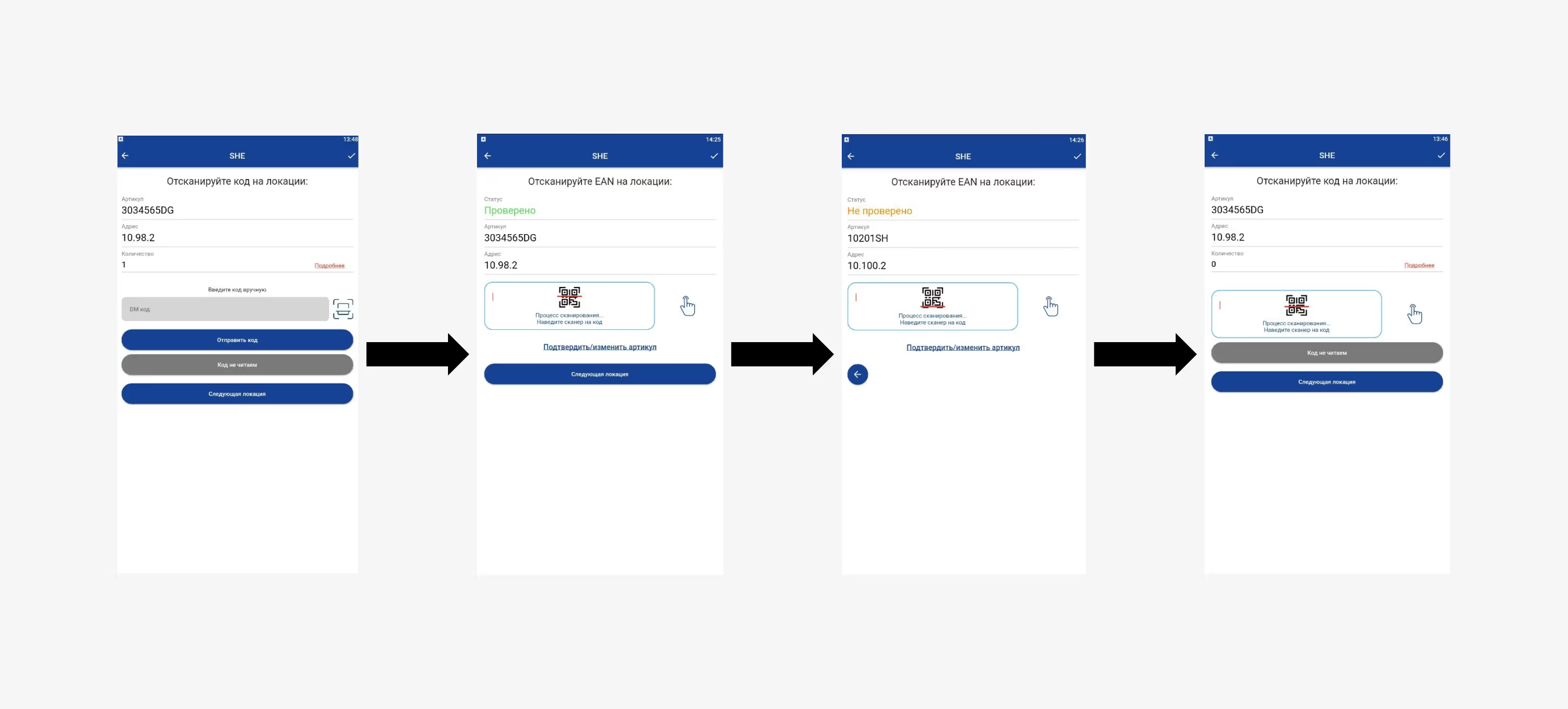
Now, after receiving an inventory task, the employee works with only one source of information: the scanner. On the screen, they see the storage location that needs to be checked and, if necessary, the exact quantity of goods, batch number, shelf life, and other inventory data.
The scanner also alerts the employee if the marking code is duplicated across multiple items or is mechanically damaged and needs relabeling.
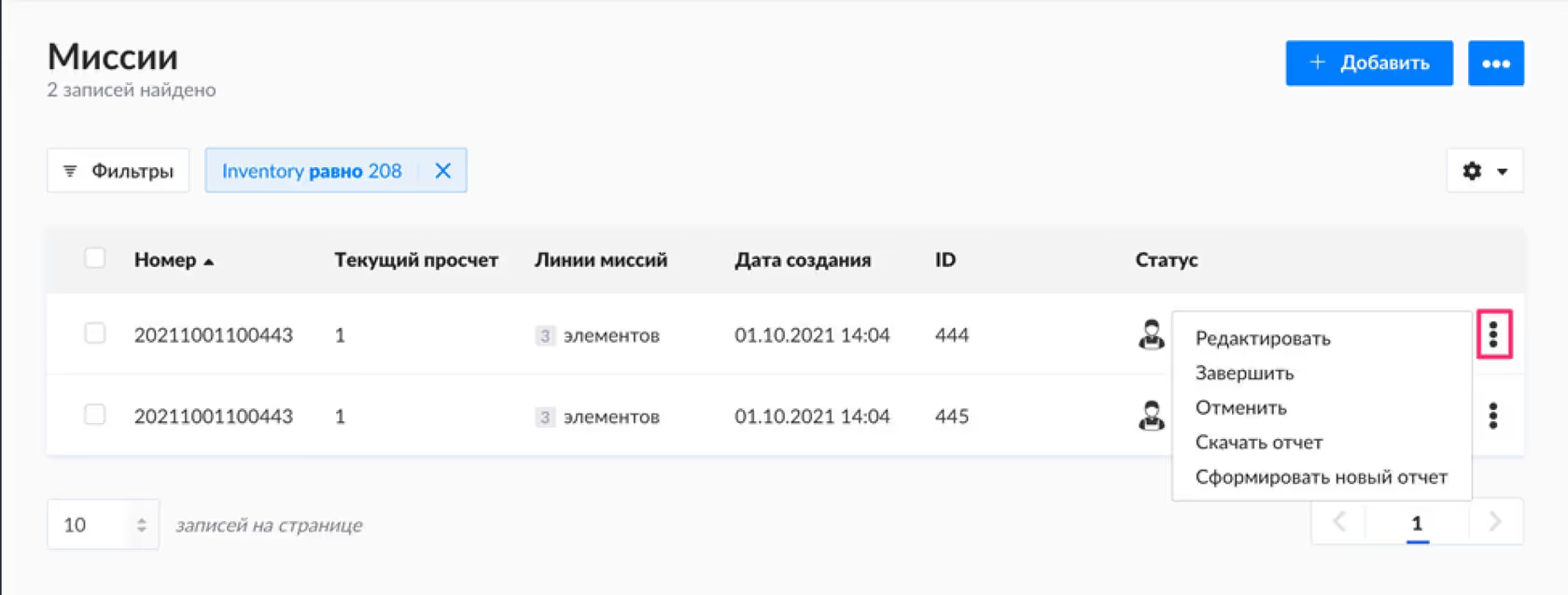
If the inventory plan does not match the actual count, the system alerts the line manager, who can then assign a recount. After the inventory check, the line manager receives an automatically generated report on the goods actually present at the checked location.
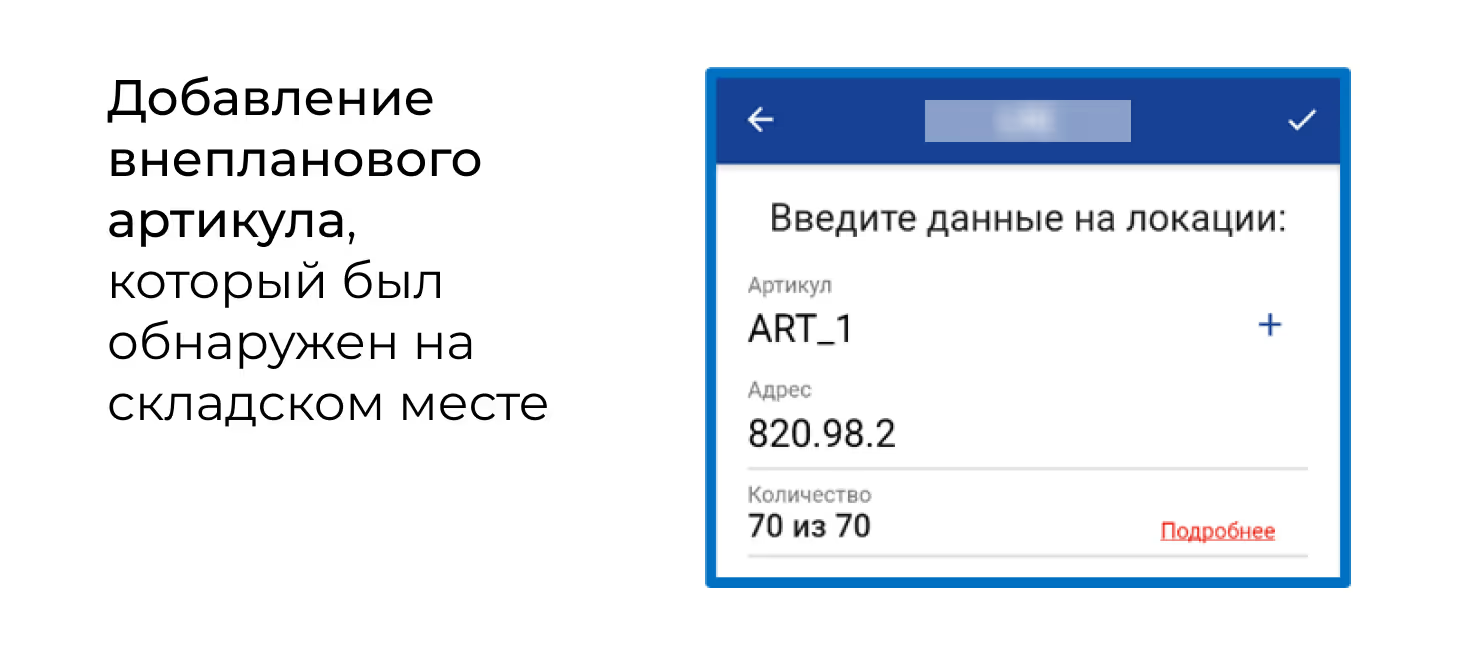
If an employee finds an unexpected item at a storage location, the scanner will signal it with an audible alert. The employee immediately places such goods in the anomaly zone so they can later be moved to the correct storage location. This makes it possible not only to detect mispicks but also to restore order in the warehouse at lower cost.
The scanner also alerts the employee if the marking code is duplicated across multiple items or is mechanically damaged and needs relabeling.
If the inventory plan does not match the actual count, the system alerts the line manager, who can then assign a recount. After the inventory check, the line manager receives an automatically generated report on the goods actually present at the checked location.
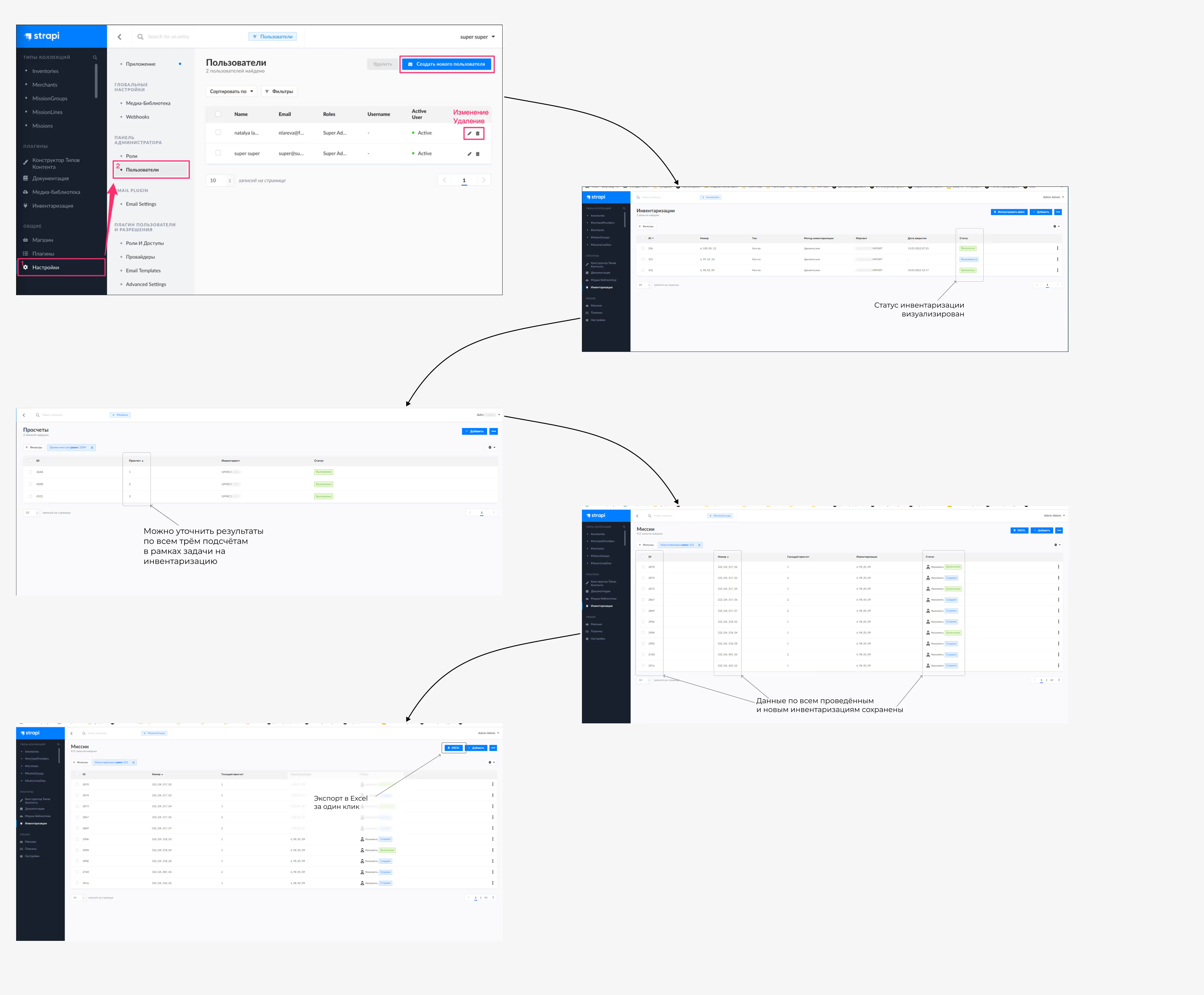
The client report is generated automatically in the admin application.
Results
- The labor required for inventory and its unit cost have been reduced threefold.
- Both cycle counts and full inventory checks can be carried out rhythmically.
- Mispicks are detected faster and returned to the correct location.
- Reporting on storage services for the merchant is generated automatically and becomes more accurate.
- The merchant report can be sent with one click as soon as the inventory check is complete.
- Corporate reporting becomes more reliable.
- The company gains an additional source of information for management decisions.