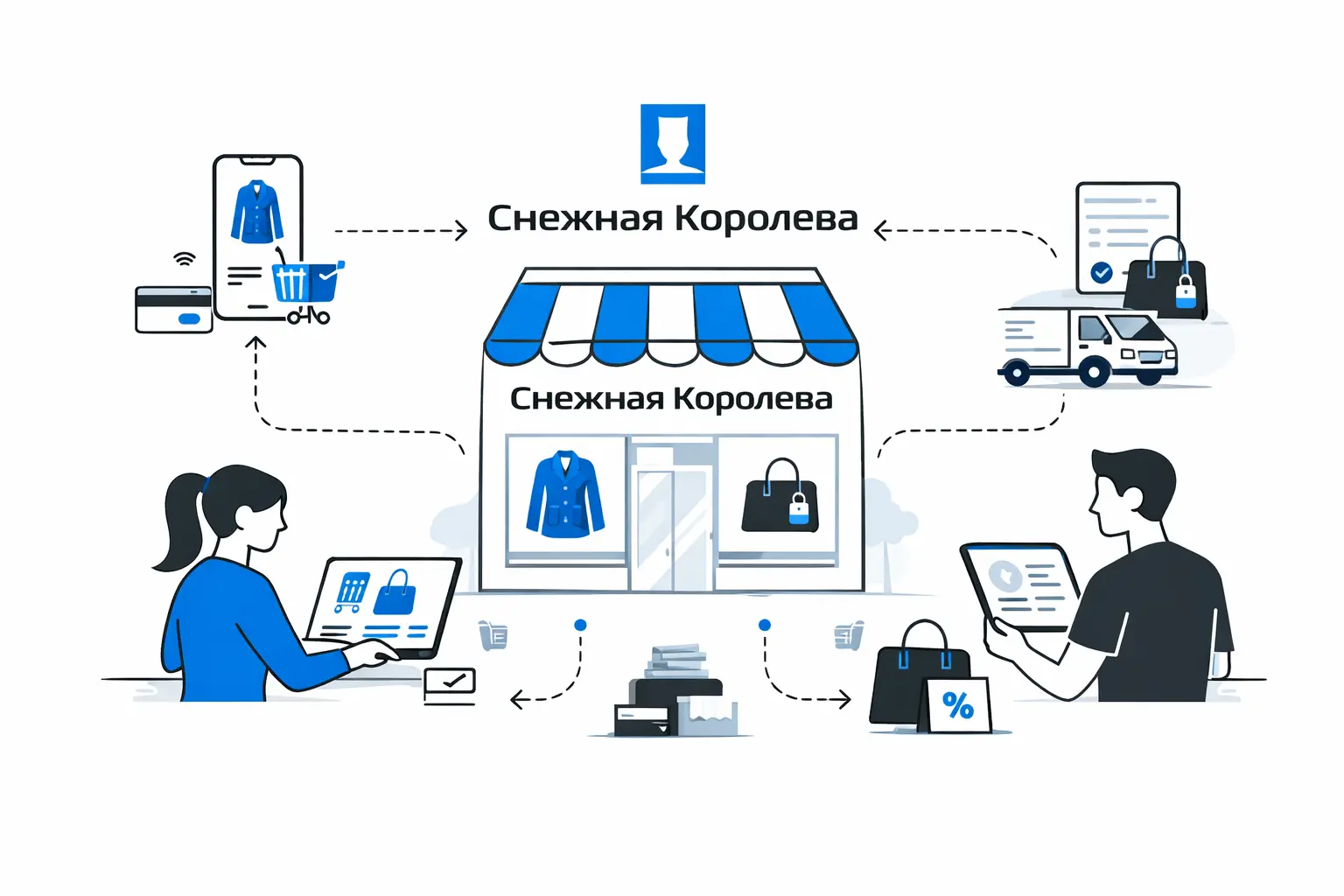














How the previous reservation scheme worked
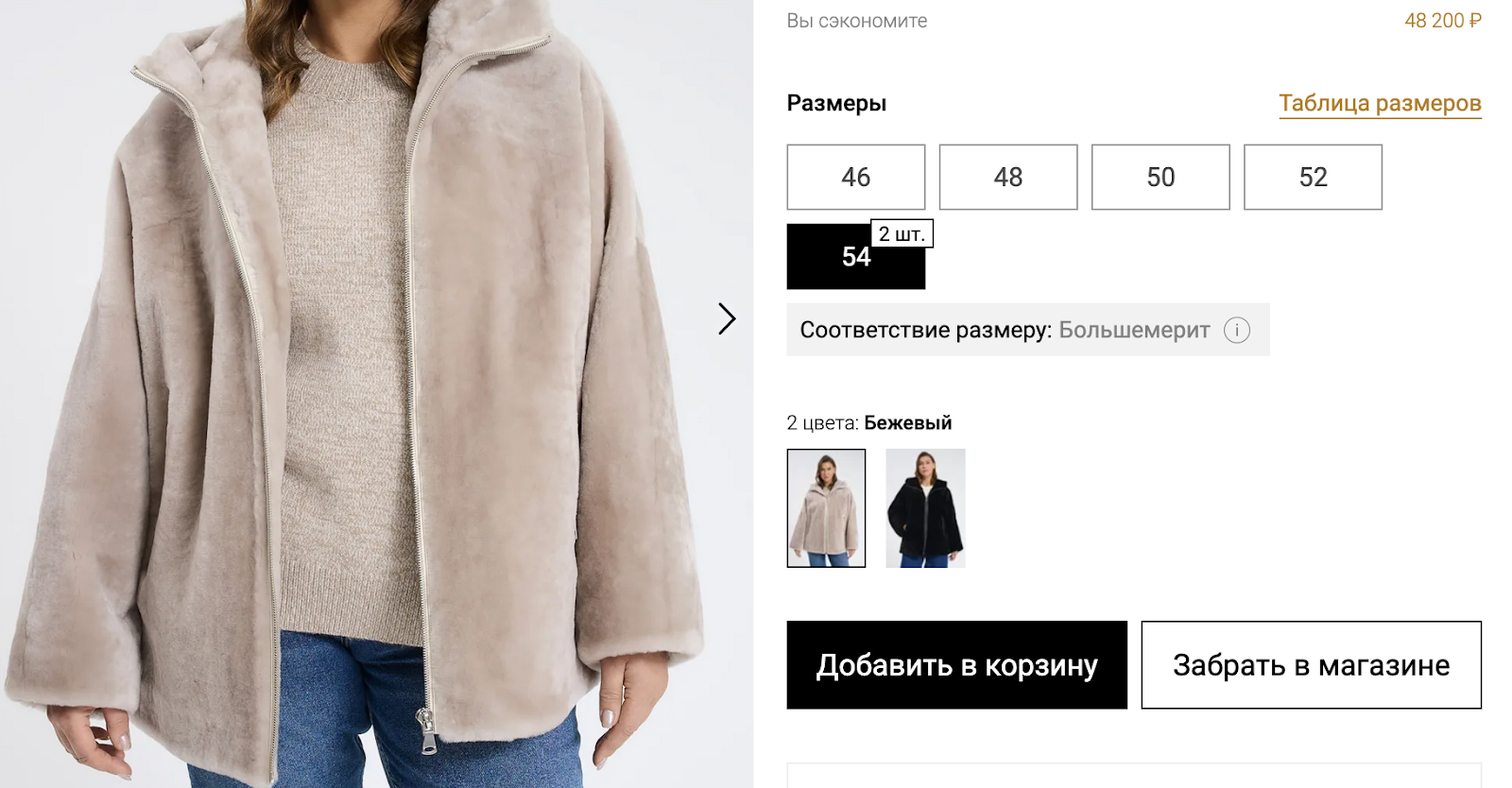
Previously, the Snow Queen website allowed customers to place an order for in-store pickup. However, the system did not account for changes made at the time of purchase.
The customer came to the store, tried on the item, and could change the order details, for example choose a different size or color. In that case, the original online order was canceled and a new one was created in the retail system.
As a result, the sale was recorded in retail even though the website initiated the purchase. This complicated analytics and the distribution of performance metrics across channels.
In 2020, the company temporarily disabled in-store pickup for online orders. This stabilized accounting, but affected the customer experience.
If the size did not fit, the customer had to arrange another delivery. If they wanted to add an item, they had to create a new order. This lengthened the customer journey and could reduce conversion.
The task was to restore a convenient purchase flow while ensuring accurate sales accounting within the omnichannel model.
Goal: implement multi-reserve without metric conflicts
Snow Queen decided to move toward omnichannel retail by unifying brick-and-mortar and e-commerce into a single system for accounting and incentives.
Our KT.Team experts joined the technical implementation. Together with the client's internal team, we:
Work began in February 2025.
- developed a multi-reserve module, allowing multiple items to be reserved with order adjustments in the store;
- reworked the accounting logic so the final sale is recorded in both e-commerce and retail;
- ensured synchronization between Magento, the OMS, and 1C:Retail.
How multi-reserve was implemented in PHP + Magento
We kept the existing stack, PHP and Magento. The new reservation module was built from scratch.
It was important to ensure that, after any changes, the order would remain linked to the e-commerce channel.
- Multi-reserve logic:
- The customer reserves the item on the website.
- The information is sent to the OMS system, and an order is created.
- OMS sends data to 1C:Retail.
- The store creates a picking order and notifies the customer when it is ready.
- The customer comes to the store, tries on the item, and adjusts the order if needed.
- The final data is returned through the OMS to the online accounting system.
Phased rollout and risk reduction
First, we restored the previous standard reservation mechanism, taking into account the updated online store functionality. We verified the exchanges with OMS and 1C:Retail and ran end-to-end testing through to purchase completion.
After that, we implemented a more advanced multi-reserve module to meet the new business requirements.
Review a similar project with an architect
Smooth transition
To avoid changing the familiar customer journey, both module versions were launched in parallel during the transition period. Once the processes stabilized, the entire order flow was switched to multi-reserve.
Cross-team development
KT.Team experts and the client's team, on the OMS and retail side, worked on the project at the same time. We synchronized development and testing stages to avoid gaps in data exchange logic.
Limit repeated reservations
During launch, we saw that some customers placed reservations repeatedly without completing the purchase. This ties up inventory and reduces turnover.
A limit on the number of consecutive reservations for a single item is now under consideration. The parameter will be configurable, so the business can adjust it according to its sales strategy.
How the ordering process changed
One advantage of offline shopping used to be the ability to talk to consultants who could recommend products and help with fitting. Now, similar functionality is available for online orders too. Here's what the process looks like now:
Even if the order contents change, it remains part of the online sale. This makes it possible to accurately account for e-commerce's contribution to revenue.
Customers no longer need to order multiple sizes for delivery. They can try the item on in store and decide on the spot.
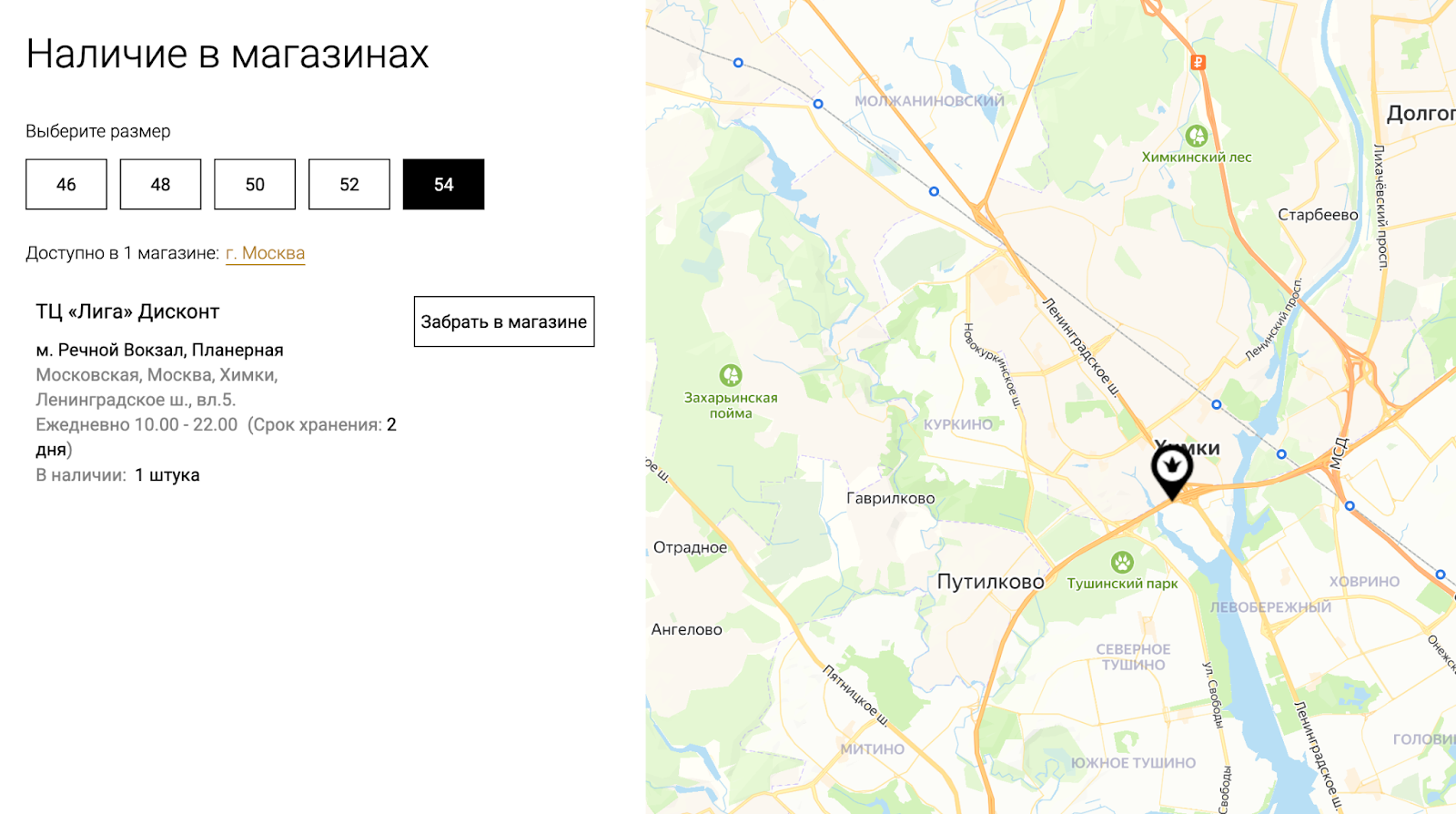
After the customer selects a store, they are prompted to sign in and reserve the item
Customers no longer order three sizes for delivery just to keep one. They can come to the store, try things on, and choose the right size. And if nothing fits at all, they can pick a more suitable item right there.
The project was interesting to us because of its scale. We worked together with the Snow Queen team, split responsibilities, and planned each stage around interdependent blocks. In the end, we created a service that made ordering easier for customers and brought profit to the client company. We also plan to keep improving multi-reserve so the ordering process becomes even more convenient and transparent.
- The customer selects a product on the website and chooses the "Pick up in store" option.
- After checkout, store staff prepare the item and reserve it for 24 hours.
- The customer comes in, tries the item on, and changes the size or model if needed.
- They can add new items or remove part of the order.
- The final order is synchronized between 1C:Retail, the OMS, and the online system.