You cannot just "buy and plug in" AI. For it to really work, you need to redesign an approach to management, people, and processes. Rebuild processes instead of layering AI on top of old ones The main mistake is adding AI to an existing process with little or no adaptation. This approach has minimal impact because the processes were never optimized in the first place.
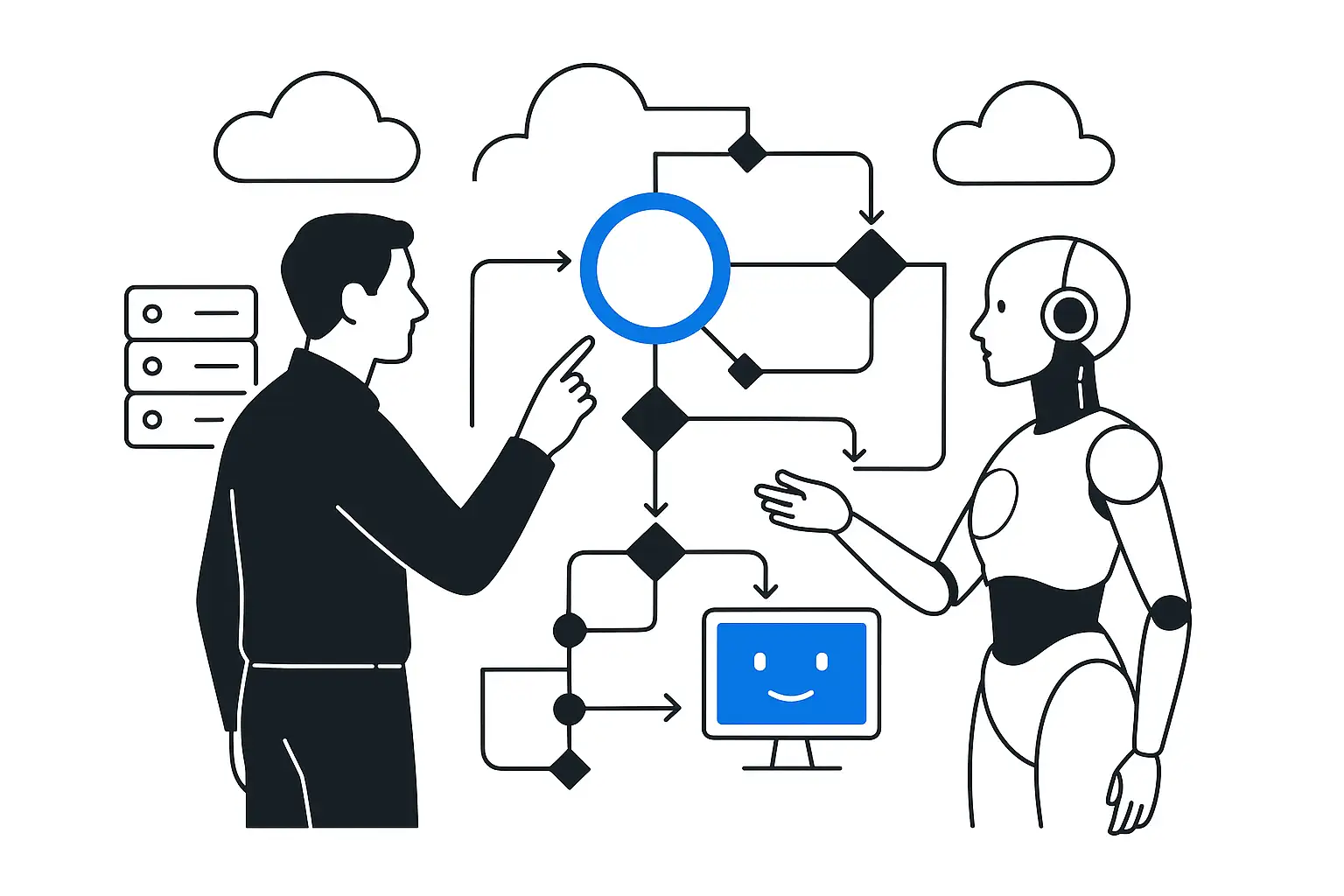
The right logic is: "If the process had originally been designed with AI in place, what would it look like?" Conduct IT consulting and answer these questions: - What can be fully automated? - Where is a human needed only as a controller? - Which blocks can be combined or removed? IBS and SberTechare calledthis is AI-first redesign - designing processes from scratch on the assumption that "any stage can be performed by AI". Prepare employees so AI is not sabotaged. Resistance is inevitable if employees see AI as a "competitor."
Therefore, you need to: - appoint AI ambassadors within departments; - not only train employees to use the system, but also show why it benefits them; - move workers from the role of executors to the role of AI task setters. Sber, Rostelecom, and MTSlaunchedinternal AI courses and receive initiative cases from employees rather than resistance. Encourage learning flexibility among employees, as AI requires continuous acquisition of new technical skills.
Encourage participation in training with bonuses. Building a culture of continuous AI improvement is not a static solution. To fully unlock its potential, companies need a flexible culture, which is focused on continuous learning and improvement: - Launch a weekly feedback loop.
Use model metrics and user feedback as the basis for changes in the next release. - Analyze feedback and metrics, to identify areas for improving AI-based decisions. Regularly update algorithms to improve forecasts and recommendations. - Bring teams together regularly, to find new ways to apply AI in sales, logistics, and customer support.
This approach helps identify growth opportunities and increase profit without expanding headcount. - Track AI updates and roll out new versions when they improve forecast accuracy or reduce errors. - Record key decisions and model updates, to preserve knowledge and train new employees faster. AI companies that update models every 2 weeks,increaseforecast accuracy and capital turnover, so they grow faster than competitors. Build a data platform The quality of AI depends on data quality.
For the system to work correctly: - Combine data from fragmented systems into a centralized cloud repository so it can be analyzed consistently. - Set up data management: protection, access control, and backups.
Clean the data and fix inconsistencies and inaccuracies. - Implement real-time analytics- it makes it possible to spot deviations and respond in minutes, not weeks. - Hire engineers data processing specialists and analysts with experience working with complex datasets needed to train reliable AI algorithms. Surgutneftegas, Lukoil, Aeroflot buildData Governance platforms, so that AI delivers consistently reliable results.
AI should be designed into human-machine collaboration do bulk routine work, while a person monitors, corrects, and makes exception decisions. This is called Human in the loop. Roles of humans and AI in business processes
| Business task / stage | AI | Person |
|---|
| Data collection and processing | Automatically collects, cleans, and classifies large volumes of data | Determines what data is needed and why |
| Forecasting and Computation | Performs calculations, identifies patterns, and builds forecasts | Assesses which forecasts are valuable and what to do with them |
| Making simple rule-based decisions | Automatically performs actions under standard conditions | Sets rules and monitors exceptions |
| Making complex, high-risk decisions | Suggests options | Makes the final decision and takes responsibility |
| Communication with customers and employees | Answers routine requests and handles repetitive work | Steps in when there are emotions, conflicts, or unusual situations |
| Generating ideas and options | Creates drafts: text, visuals, scripts | Selects the best, edits, and sets the style |
| Quality control and audit | Finds deviations and defects - visually or from data | Reviews disputed cases and makes the final decision |
| Execution of routine operations | Performs clicks, data transfer, and field filling | Configures scenarios and monitors errors |
| Training and development of AI systems | Self-learns from data | Formulates tasks, corrects, and trains |
Consider ethics and regulation In CIS, there is law on experimental legal regimes in the field of AI, and responsibility for algorithmic discrimination is being discussed. To avoid violating requirements and ethical standards: - Define the principles of ethical AI use: data protection, decision transparency, and customer safety. This increases trust and reduces legal risks.
Create an AI ethics committee - as in Sber and Yandex. - Conduct an impact assessmentbefore deploying AI to eliminate unfair bias. Make algorithmic processes explainable. - Implementstrict cybersecurity protocols: role-based access, encryption, zero trust. - Regularly review how the models perform. This helps fix errors in time and maintain decision quality.
Trust is the main asset. Companies that deploy AI without transparency will quickly face public and government pressure.