













Client
Lenta is one of CIS's largest food retailers. Over 30 years of operation, the chain's hypermarkets and supermarkets have appeared in more than 650 cities. A total of 2,957 stores under the Hyper Lenta, Super Lenta, and Monetka brands across the country occupy more than 2.3 million square meters of retail space. The company's revenue in 2023 was $7 billion.
The Problem
To store and manage a large volume of digital assets, the client used a foreign cloud DAM system. Since 2022, this option has become risky: the vendor could disable access to the system at any time.
This would have affected two of the client's platforms: the lenta.com e-commerce site and the Lenta mobile app.
The chain's products featured on these platforms are accompanied by several photos. In some cases, there are additional materials, such as usage instructions.
For Lenta, it was important to get its own on-premise solution for working with media files, independent of third parties.
Task
Before contacting KT.Team, the Lenta team was already looking for a replacement for the previous solution and chose Pimcore. Pimcore DAM is an open-source system with the ability to extend functionality and deployment options both in the cloud and on the company's own servers. The core functionality that had to be implemented in the first stage was management of the photo library, a media file repository, configuration of image links to product cards on lenta.com, and image sorting.
Review a similar project with an architect
Solution
The KT.Team team implemented Pimcore DAM for Lenta, a free open-source system. To do this, a Kubernetes cluster with two environments, testing and production, was deployed on the company's servers. It was connected to Lenta's data bus and website via API.
The free version of Pimcore has limited capabilities, so the team supplemented it with custom features. To integrate with the client's data bus, a REST API connection had to be implemented.
After that, the team carried out a test migration of product data from Lenta's ERP system. Product cards from the old DAM were moved to the new system without changes, and fresh product data from Lenta's main system is sent to the DAM automatically. S3 object storage is used for images.
From the DAM, media assets are automatically uploaded to lenta.com and placed into the relevant product cards. In addition to images, Pimcore can send JSON message queues with information about the links between photos and products.
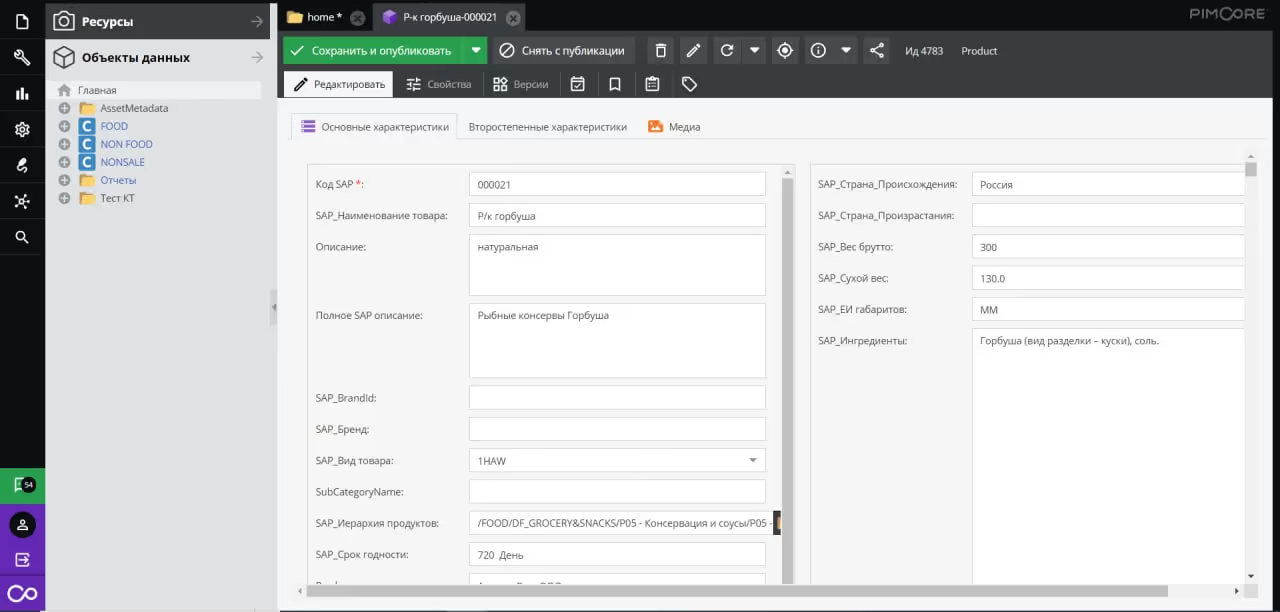
Result 1: the on-premise DAM system allows Lenta to remain independent of vendor decisions
The new DAM solved the client's main problem: all media data is now stored on its own servers, and the system's operation no longer depends on unilateral vendor decisions. This eliminated the risk of sudden storage shutdowns that could have caused serious reputational and financial damage.
Result 2: after moving to Pimcore, the website still automatically receives product cards with linked images, and the transition was seamless
First, the KT.Team team implemented functionality that was critical at the first stage of the transition: exporting photos to the online store. To do this, they added the ability to automatically link an image to a product card based on the SKU, the product's unique code.
Content creators for the website, the designers, add this code to all photo and media assets related to a specific product. For example, the image name includes the code 777_1, which means it is the first photo for the product with SKU 777.
Images can be linked to multiple products that differ, for example, by color or another attribute. For instance, an online store may sell sets of Christmas baubles in blue, red, and green. The same packaging photo can be used in all three product cards because the packaging is identical across the sets. To make this work, all required codes are entered in the metadata during photo production and processing, separated by a slash. For example: 'SKU1_2/SKU2_1'. The DAM automatically detects that the image belongs to multiple cards.
When a new image is uploaded, Pimcore extracts this unique identifier from the file name and its metadata, then links the file to the product card with the same code.
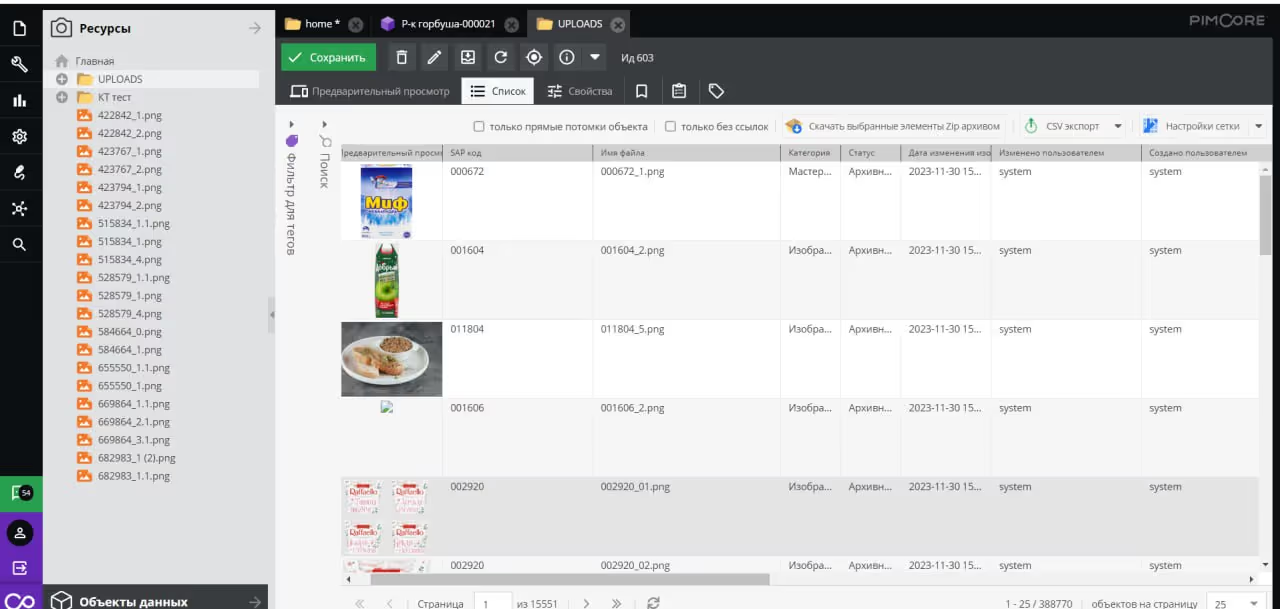
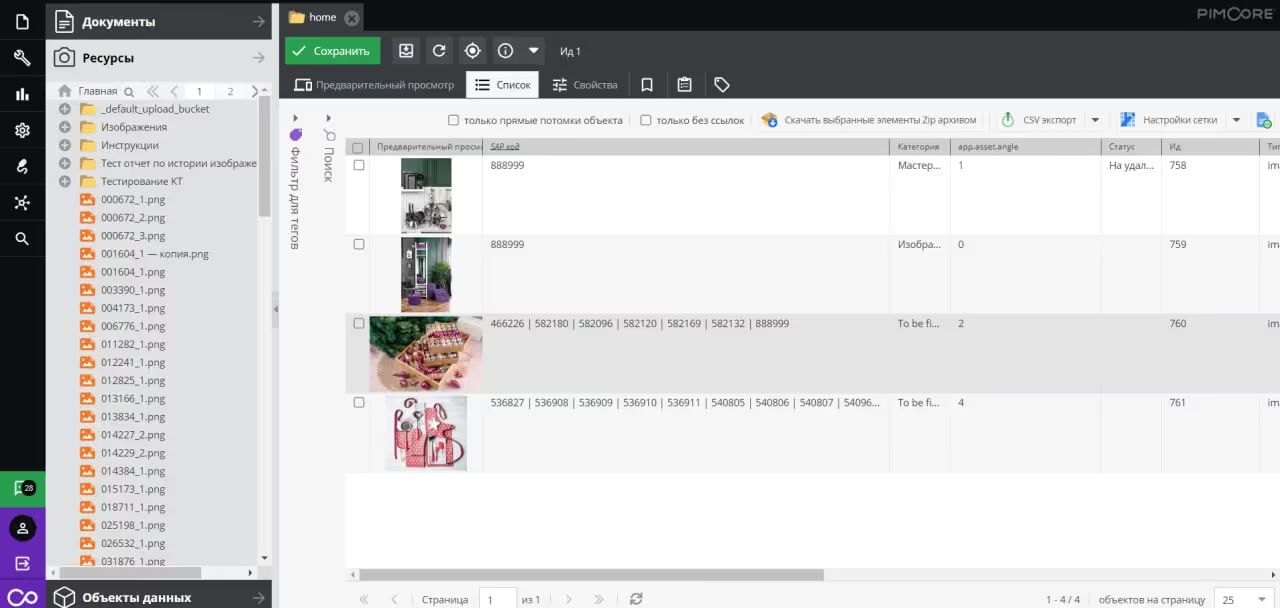
Result 3: using the usual workflow, the client can analyze file relevance and update frequency with DAM reports
In the previous DAM system, the client used reports to manage and monitor media assets:
The KT.Team team also implemented these same reports in Pimcore, which required enhancements to the product's core functionality.
The first type of report is used for working with images: sorting, filtering, and searching photos by attributes. For example, they can be used to find files with a specific upload date and mark them all as outdated at once.
The second type of report makes it easy to see how products and images are connected. For example, you can select all product cards that do not yet have images and export them as a single Excel list.
- image report;
- product and image report.