














Client
Relef-Center is CIS's largest manufacturer of stationery and a leader in wholesale distribution of products for the office, study, and creativity. Its portfolio includes 17 in-house brands and 6 production sites.
The situation at the start of the project
Relef-Center runs a centralized Pimcore PIM system that stores all product names, attributes, and media files — with a total data volume of more than 30 TB. The information is updated regularly through integrations with 1C and the ERP system.
The company works actively with the Wildberries, Ozon, and Yandex.Market marketplaces. Marketplaces account for a key share of sales, collections are updated regularly, and yet publishing new products requires manually adapting the data to the format of each marketplace channel.
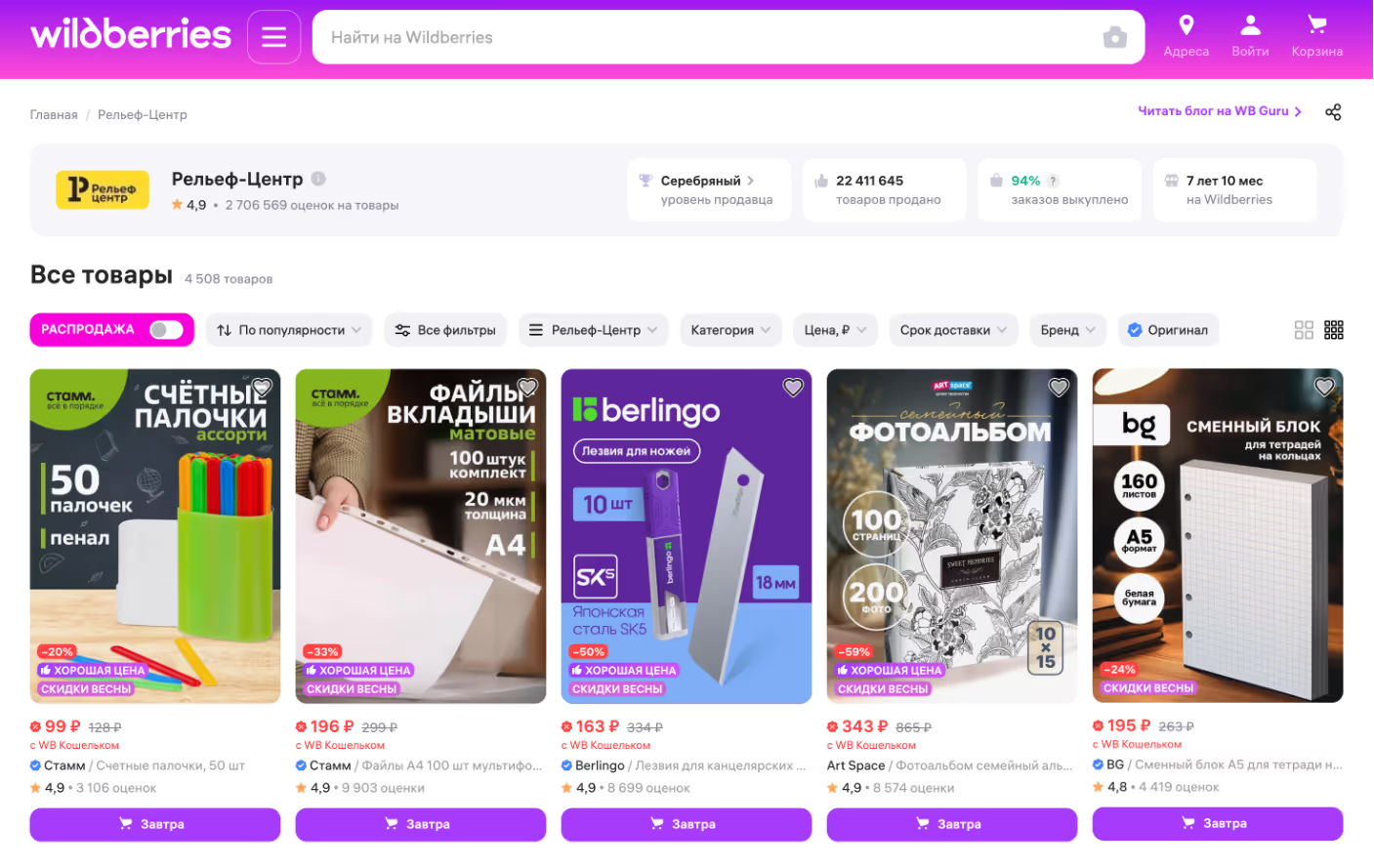
Relef-Center's page on Wildberries — the key marketplace for the company
The challenge
- Manually bringing product data into line with each marketplace's requirements — that is, "translating" attribute names and values from the PIM system — takes content managers a lot of time and slows down product publishing on external platforms.
- Updating collections takes significant effort. Three full-time employees work exclusively on preparing and publishing product cards on Wildberries for the company's leading brands — Berlingo and BG.
- Manual work also becomes a source of human error: inaccurate attributes, missing fields, duplicates. This leads to extra costs and hurts both brand reputation and sales.
- A growing product range increases the load on the content team, limiting how fast the company can scale.
Business Outcome
In 2.5 months we launched a service that maps product-category data in the PIM system to marketplace requirements, which made it possible to:
- Cut the time to bring new collections to marketplaces: updating product items now takes 1 day instead of 10. With the service, a single employee can upload thousands of cards per day, whereas before they processed no more than 30.
- Free up to 100 person-hours per week: by automating the preparation and uploading of product cards, the team can now focus on business goals instead of manually publishing content.
- Avoid downtime when a marketplace changes its data intake format: there is no longer any need to update data manually for each product — it is enough to update the mapping once for the product category.
Business request at the start
Set up automated publishing of product cards from the PIM system to marketplaces.
Review a similar project with an architect
Project goal at the start
Build a service for intelligent attribute mapping between the client's internal PIM system and the marketplace reference catalogs. As a first stage — launch for Wildberries as the key sales channel.
How things worked before the service
Preparing and publishing product cards to marketplaces takes considerable time and demands heavy involvement from the content team:
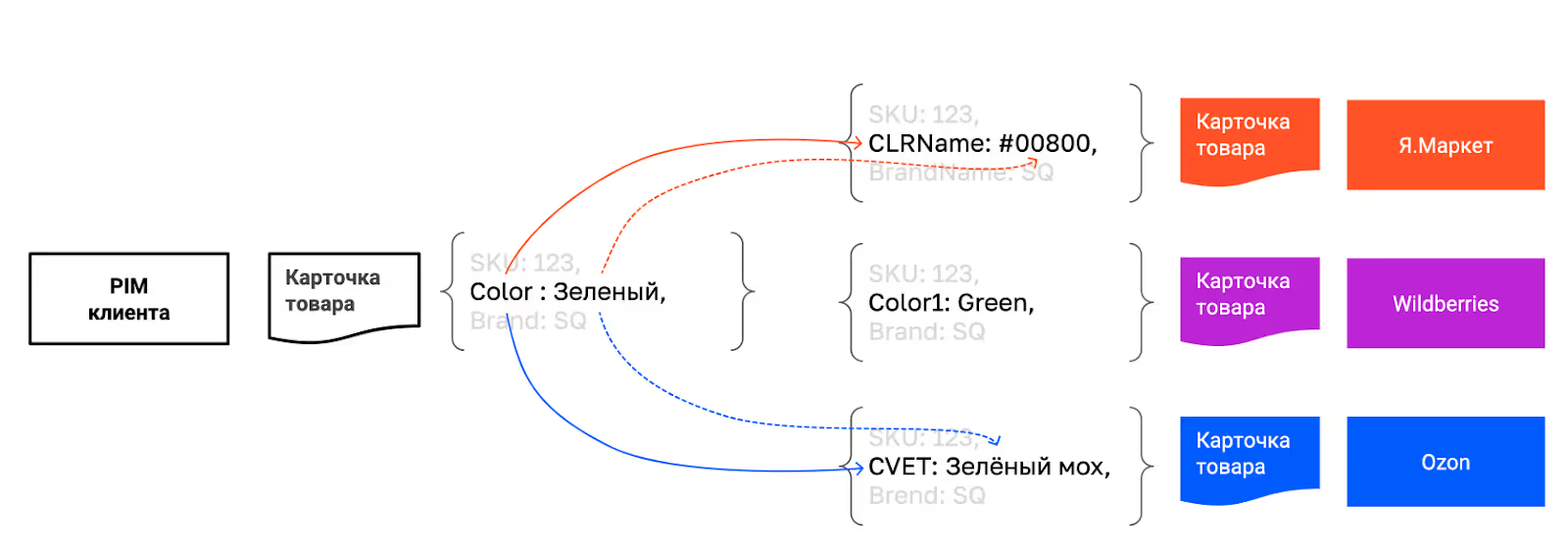
Diagram of parameter mapping between the PIM system and marketplaces
- Each marketplace uses its own data formats: field names, reference catalogs, and values differ, so the data from the client's PIM system has to be adapted manually to each marketplace's format.
- Adaptation involves not only renaming fields but also mapping values (for example, colors, materials, sizes, categories, etc.) to the reference catalogs of each platform.
- Work is done in the separate seller accounts of each marketplace. Content managers have to publish cards, track statuses, fix errors, and update data — separately for each marketplace.
- One employee can publish an average of 20–30 cards per day, while errors and corrections constantly arise: format or value mismatches cause publications to be rejected and then require fixes.
Development time
2.5 months — from project start to go-live for business users.
How the service works
The mapping service is installed on the client's infrastructure and connected to their PIM system. It is designed to automate the publishing of product cards on marketplaces and to manage attribute mapping.
The service performs several key functions at once:
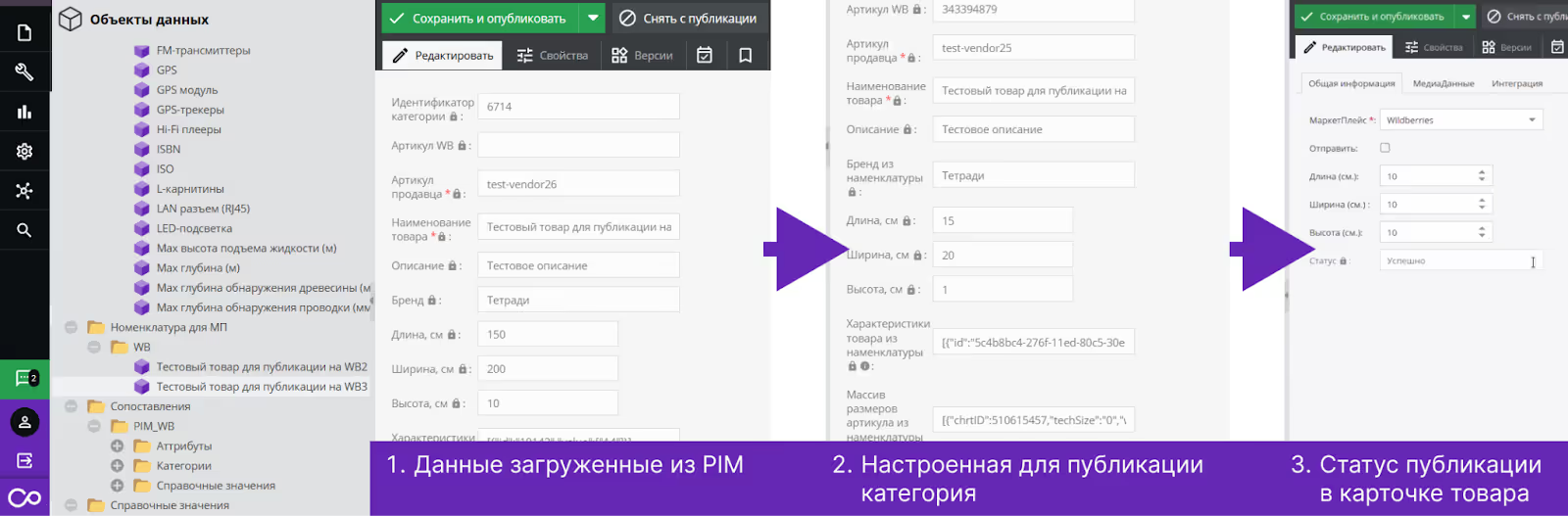
The service's user interface, built on top of the PIM system.
Benefits of the chosen solution
- Centralized management of categories and reference data: all attribute-mapping logic is moved into a separate module that can be configured without touching the core PIM system. This ensures a secure and flexible architecture.
- Category mapping interface: through a web interface, the user can select a marketplace category, configure attribute mapping, and start publishing. If the selected category is not configured, the service notifies the user that setup is required.
- Data mapping: KT.Mapper makes it possible to configure the correspondence between fields and values in the client's PIM system and the requirements of each marketplace. This applies both to attribute names (for example, "color," "brand," "material") and to the values themselves (for example, "Green" or a color code).
- Marketplace integration: once the mapping is configured, the service automatically converts product cards into the format of the required marketplace and publishes them directly, without manual work in seller accounts. The service receives publication statuses from the marketplaces and passes them back to the PIM, enabling tracking of the entire product-card lifecycle.
- The service scales easily to other marketplaces without reworking the internal logic of the PIM system.
- The service adapts data from the PIM system to the required formats but cannot affect the source data itself.
- The service can be easily ported to another PIM system, and its functionality extended.
Technology stack
Interface: Pimcore
Backend: PHP, Symfony, Kafka
Next steps
Right after launching the service on Wildberries, we began preparing integrations with Ozon and Yandex.Market. Within a month of going live on Wildberries, we plan to launch publishing on these platforms as well.
Going forward, we are considering integrating AI models for full process automation, as well as adding video support — currently only text, photos, and reference materials are uploaded.