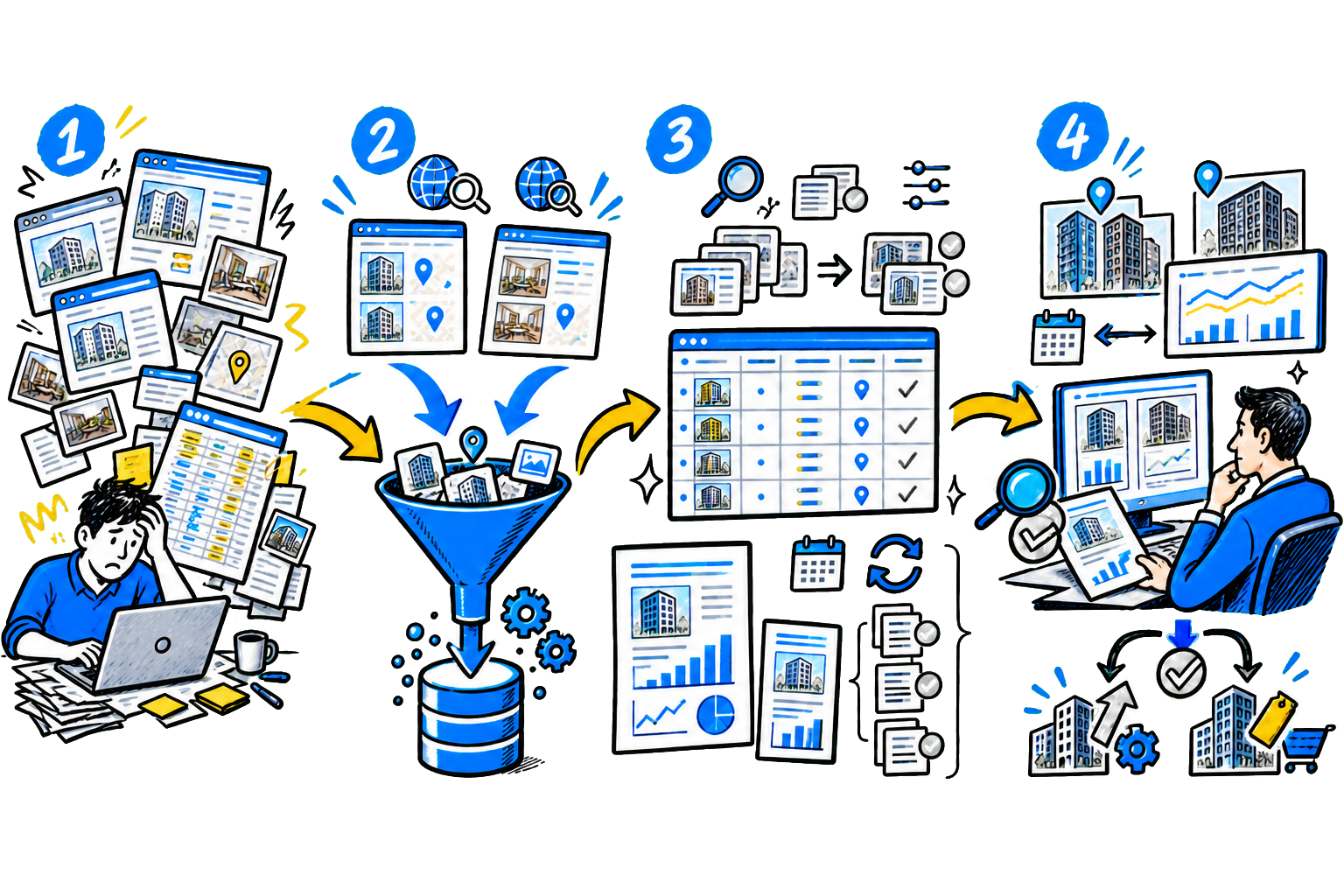
A construction company's digital transformation is not built on a single technology. Results appear when the company combines solutions into one system and works with data in real time. Below are the key tools. BIM (TIM): project control before construction begins BIMis not a 3D model, but a working database of the facility. It stores all parameters: materials, cost, delivery times, and specifications.
What it delivers: - you identify errors and clashes already at the design stage; - you reduce rework on site; - you issue working documentation faster. In practice, BIM helps eliminate the most expensive errors - the ones discovered during construction. EDI: fast document exchange without errors EDIconnects the developer, contractors, and suppliers in a single data exchange chain.
How it works: - the request is created in the system and sent to the supplier immediately; - the invoice arrives automatically, with no manual entry; - accounting sees the documents right away, without delays. The business speeds up procurement from days to hours, eliminates data entry errors, and makes settlements transparent. IoT and digital twins: real-time construction site control IoTare sensors on the site.
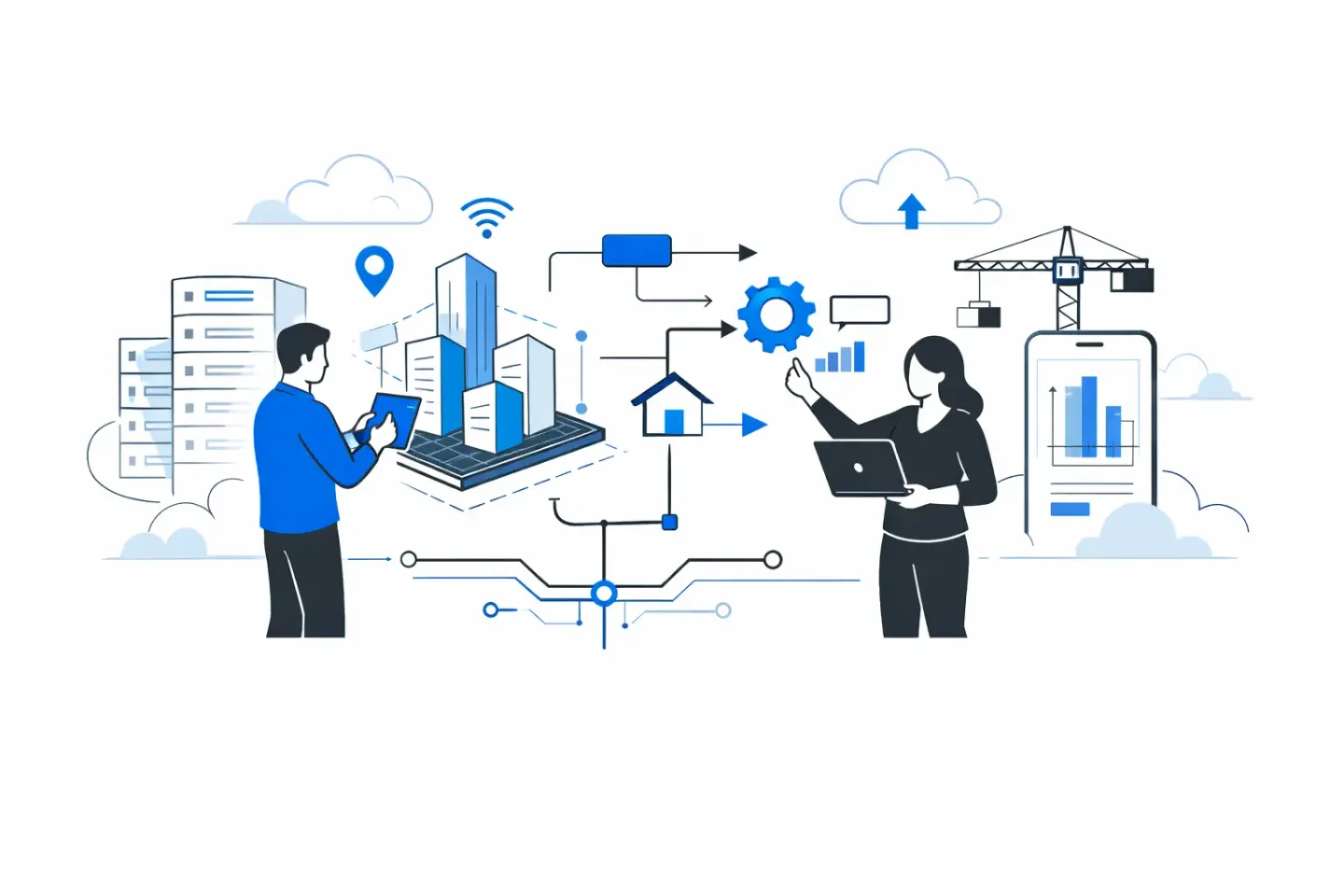
They transmit data on equipment operation, material status, and work progress. Digital twinis a model of the facility that is updated based on this data. What this delivers: - you control site processes without delays; - you reduce the risks of incidents and downtime; - you optimize facility operations. For example, sensors in engineering systems make it possible to detect problems in advance and reduce breakdowns and maintenance costs.
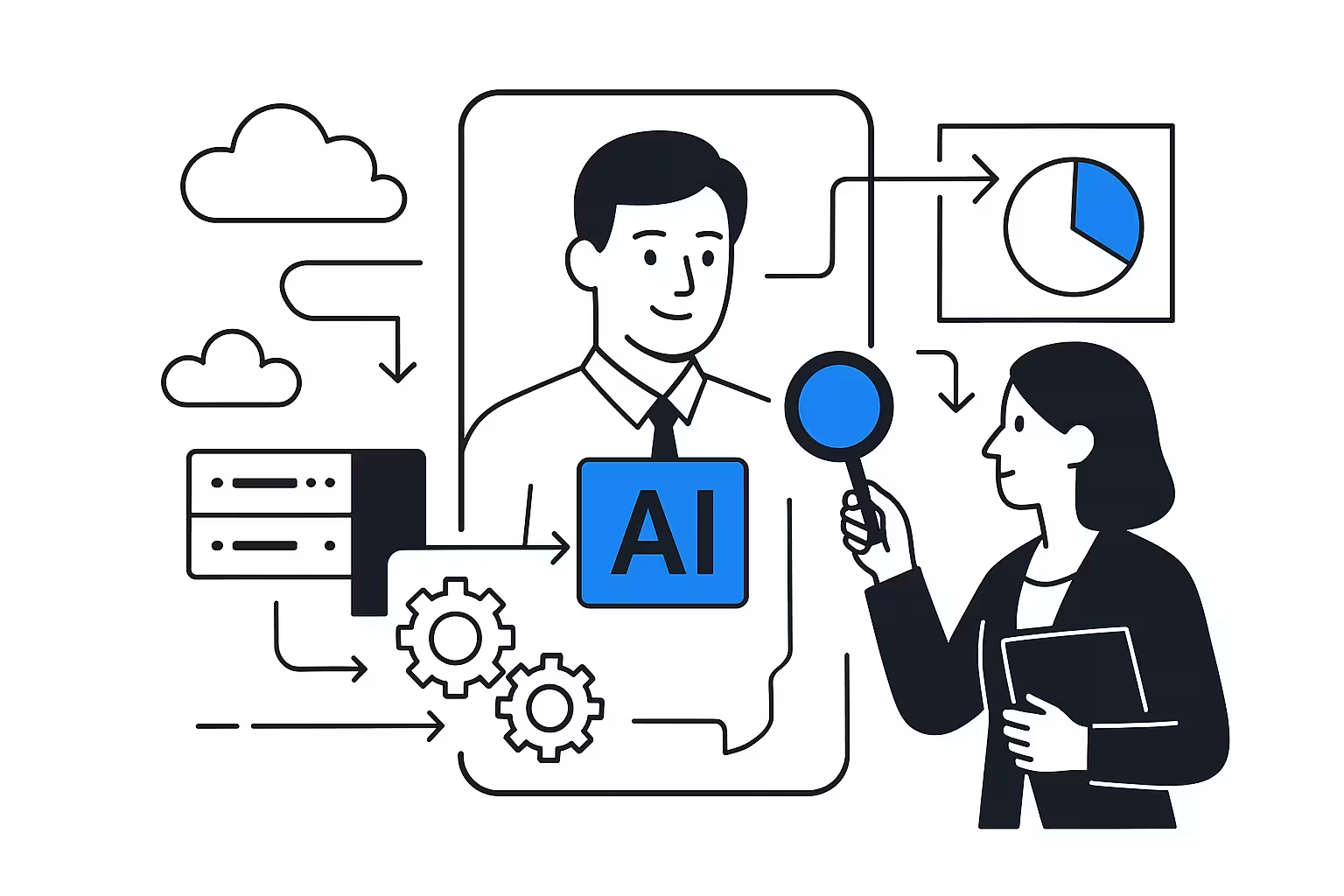
Artificial Intelligence: Speeds Up Calculations and Reduces the Burden on People AIis already used in day-to-day work, not just experiments. Where it helps: - selects layout options faster than designers; - processes documents without manual work; - automatically calculates work volumes; - analyzes data and highlights deviations. The organization saves specialist time, reduces errors, and makes decisions faster.
Discuss your challenge with an architect
Drones and Robotics: Fast Control and Accurate Data Dronesand robotic solutions solve the task of site control without constant visits and manual measurements. These technologies are especially important when a project is large, distributed, or located in a hard-to-reach area. Drones are used for site surveying, progress monitoring, and creating accurate terrain models, while robots are used for repetitive or hazardous tasks.
What it delivers: - you check construction progress and record deviations faster; - you reduce the number of site visits by engineers and managers; - you get accurate data without manual measurements and errors. The company can compare the actual state of the site with the BIM model and reduce risks when working at height and in hazardous areas.
AR/VR: speeds up approvals and reduces revisions AR and VRmake it possible to show the project before construction begins and agree on decisions without long discussions over drawings. Instead of reviewing the project on paper, the client sees the future facility in a clear format and makes decisions faster.
What it delivers: - you approve layouts, facades, and engineering solutions faster; - you reduce the number of revisions already at the design stage; - you save on physical mockups. The business simplifies communication between designers, the client, and contractors, cutting approval cycles from weeks to days. Step-by-Step Digital Transformation Plan for a Construction Company Digital transformation requires a step-by-step approach: it is important to move in stages and measure the effect at each one. Step 1.
Find where the company loses money Start by analyzing current operations: procurement, supply, construction, and document flow. Determine how long request processing takes, where downtime occurs, and how many document errors there are. At this stage, do not implement systems yet. Collect baseline metrics so you understand what effect EDI, BIM control, and other solutions should deliver. Step 2. Appoint a digital transformation owner Assign a manager who will be responsible for implementation and results.
This could be the business development director or the CDO. They will coordinate the rollout of BIM, EDI, BI analytics, and other tools, and manage priorities. Step 3. Launch a pilot: one site or one process Choose a pilot area: a site in an active phase or the process with the biggest losses, such as procurement. At this stage, implement the basic setup: materials tracking, electronic requests, and exchange with suppliers through EDI. At the same time, you can add basic BIM control to track whether the work matches the model. Step 4.
Implement a CDE (common data environment) Create a single space where data from BIM, accounting systems, and the construction site is collected. A CDE connects all participants: foremen, procurement, accounting, and management. It is the foundation for further implementation of BI analytics, IoT, and digital twins. Step 5. Automate procurement through EDI Connect suppliers to EDI and move requests, invoices, and certificates into electronic format. Data should be transferred directly between systems without manual entry.
This shortens procurement time, reduces errors, and removes delivery delays. Step 6. Set up BIM control and BI analytics Use BIM not only for design, but also for construction control. Compare actual work with the model and track deviations. Based on data from the CDE, configure BI dashboards: plan vs. actual for schedules, costs, and resources. This lets you manage the project in real time. Step 7.
Connect IoT and digital twin elements On key sites, install IoT sensors to monitor processes: equipment, concrete, and site access. The information is automatically fed into the system and enriches the BIM model. This creates a digital twin that shows the real situation on site. Step 8. Implement AI and decision automation Use AI for document processing, data analysis, and quantity takeoffs. AI reduces the workload on employees and speeds up decision-making.
- At this stage, routine tasks can be automated and planning accuracy improved. Step
- Train employees to work with the systems Train the team to use EDI, BIM, CDE, and other tools. Make system use part of daily operations - without this, even implemented solutions will not deliver results. Step
- Scale the solution across the company After the pilot, roll out the practice to other sites.
Connect all key suppliers to EDI, expand BIM control and BI analytics, and add new data sources. The more processes run in one system, the greater the effect.