













Client
A development and PropTech corporation ranked among the CIS top 5 by construction volume. Included in the list of systemically important enterprises. As of April 2023, it was working on more than 50 large-scale projects.
Problem: the client learns about construction issues too late and loses money
The developer's main task is to deliver the project on time. Every day of delay on a construction site costs about 200,000 rubles, and the city administration imposes additional fines.
In addition to direct losses, construction delays slow business growth. The developer receives payment for sold apartments not right away, but only after the building is fully delivered.
Problems that extend the delivery date can arise at any stage of construction. For example, repairing a broken excavator will take five days, but the developer can still adjust the process and make up for the delay if they learn about it immediately. They can arrange for a new excavator to be delivered to the site quickly or bring in an additional construction crew for the next stages of the project.
To enable the developer to address issues on site in time, they need reliable information about the current situation and a realistic forecast of the timelines for the remaining construction stages.
How the client manages construction and timelines
Before construction begins on any building, the developer creates a phased work schedule that includes all information about the upcoming project:
As construction progresses, actual data is added to the plan, and this is used to calculate forecasts for all subsequent construction stages.
Creating the work schedule and forecast came with the following problems:
As a result, the developer learned about problems on site several months late, when nothing could be fixed anymore. Wanting to eliminate this problem once and for all, the company turned to KT.Team.
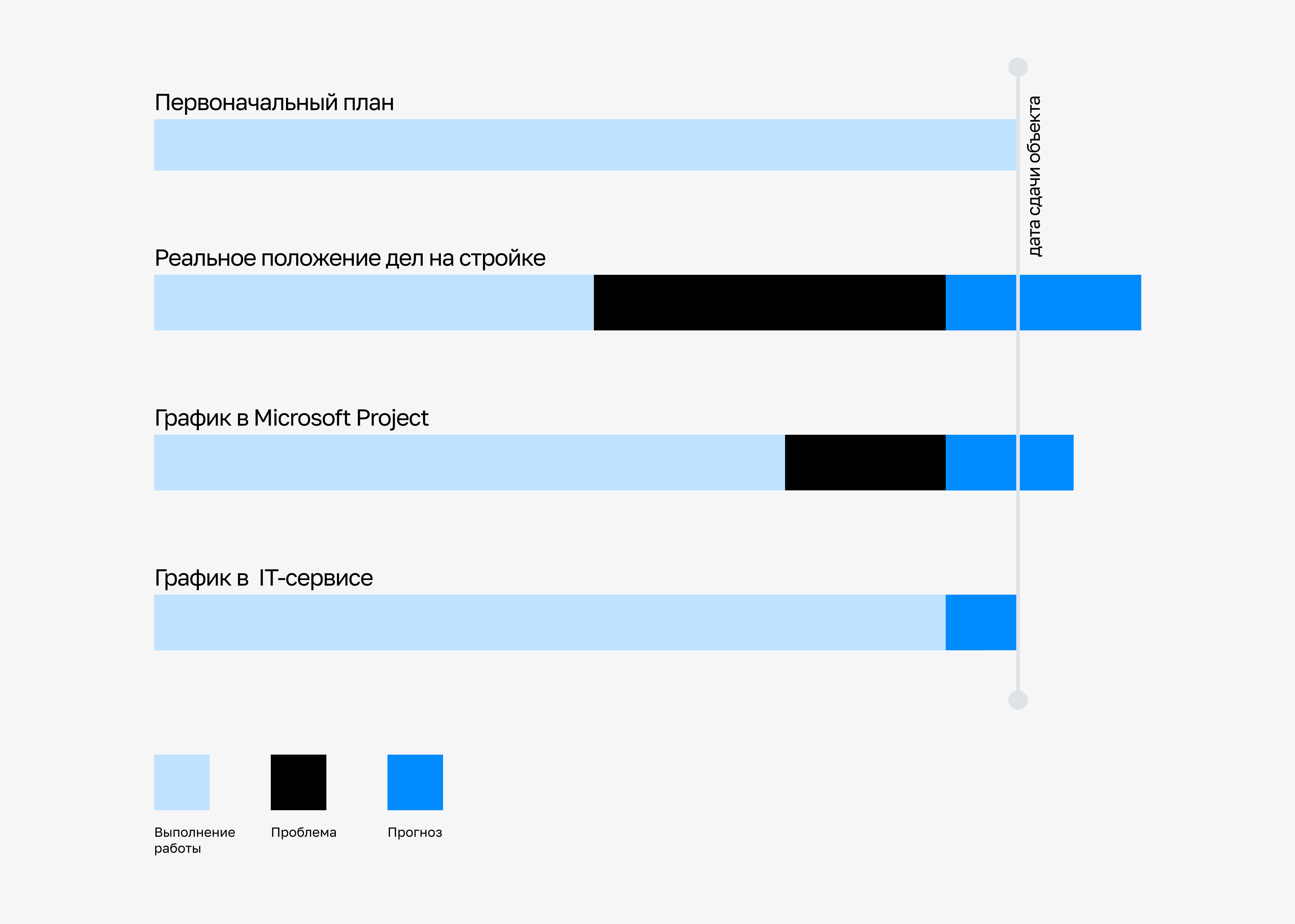
At the same time, there were four construction timelines: the original plan, schedules in Microsoft Project and the internal IT service, and the actual situation on site. The client learned about deadline changes only after information about the issues was entered into Microsoft Project.
- the start and end dates of each construction stage (for example, the excavation is completed on May 15, the foundation is poured on July 1, and by September 20 the walls of the first three floors must be erected);
- the timing and volume of construction material deliveries to the site;
- the number of construction crews at different stages of the project;
- a list of required equipment.
- as a matter of practice, employees maintain the work schedule in three different systems at the same time, including Microsoft Project and the developer's internal IT services;
- data on the real situation at the construction site is updated manually every few weeks, and only after direct communication with the contractor building the structure;
- the duration of the same stage on site, as calculated by the systems in use, does not match because each of the three systems has its own calculation logic.
Task: build an automated system for planning and controlling construction work on site
The functionality of the system developed by KT.Team must ensure the smooth execution of the following processes:
- receiving data on construction progress and other parameters directly from the site or from the client's other IT systems;
- forecasting the completion date of construction and each stage separately based on information received directly from the site;
- timely notification of emerging issues and changes to construction deadlines.
Review a similar project with an architect
Before
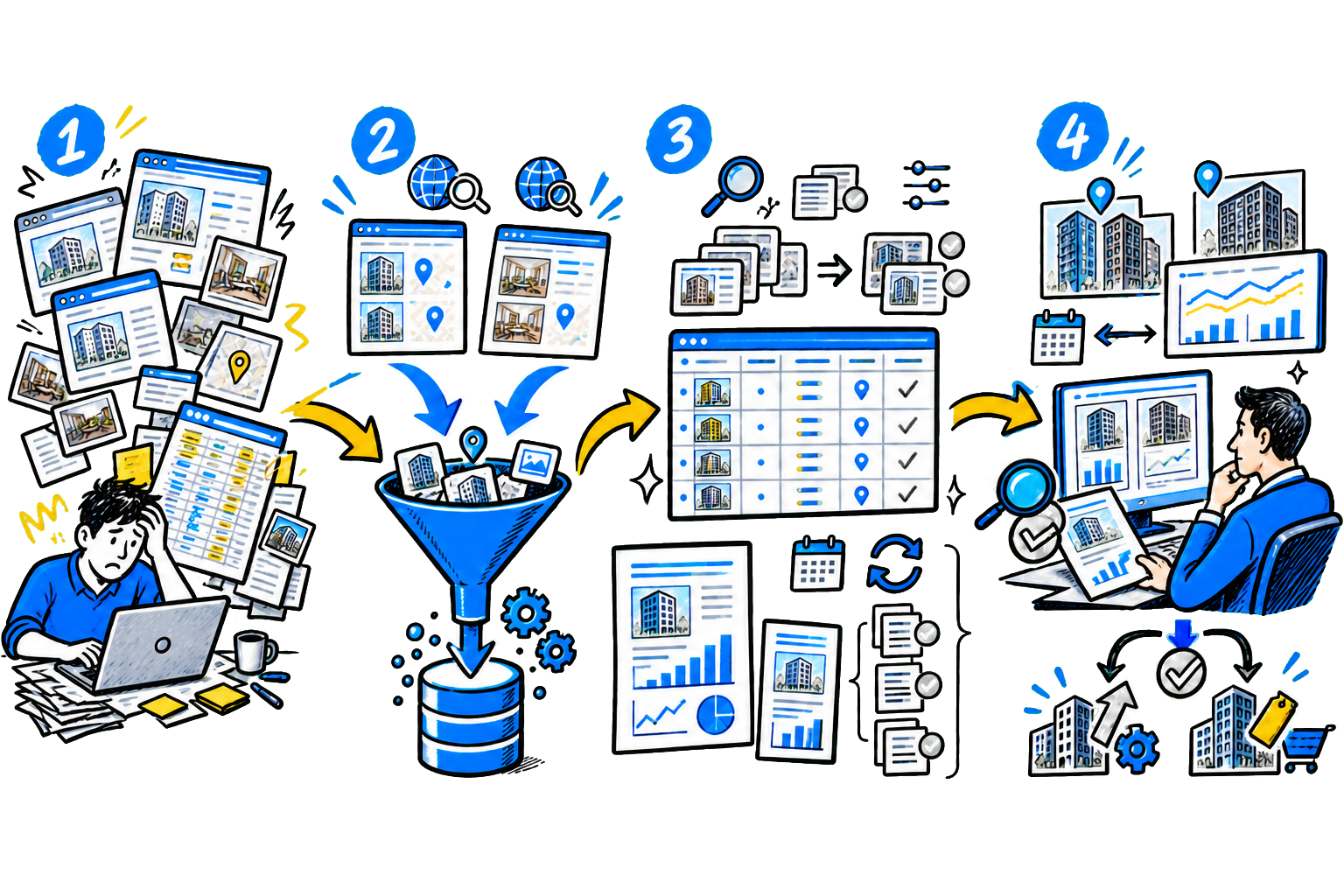
Once a week, the contractor had to report on construction progress. This data was entered manually into Microsoft Project, and the forecast was built from it.
In reality, contractor updates could arrive with a delay, for example once a month. As a result, construction progress estimates were sometimes inaccurate. A contractor might estimate by eye that the excavation was half complete, while in fact only one third of the work had been done. Or the project team might decide to polish the report by slightly "adjusting" the data.
Employees updated the forecast manually, tracked deadline changes, and reported issues to the project team.
Problems were often identified too late, causing construction deadlines to slip by several months.
After
Contractors report on progress through a dedicated app. The reporting frequency changed from several times a month to two or three times a week. In addition, the client monitors each construction site using cameras and drones that record video of conditions on site.
All information is automatically fed into the system developed by KT.Team, after which the forecast is adjusted. The project team sees schedule changes, which makes it possible to address the issue at the earliest stage.
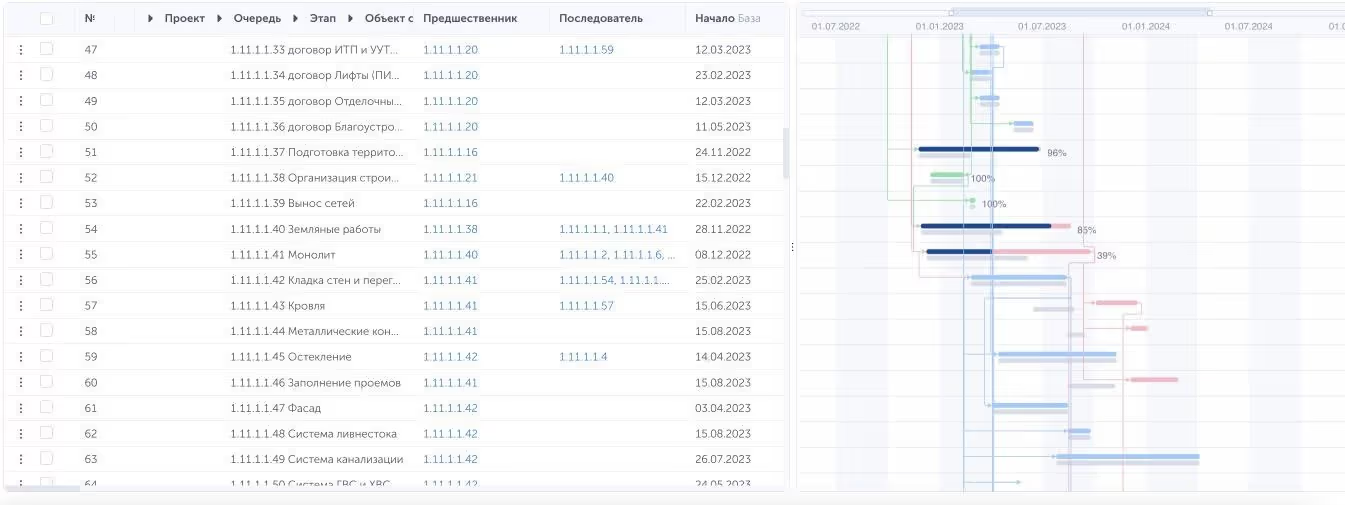
The chart simultaneously shows work progress, forecasted deadlines, and dependencies between construction stages. Changes that conflict with the planned project dates are marked in red.
Before
The client had three systems that forecasted project timelines: Microsoft Project and two internal IT services. The first tracked construction stages, while the second controlled the legal and information support phases of the overall process, including work with project documentation, obtaining permits, and more.
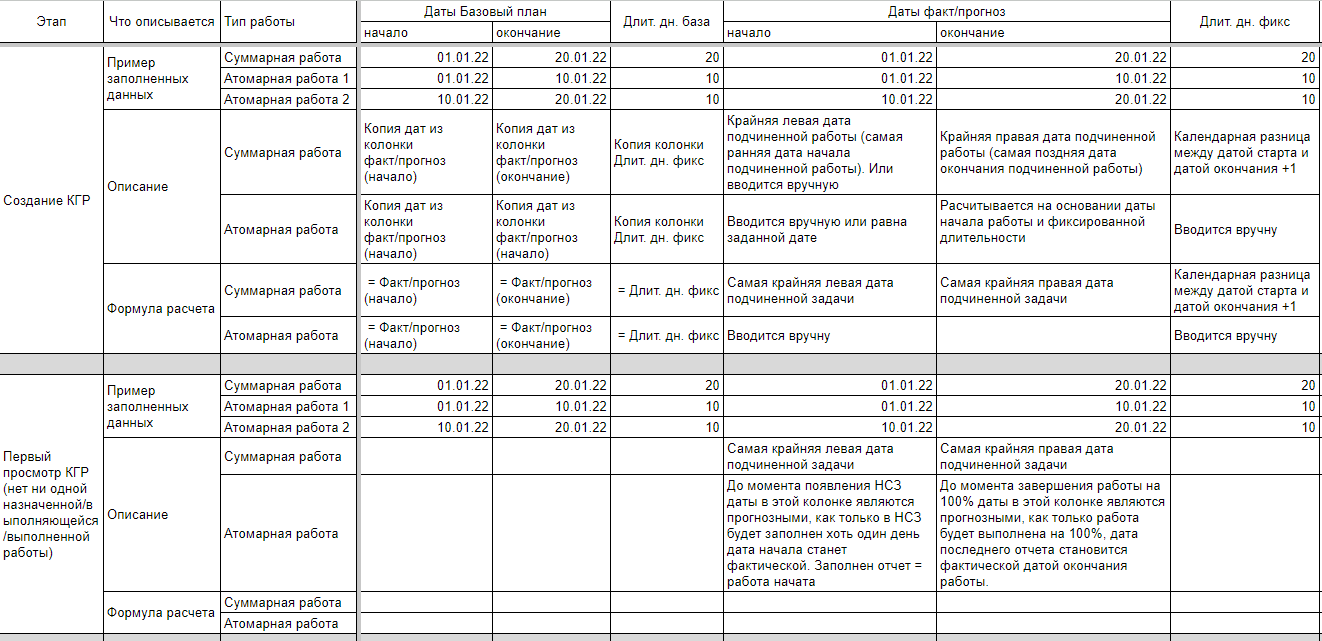
The calculation logic of the connected services did not match: when processing the same data, they produced three conflicting forecasts. The rules in Microsoft Project differed from those used in the other systems, and the rules in the developer's internal services were created by different IT teams altogether. The developers hardcoded them without providing the company with any software documentation.
After
KT.Team studied hundreds of usage scenarios based on real projects and worked with the client to refine the formulas so they aligned with the developer's methodology. Once established as the baseline, these formulas began to be used across all of the client's systems, which made it possible to stop using Microsoft Project. The deadline data predicted by the system became a reliable source of information for decisions about material deliveries, hiring contractors, issuing working documentation, and much more.
All rules were consolidated into a single table and refined to match the client's business requirements.