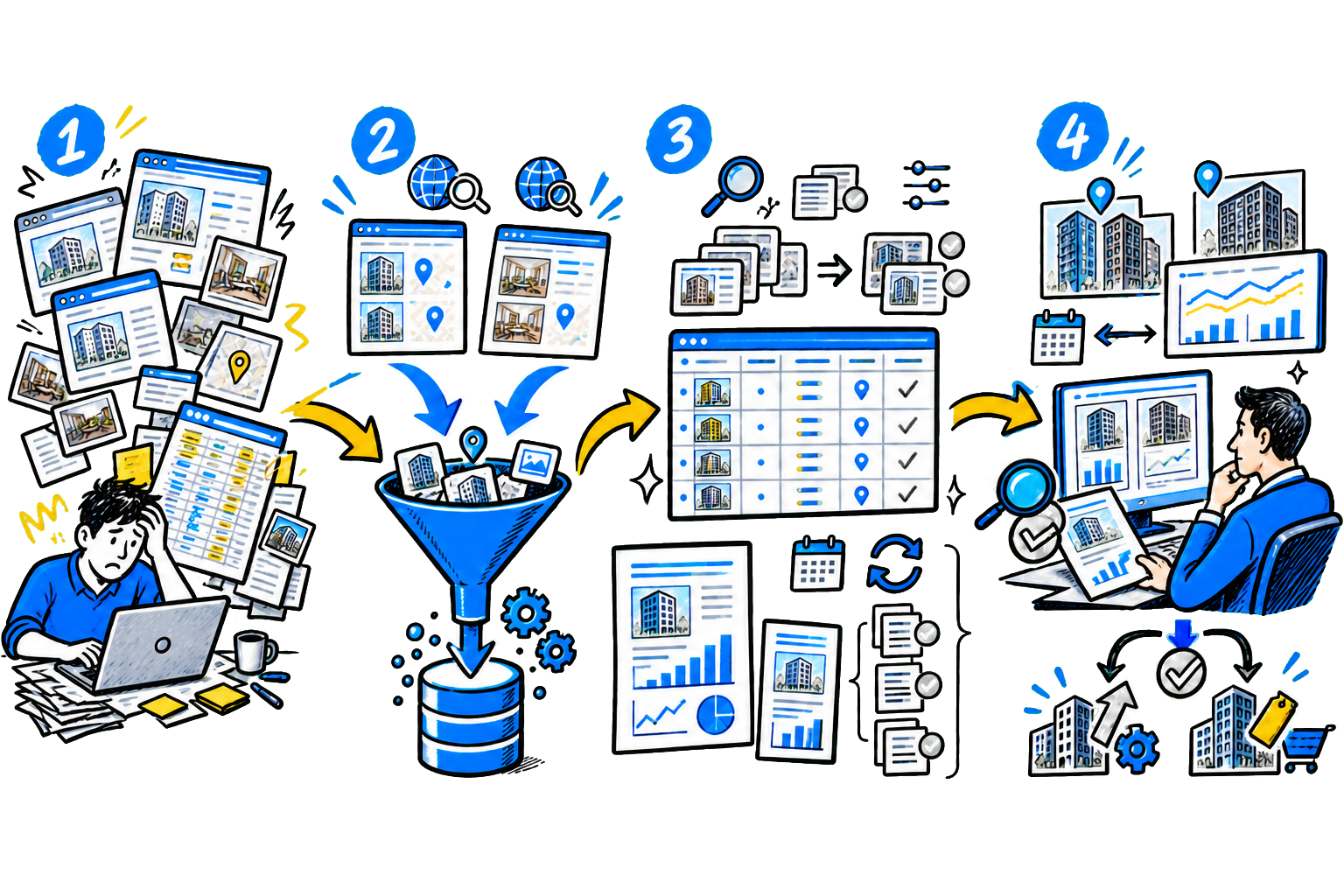
The main advantage of an industry CRM is its ability to manage a developer's unique asset: real estate properties. Customer database management (collection and segmentation) The initial stage is data collection and storage.
The CRM system captures leads from all acquisition channels: the website, aggregators, social media, and telephony. - Customer profile: contains the full interaction history - calls, messenger conversations, apartment views on the website, and funnel stages. - Automatic segmentation: the software assigns clients to categories (for example, "Mortgage", "1-bedroom apartment", "Investor") to personalize offers. - Integration with the business ecosystem: Without deep integration with partner and government systems, the CRM will not reach its full potential.
This connection eliminates duplicate data entry, reduces errors, and speeds up all business processes. Key integrations for a developer:
| Integration type | What problem it solves |
|---|
| With official websites and portals (Cian, Avito) | Automatic updating of the property catalog, forwarding requests to the CRM. |
| With partner banks (Sber, VTB, Dom.RF) | Online mortgage inquiry and approved amount calculation directly from the client card. |
| With electronic registration systems (Rosreestr) | Submitting documents for state registration without visiting a public service center. |
| With call centers and messengers | Recording all calls, automatic lead capture from WhatsApp/Telegram chats. |
| With accounting systems (1C) | Synchronizing payment and contract data. |
Launching marketing campaigns automatically. The system helps the developer spend ad budget more effectively by identifying the highest-performing channels. The system allows: - Track the customer journey from ad click to document signing. The company sees which acquisition channel actually brings in revenue and which wastes budget. - Set up email sequences and SMS notifications to warm up leads: invitations to site visits, information about new offers, congratulations.
Deal management A real estate deal is a long and complex process. The CRM sales funnel clearly reflects every step. Typical developer sales funnel stages: - New lead → Qualification (needs assessment) → Apartment selection → Reservation → DDU preparation → Mortgage → Deal (DDU signed). - Automated stage transitions: the platform moves the deal to the next stage on its own and assigns a task to the manager (for example, "Call back in 2 hours to confirm mortgage details"). This prevents deals from being lost at long stages.
Reporting and analytics The head of sales and the director must see the full business picture online. The platform provides reports that help the developer: - Forecasts sales:based on current deals and historical conversion, the system predicts how many apartments will be sold by the end of the month. - Evaluates employee performance: the software automatically counts calls, deals, and revenue for each manager.
These figures can be used to build a motivation system and identify training needs. - Monitors plan execution: comparison of planned and actual sales performance.
Discuss your challenge with an architect