
Context
In the agritech product, the digital agent must help users work with domain entities: find the right records, apply filters, see correct names, and get clear results. For the business, this is not just a technical release but a readiness check for a new user scenario.
The bottleneck was at the intersection of data and interface. If the data dictionary contains ambiguous names, the API returns incomplete fields, the filter doesn't work as the user expects, or an empty value displays as an error, the agent stops being helpful. Users can't tell where the problem originates: data, API, UX, or search rules. They simply stop trusting the results.
Challenge
Business challenge: prepare a digital agent for release so that the user scenario is clear, verifiable, and maintainable. The team needed to not just "complete the API" but reduce release risk: eliminate ambiguity in data dictionaries, align expected fields, configure filters, and define system behavior for empty values.
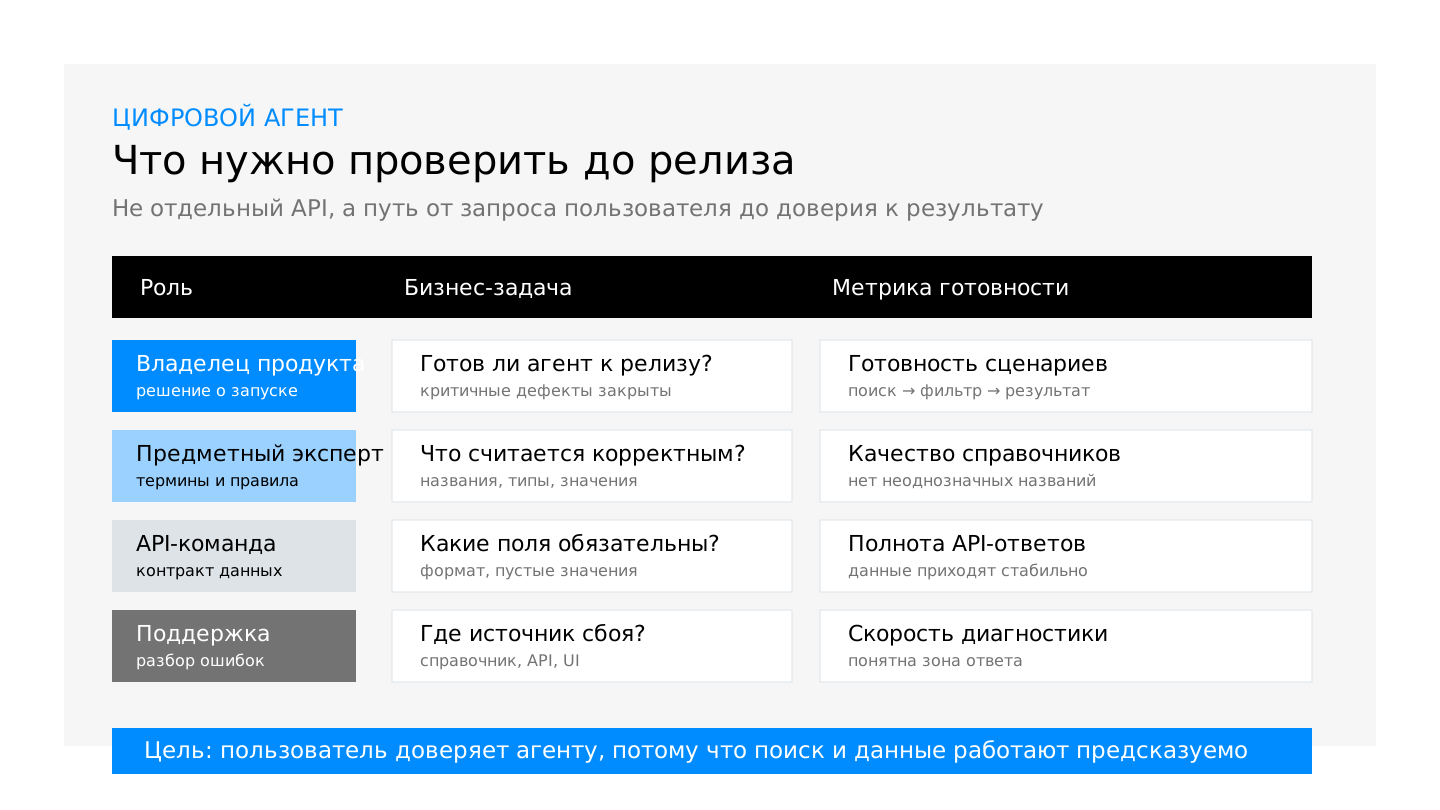
The task looked different for each role: the product owner must understand whether the agent is ready to launch and which defects block release; the subject matter expert is accountable for correct names, entity types, and search rules; the API team must lock in the contract; support and admins must see where the issue is; the agent user must quickly find the needed entity and get a result without manual workarounds.
Review a similar project with an architect
Solution
The team built agent release readiness around the user journey: user request → filter → data dictionary → API response → result display. This approach helped view defects through their impact on the scenario, not as scattered development tasks.
- Clarified the API contract for mandatory and expected fields.
- Defined display rules for names, encodings, and empty values.
- Moved filters for name, type, and entity category into user search scenarios.
- Aligned data dictionary improvements with admin UX so support followed the same rules as the user flow.
- Established clear diagnostic checkpoints: data dictionary, API, filter, display.
Metrics and business goals
For a digital agent release, what matters is managing user scenario readiness, not just the count of closed technical tasks.
The business goal of these metrics is to release the agent as a working tool for users, not as a demo with unstable data. This approach reduces the risk that after release, the product team will explain errors manually instead of developing new scenarios.
- share of successful search scenarios: the user finds the needed entity using expected filters;
- API response completeness: mandatory fields arrive consistently and in aligned format;
- data dictionary quality: no ambiguous names, encoding errors, or undocumented empty values;
- number of user errors and support requests due to unclear results;
- defect diagnosis speed: clear identification of the problem source—data dictionary, API, filter, or UI;
- release readiness: no critical defects that break agent trust.
Result
The project gained a more manageable foundation for digital agent release: the API contract became clearer, filtering became part of the verifiable user scenario, and data and display errors gained diagnostic checkpoints.
For the product owner, this provides a clear release readiness criterion. For the subject matter expert—control over terms and data dictionaries. For the API team—an aligned contract. For support—a clear troubleshooting path. For the user—more predictable search and less risk of encountering incorrect results.