
Context
In developer projects, schedules, roles, and data migration must align within a single management system. Without pre-established rules, users face different versions of truth about timelines and work scope.
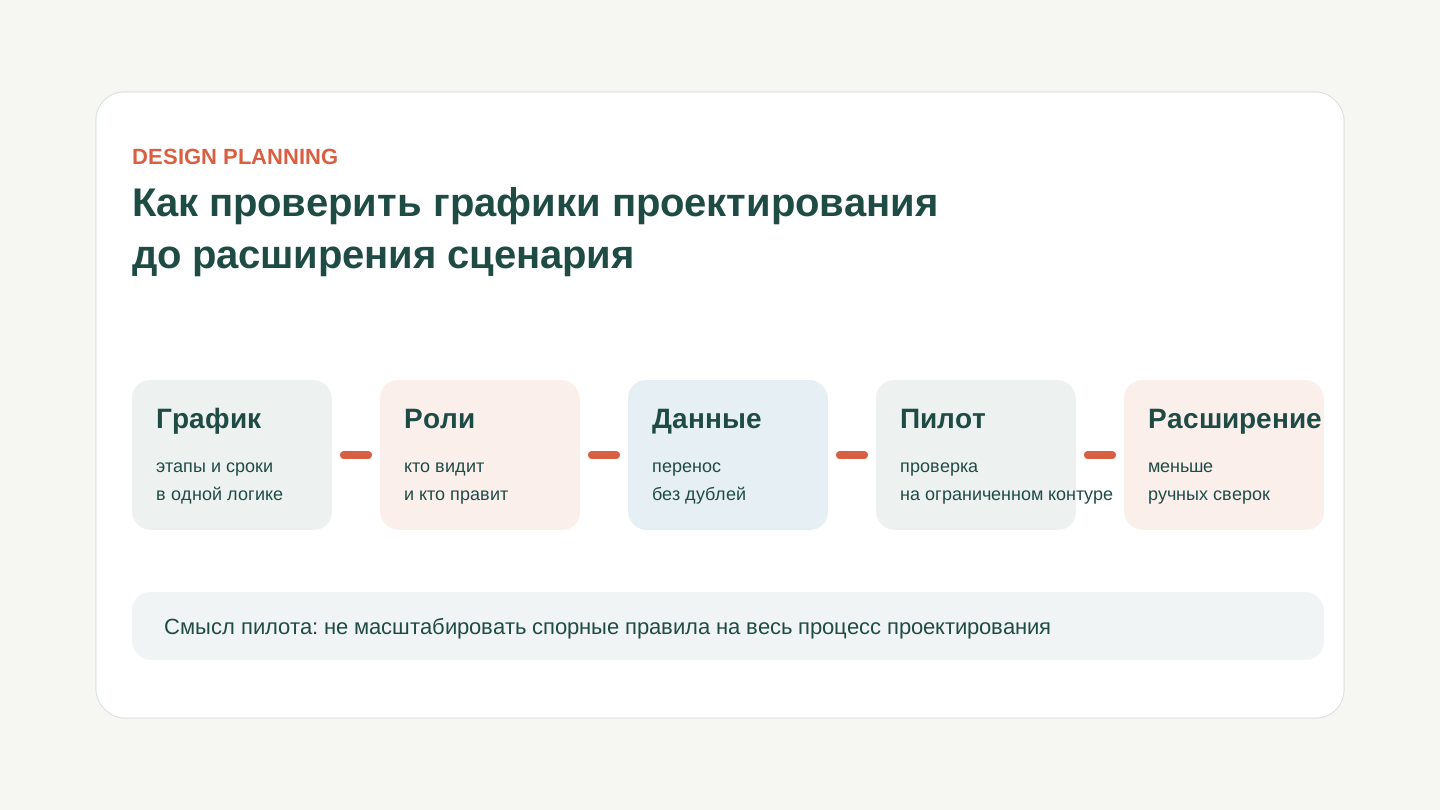
The team worked with a pilot scope and verification checkpoints that prevented errors from scaling across the entire process.
Challenge
The goal was to align schedule rules, the role model, and data migration so the design scenario could scale without constant manual coordination.
A separate objective was to validate integration points before scenario expansion, preventing disputed rules from immediately spreading across the entire design process.
Review a similar project with an architect
Solution
The team viewed schedules, roles, and data as interconnected process elements. Verification occurred on a pilot scope to confirm rules first, then proceed with expansion.
For management oversight, disputed areas were documented: where data corrections were needed, where roles required clarification, and where integration validation was necessary.
- Schedule rules were aligned with the role model.
- Data migration was verified before scenario expansion.
- Data errors and integration errors were distinguished.
Result
The project established a more resilient foundation for design schedule management: fewer manual interpretations, clearer pilot boundaries, and a more structured verification checklist before the next phase.
For business purposes, scenarios can expand after rules are validated on a limited scope, rather than requiring manual reconciliation cycles between design, responsible roles, and data.