
Context
For a major developer, paid reservation depends on the user journey, payment flow, statuses, integrations, migrations, and environment settings. An error in any component can stop the scenario at the moment the customer is ready to confirm the reservation.
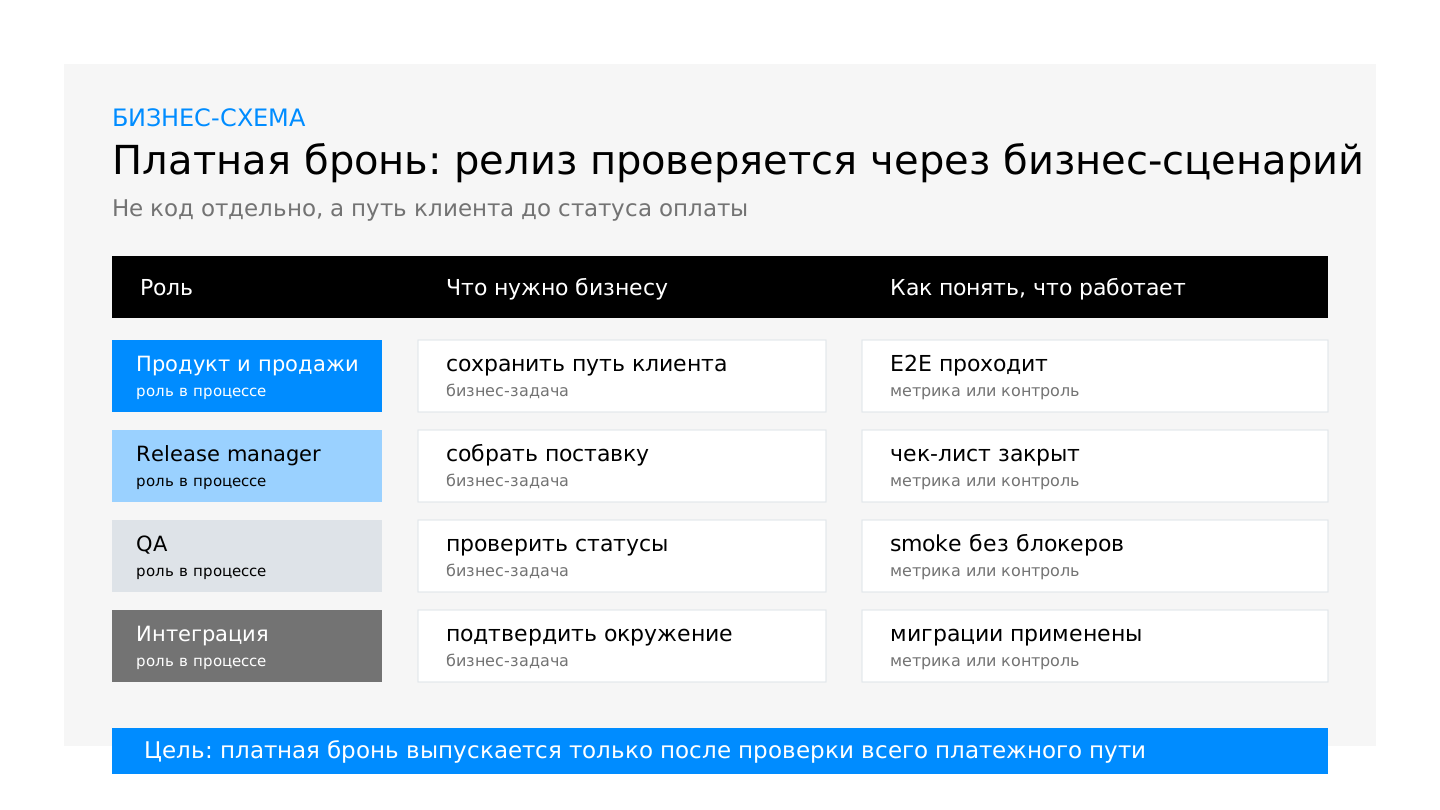
Therefore, a release cannot be verified solely as code deployment. What matters for business is: does paid reservation work from selection through status, is any failure clear, and is there confidence the environment is complete.
Business challenge
For product and sales, paid reservation failure means lost channel trust and manual customer workarounds. For support, increased inquiries with unclear status. For the release team, the risk that problems appear not during development but during scenario verification.
Hidden dependencies are particularly dangerous: an environment variable, migration, or smoke test may appear as technical details but can actually block the business scenario.
Challenge
Needed to establish stable payment scenario verification and build release control around the specific paid reservation business flow.
Business goal: release changes without risking payment disruption from incomplete configuration, missing migrations, or unverified status.
Review a similar project with an architect
Solution
The team integrated release checks with the paid reservation E2E scenario: environments, migrations, and smoke tests became part of a single control workflow.
After the environment variable incident, the delivery checklist was reinforced to make the next check independent of individual team members' memory.
- Added environment variable checks to the release control workflow.
- Managed migrations as a mandatory pre-acceptance step.
- Tied smoke tests to the payment scenario and statuses.
Metrics and business goals
Metrics for this case should demonstrate whether changes can be released without risk to the sales scenario.
- Success of the paid reservation E2E scenario;
- Completion of smoke tests for key statuses;
- Completeness of environment variables before release;
- Application of migrations before acceptance;
- Number of release blockers found before business verification
Result
The project achieved a more manageable release framework: fewer hidden dependencies, clearer delivery order, and reduced risk of paid reservation failure from out-of-code configuration.
For product, this provides release readiness criteria; for sales, a more reliable customer journey; for support, fewer ambiguous inquiries after launch.