












AI

AI engagement assessment and continuous eNPS

AI continuously reads anonymized signals and calculates eNPS as a guiding indicator. No surveillance, no automated decisions about people, and personal data stays within the perimeter under Federal Law 152.

Our clients

Clients and partners

Capital Group
FSK Group
SMLT
Tochno
Dogma
Sber City
FM Logistic
Danone
+19clients · View cases →

Retention is expensive, and the departure signal comes too late

  1. The manager learns that an employee is burned out or planning to leave during the exit interview - when the decision has already been made.

  2. An annual engagement survey provides a snapshot once a year and misses the moment when sentiment changes.

  3. A line manager oversees dozens of people and simply cannot track who is growing tired, who is being overlooked, or who stopped suggesting ideas a month ago.

  4. Hub AI implementations for business already promises an HR assistant that suggests how to retain a specific employee.

  5. This page explains the mechanism: how the assistant continuously evaluates engagement and calculates eNPS - and where the line is between "helps the manager"

What eNPS is and what it really measures

  1. eNPS (Employee Net Promoter Score) is an employee loyalty metric adapted from customer NPS.

  2. It is based on one question: 'On a scale from 0 to 10, how likely are you to recommend the company as a place to work?'

  3. Responses are divided into three groups: promoters (9-10), neutrals (7-8) and detractors (0-6). The result is calculated as the share of promoters minus the share of detractors; neutrals are excluded from the formula. The range is from -100 to +100.

  4. The NPS approach was created by Fred Reichheld (Bain & Company) and presented in Harvard Business Review in December 2003 in the article "The One Number You Need to Grow."

  5. eNPS applies the same logic to employees.

0–10one-question scale
9–10 / 7–8 / 0–6promoters / passives / detractors
−100…+100final index range

eNPS is a signal, not proof

How the assistant continuously calculates eNPS

From signal to guiding indicator

Signal

Communications within the perimetermessages, requests, and feedback stay within the company perimeter

Anonymization

Two-way personal data perimeterobfuscation before the model, deobfuscation in the response - the model sees anonymized text

Aggregation

Index based on anonymized signalsengagement assessment is calculated on aggregates, not on raw named correspondence

Indicator

eNPS as a trendcontinuous dynamics instead of a once-a-year snapshot; direction, not a proven cause

Person

Manager summarythe assistant suggests the next step; a person makes the HR decision
Each stage follows from the previous one: the signal is anonymized, aggregated into an indicator, and passed to the manager as direction, not as a verdict.

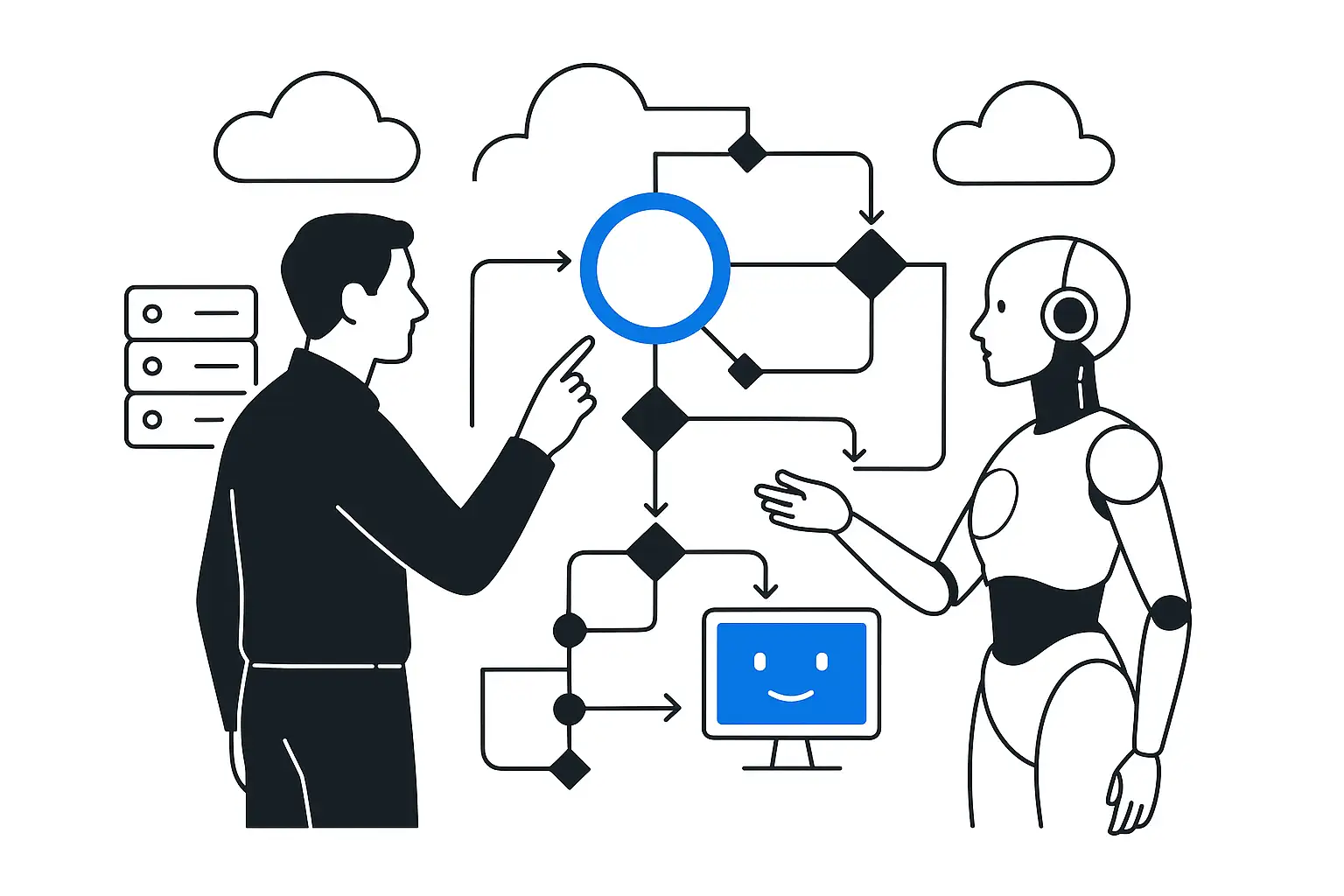
The same cycle: "signal -> question to the person -> route to the manager"

This logic is not new for the KT.Team environment. Quality control agent it also flags the deviation, asks the employee for the reason, and suggests the next step to the manager. Call Analytics continuously checks communications against policies on isolated servers with anonymization. The HR assistant uses the same approach for engagement: a continuous anonymized signal, an aggregate, a leading indicator - and a human in the end.

When eNPS changes, the assistant can suggest how to support a specific person through the appreciation language that suits them best.

by Gary Chapman and Paul White, "The 5 Languages of Appreciation in the Workplace"

(2012). This is a framework from the study, not an invented metric.

What the assistant does NOT do

The product boundary is just as important as its function. An engagement assistant is a manager's tool, not a surveillance system.

Assess where AI can deliver impact in your process

Federal Law 152: where the boundary lies and how the perimeter keeps it

  1. Not all processes and not all data fall under GDPR, but personal - those that identify a person: full name, phone number, email, and any information tied to a specific employee.

  2. Employee data is personal data, and processing it requires a lawful basis.

  3. Employment relations are a recognized basis, but AI analysis of internal communications without an explicit basis may be treated as a violation, and penalties have been tightened.

  4. There are two clean ways to keep the process within the legal framework.

  5. First - consent: it must be specific, informed, voluntary, and unambiguous, and from September 1, 2025 it must be issued as a separate document from other signed paperwork.

  6. Second - anonymization: anonymized data can be processed without consent.

  7. That is why eNPS is calculated from aggregated and anonymized signals - this is an architectural response to the risk, not a paperwork one.

  8. The mechanism is already implemented in LLM & Security Gateway: two-way personal data obfuscation before the model and deobfuscation in the response - the model and the provider logs see only anonymized text.

  9. This is the proof of the boundary: the employee's personal data does not leave the perimeter.

When to use an eNPS assistant, and when not to

When to adopt

  • Line managers cannot keep up with the mood of dozens of people, and an annual survey arrives too late.
  • A continuous engagement trend signal is needed to intervene before an exit interview.
  • There is readiness to keep data within the perimeter: separate consent under Federal Law 152 or anonymization of signals.
  • People decisions are made by a person, while the assistant is there as a prompt and summary, not as an automatic system.

When not to use it

  • You need a 'fair number instead of a conversation': eNPS does not replace the direct 'why' question and a conversation with the person.
  • The team is so small that anonymization does not help - segmentation points to a single person, and anonymity breaks down.
  • The goal is to control and punish employees, not retain them: that conflicts with the product boundary.
  • A proven percentage forecast of turnover may be expected: the assistant provides direction, not a guarantee.

What it looks like in practice

An illustrative scenario is available in the blog "How AI Changes Daily Work": the assistant collects data, analyzes surveys, prepares reports, and in the story eNPS rises after deployment. This is a hypothetical example for illustration, not a measured KT.Team case; we do not provide specific eNPS or retention gains until they are backed by a real project.

How to connect

  1. 01

    Record personal data

    We identify which fields in the process are personal data and choose the path: separate consent under Federal Law 152 or anonymization.

  2. 02

    Set up the boundary

    We connect an LLM & Security Gateway: personal data is obfuscated before the model and de-obfuscated in the response, so the model sees anonymized text.

  3. 03

    Calculate indicator

    The assistant continuously aggregates anonymized signals into eNPS as a trend and supplements it with the open-ended "why" question.

  4. 04

    Hand over to a person

    The manager receives a summary and a suggested next step; the personnel decision remains theirs.

FAQ

FAQ

Isn't this employee surveillance?

No. The assistant works on anonymized and aggregated signals, does not move personal data outside the perimeter, and does not make HR decisions - it prepares a summary, and the final decision is up to the manager. Will AI fire or punish someone for a low eNPS? No. eNPS is a leading trend indicator, not a verdict. Any action involving a person is taken by a person. How accurately does AI predict eNPS from messages? We do not give an accuracy percentage - that would be an unverifiable figure.

The assistant provides direction: continuous trends instead of a once-a-year snapshot, which should be read together with an open-ended "why." How does this comply with Federal Law 152? Two paths: separate employee consent (from 2025-09-01, as a separate document) or anonymization. We calculate eNPS on anonymized and aggregated signals within the perimeter; the mechanism is LLM & Security Gateway.

Sources

Checked on: 28.06.2026

Discuss the solution: AI engagement assessment and continuous eNPS

Send via: