Extra code
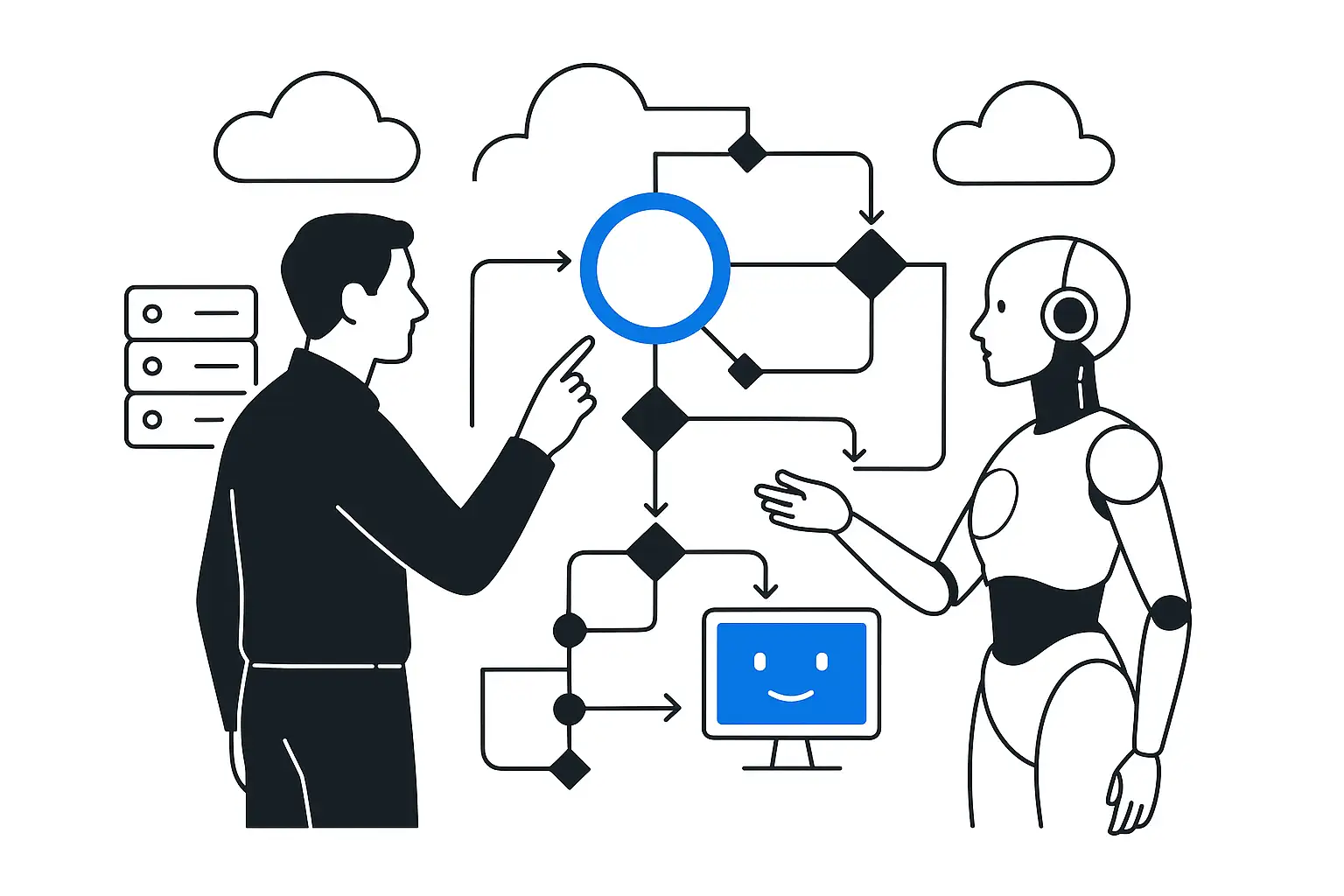
Unnecessary libraries, universal abstractions, and bloated structure increase the blast radius. Agents then spend more tokens reading and editing things that did not need to be written.

Learn how to cut AI-assisted work costs: Ponytail trims extra code, Caveman compresses communication, and RTK removes shell-output noise.
Three noise filters in AI-assisted development
Codebase
Conversation
Terminal
Result
In Claude Code, Codex, and similar tools, the cost of work is not only determined by model pricing.
The agent reads the repository, receives command output, writes intermediate explanations, fixes its own decisions, and runs checks again.
If extra files, long status updates, and multi-page logs appear at every step, the team pays not for thinking but for noise.
So savings start with a simple question: what context does the agent actually need to take the next action?
Unnecessary libraries, universal abstractions, and bloated structure increase the blast radius. Agents then spend more tokens reading and editing things that did not need to be written.
Long status updates, obvious explanations, and repeated context slow down fast iterations. Inside a team, what is often needed is a short signal: what was done, what broke, what comes next.
Builds, tests, the package manager, and git can produce a lot of output. If the agent sees the full stream without filtering, it is less likely to spot the actual error.
Ponytail is interesting not as a "magic plugin," but as a formalized habit of a strong engineer: first understand the task, then choose the simplest sufficient solution.
If the native `<input type="date">` solves the task, you do not need a date picker library.
If an existing function already does the job, you do not need a new service layer. In the published benchmark, the Ponytail authors show an average 54% reduction in LOC and about a 20% cost decrease, but these numbers should be read carefully: this is a limited test on a specific agent scenario, not a rule for every project.
The right way to put it is this: Ponytail does not make the agent smarter; it reduces the surface area where the agent can make a mistake.
Caveman is not about reasoning quality, but about response format. It is useful when the context is already shared and you need a result quickly: a short review, task status, a commit message, handoff between agents, or a list of factual errors. In public materials, legal conclusions, financial decisions, and complex migrations, this kind of compression is dangerous: important caveats can disappear. So Caveman should be enabled as a mode for work iterations, not as the default style for all communication.
RTK covers another area in our work environments: command output.
The agent runs shell commands through `rtk`, gets a compressed useful result, and spends less context on lines that do not affect the next action.
Important detail: such a wrapper must have a bypass to raw output, otherwise the filter itself becomes a source of errors.
RTK does not fix commands or make them safe on its own; it makes the execution loop cheaper and disciplines reruns.
See where the team is wasting context: extra diffs, long responses, test logs, and repeated attempts at the same command.
Use minimalism where risks are low and the checks are clear. Do not cut safety or data contracts.
Use a concise style for statuses and reviews, but return to normal clear language for decisions with a high cost of error.
Filter command output, but keep the option to open the full log, trace, or raw output when debugging.
Compare not only tokens, but also diff size, review time, the number of rework cycles, and the quality of the test signal.
Ponytail, Caveman, and RTK do not solve service integrations on their own. They help you research, write, and maintain adapters more cheaply, but they do not replace API, permissions, auditing, or monitoring. If the task is specifically how to connect a service without a ready-made connector, that is a separate architectural question: we covered it in the article Integration without API: How to Connect a Closed System.
For an enterprise AI stack, it is important to keep two layers together: AI-native development and manageable AI-native integrations.
AI-native development
We will break down your agentic workflow, repository rules, terminal setup, and cost metrics. We will apply the minimum practices where they matter and avoid compressing what should stay explicit.
Ponytail, Caveman, and RTK are useful precisely because they do not try to replace engineering judgment. Ponytail reduces extra code. Caveman removes extra words. RTK reduces extra terminal output. Together they lower entropy at three boundaries of AI development: codebase, conversation, terminal. But boundaries remain: security, data, architectural contracts, and incident diagnostics must be explicit, even if that costs more tokens.
Verification date: 09.07.2026