Defect detection accuracy
AI visual inspection vs ~70-80% with manual inspection.

AI
AI detects defects and deviations, pulls context from MES, ERP, and inspections, and explains each finding for review.
Our clients












Vendor and research data, not KT.Team results; sources at page bottom.
AI visual inspection vs ~70-80% with manual inspection.
and +30% productivity gains for facilities with AI quality control (McKinsey).
typical timeline for AI visual inspection; average 7-8 months (Forrester).
AI visual inspection market volume, growing ~13.8% annually.
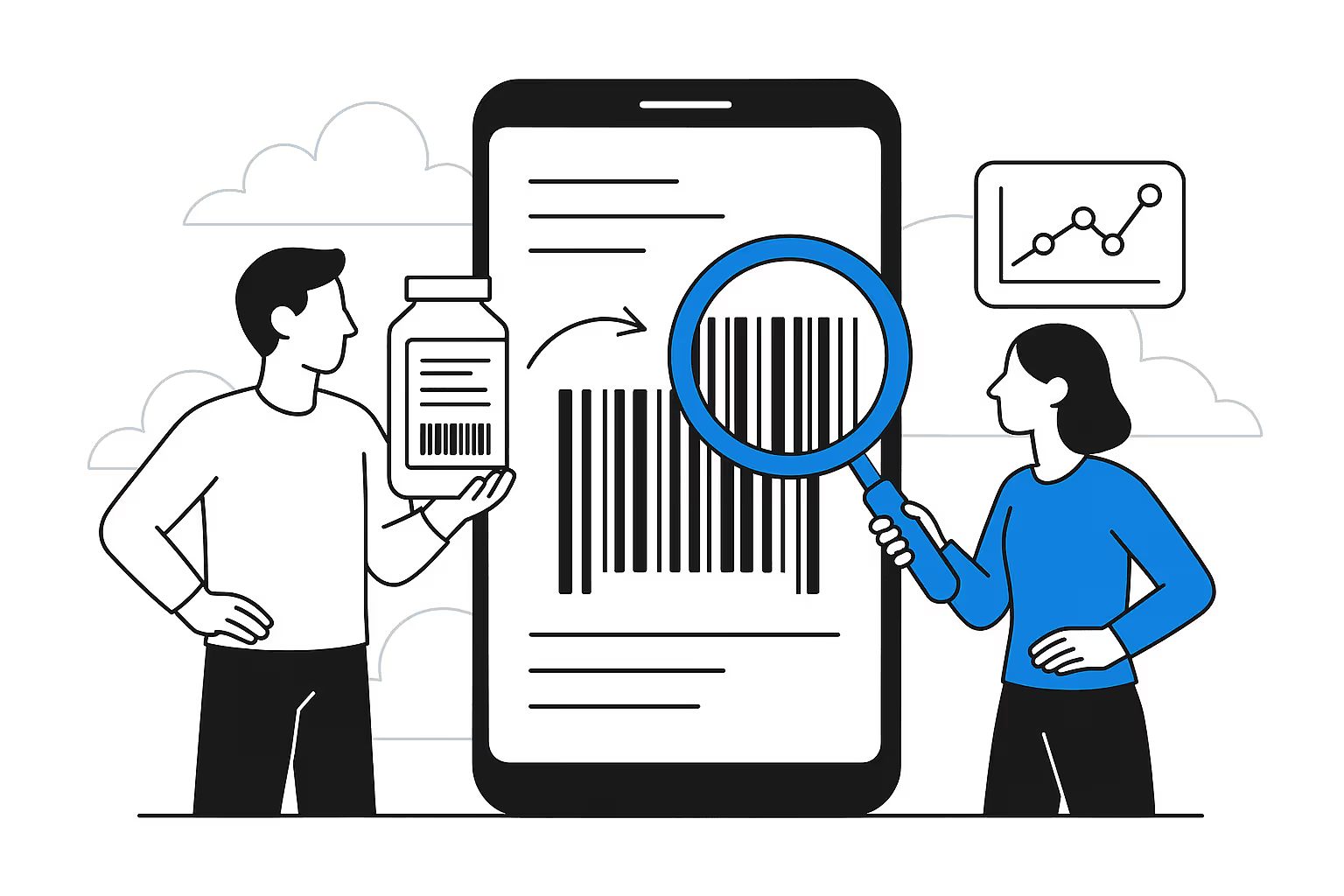
Agent finds defects or deviations in products, batches or work on site: from line frames, inspection cameras or uploaded photos.
Finding is enriched with MES/SCADA, ERP/1C data, inspection checklist and SKU or stage history—within access permissions.
Line operator or site supervisor provides missing context: shift conditions, raw material batch, assembly details.
Agent shows what's wrong, what facts support the conclusion and the next step—no black box.
QC inspector or site manager selects pass/fail/rework and initiates corrective action.
Confirmed review feeds back into the validation set and refines the model for next inspections.
| System / layer | Scope of responsibility |
|---|---|
| Computer vision and cameras | Line and inspection camera frames, photos of components and batches, deviation area highlighting. |
| MES / SCADA / ERP / 1C | Data on batch, order, stage, process parameters and statuses — context around the finding. |
| Standards database and inspection checklists | Current standards, tolerances, acceptance criteria and inspection checklists on site. |
| AI layer | Detection, context collection, verifiable explanation and source log for each analysis. |
| Legal and data security | Data handling basis, access roles, masking and retention are set before connecting sources. Acceptance and personnel decisions are not automated. |
| QC inspector and process manager | Pass/fail/rework decision, acceptance and corrective action remain with humans. |
Related experience
Pilot builds on labeled defect history and new detections of the same type. Impact is measured on a validation set with sigma significance, not impressions.
Percentage of known defects agent found in control sample.
Percentage of signals QC classified as normal or acceptable variation.
Percentage of analyses where QC didn't need to manually collect data and photos.
Time from defect detection to confirmed decision: pass / reject / rework.
FAQ
Existing infrastructure is enough: line or inspection camera frames or uploaded photos, access to MES/SCADA, ERP or 1C for relevant process sections and inspection checklists. No separate infrastructure needed for pilot.
Pilot runs on one defect type and your labeled data; scope and timeline are fixed upfront based on data volume and sources. Payment after results are accepted, so you pay for proven impact, not promises.
Pass/fail/rework, acceptance and corrective action. Agent detects defects, gathers context and explains findings, but makes no automatic acceptance or personnel decisions.
Effect is measured on a control sample: we compare the agent's detection completeness and false positives against current inspection and assess statistical significance, not impression.
Through contracts and queues, not direct edits inside systems: the agent reads batch, order and phase data and returns findings to a unified stream for QC. Direct database access and credential sharing are not required.
Yes. On line, agent analyzes product and batch defects; on site, deviations in work and inspection. For construction estimates and volumes, see related solution AI estimator.
This is a separate task - for it there is AI Compliance Control AssistantThis page covers product and work quality control: defects, rejects, inspection and QC.
Pilot
Pick one defect or deviation type, train the agent on your labeled history, connect required data sources and agree on manual review threshold. Payment after pilot acceptance, scale to line or site. This is part of AI solutions for business.
Checked on: 18.07.2026