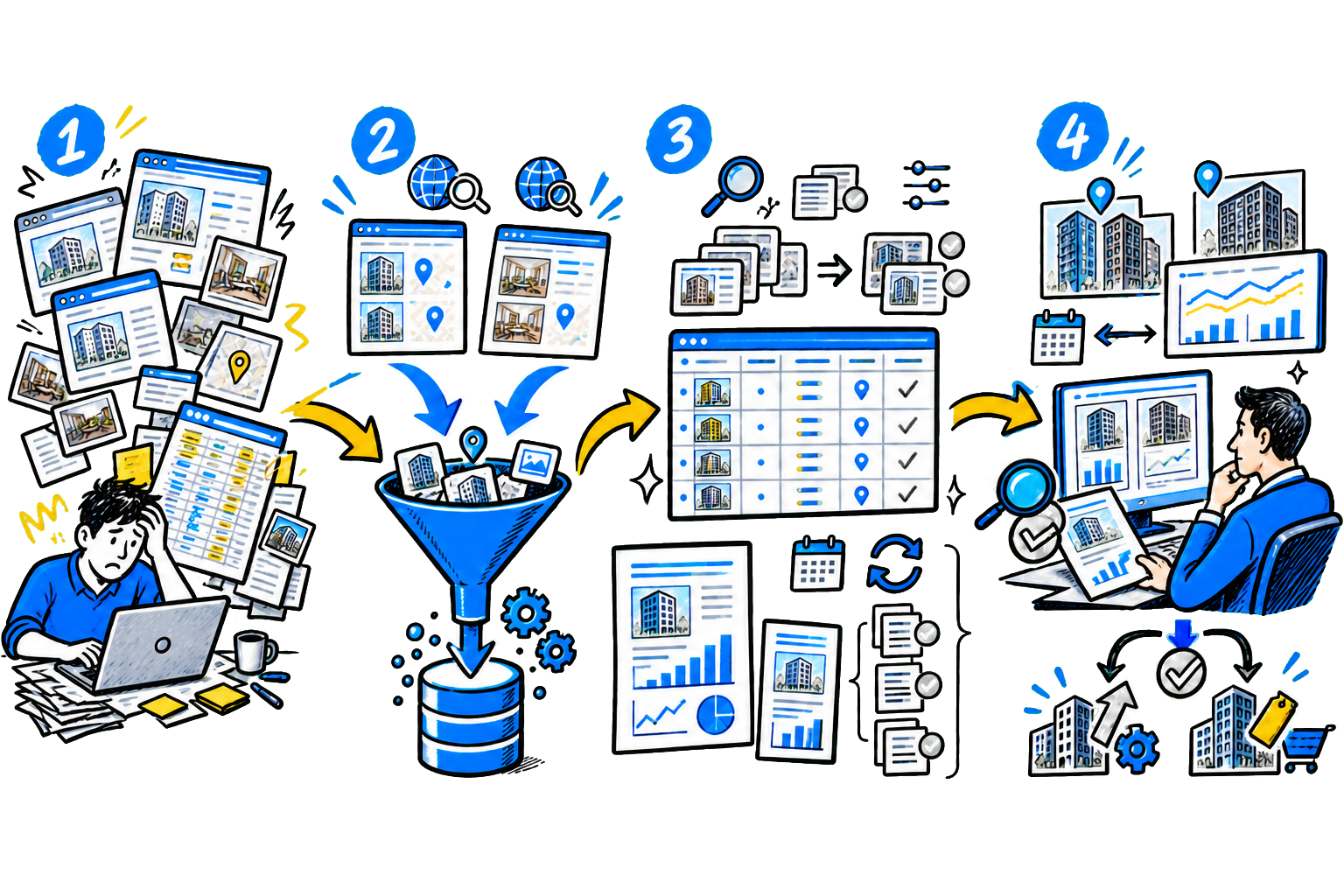
Developer automation covers not only the construction site, but also sales, documents, planning, and data work. Results appear when you connect these processes in one system: data is not duplicated, and specialists work according to common rules. Below are the key areas that deliver practical results. 1.
Sales automation (CRM) CRM collects all inquiries from the website, ads, and calls in one place and immediately distributes them among managers. You can see how much time passes from inquiry to first contact and where customers are lost. The system records the lead source, so you understand which channels actually bring deals, not just inquiries. Managers work in one program: calls, comments, and statuses are not lost or left in personal notes.
A manager can see the team's workload and quickly redistribute incoming requests, which reduces handling time and increases conversion without increasing the ad budget. 2. Electronic document exchange (EDI) EDI stores contracts, acceptance acts, and approvals in a single window with a clear structure. You do not waste time searching for files and do not work with outdated document versions.
Contracts are generated automatically from CRM data, which reduces form-filling errors. The system sends documents for approval on its own and shows the status at every stage; signing with an electronic signature speeds up deals. As a result, you close stages faster and reduce the risk of disputes. 3. Project management and schedule-network planning (CNP) CNP connects the work schedule with resources and deadlines - you see the real picture for the project.
If one stage shifts, the system automatically recalculates the entire plan and shows which tasks are at risk. Engineers record completion directly on site, and the data goes into the system immediately without manual reports. You can see where delays arise and intervene before they affect the handover date. The manager gets not just the current status, but a forecast for the project over the coming weeks. This helps manage deadlines instead of reacting to problems after they happen.
Discuss your challenge with an architect
4. BIM and site data BIM stores all data about the asset: quantities, materials, and structural decisions. But you get real value when you connect the model with actual site data. The system shows differences between the plan and completed work, not just a visual model. You find errors faster and reduce rework. The team works with up-to-date information, not outdated drawings, which makes control much easier. 5.
Low-code Platforms Low-code Platforms allow you to quickly adapt processes to the company's needs without lengthy development. You build solutions yourself for work control, procurement, and contractor coordination. If requirements change, you can make adjustments without complex rework or lengthy approvals. As a result, the company is not dependent on development contractors and adapts the system to real business needs faster.