Well-organized logistics reduces costs:
About the Article
Published: 11.8.2025 Reading time: 1 min. Learn how to organize sourcing and production for retail effectively, reduce costs, and keep fast-moving items in stock.

How to plan sourcing and production, control quality, and maintain a stable assortment for retail.
Published: 11.8.2025 Reading time: 1 min. Learn how to organize sourcing and production for retail effectively, reduce costs, and keep fast-moving items in stock.
Organizing the sourcing and production of goods for retail is a key task for a stable business. Profit, service quality, and competitiveness depend on how well these processes are set up.
Before sourcing or starting production, it is important to: Study sales data from previous periods. Assess seasonality and market trends. Forecast demand by product category. Tip: use ERP systems and BI analytics to automate forecasting.
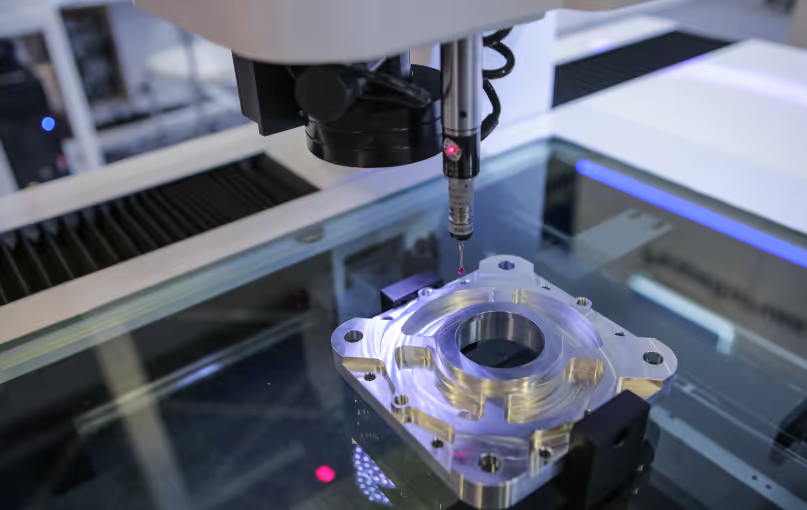
When sourcing, consider: supplier reliability, delivery times, product quality, and the ability to customize for your brand. With in-house production: control quality at every stage, optimize production capacity, and minimize downtime and defects.
Well-organized logistics reduces costs:
Consolidate orders to save on delivery.
Use automation to track shipments.
Use the Just-in-Time approach to reduce warehousing costs.
Regularly analyze stock levels: avoid excess inventory (tied-up capital), minimize shortages (lost sales), and set up automatic alerts for critical stock levels.
Plan your sourcing/production budget with seasonal peaks in mind. Evaluate each product's profitability. Track exchange rates when buying abroad.
Effective sourcing and production for retail require accurate forecasting, well-structured logistics, and ongoing quality control. Investments in automation pay off quickly and give the business a lasting advantage.