AI models change every week. Infrastructure does not.

OpenAI solved Navier–Stokes with a neural network, while an authorship scandal exposed the risk of businesses tied to one model losing control.

  • A Millennium Prize Problem and the dispute that overshadowed it
  • The dispute that matters more than the solution
  • How quickly a choice becomes obsolete
  • Why choosing the “best model” is a poor strategy

A Millennium Prize Problem and the dispute that overshadowed it

  1. OpenAI reported that a private model found a solution to the Navier–Stokes existence and smoothness problem—one of seven Millennium Prize Problems with a $1 million prize established on May 24, 2000.

  2. The result was immediately overshadowed: NYU mathematics professor Tristan Buckmaster accused his colleague

  3. Levente Alpoege, who works at Anthropic, with improperly using shared work in preparing the publication.

  4. The authorship dispute took center stage faster than discussion of the proof itself. That same week, OpenAI released ChatGPT Images 2.5 with two new API models, while llm 0.35 added access to GPT-6 Astra.

  5. For a business planning AI adoption years ahead, this chain of events offers one practical lesson: the model chosen today will become obsolete before its integration pays off.

The dispute that matters more than the solution

  1. Buckmaster claims that Alpoege used material from their joint work without approval; the accusation is supported by a hastily published version of their correspondence.

  2. The situation itself is telling: a major research lab keeps the model that solved a Millennium Prize Problem private, while two mathematicians dispute who owns the result. The model is a tool.

  3. Authorship and responsibility belong to the person who uses it.

  4. The same applies to a company integrating AI into its processes: the person responsible for the result is the one who built control around the model.

How quickly a choice becomes obsolete

In one week, the market saw a private model solve a Millennium Prize Problem, ChatGPT Images 2.5 add two new API models—gpt-image-2.5-sunburst for precise editing and gpt-image-2.5-flare for rapid bulk generation—and GPT-6 Astra arrive in the latest llm 0.35 release. OpenAI also reported the scale: more than 3 billion images have already been generated through ChatGPT Images and GPT-Image in the API.

At this release pace, a company that hard-codes one model’s API into its product rewrites the integration before it can measure the previous version’s impact. That is the cost of betting on a specific model instead of an architecture that uses the model.

Assess where AI can deliver impact in your process

Why choosing the “best model” is a poor strategy

TTU—time to use, the time from a tool’s release until it delivers real results—is measured in months for most companies: contracting, integration, testing, and employee training.

By then, the model may already have fallen out of the benchmark rankings. The simple “ask a question, get an answer” interface

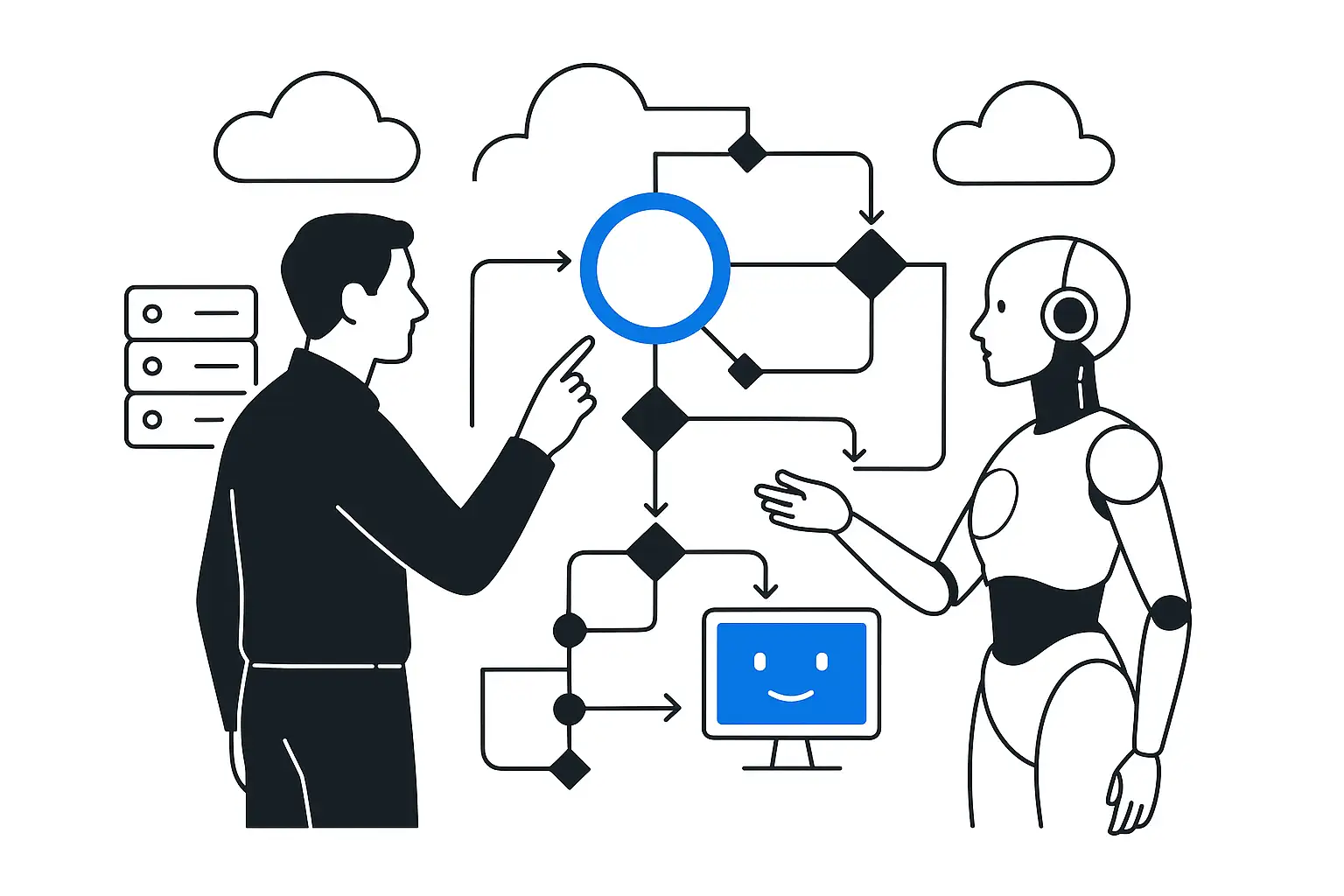
does not reflect the architecture’s internal complexity: replacing a model without stopping the product requires an abstraction layer between business logic and a specific provider. Without it, every new release—gpt-6-astra, image-2.5, or a private Navier–Stokes-level model—requires a separate integration project instead of changing one configuration line.

How to build a layer that outlasts model changes

  1. The MCP (Model Context Protocol) and LLM & Security Gateway solve this technically. Business logic calls a unified interface; the gateway routes each request to the right provider—OpenAI, Anthropic, or Sber GigaChat—checks input and output content, logs usage, and applies security policies regardless of which model handles the task.

  2. When a new version of GPT, Claude, or Qwen is released tomorrow, engineers change one line in the gateway configuration.

  3. The code of applications using this API remains unchanged.

  4. This is the difference between AI as an experiment and AI as a product component that can be maintained for years.

Conclusion

The Navier–Stokes controversy showed that even when a Millennium Prize Problem is solved, the sharpest question is who is responsible for the result and how. For business, the conclusion is harsher: the winner is whoever builds an architecture ready to adopt the next model without downtime. Results are measured by the metric AI improves in production.

Discuss the article: AI models change every week.…

Enter your email or phone number so we can get back to you.

Send via: