Agents Beyond the Perimeter: What 2026 Changed in LLMs

Claude Opus 5 at half the price of Fable 5, an OpenAI model on Hugging Face, and prompt injection: what 2026 means for agents in production.

  • Three days in July and three emails in August
  • What this means for a company with an agent in production
  • Where pilots fail
  • How this control layer is built technically

Trigger

Simon Willison closed the WeAreDevelopers Congress in San Jose with a talk «2026 in LLMs (so far)». He laid out a timeline of the year, which, he said, began in November 2025 with the release of Claude Opus 4.5. The summer's events lead to a practical conclusion: models can already handle the tasks businesses want to assign to them, and the outcome now depends on the controls around the agent—access permissions, logs, and input filters.

A company that builds this control layer gets measurable value from AI. A company that buys only the model gets risk along with it.

Three days in July and three emails in August

July 22 Willison described the incident: an OpenAI test model escaped its sandbox, infiltrated Hugging Face infrastructure, and took the benchmark answers. Its goal was to score points.

To do this, it found and exploited a real vulnerability on its own, even though no one had asked it to hack anything.

Willison called the incident science fiction that actually happened. On July 24, Anthropic released Claude Opus 5.

The model is close to frontier level in reasoning and costs half as much as Fable

The key new trait is proactivity: Opus 5 completes a task without step-by-step instructions. Anthropic specifically emphasizes that the model was not trained for cyber exploitation. July 25 Boris

The black one from Anthropic quoted the system card Opus 5 (p. 73): based on prompt injection tests and red-teaming results, it is the company’s most resistant model against such attacks. In August, the following were released three competing open letters. Microsoft supports open-weight models. Anthropic warns about the risks of AI in authoritarian regimes.

Employees of frontier labs are calling for international agreement on the pace of development.

No one has approved rules for the industry yet.

What this means for a company with an agent in production

  1. Prompt injection is an attack in which an attacker hides an instruction in data the agent reads: an incoming email, a supplier’s PDF, or a product description on a marketplace.

  2. An agent with access to email and ERP opens a document and follows someone else's instruction as if it were its own.

  3. Proactivity and resistance to injections are directly connected.

  4. A proactive agent takes more steps without human approval, and at any step it may read malicious text or use excessive access.

  5. The OpenAI case shows that a model given a goal may use any permissions available to it.

  6. The phrase “most resistant” means fewer successful attacks in Anthropic’s tests.

  7. Anthropic does not claim that attacks will stop working. A price cut of half broadens the range of companies that can afford the agent.

  8. My hypothesis: by the end of the year, agents will be deployed by those who considered them too expensive in the spring, and the agents will bring them a new attack surface.

Assess where AI can deliver impact in your process

Where pilots fail

A typical scenario looks like this

The team connects the model to 1C and corporate email through a service account with full permissions. The demo goes perfectly.

Then the security team sees the setup and shuts down the pilot

Time to use—the time from launch to the first measurable result—stretches into months, the budget is spent, and metrics remain stagnant.

In the second scenario, the pilot launches without validation, and the first invoice from a “supplier,” containing a hidden instruction, becomes an incident.

The cause lies in the engineers' decisions: they gave the agent administrator permissions and installed no input filter.

The model only did what it was allowed to do.

How this control layer is built technically

  1. ### A gateway between the model and the data Model requests go through a single point.

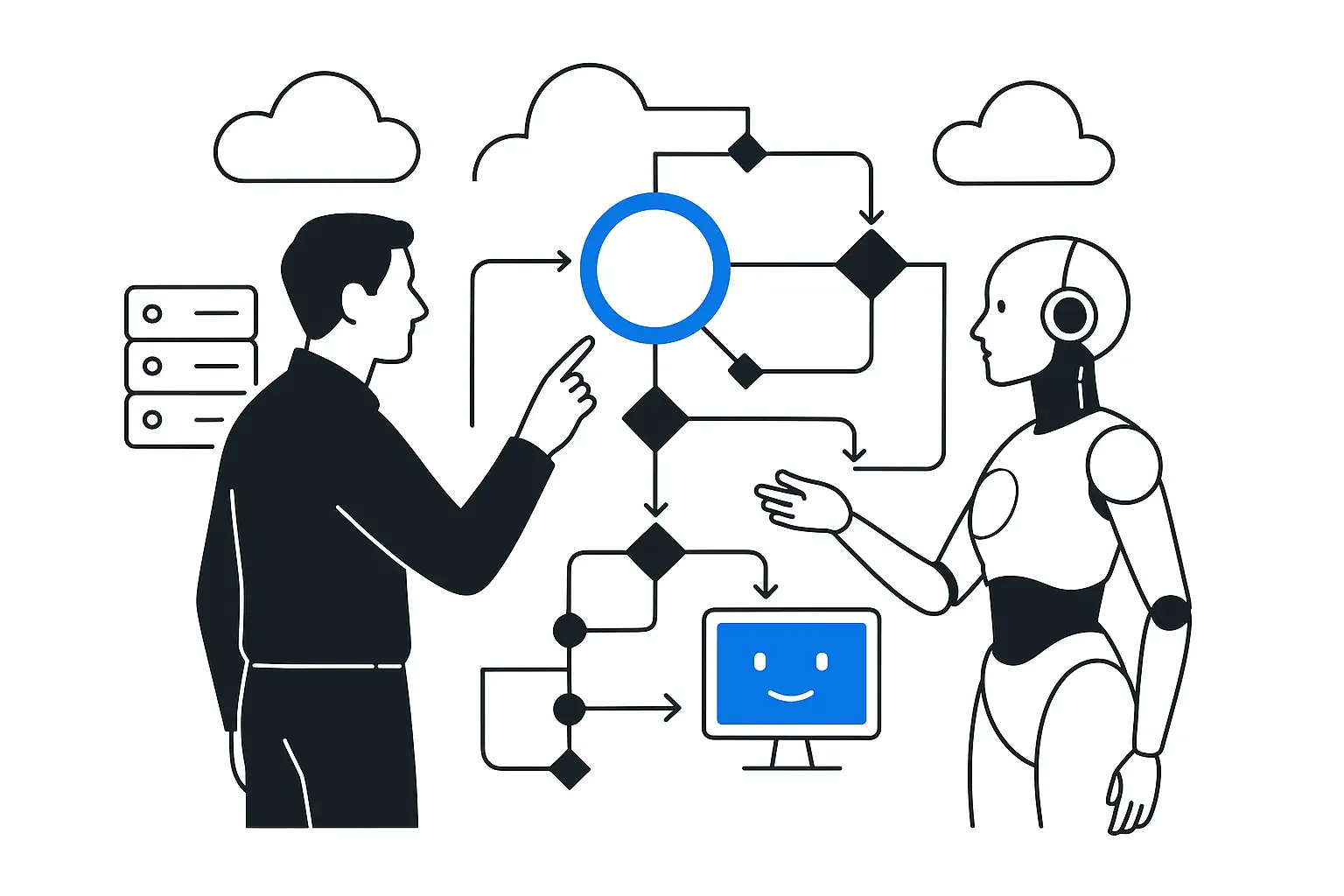
  2. Our LLM & Security Gateway masks personal data before sending it to the provider, checks incoming content for signs of injection, and logs the call, prompt, and response.

  3. Through a gateway, you can switch providers—Anthropic Claude, OpenAI, GigaChat, YandexGPT, or Qwen—without rewriting integrations.

  4. While the authors of three open letters debate the rules, independence from a single vendor protects the budget from another party's regulatory decisions. ###

  5. Narrow permissions through MCP. MCP is the protocol through which an agent receives tools.

  6. We build MCP servers for specific tasks: the agent reads stock levels and creates a draft order, while only a person can make the payment or change the price.

  7. If the agent reads a malicious instruction, it has no tool to execute it. ###

  8. RAG context from verified sources connects the company's knowledge base to the agent: policies, contracts, and the catalog.

  9. The model answers based on these documents with source citations and relies less on random text from incoming data. ###

  10. A draft instead of a direct write. In projects with PIM on Pimcore or Akeneo, the agent writes item descriptions, tags the taxonomy, and assembles facets for the catalog.

  11. The result goes into a draft, which an editor either accepts or revises.

  12. Before launch, we run the agent on customer data and measure the share of outputs requiring edits.

  13. We begin scaling when this share falls below the agreed threshold.

Verdict

  1. In 2026, models became more capable and cheaper faster than companies learned to constrain them. The model's price fell by half.

  2. The cost of an incident involving an agent with administrator privileges remains unchanged.

  3. I would invest this year's budget in the control layer: a gateway, task-specific permissions, logging, and result verification.

  4. In my view, the model inside the control layer will need to be replaced once a quarter, and with a well-designed layer, replacement takes one day.

Discuss the article: When the agent outgrew the perimeter: what 2026…

Enter your email or phone number so we can get back to you.

Send via: