An Agent in 20 Seconds Instead of a 20-Minute Panel

See how Trane and Reactiv use agentic AI to save hours, with a business review of Bedrock AgentCore, MCP, and Claude Opus 5.5.

  • The problem: the data exists, but there is no answer
  • TTU matters more than intelligence
  • How it works technically
  • The engineering layer determines the project's fate

Key point

In September 2026, Amazon published three production cases on Bedrock AgentCore in succession: Trane Technologies cut building systems diagnostics from 20 minutes of manually copying and pasting across dashboards to a 20-second agent response; Reactiv reduced merchant time spent updating mobile storefronts by 80%; and public-sector teams taught an agent to read camera footage through MCP instead of manually reviewing archives. Claude Opus 5.5 launched in the same wave of announcements, but the model played a secondary role in these figures.

The decisive factor was the engineering layer—identity, data access, and call auditing—that sits between the model and the result.

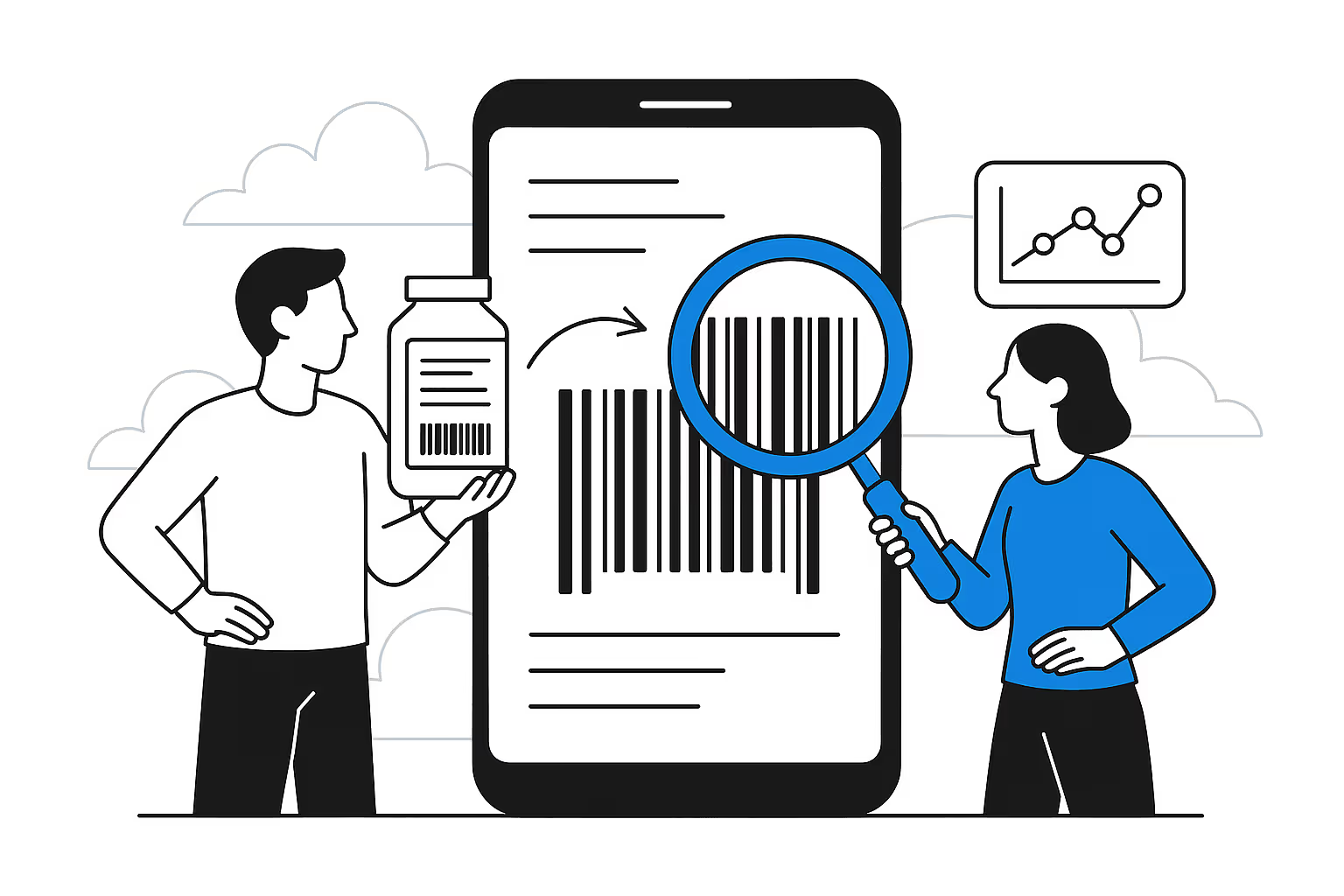
The problem: the data exists, but there is no answer

Trane manages millions of connected HVAC devices.

Telemetry, service history, and facility drawings are already collected

An answer to a technician's specific question (“why is refrigerant pressure fluctuating in unit 4”

) did not exist: the engineer opened 5–6 systems, compared charts manually, and spent at least 20 minutes on a single incident. The model could have answered in seconds if it had structured data access and permission to act. What was missing was the engineering layer: who authenticates the agent, where it gets current data, how every call is logged, and what happens when a data source fails.

TTU matters more than intelligence

KT.Team considers the time from a question to a usable result (time to use, TTU) the primary metric of an agent's value. Amazon recorded Trane's 60-fold acceleration—20 minutes reduced to 20 seconds—as a fact in its production deployment report, not a marketing estimate. Reactiv removed 80% of the merchant's manual work on storefront content. Both figures use the same principle: how many seconds separate a person from a decision.

A model may reason impressively, but if every call requires 20 minutes of manual integration around it, it does not work for business—regardless of the model's benchmark ranking.

Assess where AI can deliver impact in your process

How it works technically

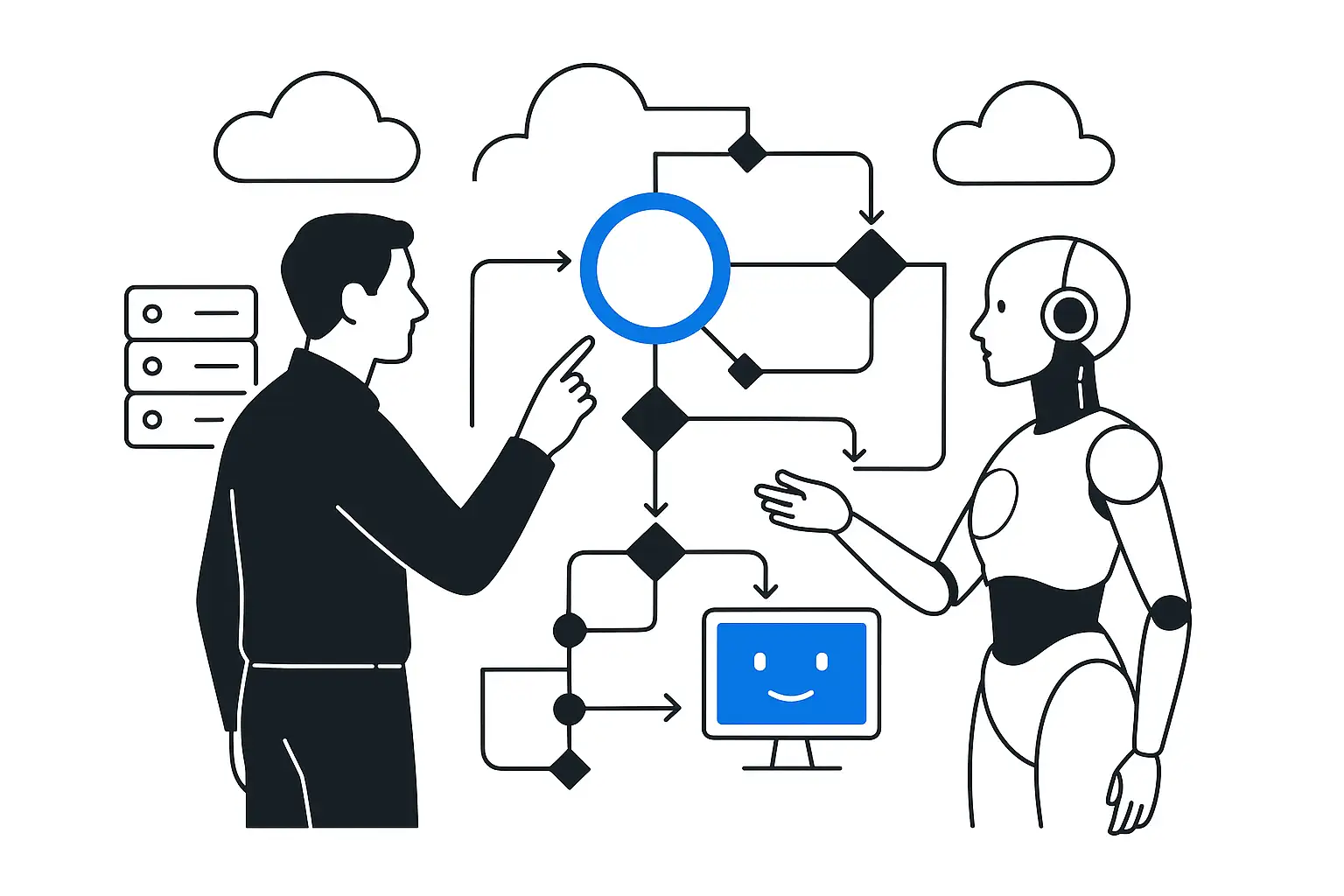
Bedrock AgentCore is a runtime for agents built on any LLM, providing identity, memory, tool calling, and tracing. Trane built the solution in 3–4 weeks: the platform handled authentication, retry logic, and observability, while Trane engineers wrote only the diagnostic business logic. In the same wave of announcements, AWS introduced Strands Evals, a method for evaluating an agent together with its skills—modular instruction files (SKILL.md) for a specific procedure, such as a compliance check, invoice processing, or code review convention.

A skill is tested and updated separately from the system prompt; without this separation, the prompt grows into an unreadable mess. In its own Python agentic projects, KT.Team maintains the same structure through MCP: the contract with the data source and the calling rule are described separately from the model, so the underlying model can be changed without touching the logic.

The engineering layer determines the project's fate

Claude Opus 5.5 launched on AWS in the same wave of announcements and, according to Anthropic, delivers better results than the previous version with fewer tokens; its call price has been reduced accordingly. This benefits agentic pipelines, where TTU is measured both in tokens and minutes.

Three independent September cases—industrial HVAC, mobile commerce, and the public sector—use the same architecture regardless of the model: MCP as the data access protocol, an LLM & Security Gateway for call control, and explicit skills instead of one oversized prompt.

What This Means for Business

A company that has already tried an AI pilot and delivered an impressive demo with no production impact will recognize a familiar crossroads in the Trane case. Trane has authorization, auditing, and retry handling for every agent call. Teams preparing a typical demo usually skip this work, so the demo remains just a demo. This work is invisible in the pitch, but determines whether the agent makes it to production. The simple result—an answer in 20 seconds—required a mature engineering process around the model.

Conclusion

Three cases from one week tell the same story: AI that does not move a business metric—diagnostics, conversion, or request processing time—becomes theater. Businesses close the theater when they review the budget. Trane and Reactiv gained a fast path from question to action: 20 seconds instead of 20 minutes, with 80% less manual work. That is what the business pays for.

Discuss the article: An agent in 20 seconds instead of a 20-minute dashboard…

Enter your email or phone number so we can get back to you.

Send via: