AI Agents Broke GitHub: Who’s Next?

A 3.5-fold increase in AI agent load brought GitHub down. We examine why AI's bottleneck is not models, but infrastructure and cost control.

  • GitHub as the first warning sign
  • Where the real bottleneck lies
  • Token budgets are calculated in advance
  • Even operating systems have accounted for this

GitHub as the first warning sign

  1. This summer, GitHub fell from near-perfect availability to a major outage: AI-agent traffic grew 3.5 times faster than the infrastructure could scale.

  2. Some developers, including prominent engineers such as

  3. Mitchell Hashimoto, began looking more closely at GitLab and Bitbucket.

  4. At the same time, companies’ spending on LLM tokens increased roughly tenfold over six months, while GitHub Copilot and Anthropic began tightening limits for personal accounts in favor of corporate ones. GitHub, token budgets, and Windows are one process viewed from three different angles.

Where the real bottleneck lies

  1. For two years, companies believed AI’s bottleneck was model quality: a more precise prompt, a smarter model, a larger context window. Reality proved different.

  2. During that period, models became both cheaper and smarter.

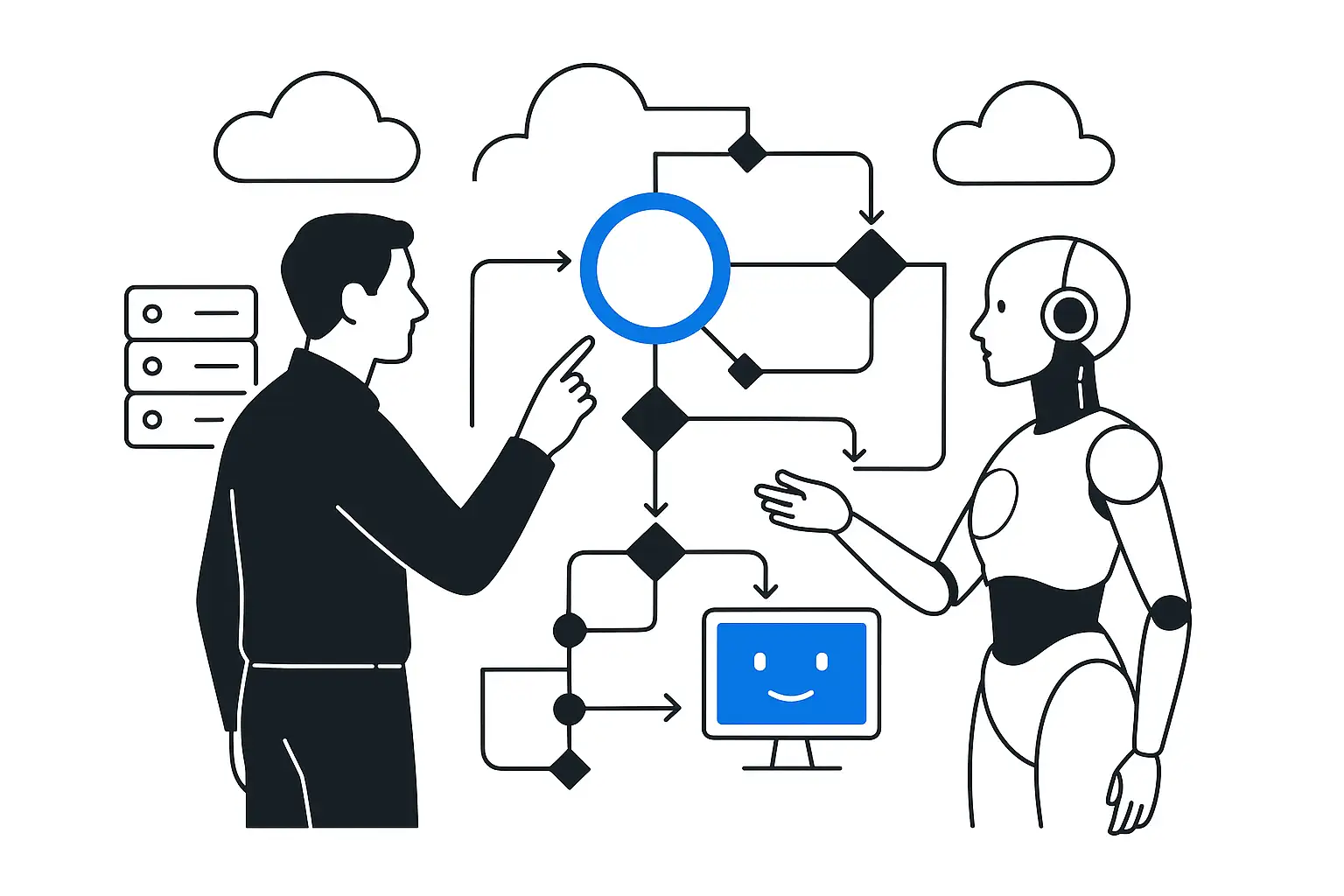
  3. The bottleneck became infrastructure designed for a human at a keyboard.

  4. A human opens a pull request once an hour.

  5. The agent opens it every few minutes while simultaneously running the linter, tests, and three more review agents. GitHub was built on an architecture developed over 18 years for human traffic.

  6. It was not designed for—and could not withstand—load growing 3.5 times faster than the infrastructure. GitLab, Vercel, and Linear faced similar load growth without buckling: their stacks are younger and carry less technical debt under the hood.

Token budgets are calculated in advance

The second symptom of the same process is managerial. Engineering leaders at mid-sized and large companies have begun setting token budgets per engineer and routing requests between models based on task cost: simple refactoring goes to a cheaper model, while a complex architectural question goes to an expensive one. The reason is straightforward: a tenfold increase in spending over six months with unmeasurable ROI is exactly what gets cut at the first budget committee. A CFO considers AI that cannot be measured to be theater. Theater is cut first.

Assess where AI can deliver impact in your process

Even operating systems have accounted for this

Microsoft confirmed the same at the Windows level: the team says future versions of the system will offer deeper built-in support for agent tools. The reason is engineering-related: agents have become a distinct workload class, and operating systems must be designed for it—a process and permissions model built for humans is not suitable. Notably, this is happening amid reputational costs, with some users already dubbing the company’s previous attempts “Microslop”.

How this is addressed technically

All three scenarios are addressed by one class of solution: a governance layer between agents and the rest of the infrastructure.

Three specific elements: - Routing requests by cost and task. LLM & Security Gateway sits in front of model calls and decides which requests go to an expensive model and which go to a cheaper or local one (Qwen, YandexGPT, GigaChat), without changing agent code.

This is the very mechanism that “Pulse” describes as smart model routing, implemented as an infrastructure component rather than a manual policy. - Protocol-level limits and quotas. As a standard, MCP provides a point where you can limit exactly what an agent can call and how frequently—before the request reaches a GitHub-like system and adds to peak load. - An architecture designed for agent traffic from the outset.

Systems designed from the start with queues, idempotency, and backpressure do not buckle under a multiple increase in load as systems do when agents are bolted onto human-oriented architectures.

That is the difference between GitLab and GitHub in this summer’s specific case.

Conclusion

The GitHub incident is the first public case showing that an agent’s TTU depends on the infrastructure around the model—specifically, whether it can handle an agent workload profile: hundreds of API calls per minute around the clock instead of one pull request per hour from a human. Companies now widely connecting AI agents to CI/CD, repositories, and internal systems are following GitHub’s path; they simply have not reached the peak yet. The difference between “it just works” and “it broke under load” is a governance layer built in advance.

After the first incident, it is too late to build one.

Discuss the article: AI Agents Broke GitHub. Who’s Next?

Enter your email or phone number so we can get back to you.

Send via: