AI news digest: selection costs the most

54 of 60 news items were reprints of one release. How a filter cascade saves LLM calls and why AI digests and RAG lose value without it.

  • Where the budget goes
  • How low-cost selection works
  • Garbage in also breaks RAG
  • Reliability is tested with malformed data

Trigger

His main point matches our experience.

Finding and summarizing news is inexpensive.

Most of the money and time goes into deciding which news item is worth reading

In his example, 54 of 60 morning articles turned out to be reprints of a single press release.

If a company runs such a stream through a large language model, it pays for every call, and the model spends those calls looking for duplicates.

Where the budget goes

  1. The search API returns links in a fraction of a second.

  2. Summarizing one article takes the model a few seconds and costs little.

  3. Evaluation is expensive: each news item must be assessed for importance. In a simple setup, that requires a separate call to a general-purpose model.

  4. Sixty news items mean sixty calls every morning, each costing the same money and waiting time as the others.

  5. According to Eastman's observation, most digests eventually abandon filtering and send the reader the entire feed.

  6. The reader gets a wall of repeated items and stops opening it after a week, after which investments in automation generate no return.

  7. The TTU (time to use) metric is useful here: the time it takes a tool to start delivering value. For a digest that nobody finishes reading, TTU is infinite, regardless of how many models power it.

How low-cost selection works

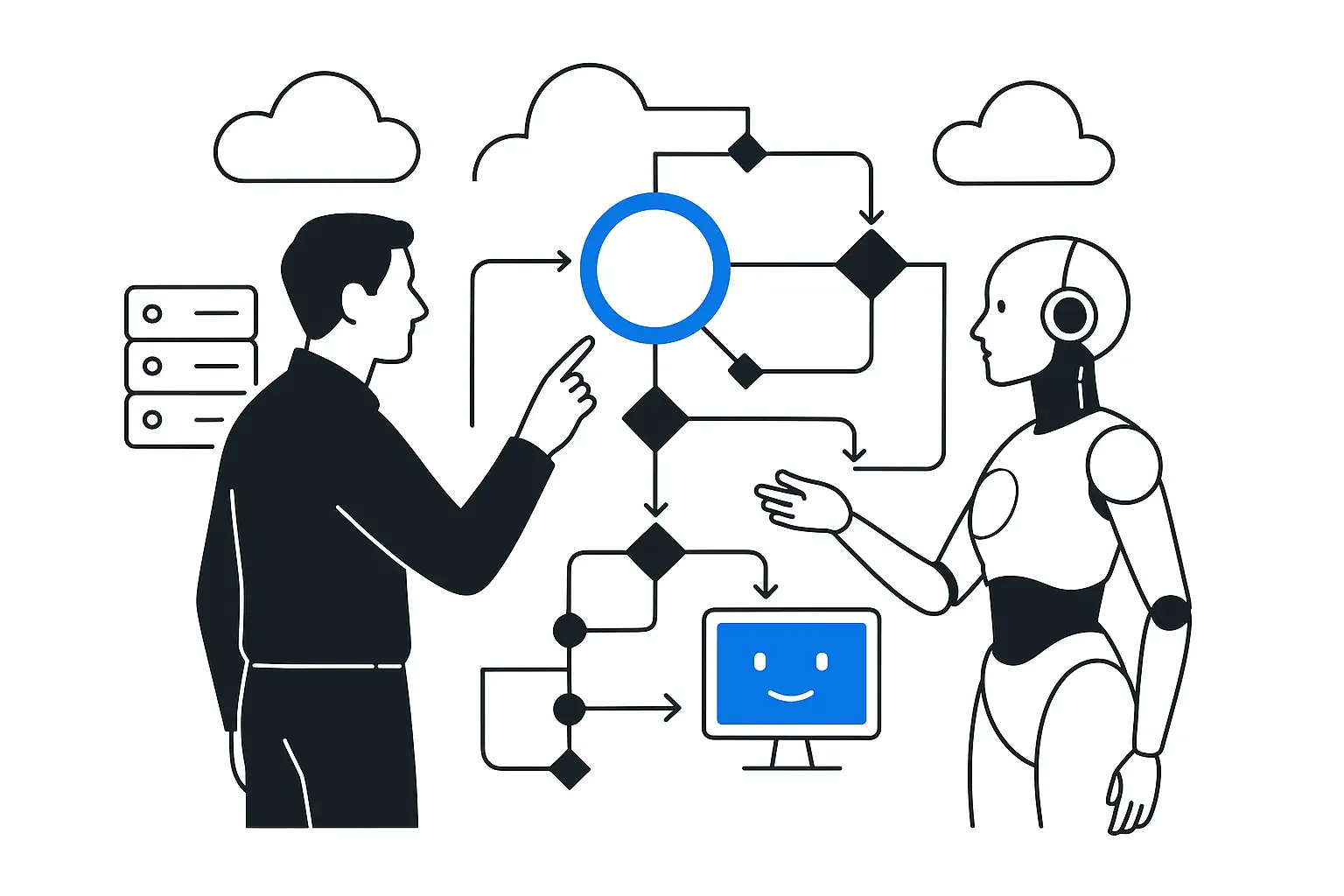
Engineers solve this with a cascade: each successive filter costs more than the previous one and receives less data. 1. Deterministic checks.

URL normalization, text hashing, and headline comparison.

Standard code removes exact copies for free. 2. Rules.

Publication freshness, source authority, link availability, and whether the domain matches the stated publication. 3. Clustering.

Embeddings or a lightweight model group summaries of the same event into a cluster. In the example

In Eastman's example, 54 reprints become one entry. 4. Expert assessment.

The large model receives several clusters and decides which ones deserve the manager’s attention.

Only a small share of the original stream reaches the final step

In the reprint example, 60 articles are reduced to seven candidates, and the expensive model evaluates seven entries instead of 60. ### How it works for us

We built our own news machine based on this model.

Every morning, the agent collects news from a source registry in which each source has an authority weight from 0 to

The agent excludes news older than 120 days, links to external domains, and inaccessible URLs from the pool.

For each source, it records HTTP statuses, the number of accepted and rejected records, and duplicates, so source quality is visible in the numbers.

The pool stores records for 180 days, while synthesis operates on clusters.

If no cluster meets the significance threshold, the agent publishes nothing that day.

We deliberately chose this rule: missing a day costs less than losing a reader’s trust.

Assess where AI can deliver impact in your process

Garbage in also breaks RAG

  1. RAG systems face the same problem when the model answers based on corporate documents.

  2. Author a breakdown in the n8n community shows a typical failure: standard PDF text extraction turns a borderless table into a column of unrelated numbers, and the model confidently answers using the wrong row.

  3. His solution converts tables to Markdown, processes scans with OCR, and splits documents into fragments with `pageStart` and `pageEnd` page numbers so every answer can be checked against the primary source. For a business, this is a matter of money.

  4. Product specifications, price lists, and technical specifications are usually stored in tables.

  5. If the table structure is lost during data preparation, the RAG assistant will confuse sizes and prices. Replacing the model with a more powerful one will not fix this: it cannot restore the link between a number and the row that the parser lost.

  6. That is why, in Akeneo and Pimcore projects, we first align product attributes with the PIM structure and only then connect the model to the clean data.

Reliability is tested with malformed data

In n8n community threads, testing specialists suggest a list of checks that works as a checklist for any AI automation:

  • duplicate webhook events
  • malformed and unexpected input data
  • external API timeouts
  • invalid model response
  • retries after a failure
  • error notifications

During a demo, the team provides clean data, so these failures do not appear

In production, duplicate webhooks and timeouts happen regularly, so the system must be designed to handle them.

An integration bus based on Apache Kafka or Datareon ensures idempotency, so a duplicate webhook does not create a second order.

The model's response is validated against a JSON schema before entering the accounting system. LLM & Security Gateway sits between business systems and models: it logs calls, controls costs, and prevents personal data from reaching external APIs.

What this means for managers

  1. You can build a digest or RAG assistant on n8n in an evening, making it a fast way to test a hypothesis.

  2. The n8n blog authors in their review 11 DevOps tools give a clear warning: an automation stack should not require more coordination effort than the manual work it replaced.

  3. Before going live, ask the team three questions.

  4. How much does one model decision cost, and how many such decisions does the system make each day?

  5. Which filters remove noise before the model call?

  6. What happens if a webhook arrives twice and the model returns malformed JSON?

  7. My conclusion: the engineering around the model determines the value of AI automation.

  8. Low-cost selection, clean data, and failure testing turn a demo into a tool people open every morning.

  9. Without this work, all that remains is a polished n8n workflow that the company pays to run for no benefit.

Discuss the article: AI news digest: selection costs most…

Enter your email or phone number so we can get back to you.

Send via: