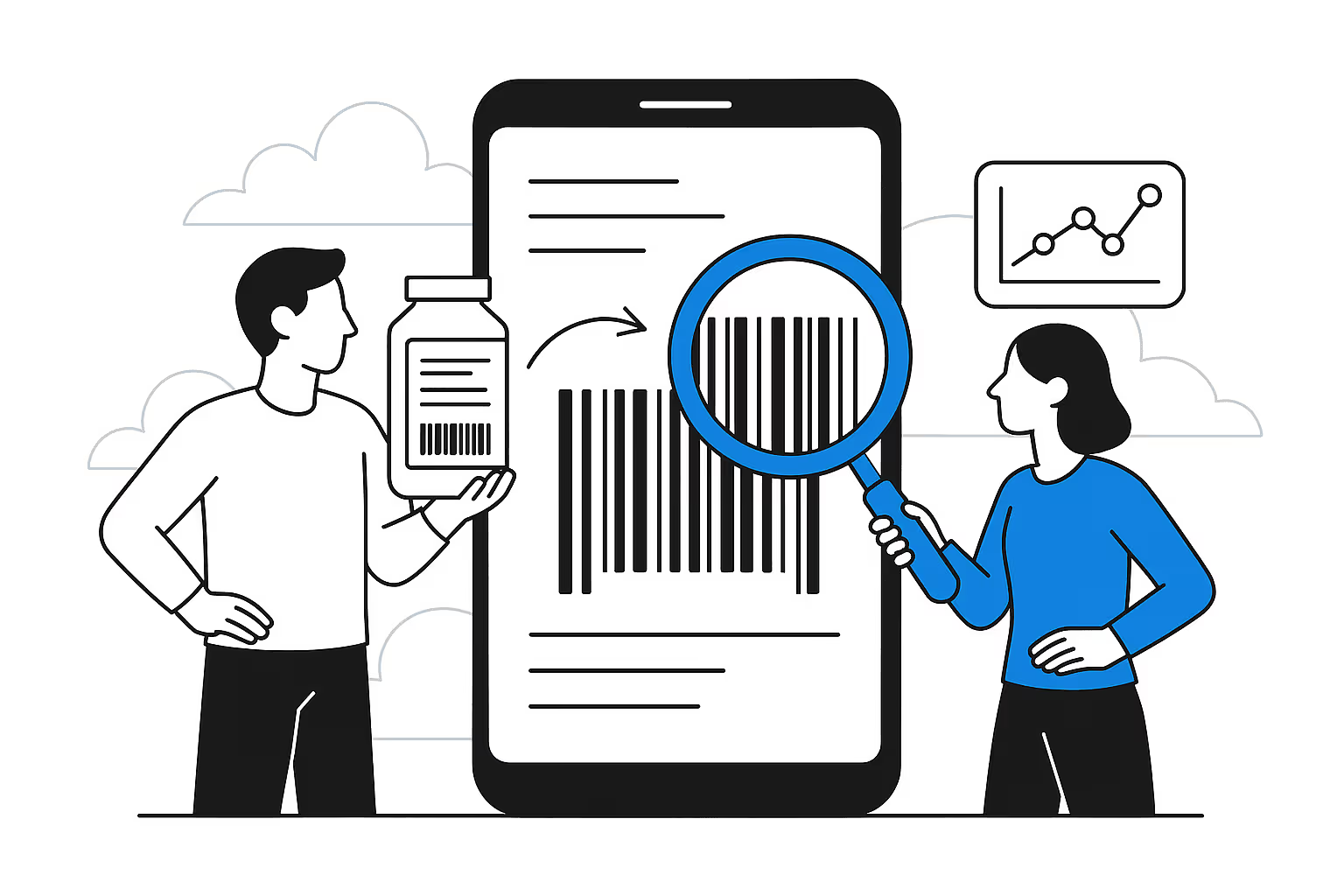
GigaChat: automation layer and raw weights have different entry costs

The Ouroboros case and GigaChat 3.5 432B in GGUF show why open weights do not remove integration issues, while MCP solves business tasks within its perimeter.

  • Ouroboros: an MCP server as an automation layer
  • 432B open weights: infrastructure remains your responsibility
  • Audio model: the same pattern in a compact form
  • What this looks like in a business integration

Ouroboros: an MCP server as an automation layer

  1. Sberbank presented two GigaChat products almost simultaneously. They look like one product line from the outside, but differ significantly in cost and effort. The Ouroboros MCP server already handles the bank's clients' financial use cases within its perimeter.

  2. The GigaChat 3.5 432B-A28B weights are available in GGUF for local deployment with llama.cpp.

  3. The first is a ready automation layer; the second is material from which you still have to build the layer yourself, a difference measured in months of engineering work. Ouroboros is an MCP server: a protocol layer where external systems call model functions as tools with typed contracts, bypassing arbitrary text prompts. In the case from the article

  4. Sber's server handles specific corporate financial use cases for clients: reconciliation, calculations, and document generation.

  5. The model calls billing and ERP functions and returns a structured result.

  6. This is the difference between a chatbot and an automation layer, which businesses usually discover after their second or third failed integration.

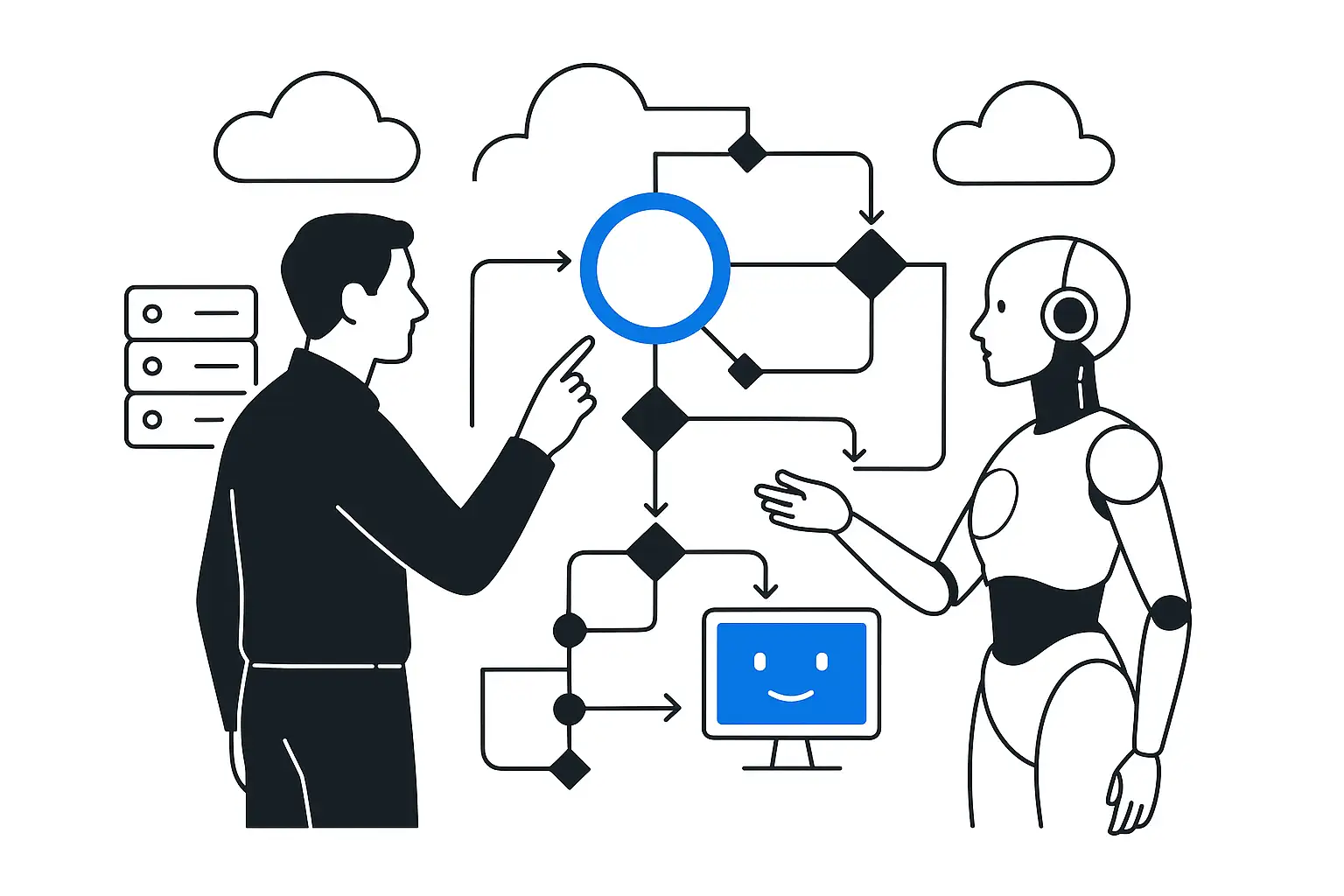
432B open weights: infrastructure remains your responsibility

GigaChat3.5-432B-A28B is an MoE model: 432 billion parameters in total, with around 28 billion activated for each token.

Even in GGUF quantization, this is not a laptop model: inference requires tens to hundreds of gigabytes of memory depending on quantization bit depth, a dedicated deployment pipeline, and someone who can tune llama.cpp for the specific workload.

Training checkpoints published separately are material for researchers and fine-tuning; a ready production result

Sber does not publish

TTU for this release is measured in weeks of infrastructure setup before the first useful response, not minutes after downloading.

The simple conclusion: “the model is open, so we can use it”

The false assumption here is that openness lowers the licensing barrier. The engineering barrier remains with the business.

Assess where AI can deliver impact in your process

Audio model: the same pattern in a compact form

GigaChat3.1-Audio-10B-A1.8B recognizes emotions in speech, performs temporal grounding in long audio streams, and supports tool use directly on audio: it calls functions based on the analysis of a recording instead of merely transcribing it. The model is several times smaller than 432B, but follows the same design of an agent component that calls external tools. Sber is building a range of models of different sizes for different invocation points within one automation layer.

What this looks like in a business integration

  1. For a company outside Sber's perimeter, the decision depends on data volume and control.

  2. If the use case already requires communication with a corporate ERP or billing system, calling through MCP is a practical approach: a typed contract instead of free-text parsing, with predictable degradation when a tool fails.

  3. If data must remain within your own environment due to regulatory requirements or trade secrets, self-hosting becomes a consideration. 432B-A28B in GGUF competes with the cost of hardware and an engineer's salary to keep inference running.

  4. The cloud API token price is irrelevant here; the comparison is based on total cost of ownership. RAG over your own knowledge base and LLM & Security Gateway as an access-control layer are essential components without which self-deployment of such a model remains an experiment without an SLA.

Conclusion

  1. Value emerges when the model is connected to real systems through a clear protocol, as it already is in Ouroboros.

  2. The release of the GigaChat 3.5 weights and the Ultra demonstration at WAIC in

  3. In Shanghai, they pursue the platform's ambition separately from this point.

  4. The rule is simple: use the vendor's ready-made MCP layer if the data is already within its perimeter; deploy an open model yourself only when the call volume justifies the infrastructure costs.

  5. Free access to the weights on Hugging Face alone is not enough reason to do so.

Discuss the article: GigaChat: automation layer and raw…

Enter your email or phone number so we can get back to you.

Send via: