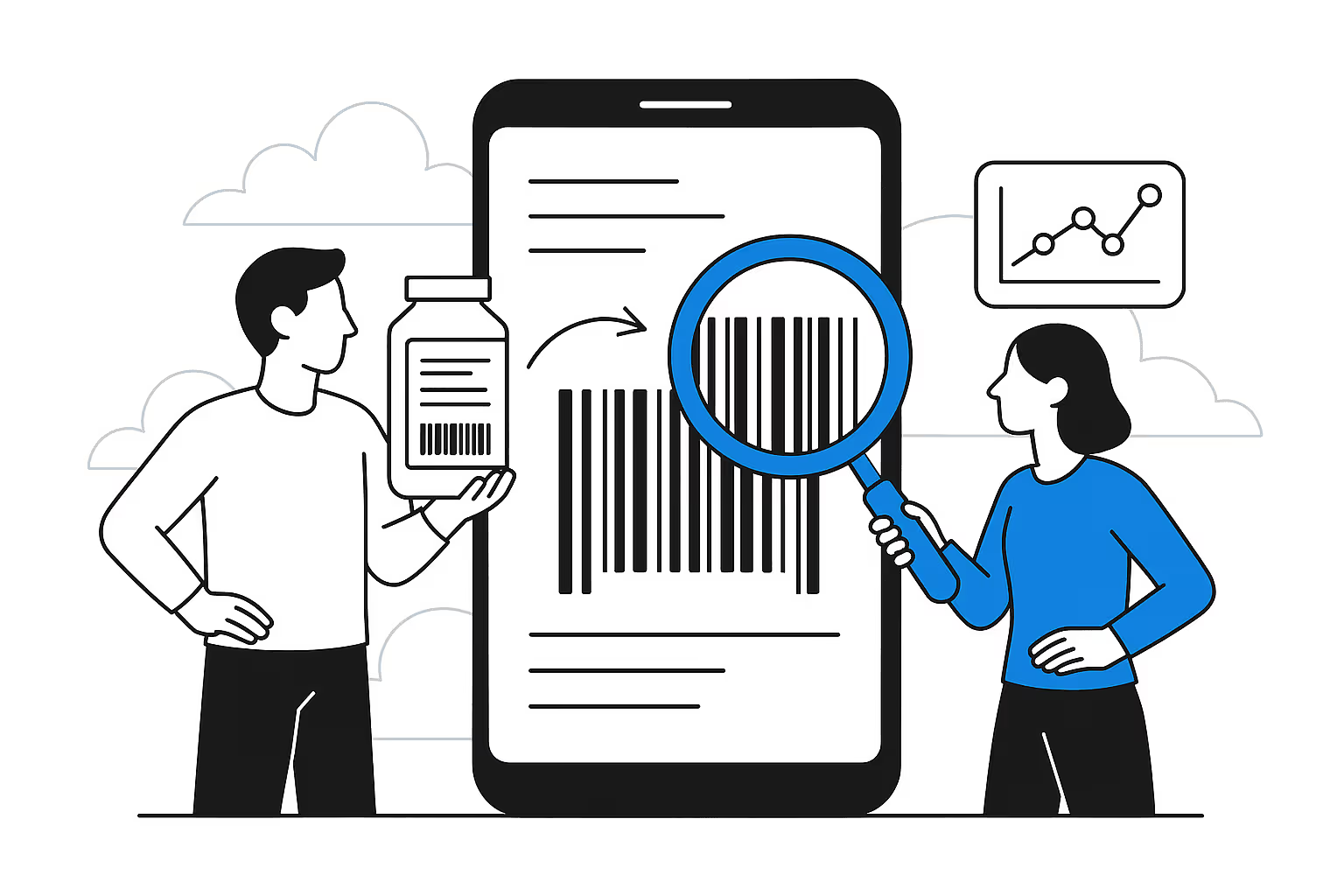
MCP—the moment a BI system began obeying an agent

Qlik connected Claude to Qlik Cloud through MCP Server. We explain MCP, its impact on integration costs, and how to manage security risks.

  • The trigger: Qlik opened BI to an agent
  • MCP: one protocol instead of a bridge for every system
  • Where TTU used to hit its ceiling
  • What this changes for business

The trigger: Qlik opened BI to an agent

On September 9, Qlik held a Tech Talk and showed that Claude, through Qlik MCP Server, can prepare data, build apps, and design analytics in Qlik Cloud - without a single click in the interface. Formally, it was a webinar announcement. In substance, it was a public acknowledgment that a BI platform built around a GUI for thirty years now has a second interface: an agent interface. For businesses that have spent years paying for Qlik, Talend, 1C, and dozens of systems with closed UIs, this changes the rules: the access protocol becomes the entry point to data.

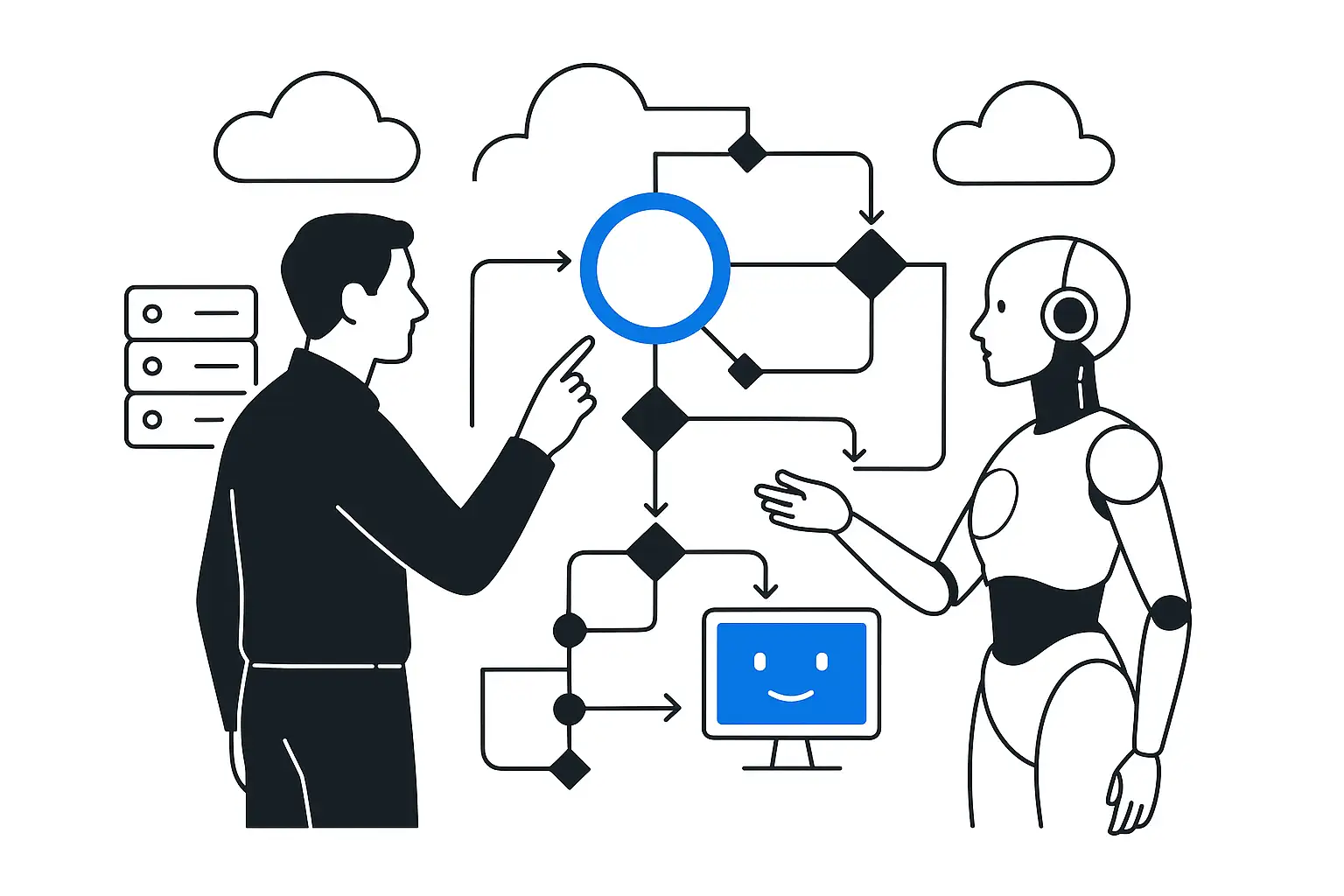
MCP: one protocol instead of a bridge for every system

  1. MCP (Model Context Protocol) is an open Anthropic protocol that describes how a model interacts with an external system: its available operations, data, and constraints.

  2. Before MCP, integrating with Claude or another LLM meant building a custom API bridge for each system: a week of developer work per service, a separate format, and separate authentication. An MCP server describes Qlik (or 1C, or Pimcore) once in a language the agent understands natively.

  3. After that, any MCP-compatible agent - Claude or any other - can work with the system without a new bridge.

  4. The practical difference: previously, an analyst opened Qlik Sense, clicked through the visualization wizard, and manually assembled the data model. In the Qlik demo, a verbal task was enough for the agent: it reads the schema through MCP, prepares the data, and builds the app.

  5. A human checks the result in this setup.

Where TTU used to hit its ceiling

TTU - time to use, the time from task to result - traditionally depended on the interface in BI. The data was ready and the model was correct, but between “the data exists” and “there is a working dashboard” stood a person who knew that specific GUI. This bottleneck does not scale: training a Qlik analyst takes weeks, and finding another one is difficult in the labor market. MCP removes this layer because the task no longer requires knowledge of a specific vendor’s interface - only domain knowledge.

That is the point behind “simple does not come easily.”

For an agent to build a Qlik app from a phrase, someone had to formally describe the entire Qlik Cloud model - objects, permissions, and constraints - so that the model would not make a wrong assumption. The Tech Talk demo looks easy precisely because the engineering work is behind the scenes.

Assess where AI can deliver impact in your process

What this changes for business

  1. For a company with a zoo of systems (BI, ERP, CRM, EDI), the challenge is connecting data with one another and with the people who make decisions.

  2. Each new integration is a separate project with a separate budget.

  3. An engineer describes the system as an MCP server once, and any agent within the company environment can access it without a new integration contract.

  4. The economics change: instead of a chain of projects, there is one one-time description.

  5. The risk is specific: an MCP server is a new entry point to corporate data, and it must be secured as strictly as an API.

  6. An agent with access to Qlik Cloud or 1C through MCP must operate through a gateway that verifies exactly what it is doing and with which permissions - otherwise integration savings will turn into a security incident.

How KT.Team does it

MCP follows the same principle as KT.Team’s own integrations: LLM & Security Gateway sits between the agent and the system (1C, Pimcore, Bitrix, Talend ESB), verifying and logging every call before the agent gets access to data. Here, AI-native integration means the system was described with its real constraints - access permissions, data integrity, and auditing. The agent operates within them through an API that respects those constraints.

Conclusion

Qlik showed one system. The logic applies to any platform with a closed interface - 1C, Bitrix, Pimcore, or Talend. Companies that still measure automation maturity by the number of custom integrations in 2026 are paying for a problem MCP addresses systematically. Those that first describe their systems using this protocol and secure access through a gateway instead of trusting the agent will achieve a real reduction in TTU for their employees.

Discuss the article: MCP — when a BI system started…

Enter your email or phone number so we can get back to you.

Send via: