Models Cost Half as Much Overnight, but the Choice Isn't Easier

Opus 5.5 and GPT-6 Luna now cost half as much, yet cheaper models make choosing an AI provider even harder.

  • The problem: choosing a model has become a full-time job
  • Low cost is raw material for strategy
  • How the solution works: a gateway between business logic and the model
  • MCP: the same solution, but for tools

Key point

On September 22, 2026, the large language model market experienced an exceptionally busy day: first xAI released Grok 4.7, followed by MiMo v2.6 Flash and Pro, then Anthropic released Claude Opus 5.5, and an hour later OpenAI responded with GPT-6 Sol and GPT-6 Luna. Prices did not rise with capabilities; they collapsed instead: GPT-6 Luna costs half as much as GPT-5.6 Luna, which was already one of the most economical models on the market. GPT-6 Sol saw a similar price cut.

For a business owner, this is a signal: the economics of owning a model have changed faster than internal procurement and integration processes can adapt.

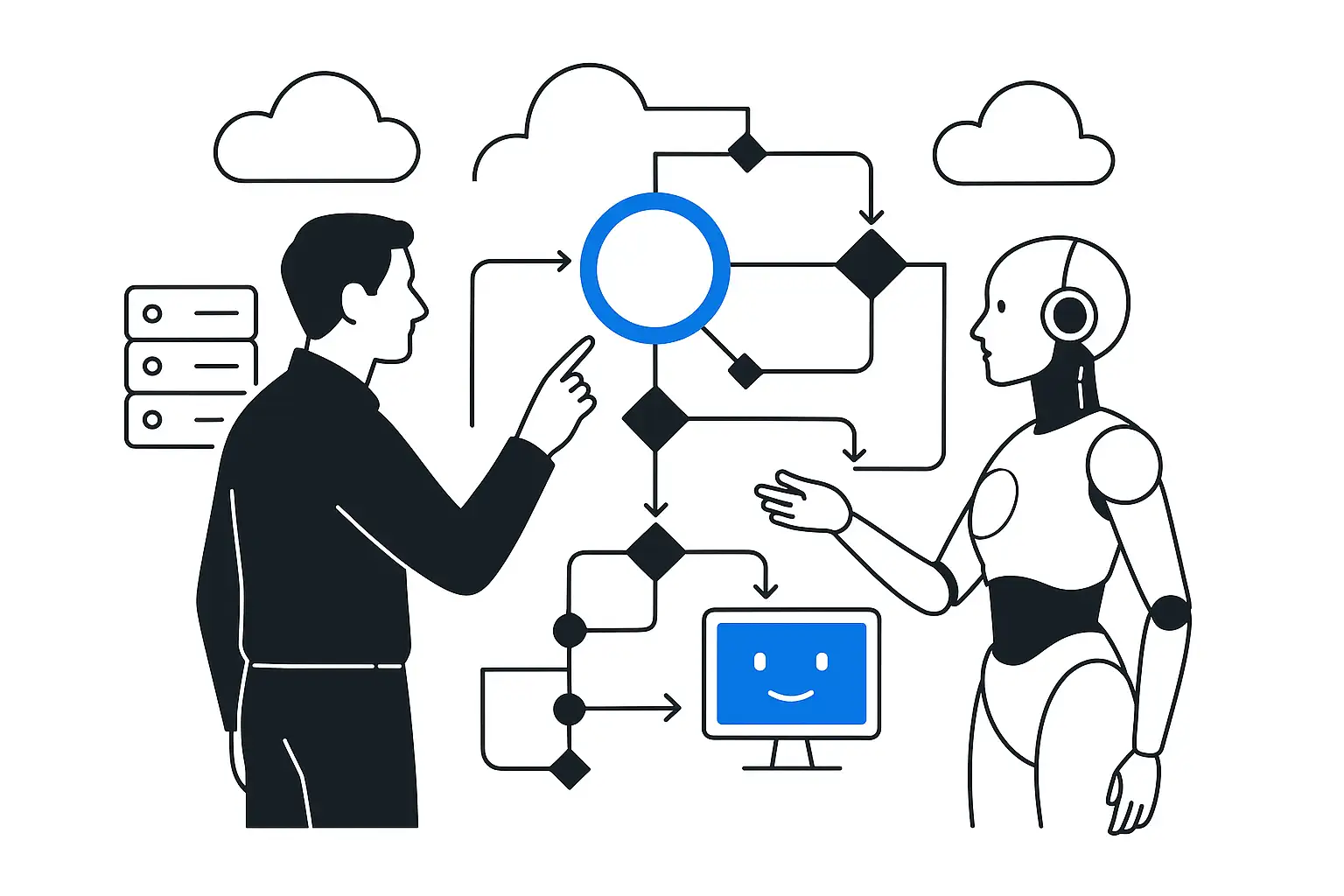
The problem: choosing a model has become a full-time job

Just three years ago, the decision of "which model to use" was made once a year and recorded in an architecture document. Now, four models from four different companies have launched within 24 hours, with different prices, context windows, and strengths. A company that hard-coded calls to a specific model into its product faces the same choice every few months: rewrite the integration for the new model or overpay for the old one. Both options waste engineers' time without generating revenue.

Low cost is raw material for strategy

  1. A 50% price drop looks like a reason to cut the AI budget.

  2. In practice, this is a trap: models change places in terms of price and quality with every release cycle, and a company that "saved money" once by switching to the cheapest model may find itself a month later using a model worse than the previous one.

  3. Savings should be measured by TTU: the time from an idea to a result that actually works for the user.

  4. Token price alone is a poor benchmark: it does not account for engineers' hours spent migrating prompts and tests. A model that is 20% cheaper but requires manual migration costs more than one that is 20% more expensive but can be connected in an hour.

Assess where AI can deliver impact in your process

How the solution works: a gateway between business logic and the model

The technical solution is well known and unglamorous: abstract model calls away from business code through a single gateway. This is evident in the open-source tools ecosystem, for example in the llm library: support for both GPT-6 Sol and GPT-6 Luna appeared on the day they launched, while the Anthropic plugin added Claude Opus 5.5 that same day. An application built on such a gateway does not know which model answers a request; it knows only the contract: input, output, cost, and latency.

Changing models becomes a configuration change, not a release. KT.Team builds exactly this layer for clients: the LLM & Security Gateway, a single entry point for requests to Claude, GPT, YandexGPT, GigaChat, and other models, with routing by price and quality for each task, auditing, and data protection. When another model launches tomorrow at half the current price, the client's business logic will not even need to know about it.

MCP: the same solution, but for tools

The second part of the same problem is not the model itself, but its access to external systems: databases, CRM, and document management. The MCP protocol solves this in the same way: a tool is described once in a standard format and becomes available to any model that supports MCP, without rewriting the integration for each new provider. For a company, this means that changing model providers does not require rebuilding all connected systems; only the gateway address changes.

What this changes for CIS businesses

CIS companies often have to combine several models at once: Sber GigaChat or YandexGPT for data that cannot leave the corporate perimeter, and external models such as Claude or GPT for tasks requiring maximum reasoning capability. The cheaper a top external model becomes, the more attractive a hybrid setup is: a local model handles high-volume operations, while an external model is used selectively for complex cases.

Without a gateway and standardized access to tools, this setup becomes an integration zoo that nobody wants to maintain.

Conclusion

The price war between Anthropic, OpenAI, xAI, and Xiaomi benefits not those who guess the cheapest model of the month, but those who have built an architecture that is indifferent to which model is currently winning. The model race will continue at the same pace, with releases separated by mere hours. Companies that invested in a gateway and standard protocols instead of rigid integrations simply add each release to their configuration. Everyone else rebuilds it as a new project every time.

Discuss the article: Models got half as cheap overnight. The solution…

Enter your email or phone number so we can get back to you.

Send via: