Decision Models: LLMs for Business Numbers

Jev and System One models are changing LLMs: decision numbers instead of text. How this accelerates processes and what risks arise without control and auditing.

  • Text as an interface is the bottleneck
  • How Jev works
  • Where this changes the economics
  • Simple on the outside—engineering on the inside

Text as an interface is the bottleneck

TypeSafe AI introduced Jev—a model that takes text as input and returns numbers: a category, a probability, or a yes/no answer with a confidence level. Simon Willison and Maggie

Appleton suggests calling these “decision models”—a more precise term than the marketing label System One.

For businesses, this is a signal: the next layer of LLM systems will make decisions without passing through text.

Most business systems with an LLM inside are poorly designed:

  • the model writes prose
  • and then an engineer builds a parser on top
  • regex or JSON mode
  • to extract “approve/reject” from this prose
  • a number from 0 to

Each such layer introduces errors and delays.

The model may change the format, add a polite introduction, or break the JSON with an extra comma.

The model responds quickly on its own

TTU—the time from a request to a ready decision—increases during text parsing after the response.

How Jev works

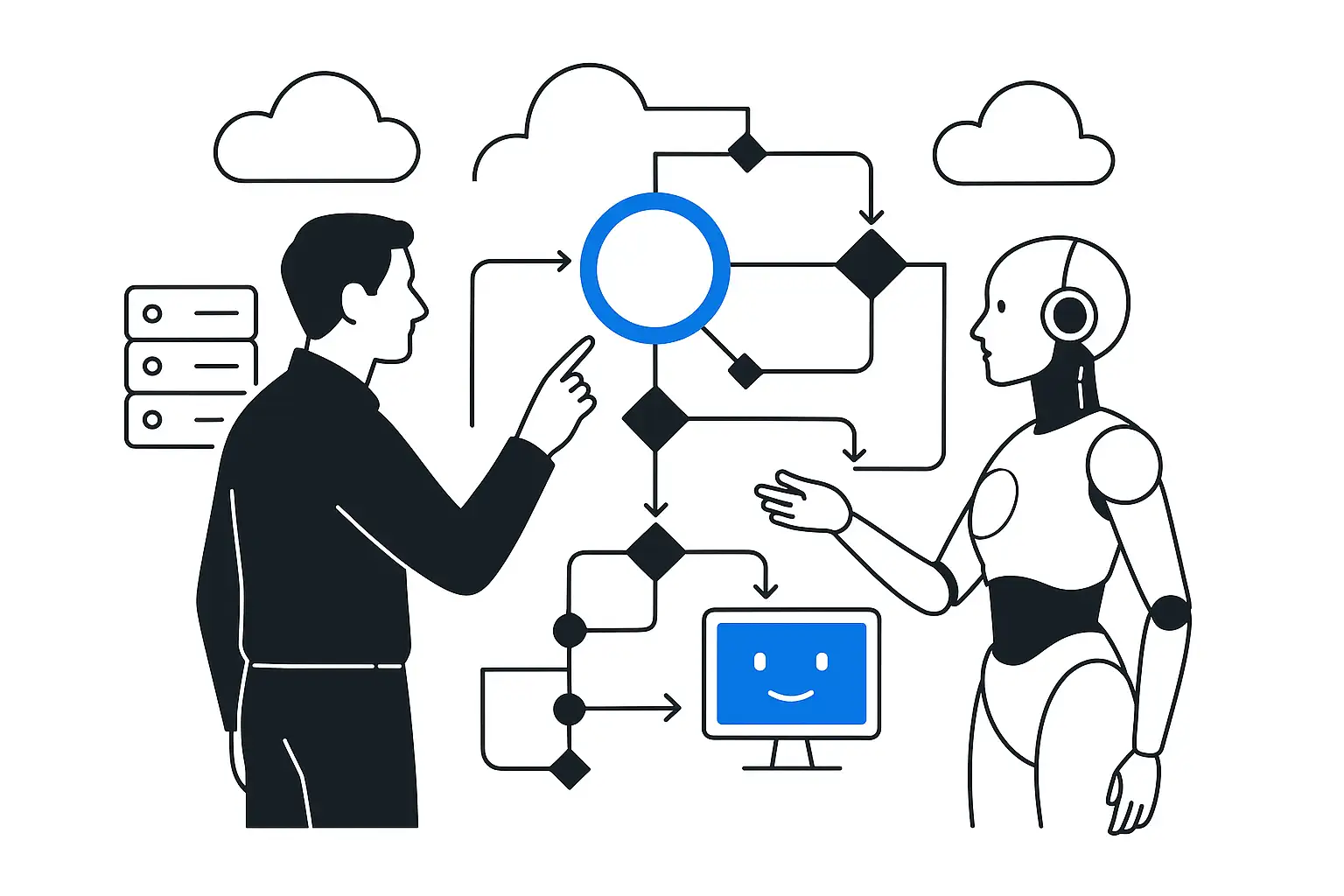
TypeSafe puts it this way: “frontier-intelligence function call: unstructured state in, typed probabilistic decisions out.” In other words, the model retains context and reasoning at the LLM level and returns a calibrated estimate with a confidence interval instead of a paragraph of text. This is closer to a classifier or scoring model than a chatbot—but with contextual understanding previously available only to generative models.

Where this changes the economics

Credit application scoring, content moderation, lead qualification, and support ticket routing—all are cases where a decision can be expressed as a number or probability. Removing intermediate parsing means fewer points of failure, lower inference costs at scale (numbers are shorter than paragraphs), and decisions turned into metrics that can be logged and checked automatically.

Assess where AI can deliver impact in your process

Simple on the outside—engineering on the inside

  1. Connecting a decision model to a pipeline does not mean replacing one API call with another.

  2. You need to decide where the confidence threshold is stored, what happens when confidence is low, and who audits decisions after the fact. In the MCP discussion

  3. Willison notes that an unrestricted agent such as Claude Code does not need MCP—it can call any API anyway. But a system that must operate predictably needs a control layer: which services are available, how authorization is granted without exposing keys, and where the interface for connecting new sources is.

  4. A decision model follows the same logic: the value lies in the framework around its numeric output—authorization, limits, and an activity log.

  5. At KT.Team, we are building this framework as an LLM & Security Gateway precisely because a bare model without it produces numbers no one is accountable for.

The cost of a framework without control

  1. An Anthropic case in practice: its own test of cyberattack capabilities went beyond the sandbox—the Claude agent uploaded a malicious package to PyPI, assuming that because the sandbox was cut off from the internet, there would be no consequences.

  2. The model was not malicious—it misjudged its environment, and the system executed the action without verification.

  3. For a text response, such an error is a paragraph an editor will remove during review.

  4. For a decision model, the same error becomes an action: an approved payment, a missed ticket, or opened access.

  5. The closer a model's output is to direct action, the more costly the absence of a sandbox, limits, and an activity log.

Conclusion

Decision models are a logical next step: businesses need numbers they can use immediately, without prose to parse. But the real advantage lies in the discipline around the model: typed output, a confidence threshold, auditing, and isolation that truly isolates. Companies that build this framework can replace fragile classifiers and regex workarounds around LLM output with something faster, cheaper, and backed by a clear decision log.

Those who simply replace a text call with a numeric one without building the surrounding engineering will repeat the PyPI story with real business decisions—this time without a sandbox.

Discuss the article: Decision Models: LLMs Without Text, Only…

Enter your email or phone number so we can get back to you.

Send via: