A New AI Model Every Month: What Companies Should Build

Anthropic releases a strong model almost monthly, with Opus 5.5 scoring 88.4% on SimpleBench. What should companies build for immediate gains?

  • What happened and the numbers behind it
  • Where companies get stuck
  • Claude Code as an architecture example
  • What remains when the model changes

Trigger

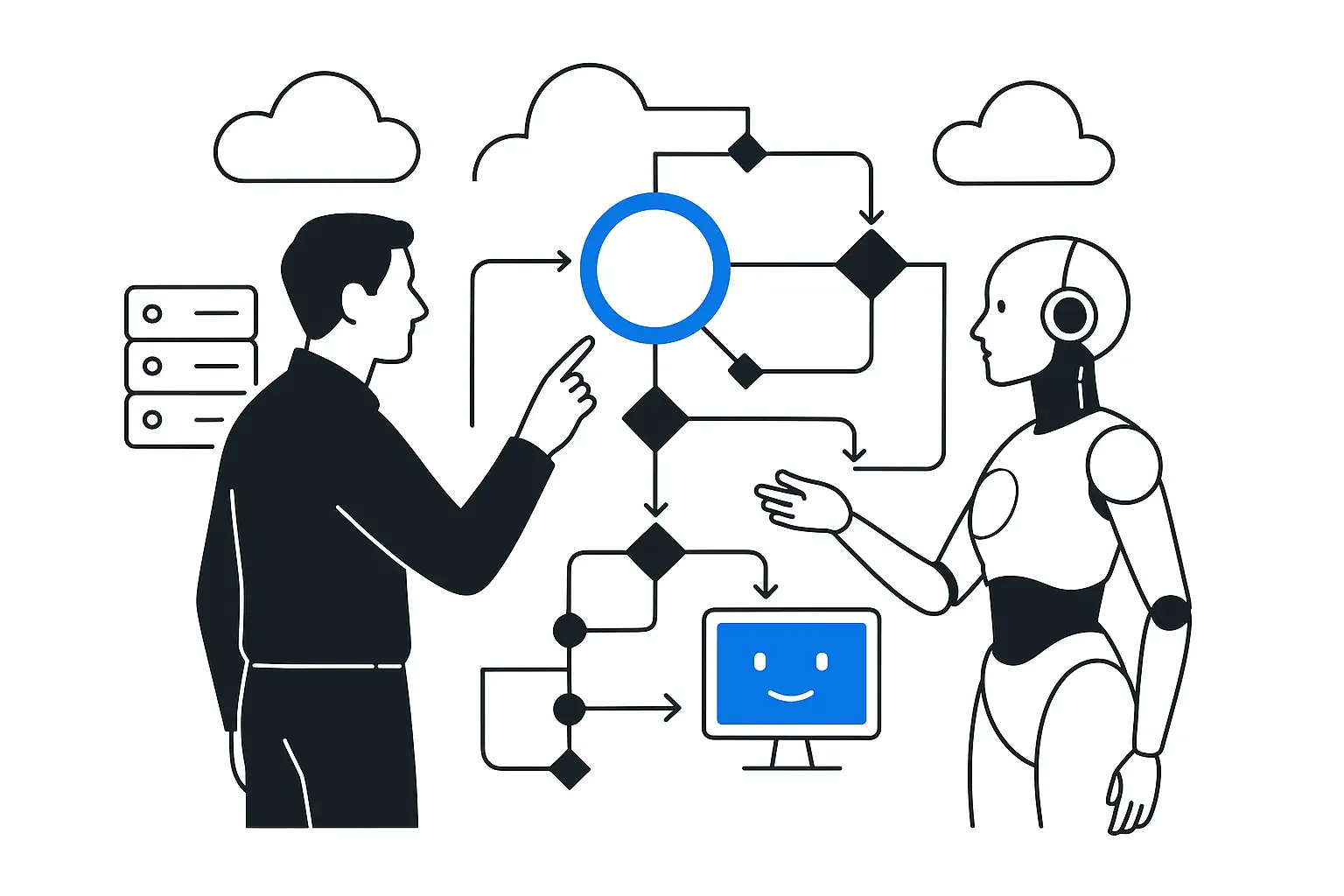
Latent Space released a conversation with Thariq Shihipar from Anthropic about the next stage of Claude Code. In the introduction, the editorial team listed Anthropic's releases over four months: Sonnet 5 and Fable 5 in June, Opus 5 in July, Fable 5.1 in September, and Opus 5.5 this week. Five models in four months give executives a practical rule: a model in an AI project should be treated as a replaceable component.

Value accumulates in what the company builds around the model:

  • in data access
  • checks
  • metrics and process
  • that turns the model's response into an outcome

What happened and the numbers behind it

  1. According to Latent Space, Anthropic's annual recurring revenue from subscriptions (ARR) was $47 billion at the time of its largest funding round in May. It exceeded $65 billion in July, and the publication expects up to $100 billion by the end of 2026.

  2. The same source mentions a target IPO valuation of $2 trillion.

  3. These figures come from an industry roundup; auditors have not verified them.

  4. They show the scale: companies pay substantial sums for models and rapidly increase their spending. September 24–25, AINews recorded a wave of releases: Claude Opus 5.5, the GPT-6 family, Gemini 3.8 Flash, and Xiaomi MiMo-V2.6-Pro.

  5. According to AINews, Opus 5.5 topped SimpleBench with a score of 88.4%. SimpleBench consists of common-sense and spatial-reasoning questions: people solve them easily, while models struggled with them for a long time.

  6. Our hypothesis is that improvement on this test means the agent can be assigned more tasks with implicit conditions that previously required a person.

  7. This should be tested on your own tasks.

  8. Powerful models are released roughly once a month.

  9. For an internal AI project, this means the model chosen at the start will become outdated before the project reaches production.

Where companies get stuck

This is what we see among our clients.

The team spends three months selecting a model, preparing a comparison table, and obtaining security approval.

Developers build a pilot for a specific model: they tailor prompts to its characteristics and write integrations directly for its API. By launch, two new versions have appeared, and the committee has to start the comparison again.

The company spends its budget, while the business metric remains unchanged

An executive who brings the board a model comparison table six months later instead of figures on sales-cycle length or request-processing time risks their position.

Claude Code as an architecture example

Claude Code - an agent in the developer's terminal.

It reads the repository, runs tests, edits files, and prepares commits.

The tool and workflow remain the same when the model changes.

When Anthropic releases Opus 5.5, the team gets an immediate quality improvement without rewriting anything.

The team gets this improvement only if it has built the cycle itself:

  • tests
  • CI
  • access rights
  • review

Without tests, a more capable model produces unverified code faster.

We call this cycle the development platform: the journey from “wrote the code” to “running in production.”

The platform itself limits the agent's speed. Changing the model does not make it faster.

Assess where AI can deliver impact in your process

What remains when the model changes

  1. A company that invests in the four layers below changes the model through configuration and a test run, without rewriting applications. ### Context

  2. The model receives company data through RAG: searches across documents, regulations, 1C, and the PIM catalog.

  3. These data, their completeness, and their relevance determine the quality of the response. ###

  4. MCP (Model Context Protocol) tools are an open standard that lets an agent work with systems: create an order in 1C, update an item card in Pimcore, and find a document in EDI.

  5. The team writes the connector once, and it works with any model that supports the protocol. ###

  6. The LLM & Security Gateway sits between employees and models.

  7. It masks personal data, logs requests, and routes them: sensitive tasks go to GigaChat, YandexGPT, or Qwen within the company's environment, while complex reasoning goes to Claude.

  8. An engineer connects the new model in the gateway, and the applications work as before. ### Evaluation

  9. A set of 50–100 real company tasks with benchmark answers.

  10. The new model is run through it in one evening, and the decision to switch is based on the numbers, without a committee.

How we do it

  1. This material was prepared by our news-machine pipeline.

  2. Every morning, it collects industry sources, discards outdated and inaccessible material, identifies strong signals, and writes a draft using Claude.

  3. Checks come next: text-quality gates, source-code review before publication, dry-run mode by default, and a kill switch that removes content with one command.

  4. We change the model inside the pipeline through configuration, without touching the checks or the interfaces between components.

  5. We apply the same principle in PIM projects built on Pimcore and Akeneo.

  6. The agent writes product card copy, organizes the assortment by taxonomy, and fills in filter facets. A content manager reviews the result before publication.

  7. When a better model is released, we run it on the client's benchmark cards and switch if the metrics improve.

Verdict

  1. The value of AI for business is measured by time to usefulness (TTU): how many days pass from an idea to a moving metric.

  2. The model race shortens this timeline for companies that have their context, tools, gateway, and own test ready.

  3. Companies without these layers return to the comparison table with every release.

  4. I would put model selection last in the plan: it can be reviewed monthly, while the infrastructure around the model is built once and used for years.

Source

- Claude Code’s Next Era - Thariq Shihipar, Anthropic, Latent Space. - [[AINews] Opus 5.5 is good at explainer videos](https://www.latent.space/p/ainews-opus-55-is-good-at-explainer), Latent Space / AINews.

Discuss the article: A New Model Every Month: What to…

Enter your email or phone number so we can get back to you.

Send via: