Opus 5.5 Is 40% Cheaper: What It Means for Business

Anthropic and OpenAI cut flagship model prices by 40–50%. Learn how to use the savings without risking production systems.

  • The trigger: top-model prices collapsed in a single day
  • The problem: companies choose models based on last year’s prices
  • The approach: TTU matters more than the price on the rate card
  • How it works technically

The trigger: top-model prices collapsed in a single day

  1. Anthropic released Claude Opus 5.5: for most tasks, it matches the flagship Fable 5.1 in quality but is 40% cheaper via the API than the previous Opus 5. Within a day, OpenAI cut prices for GPT-6 Sol and Luna by 50%.

  2. Prices for the two market leaders’ top models nearly halved in a single day.

  3. This is a systemic shift: inference costs have fallen by multiples, and developers should understand it before their competitors do. Opus 5.5 surpasses Fable on some benchmarks and nearly catches Astra on the rest, but the scores are not the point. Anthropic directly identifies the reason for the price cut: inference efficiency has improved significantly, from prefill to decode. OpenAI responded in kind within a day.

  4. When two market leaders halve their prices simultaneously, the cost of a unit of intelligence falls by multiples, not percentages—and it will fall further.

The problem: companies choose models based on last year’s prices

  1. A year ago, many companies rejected Opus-class models as “too expensive for our volumes.”

  2. and switched to GPT-5.6-mini or Gemini Flash because they were cheaper at the time. Since then, no one has recalculated the task economics.

  3. Complex extraction from legal documents, multistep reasoning in support, and code reviews—Opus-class models handle these tasks far more reliably, now at last year’s “mid-tier” price.

  4. The opposite situation is also common: a team built a direct integration with one provider for a specific model.

  5. No one tracks the new price because the integration is tightly tied to one model from one provider.

  6. Prices fell by 40%, but the bill stayed the same because production migration is treated as a risk rather than a routine operation.

The approach: TTU matters more than the price on the rate card

  1. Businesses measure time to use (TTU): how quickly a specific task produces an output at an acceptable cost and an acceptable risk of error.

  2. Token cost is only one input into this calculation.

  3. A lower token price expands the TTU budget: what was not economically viable a month ago is viable today.

  4. Those who can quickly switch models for each task and measure the outcome can take advantage of this.

Assess where AI can deliver impact in your process

How it works technically

  1. The Opus 5.5 price reduction results from inference optimization on Anthropic’s side: fewer computations per token at the same quality.

  2. For an API consumer, the same prompt and context now cost less without any code changes.

  3. The real benefit comes from routing: different tasks go to different models based on price, latency, and required accuracy, with automatic fallback when a model is unavailable and cost logging for every call.

  4. Without this layer, a company either overpays by routing everything through an expensive model “just in case,” or saves on models where the savings cost human hours spent analyzing errors.

The solution: where engineering matters more than an API subscription

This is handled by an LLM & Security Gateway within an AI-native development environment: a single request-routing point across Anthropic Claude, OpenAI, Google Gemini, YandexGPT, and GigaChat, with policies for cost, data privacy, and SLA. Production traffic can be switched to a new model in one day when it becomes more cost-effective, without rewriting each team’s integrations.

The same layer addresses security: not every model can access NDA-protected or personal data, and routing considers this as strictly as price.

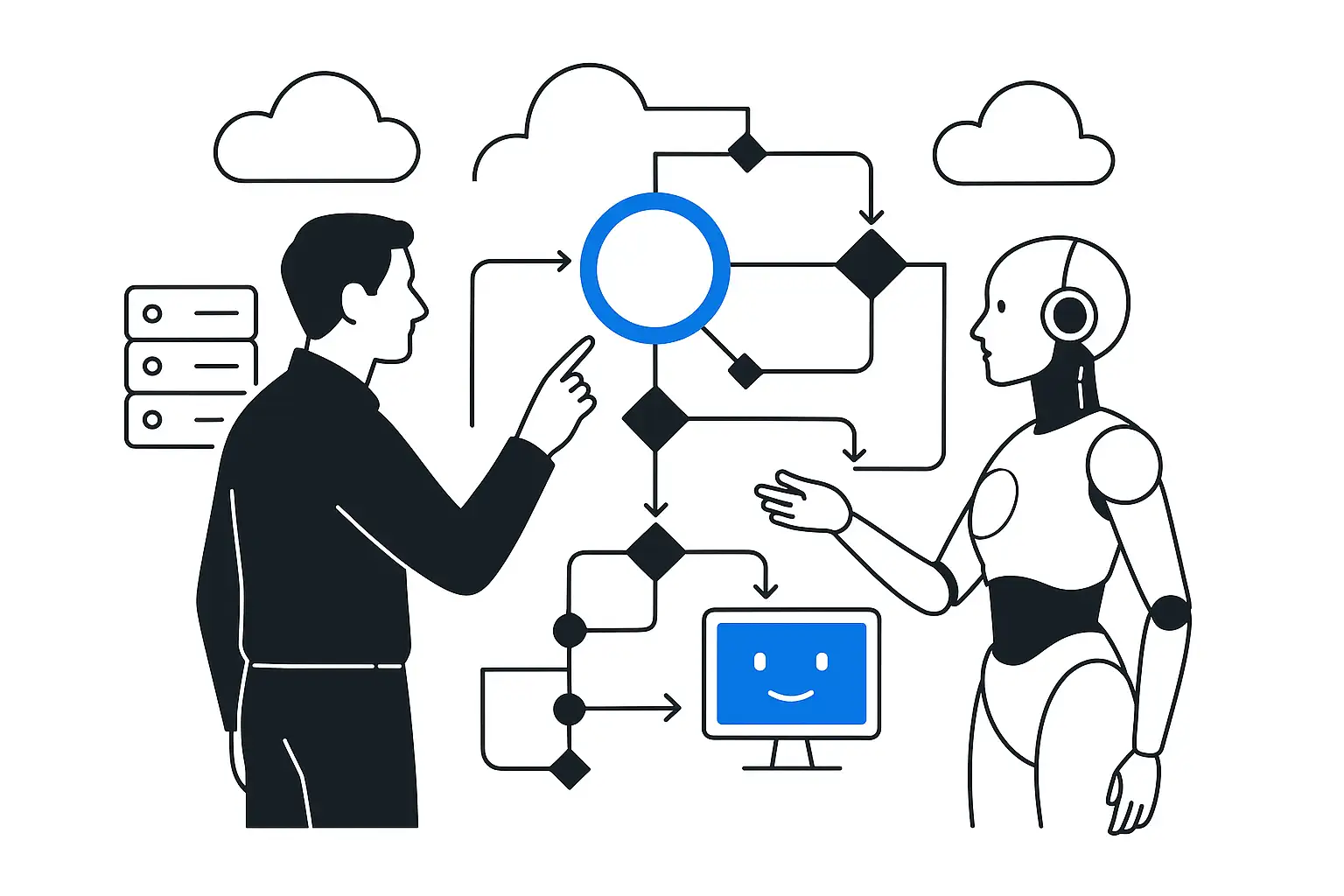
From the outside, it looks simple: “the model got cheaper, so we changed one configuration line.”

The underlying infrastructure includes:

  • evaluation set
  • which confirms this
  • that the new model performs no worse on the company’s real-world tasks
  • before deploying it to production
  • and cost monitoring
  • that catches the right moment
  • when the economics shifted again

Conclusion

The price of intelligence will continue to fall—Opus 5.5 and OpenAI’s response confirm this, and another round of cuts is close. Companies with an engineering layer for quickly switching models turn each round into lower costs or a broader range of tasks they can delegate to AI. Companies without one keep paying the old rate for what the market already sells more cheaply.

Discuss the article: Opus 5.5 is 40% cheaper: what does this change…

Enter your email or phone number so we can get back to you.

Send via: