Microsoft ended the quarter by directly linking lower operating expenses to moving AI from pilots into core processes—support, sales, and development. During the same period, Meta increased its capital investment in AI infrastructure faster than its visible returns. Ben Thompson calls the difference between the two companies the “efficiency payoff”: the question is whose AI has reached production.
Why Microsoft Has AI Impact but Meta Does Not
Microsoft cuts process costs with AI, while Meta invests upfront for the future, showing why infrastructure matters more than model budgets.
- Why Microsoft Has AI Impact but Meta Does Not
- The problem: AI as a showcase, not a process
- What exactly is paying off for Microsoft
- Why Meta Is Paying Upfront for Now
The problem: AI as a showcase, not a process
In 2026, most companies know how to showcase AI to investors and customers: a website chatbot, a CRM copilot, or a conference slide about an “AI-first culture.” Few can show AI in the P&L as a line where costs have fallen rather than risen due to subscriptions and integrators. The gap between a demonstration and a result is the gap between a pilot dependent on one engineer and manual prompt tuning, and a system that works without them week after week.
What exactly is paying off for Microsoft
Microsoft’s public earnings commentary reveals a clear pattern: savings come from areas where the model is embedded in an existing workflow—support-ticket handling, code reviews, searches across internal knowledge bases, and generating a document’s first draft. A model called from a chat is a demo. A model connected to the ticketing system, customer database, and deployment pipeline behaves like an employee who never sleeps, forgets procedures, or quits halfway through a project.
Assess where AI can deliver impact in your process
Why Meta Is Paying Upfront for Now
-
Meta is making a different kind of bet: infrastructure and models are being built for years ahead, while the returns are spread across future products—from recommendation systems to AR glasses and agents within social networks.
-
That is a reasonable strategy for a company with Meta’s valuation and planning horizon.
-
It is not replicable for a typical business: a mid-sized company cannot afford to wait three years for its AI capex to pay off.
-
It needs an impact this quarter, in this process, within this budget.
The mechanics: where the efficiency payoff comes from
-
The difference between AI theater and AI results comes down to three things.
-
First, there must be a gateway between the model and the company’s data: without one, the model’s answer is usually either fabricated or based on outdated public data instead of internal facts.
-
Second, the model needs access to internal tools and systems of record.
-
The agent creates a request, updates its status in the CRM, and emails the customer—on its own.
-
Third, time to utility, or TTU: the time from “the model was connected” to “the process actually changed, and the change is visible in the metrics.” A company that reduces TTU achieves the efficiency payoff Thompson writes about.
Where engineering closes the gap
KT.Team builds this exact layer for clients. LLM & Security Gateway provides Anthropic Claude, OpenAI, Google Gemini, Sber GigaChat, and Yandex YandexGPT with secure, controlled access to company data without leakage into the provider’s public logs. RAG over corporate databases and Elasticsearch ensures that answers rely on company facts rather than what the model learned from other organizations’ data.
MCP connects the agent to real tools—CRM, 1C, ticketing systems, and EDI—so the action takes place in the system of record rather than being described in chat. n8n orchestration and AI-native integration in Python and C# handle the routine work of connecting data sources and target systems—the work that is invisible from the outside but accounts for most of a project’s cost.
Conclusion
-
Microsoft has brought AI to the point where it works in production without an engineer sitting nearby to adjust the prompt. Meta is betting on the future, and its scale and cash reserves give it every right to do so.
-
For other businesses, the solution is simpler: track the specific metric that changed after implementation—hours, calls, tickets, or money.
-
The number of deployed models and the polish of a demo cannot replace this.
-
If there is no such metric, it is still a pilot, not a result.
Discuss the article: Why Microsoft benefits from AI, but Meta…
Related Cases

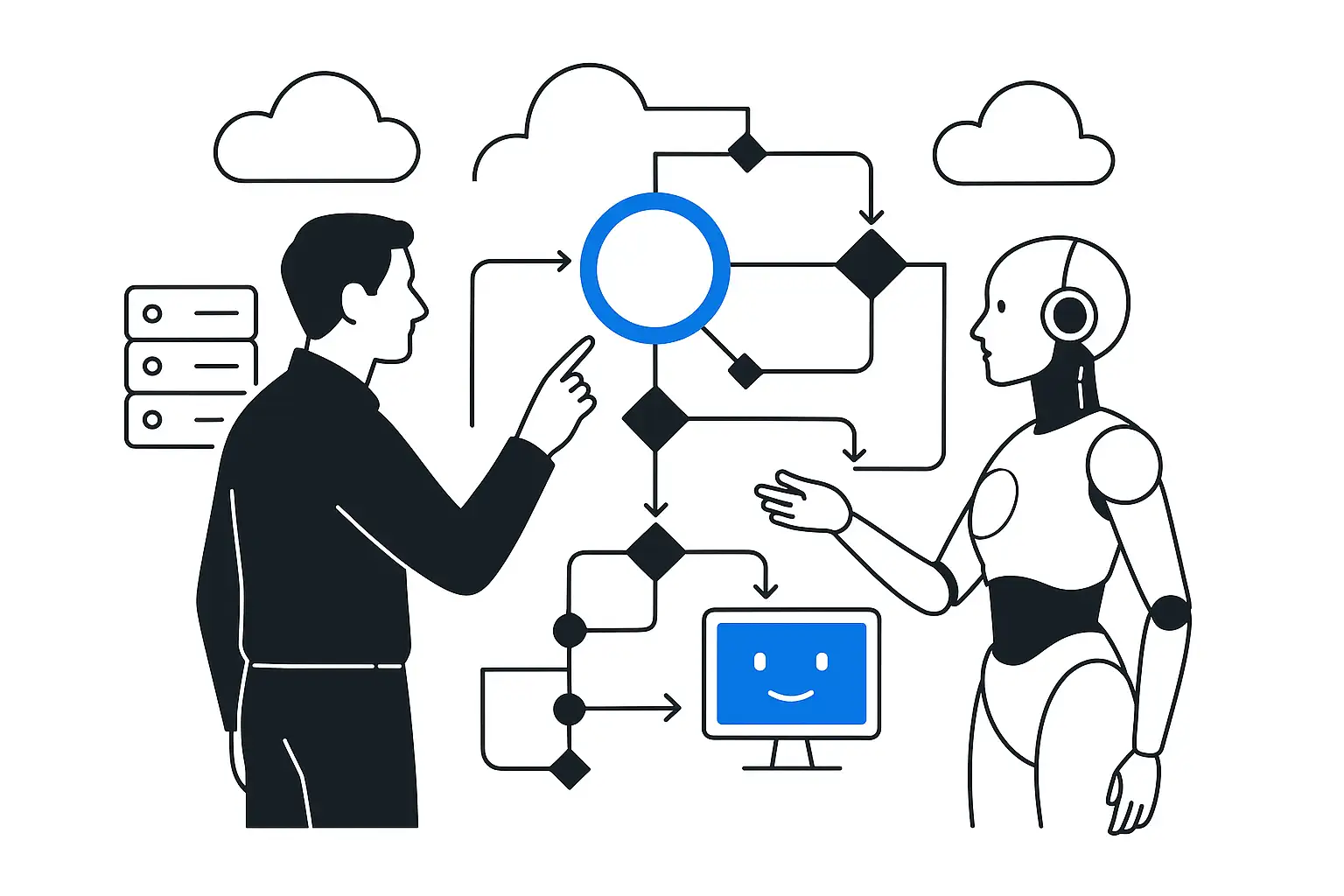
OSNO-VA: AI accountant
- Built an AI platform
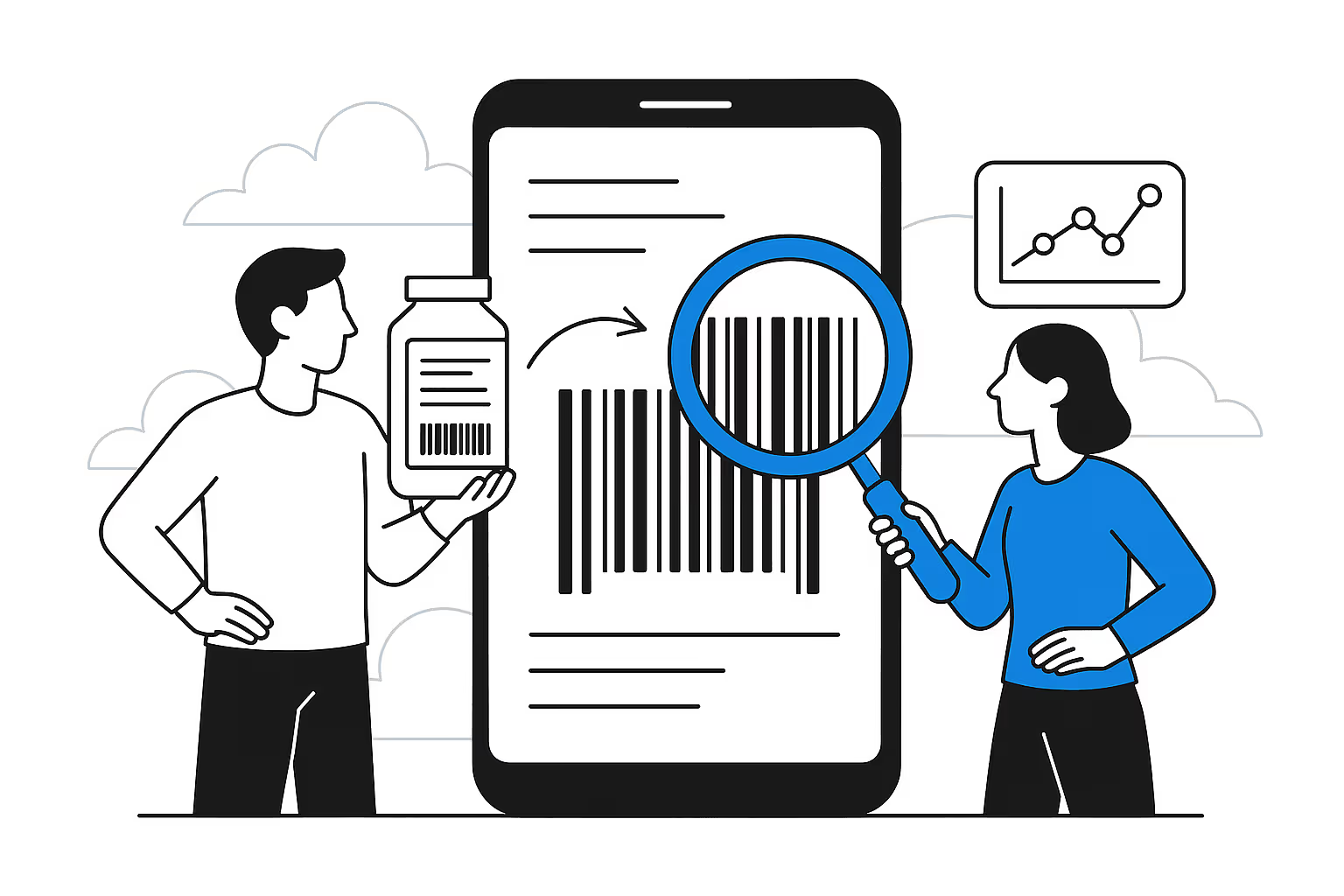
AI ingredient recognition by barcode
- The AI service processes up to 10 images in 2 minutes
- Recognition accuracy for composition is 80-95%
Related solutions
Articles on the topic
- A Demo Is Not Proof: Testing AI Automation
- Idle GPU: Where AI Infrastructure Budgets Leak
- Infrastructure for AI Agents: The End of Old DevOps
- AI models change every week. Infrastructure does not.
- What AI agents are, why businesses need them, and how to implement them in IT infrastructure with risks and benefits in mind