DAM and PXM are almost never the first step
DAM is added when the data is already in order and media has become a separate problem. PXM is for when the data and files are in order, and the next gain comes from presentation, not completeness.

We compare four master data systems so you can choose the right one for your business needs.
The question: do we need PIM or MDM?
almost always is not about the technology.
There is a concrete pain point behind it: an outdated description is still live on a marketplace, the invoice uses the wrong unit of measure, the designer sends a layout for the third time even though it has already been withdrawn, and the same product has different attributes in two systems.
These four system classes emerged as answers to four different questions, and confusing them is expensive.
A company buys PIM to clean up customer data, and fails to do so, because PIM is about products.
Or they implement MDM expecting polished product pages in the sales channel, and do not get them, because MDM is responsible for the master record, not the presentation.
Below is what each system actually stores.
| Class | What it stores | What question it answers | When it becomes necessary |
|---|---|---|---|
| MDM — master data management | Golden records for any entities: products, customers, counterparties, address reference data. | Which version of the data is considered correct and who is allowed to change it. | When the same entity lives in multiple systems and they diverge. |
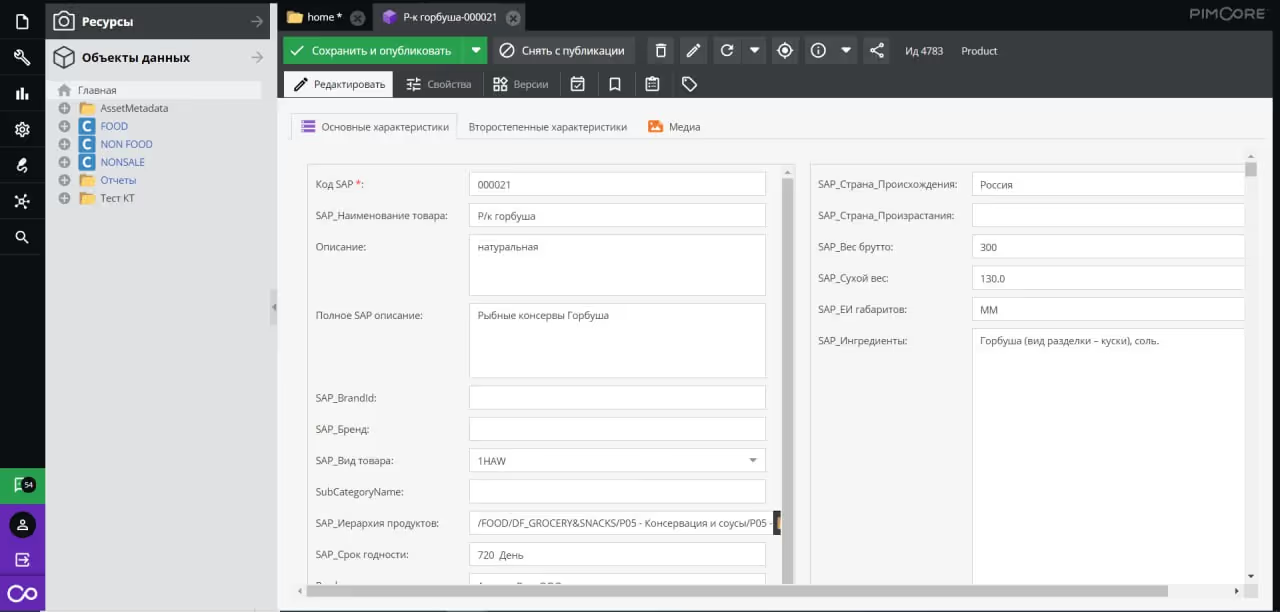
| PIM — product information management | All product information: attributes, copy, relationships, translations, and channel assignments. | What we say about the product and exactly what goes into each sales channel. | When the catalog is growing, there is more than one channel, and descriptions are edited manually. |
| DAM — digital asset management | Files: images, videos, specification documents. This class was previously called PCM (product content management). | Where the current file is, which version it is, and whether it can be published. | When there is more media than fits in folders, and usage rights have an expiration date. |
| PXM — product experience management | The product's marketing presentation: attribute variations, rules for publishing to external sources, segmentation, and positioning. | How the same product should look for different audiences across different channels. | When the data is already in order and conversion depends on presentation. PXM always includes DAM. |
| Class | Platforms |
|---|---|
| MDM | IBM InfoSphere MDM, Oracle MDM, SAP Master Data Governance, Pimcore, 1C:MDM, Informatica, Semarchy, Profisee, Syndigo (in 2021, Syndigo acquired Riversand, and the product continues under its brand). |
| PIM | Pimcore, Akeneo PIM, TreoPIM, cloud-based Salsify, Brandquad, Productsup, Pimworks. |
| DAM | Pimcore, Akeneo PIM in the Enterprise edition, Phraseanet, ResourceSpace. |
| PXM | Pimcore, Akeneo PIM in the Enterprise edition, Salsify. |
DAM is added when the data is already in order and media has become a separate problem. PXM is for when the data and files are in order, and the next gain comes from presentation, not completeness.
The right first step is not choosing a platform, but describing exactly where the data diverges and what that costs.
From this description, the system class usually follows naturally, along with whether a separate system is needed at all or whether it is enough to clean up the existing setup.
If it is already clear that this is about PIM, it is useful to compare specific systems on the CIS market and review a breakdown of MDM and PIM differences through implementation examples.
If the solution goes beyond the catalog, start by discussing the problem.
Cases
Verified on: 16.08.2026