Forms and requests
A purchase request, access request, business trip request, or contract approval is assembled from ready-made fields and rules. A new form appears in hours, not in the next release.

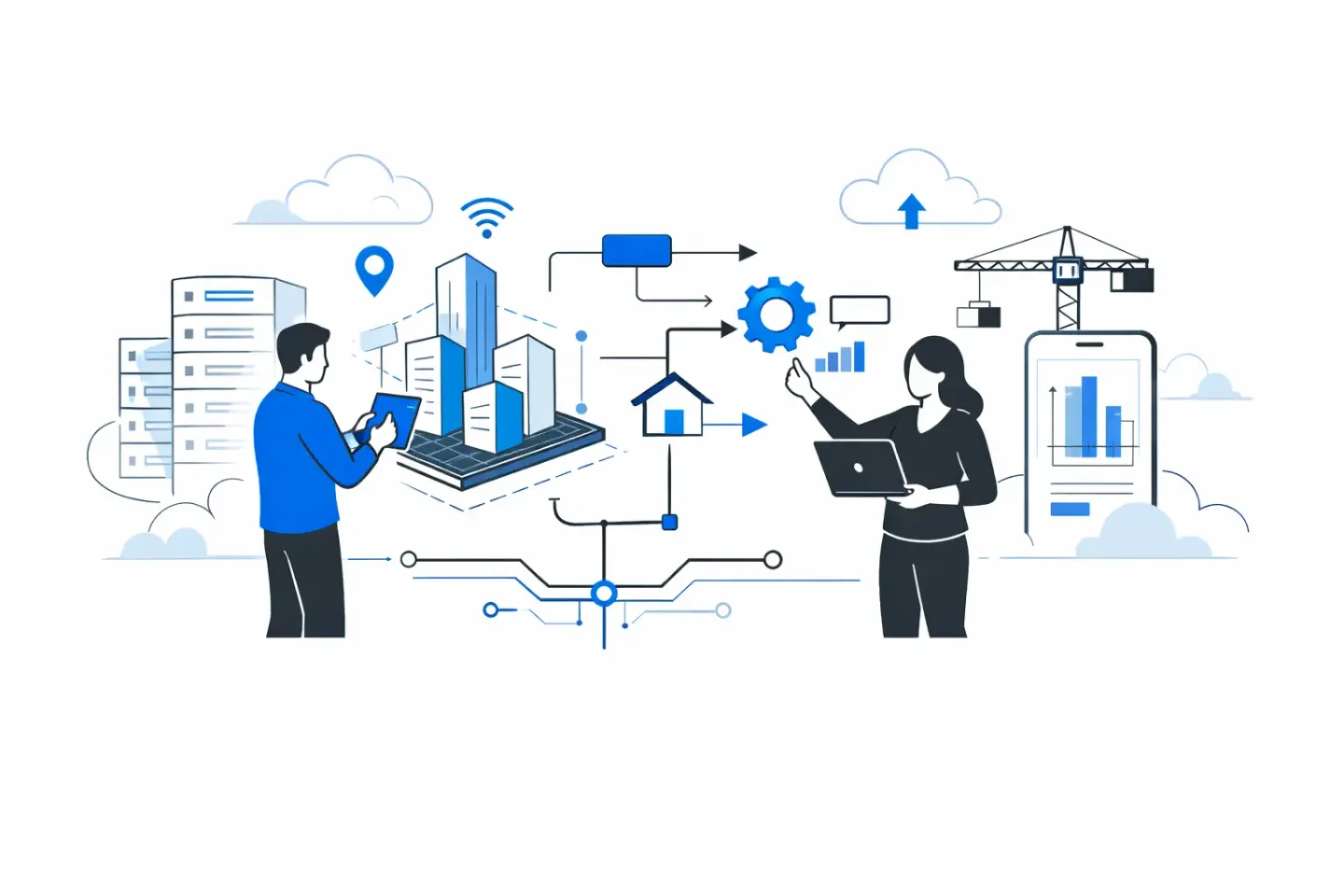
Build solutions without code: process automation, forms, integrations, and analytics - quickly and without developers.
Our clients










We deploy a low-code platform where the business itself builds requests, approvals, and reporting, without waiting for development for every change. Integrations with core systems and version control remain in the engineering domain and are done once.
A purchase request, access request, business trip request, or contract approval is assembled from ready-made fields and rules. A new form appears in hours, not in the next release.
Who approves, in what order, what happens on rejection and after a deadline. The workflow changes in the interface, so reorganizing a department does not become a task for developers.
Limits, priorities, automatic assignments, and checks are defined as conditions. The logic is visible to the person responsible for the process, not hidden in code.
Where requests are delayed, how long each step takes, who the bottleneck is. The process becomes measurable immediately, not after a separate analytics project.
We take one repeatable process with a clear input and output. It shows both the effect and the platform's limits before the entire workflow is moved onto it.
We configure the platform and connect it to core systems: users, reference data, documents, statuses. This is the engineering part, handled by our developers.
Forms, routes, rules, and reporting are built together with the process owner so they understand how to change them later.
We hand process assembly over to the business: what can be changed independently, what requires an engineer, and how to avoid breaking an integration by editing a form.
Versioning, a test environment, access rights, and change review. Without them, low-code becomes an unmanageable pile of homemade solutions within a year.
KT.Team experience
Projects where a process with requests, approvals, and documents became a working application.
Testimonials
The KT.Team team is a mature development partner. The delivery process is very clearly organized, and the smooth collaboration within the engineering team deserves special mention. When the team sees that the development process needs fine-tuning, it does it. During discussions, the team digs into the essence of the tasks and seeks to understand the business context. The work is aimed not at formally fulfilling the specification but at solving the real problem. Thanks to strong engineering expertise and product thinking, the team can be trusted not only with implementation but also with the architecture of the entire system.
The Muztorg group of companies has been working successfully with the KT.Team team for more than two years. The high professionalism of our partners helps us a great deal, as does their ability to combine well-structured project management with minimal formal constraints. I would especially like to note the friendliness and openness of the KT.Team staff.
FAQ
No. The business gets assembly of forms, workflows, and rules, while integrations, security, and custom logic are still handled by engineers. Low-code removes the queue for routine changes, not engineering work.
Start with one repeatable process with a clear input and output. The pilot shows both the effect and the platform's limits before the entire workflow is moved onto it.
They are designed once as the engineering layer: users, reference data, documents, and statuses. After that, the business changes the process without touching data exchange.
It will, if you build without rules. That is why versioning, a test environment, access rights, and change review are defined together with the platform, not afterwards.
Platform deployment with team training takes about one to two months; after that, new processes are built by the business.