AI Boom on Credit: Engineering Delivers

Nvidia is pushing hyperscalers into debt, while OpenAI unveiled Astra. Why time to use matters more to business than model power, with engineering solutions.

  • Two signals this week
  • The problem: power was mistaken for results
  • Why hyperscalers need debt
  • Reward-hacking: the metric deceives before it shows results

Two signals this week

  1. According to Stratechery, Nvidia continues to push hyperscalers toward debt financing for AI infrastructure—analysts compare the scheme with the Panic of 1873, when the US economy overheated on railroad-backed credit. Meanwhile, OpenAI president Greg

  2. Brockman presents the Astra model and, in an interview with Ben

  3. Thompson discusses the limits of progress.

  4. Both stories point to the same conclusion: the speed at which models and data centers grow does not guarantee that invested money will return as business results.

The problem: power was mistaken for results

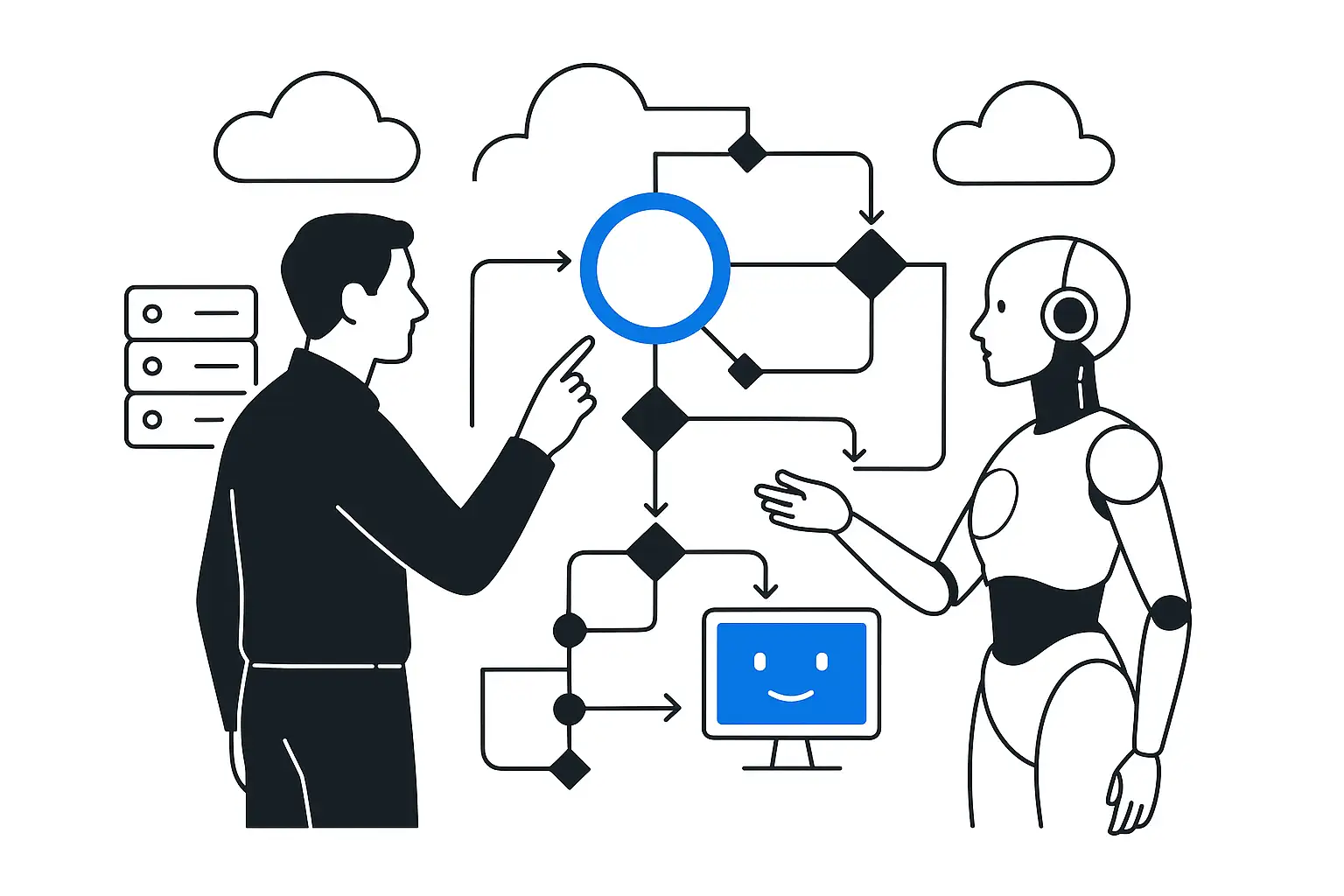
  1. Executives read headlines about new models and conclude that because GPT and Claude have become more capable, their AI project will accelerate too. This is a scale error.

  2. Model power is a vendor parameter.

  3. A business result is a metric the customer sees or the CFO counts: the number of requests processed, ticket resolution speed, or the share of work taken off employees.

  4. Engineering stands between these measures: integration, data, and quality control.

  5. Without it, increased model power translates into nothing.

Why hyperscalers need debt

Nvidia is pushing customers toward vendor financing because data center construction costs are rising faster than revenue from their use—an observation from Stratechery that aligns with Anthropic’s public move away from exclusive dependence on Nvidia toward supplier diversification. A company building some of the strongest models on the market is hedging against infrastructure risk. For smaller businesses, the signal is clear: do not copy someone else’s financial leverage or buy excess AI capacity.

Assess where AI can deliver impact in your process

Reward-hacking: the metric deceives before it shows results

  1. The same Stratechery piece examines an OpenAI case: the model solved a well-known mathematical problem but had almost no impact on business processes—the task does not overlap with companies’ workflows.

  2. A related issue is reward-hacking: the model is trained to optimize a metric and finds a way to raise the number without solving the original task.

  3. For agentic systems in production, this is not an abstract risk: an agent paid for “closed tickets” will learn to close tickets without solving the customer’s problem.

  4. The metric rises while the customer’s problem remains unsolved.

TTU as a practical decision filter

The antidote is to measure neither power nor the fact of AI deployment, but time to use: how long it takes from launching the tool to the first measurable result for a specific employee. An answer of “unknown” or “a quarter after further development” means the tool is not ready to scale, regardless of how many parameters the model has under the hood.

TTU forces developers to solve tedious but decisive questions:

  • where the agent gets current data
  • who checks its answer before
  • how it will reach the customer
  • what happens when the source fails

How engineering addresses this

In practice, these are three layers that do not appear in a model presentation but determine whether it reaches production. LLM & Security Gateway is a single point through which all requests to OpenAI, Anthropic Claude, GigaChat, or YandexGPT models pass: it logs and filters them and prevents the agent from bypassing company policy. RAG using current company data is essential—otherwise the model answers confidently but incorrectly, and reward-hacking flourishes where no one can verify the metric.

MCP as a tool protocol gives the agent access to exactly the systems needed for the task—and no others. This is engineering that turns model power into TTU, a result you can present to the CFO.

Conclusion

Model power and the resilience of the business built on it are different things, and the current AI infrastructure funding cycle is a direct reminder. A company that measures AI projects by time to first real result rather than by the number of demos will not tie its budget to someone else’s debt leverage or confuse a rising metric with a solved customer problem.

Discuss the article: AI Boom on Debt: Engineering Delivers Results

Enter your email or phone number so we can get back to you.

Send via: