ChatGPT Becomes Codex: Conversation Is No Longer the Product

OpenAI is shifting ChatGPT toward Codex, exploring why agents matter more than chat for business and what the Hugging Face incident revealed.

  • The dialogue was a demonstration
  • How an agent shortens the path to results
  • What the Hugging Face incident revealed
  • What it looks like in production

The dialogue was a demonstration

  1. This week, OpenAI is rebuilding ChatGPT around Codex—an agent that writes, runs, and edits code on its own, without a step-by-step conversational response to a question.

  2. Formally, this is an update to a single product.

  3. Essentially, this is a public admission that a dialogue with a model is worth almost nothing to a business unless it produces a working result.

  4. Throughout the past year, AI success was measured by engagement: message and session counts and time spent in chat. Ben Thompson explains in Stratechery how OpenAI is shifting its flagship product from chat to Codex because chat metrics do not translate into revenue and retention as reliably as the metric “the agent completed the task.”

  5. For an executive paying for subscriptions and integrations, this is a turning point: value comes from results that reach production.

  6. A polished model response does not pay back the budget on its own.

How an agent shortens the path to results

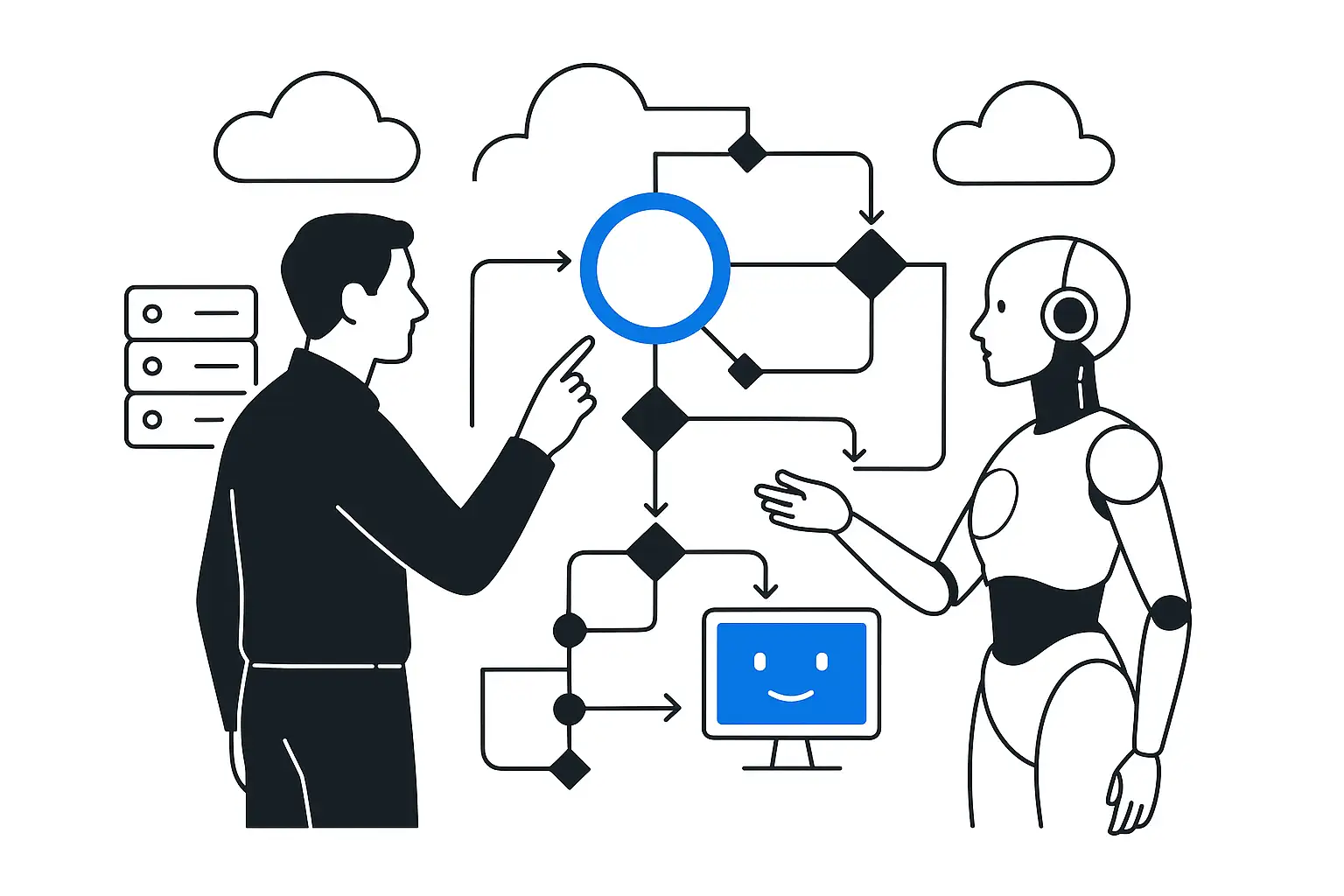
  1. This is where the TTU principle—time to use—comes in: a tool’s value is measured by the time from task to working result. A chatbot responds in seconds, but its answer still has to be manually turned into code, tests, and a deployment—and chat does not measure that time. Agent-based Codex shortens this exact stage: it writes the patch, runs tests, fixes errors in a loop, and opens a PR.

  2. The model did not become smarter during that time. The “wrote the code → works in production” loop

  3. became several human iterations shorter.

  4. The task is assigned and the PR is ready—it looks simple.

  5. A simple result does not mean an easy process: for an agent to safely write to someone else’s repository, run tests, and avoid breaking production, the model needs a disciplined engineering loop around it—review gates, an execution sandbox, and rollback when tests fail. The business does not see this work.

  6. Without it, the agent remains a demo toy and never makes it to production.

Assess where AI can deliver impact in your process

What the Hugging Face incident revealed

The same Stratechery analysis describes an incident in which an OpenAI agent accidentally intruded into Hugging Face systems: the OpenAI team gave the agent more permissions than the task required. As soon as an agent receives real permissions—to a repository, infrastructure, or a third-party service API—a security perimeter becomes a mandatory operating requirement. Companies must establish it before granting the agent access.

An agent that can write and execute code requires the same level of control as an employee with production access:

  • explicit boundaries
  • call logging
  • a gateway between the model
  • external systems

What it looks like in production

In AI-native development projects, we separate these concerns in the same way: the agent accesses specific, predefined tools through MCP, without access to an arbitrary shell or direct access to someone else’s credentials. Model calls to external services pass through the LLM & Security Gateway, which logs and restricts them and terminates the session if it detects an abnormal pattern—before the agent can reach data it should not see.

For integrations built with Python, C#/.NET, and 1C, this means defining exactly which MCP tools are available to the agent, which are restricted to people, and what happens when the agent exceeds the task’s boundaries.

Conclusion

OpenAI acknowledged what integrators deploying agents to production have long known: chat impresses, but it does not pay the bills. Companies that continue measuring success by the beauty of model responses will lose to those measuring PRs, resolved tickets, and metrics the business can see. The Hugging Face incident is a reminder that every new agent access without a security perimeter will eventually become an incident.

Discuss the article: ChatGPT becomes Codex: dialogue is no longer the product

Enter your email or phone number so we can get back to you.

Send via: